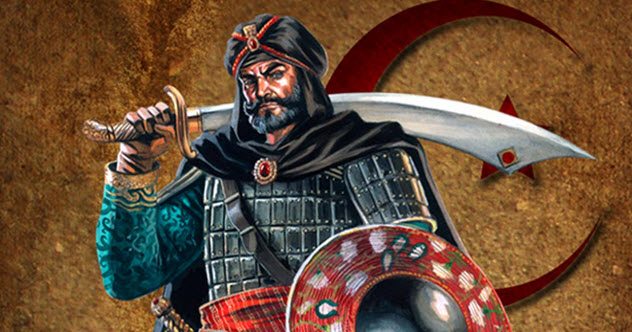
The Mamluks are one of history’s best plot twists: a society built around enslaved military recruits that ended up producing sultans, city-builders, and
battlefield problem-solvers. And yesthis is a “bloody” topic. But we’re keeping it historically bloody: power struggles, wars, and high-stakes politics,
not gore.
If you’ve ever wondered how medieval Cairo became a powerhouseor how one army managed to stop the Mongols at the edge of the Mediterranean worldwelcome.
The Mamluk story is equal parts training montage, court drama, and architectural flex.
Quick Context: Who Were the Mamluks?
“Mamluk” refers to a class of military elites in the medieval Islamic worldmost famously the rulers of Egypt and Syria who held power from
1250 to 1517, with Cairo as their capital. Their state is often called the Mamluk Sultanate, and it’s typically divided into two big eras:
the Bahri period and the Burji period.
They weren’t a single ethnic group. Over time, many Mamluks came from Turkic-speaking regions and later from the Caucasus (especially Circassians).
What united them wasn’t a shared hometownit was a shared system: recruitment, conversion, rigorous training, and loyalty networks that could make or break a ruler.
1) “Mamluk” Literally Means “Owned”and That’s the Twist
It started with status… and ended with thrones
The Arabic word mamluk is commonly explained as meaning “owned,” a reminder that many were brought in as enslaved youths and trained for war and service.
Yet the system also created a pathway to elite power: a trained mamluk could become an officer, an emir, andif the political winds cooperateda sultan.
It’s one of those historical setups that sounds impossible until you remember: medieval politics loved two thingsmilitary skill and a good loyalty story.
The Mamluks delivered both, even if the “loyalty” part sometimes came with an asterisk.
2) They Didn’t Just Serve EgyptThey Took It
1250: the “employee takeover” of the century
In the mid-13th century, Mamluk military leaders seized control in Egypt, founding a new sultanate that would dominate the region for more than two and a half centuries.
This wasn’t a quiet handover. It was a reordering of authority: soldiers became the state.
Their rule wasn’t based on claiming to be caliphs. Instead, they operated as a military sultanatepower justified by control, competence, and the ability to keep the realm standing
while rivals (and invaders) tried to knock it down.
3) Their Timeline Has Two “Houses”: Bahri and Burji
Same sultanate, different power bases
Mamluk history is often divided into the Bahri period (associated with forces based around the Nile area) and the Burji period
(linked to the Cairo Citadel and often associated with Circassian leadership).
Think of it less like two separate countries and more like two long seasons of the same show: recurring themes (military elites, court rivalries, patronage),
but with shifting casts, styles, and crisis-management strategies.
4) They Pulled Off a Legendary “Nope” at the Battle of ʿAyn Jālūt (1260)
The Mongol advance meets a hard stop
One of the most famous Mamluk moments is the Battle of ʿAyn Jālūt in 1260, where Mamluk forces defeated a Mongol army in the Levant.
The battle is widely remembered as a major check on Mongol expansion toward Egypt and the Mediterranean world.
This mattered because Mongol campaigns had already devastated major cities across Eurasia. Egypt was not interested in becoming the next chapter of that story,
and the Mamluks were not interested in writing a surrender letter.
It’s “bloody” in the way most medieval battles werebut historically, it’s pivotal: the Mamluks established themselves as the defenders of the region’s political and religious centers,
and their prestige surged.
5) Baybars Wasn’t Just a SultanHe Was a Brand
A ruler with strategy, symbolism, and serious follow-through
Sultan Baybars (often listed as Baybars I) is one of the Mamluk era’s headline acts. He rose through the military system and became a key leader during the period
when the Mamluks were fighting for regional dominance.
Baybars is associated with aggressive state-building: tightening administration, projecting authority, and sustaining campaigns that kept enemies off balance.
He also understood optics. Mamluk legitimacy wasn’t inherited by “divine right”it was performed through victory, governance, and patronage.
Translation: Baybars didn’t just win battles; he made sure people remembered who won.
6) Cairo Became a Medieval Super-City Under Mamluk Rule
Power moves you can still walk through
The Mamluk capital at Cairo became a major economic and cultural hub. The Mamluks invested heavily in architecture and institutionsmosques, madrasas,
mausoleums, and charitable complexescreating the kind of skyline that tells you, without words, “a serious state lives here.”
One famous example is the type of grand, multi-purpose complex associated with sultans and top officials, which could include a mosque, school, hospital, and tomb.
These projects weren’t only religious; they were political. Building was a way to anchor legitimacy in stone, marble, and public services.
7) Their Secret Weapon Was Training: Furusiyya Was More Than “Horse Stuff”
Elite cavalry culture with a curriculum
Mamluk military excellence wasn’t accidental. Their elite culture emphasized disciplined trainingespecially in mounted warfare traditions often discussed under the umbrella of
furusiyya (a broad term tied to horsemanship, martial skills, and elite warrior culture).
What makes this “bloody” is the outcome: a highly trained military class tends to dominate politics. When your society’s best-trained fighters are also its power brokers,
politics can turn into a contact sport. (Metaphorically. Mostly.)
The key point: the Mamluks didn’t just inherit an armythey manufactured expertise through an intense system that prized skill, coordination, and a very professional approach
to medieval combat.
8) Their Wealth and Power Ran on Tradeand the Red Sea Was a Big Deal
Merchants, routes, and a strategic geography jackpot
The Mamluk realm sat at a crossroads linking the Mediterranean world with Red Sea and Indian Ocean routes. That meant taxes, customs, and commercial influenceand also
constant pressure to keep routes stable.
This is where the Mamluks look surprisingly modern: controlling territory is one thing, but controlling chokepoints and trade flows is how you pay for armies,
monuments, and the world’s fanciest glass lamps.
Their reach also included influence over the holy cities Mecca and Medina, which boosted both prestige and political weight in the broader Islamic world.
9) Mamluk Art Was Luxury with a Loud Signature
Metalwork, manuscripts, and “yes, that is my name in giant letters”
Mamluk decorative arts are famous for bold inscriptions, heraldic emblems (blazons), and technical excellenceespecially in metalwork, glass, and book arts.
Many objects proudly display the patron’s name and titles in elegant calligraphy, which is basically medieval brandingexcept it’s hammered into brass.
Manuscripts could be extraordinary status symbols too. Some celebrated Mamluk Qur’ans are known for lavish illumination and meticulous calligraphy, reflecting both devotion
and elite patronage. These weren’t just books; they were political-cultural statements you could open.
And the art traveled in reputation. Mamluk craftsmanship was admired widely around the Mediterranean world, and later centuries even produced “revival” pieces inspired by Mamluk styles.
10) 1517 Ended the SultanateBut Not the Mamluk Story
Conquered, absorbed, and still influential
The Mamluk Sultanate was conquered by the Ottoman Empire in the early 16th century, with 1517 marking the end of Mamluk rule as an independent sultanate.
Yet Mamluk elites didn’t simply vanish from history. Their networks and influence continued under new political conditions, and “Mamluk” remained a powerful label
in Egyptian political life long after the sultanate’s fall.
In other words: the sultanate ended, but the Mamluk legacy didn’t politely exit the stage. It lingeredsocially, culturally, and in the way Cairo continued to look and function.
Conclusion: Why the Mamluks Still Matter
The Mamluks are a reminder that history is not always built by neat dynastic family trees. Sometimes it’s built by institutionstraining systems, military households,
patronage networks, and the ability to make a state function under pressure.
They fought existential wars, governed an economic hub, and left behind art and architecture that still shape how people imagine “medieval Cairo.” Their story is “bloody”
because power in the Middle Ages was rarely gentlebut it’s also deeply human: ambition, discipline, rivalry, loyalty, and the constant work of turning force into legitimacy.
Bonus: of “On-the-Ground” Experiences Related to the Mamluks
If you want to feel the Mamluk story (without needing a time machine or chainmail), the easiest gateway is to follow their footprint: the city, the objects,
and the atmosphere of public spaces they shaped.
Start with Islamic Cairo as a living museum. The Mamluks didn’t build one monument and call it a daythey built an urban personality. A stroll along
historic corridors can feel like flipping through an architectural highlight reel: stone facades that look stern and official, towering complexes that quietly announce,
“A sultan wanted to be remembered here,” and inscriptions that turn walls into speeches. Even if you don’t read Arabic, the scale and confidence of the writing
tells you the message: authority lives here.
Then do the most Mamluk thing possible: follow the moneyspecifically the charitable foundations. Many grand complexes were designed to do multiple jobs at once:
worship space, education, social services, and a tomb for the founder. The experience is oddly modern. You’re looking at a medieval strategy for public legitimacy:
build something useful, attach your name to it, and let the city repeat your reputation daily. It’s less “statue in a park” and more “I funded the whole neighborhood.”
Next, switch from streets to galleries. In museums, Mamluk art often hits you with a surprise: it’s both refined and assertive. Metalwork may be covered in elegant patterns,
but also stamped with bold titles and heraldic emblemslike a luxury item that refuses to be anonymous. Manuscripts can feel even more intimate: you’re staring at
devotion and power in the same object, where visual beauty isn’t decorationit’s an argument about authority, taste, and religious commitment.
Finally, imagine the daily “training montage” behind all this. The Mamluk elite system wasn’t powered by vibes; it was powered by discipline.
Picture the rhythm of drills, horsemanship practice, and coordinated maneuvers that turned recruits into a political-military class. That mental image changes how you
read everything else. A monument isn’t just prettyit’s funded by a machine of organized force. A victory isn’t just luckit’s the result of a pipeline designed to produce
skilled fighters and loyal households.
The most memorable experience, though, is realizing how the Mamluks solved a hard problem: how do you turn a ruling class without a traditional royal bloodline into a stable state?
Their answer was to make legitimacy visibleon battlefields, in bureaucracy, in charity, and in stone. And once you see that, “Mamluk history” stops being a chapter title
and starts feeling like a system you can still trace with your own eyes.