There are bathtubs… and then there are freestanding bathtubs. The kind that make you turn off your phone, light a candle, and wonder why you ever rushed through a shower. In modern bathroom design, freestanding tubs have become the ultimate symbol of everyday luxuryequal parts functional fixture and sculptural centerpiece.
Inspired by design insights commonly shared across reputable U.S. home and lifestyle publicationsthink long, thoughtful features from places like Better Homes & Gardens, Architectural Digest, House Beautiful, and Design Milkthis guide pulls together the most loved, lived-in, and visually stunning freestanding bathtub ideas. These aren’t just pretty tubs for Pinterest. They’re ideas that actually work in real American homes.
If you’ve ever dreamed of soaking in bubbles while staring out a window, sipping tea like you own a boutique spa, this list is for you.
Why Freestanding Bathtubs Are Having a Design Moment
Freestanding tubs aren’t new, but they’ve evolved. Where clawfoot tubs once ruled historic homes, today’s options range from sleek acrylic ovals to dramatic stone vessels. Designers love them because they:
- Create an instant focal point
- Work in both large primary baths and clever small spaces
- Pair beautifully with modern, farmhouse, spa, and traditional styles
- Signal luxury without requiring a complete remodel
Now let’s get to the tubs that steal the show.
1. The Classic Oval Soaking Tub
The oval freestanding tub is the little black dress of bathroom designtimeless, flattering, and always appropriate. Typically made of acrylic or resin, these tubs feature gently sloped sides and a symmetrical silhouette that looks equally good centered in the room or tucked near a wall.
Why it works: It suits nearly every style, from transitional to ultra-modern, and offers deep soaking comfort without bulky edges.
Style tip: Pair it with a floor-mounted tub filler in brushed nickel or matte black for a clean, editorial look.
2. Modern Slipper Tub for Long, Luxurious Soaks
Slipper tubs feature one end that’s raised higher than the otherdesigned specifically to support your back. Once a Victorian staple, modern slipper tubs now come in streamlined shapes that feel more spa than antique.
Why it works: Comfort. If you love long baths that turn into accidental naps, this is your tub.
Design bonus: Slipper tubs look stunning when placed under a window or paired with dramatic tile.
3. Sculptural Stone Freestanding Bathtub
Stone tubsoften carved from marble, granite, or composite stoneare pure drama. Heavy, matte, and undeniably luxurious, they feel like something you’d find in a high-end resort.
Why it works: It transforms the bathroom into a design statement, even without accessories.
Consider this: Stone tubs retain heat well but require proper floor support. They’re an investment, but one that makes jaws drop.
4. Japanese-Inspired Soaking Tub (Ofuro Style)
Shorter but deeper, Japanese soaking tubs prioritize immersion over lounging. You sit upright, submerged almost to the shoulders, turning bath time into a mindful ritual.
Why it works: Ideal for small bathrooms or anyone who values relaxation over sprawl.
Pair with: Wood accents, neutral tones, and soft lighting to complete the zen effect.
5. Matte Black Bathtub for Bold Bathrooms
White tubs may be classic, but matte black freestanding tubs are having a serious moment. They feel edgy, modern, and surprisingly versatile.
Why it works: Creates contrast instantly, especially in white or neutral bathrooms.
Designer tip: Balance the boldness with warm wood or brass fixtures to avoid a cold look.
6. Freestanding Tub with a View
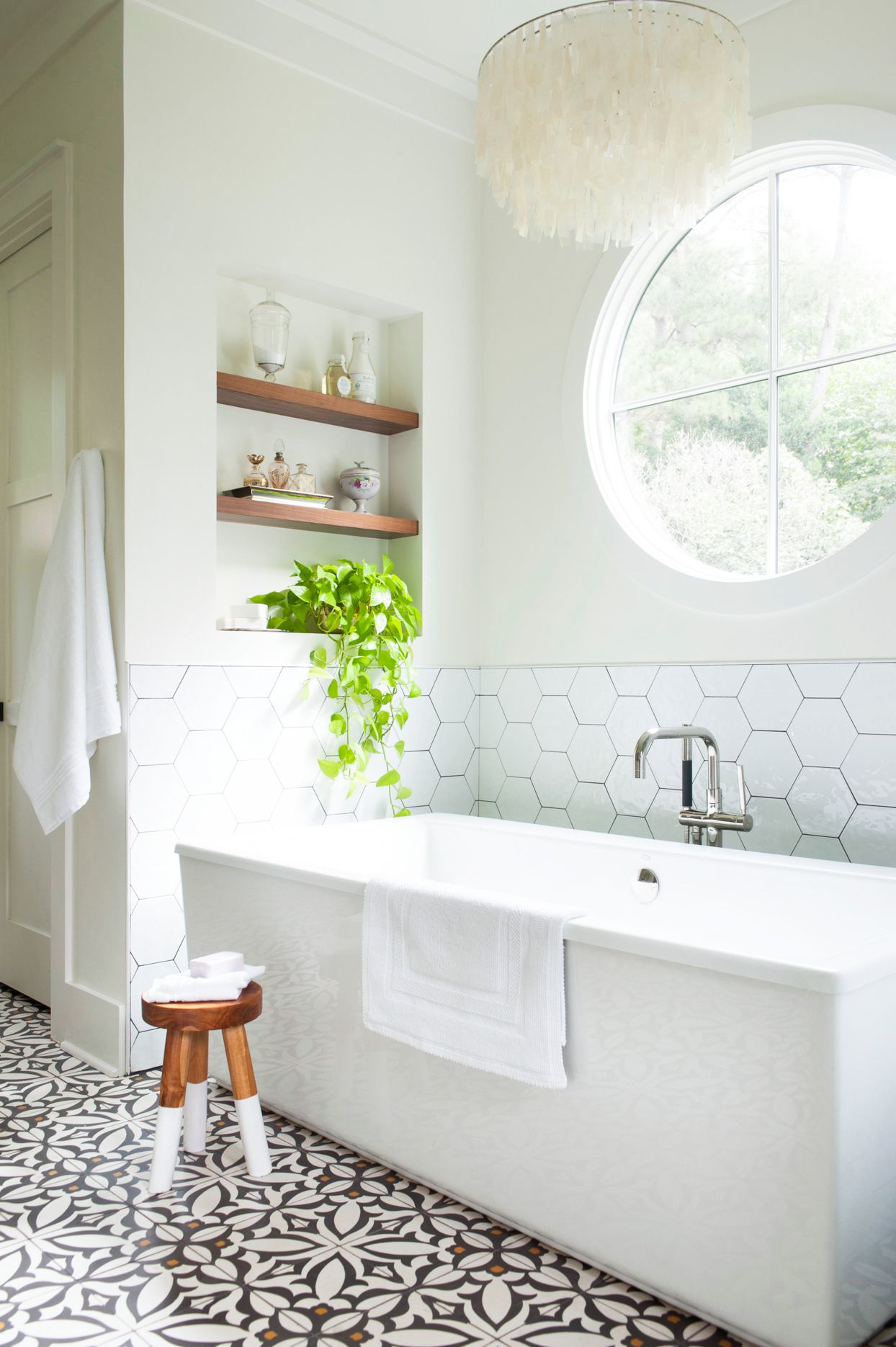
If you have a windowespecially one overlooking trees, water, or a private yardplacing a freestanding tub in front of it is a design power move.
Why it works: Natural light plus water equals instant calm.
Privacy fix: Use frosted glass, sheer curtains, or window film that lets light in without inviting the neighbors.
7. Clawfoot Tub with a Modern Twist
Today’s clawfoot tubs aren’t stuck in the past. Many feature updated silhouettes, painted exteriors, or metallic finishes that feel fresh rather than fussy.
Why it works: Adds personality and charm, especially in farmhouse or transitional homes.
Try this: A white interior with a deep green, charcoal, or navy exterior for a custom feel.
8. Minimalist Flat-Edge Freestanding Tub
Some freestanding tubs ditch curves altogether in favor of crisp lines and flat edges. These tubs feel architectural and pair beautifully with modern vanities.
Why it works: Perfect for contemporary spaces that value clean geometry.
Finish it with: Concrete floors or large-format tiles for a gallery-like vibe.
9. Compact Freestanding Tub for Small Bathrooms
Think freestanding tubs only work in sprawling baths? Think again. Compact modelsoften shorter and narrowerdeliver the same visual impact in tight spaces.
Why it works: Makes even small bathrooms feel custom and intentional.
Smart placement: Angle the tub or float it near a corner to free up walking space.
10. Double-Ended Tub for Shared Soaking
Double-ended tubs slope at both ends, allowing two people to soak comfortablyno awkward faucet negotiations required.
Why it works: Romantic, practical, and ideal for primary suites.
Design note: Center it in the room for maximum impact and symmetry.
Real-Life Experiences: What It’s Like Living with a Freestanding Bathtub
Installing a freestanding bathtub isn’t just a design decisionit’s a lifestyle shift. Homeowners often report that once the tub goes in, bathing becomes less of a chore and more of a ritual.
Many people describe the first soak as a revelation. Without the visual clutter of surrounding tile walls, the bath feels open and calming. The silence is different too. Water sounds softer. The room feels larger. You notice detailsthe warmth of the tub material, the way steam rises, the comfort of properly angled sides.
There’s also a psychological effect. Freestanding tubs encourage slowing down. Instead of hopping in for five rushed minutes, people tend to linger. Books get read. Playlists get queued. Candles become a normal purchase, not a special-occasion item.
From a practical standpoint, owners often note that cleaning is easier than expected. With no ledges for grime to hide, a quick wipe-down keeps things looking fresh. The area beneath the tubonce feared as a dust trapturns out to be manageable with regular cleaning.
Families say the tub becomes a shared luxury. Some parents use it for evening wind-down time after long days. Others mention that it transforms weekends into mini spa retreats without leaving the house. Even guests noticeit’s one of those features people remember and comment on.
Perhaps the biggest surprise? Regret is rare. While homeowners may initially debate whether a freestanding tub is “worth it,” most agree that the combination of daily comfort, long-term design appeal, and resale value makes it one of the most satisfying upgrades you can make.
In a world that constantly demands speed, a freestanding bathtub quietly insists you slow down. And honestly, that might be the most luxurious feature of all.
Conclusion
Freestanding bathtubs are more than a design trendthey’re an invitation to rest. Whether you’re drawn to sculptural stone, minimalist modern lines, or classic ovals that never go out of style, there’s a freestanding tub that can transform your bathroom into a personal retreat. Choose one that fits your space, your routine, and your idea of comfortand let the bubbles do the rest.