Insulation is one of those “boring” home upgrades that quietly does heroic things: it helps keep your
house comfortable, lowers heating and cooling strain, and can even make rooms feel less drafty and
more peaceful. It’s also confusing, because “insulation” is not one productit’s a whole cast of
characters, each with different superpowers and a few annoying quirks. Some are fluffy. Some are
foamy. Some are basically shiny space blankets for your attic.
This guide breaks down 10 common insulation types every homeowner should recognize, what each does best,
and how to choose the right mix for your climate, budget, and “how much renovation chaos can I tolerate”
threshold.
Insulation 101 (So the Rest Makes Sense)
R-value isn’t the whole story
Most insulation is rated by R-value, which measures resistance to heat flow. Higher is betterup to a point.
The “right” R-value depends on your climate zone and where the insulation goes (attic vs. walls vs. crawlspace).
But performance also depends on air sealing, moisture control, and avoiding gaps. A high R-value product
installed with voids, compression, or air leaks can underperformlike buying a premium winter coat and leaving it unzipped.
Heat moves three ways
Insulation slows conduction (heat through materials) and can reduce convection (air movement in cavities).
Radiant heat is differentit travels like sunlightand that’s where radiant barriers and reflective systems come in.
That’s why your insulation plan can’t be one-size-fits-all: attics in Phoenix and basements in Minnesota have very different problems.
One more thing: insulation isn’t a DIY personality test
Many homeowners can handle batts or loose-fill in accessible areas. But some products (especially chemical foams
and complex wall systems) are best installed by trained pros. When in doubt, follow manufacturer guidance and local
building/fire code requirementsyour house deserves better than “I saw a guy do this on a 12-second video.”
The 10 Types of Insulation (And When They Shine)
1) Fiberglass Batts and Rolls (Blanket Insulation)
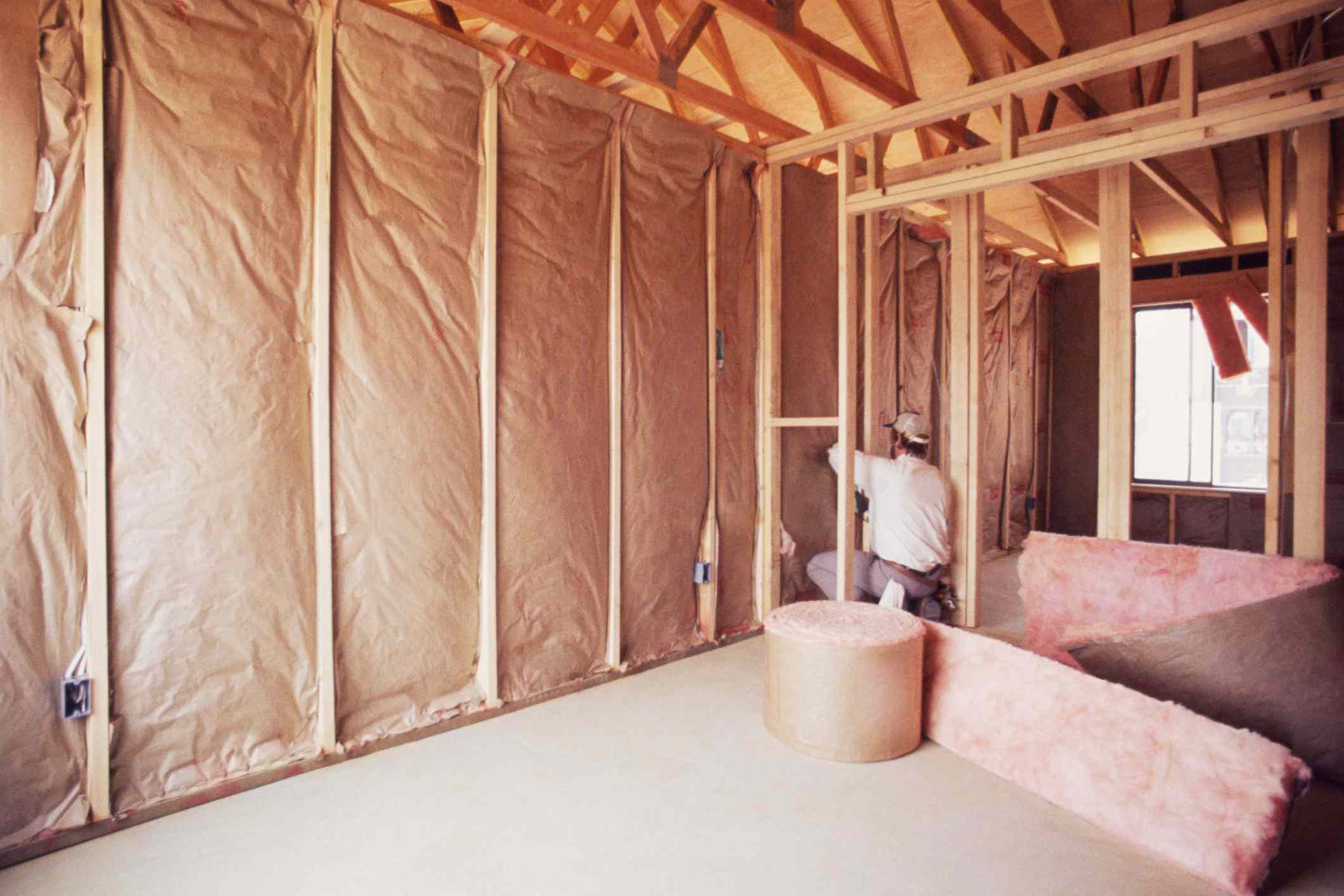
This is the classic pink (or brown, or yellow) fluffy stuff you’ve seen in walls and attics.
Batts and rolls are sized for standard stud and joist spacing, making them popular for unfinished walls,
floors over garages, and attic areas with easy access.
Why homeowners like it: widely available, budget-friendly, and straightforward to install in open framing.
Watch-outs: performance depends heavily on a snug fitgaps around wiring, pipes, or oddly spaced framing can
reduce effectiveness. Also, don’t compress it; squished insulation is like a flattened pillowless air, less value.
2) Blown-In Fiberglass (Loose-Fill)
Blown-in fiberglass is loose, fluffy material installed by “blowing” it into spacesmost commonly attics,
but also wall cavities with the right approach. It’s excellent for covering large areas quickly and filling around
irregular obstacles better than batts can.
Why homeowners like it: great for topping up attic insulation and reaching corners without endless cutting.
Watch-outs: loose-fill needs to be installed to the correct depth and coverage; underfilling leaves you paying
for the idea of insulation rather than the reality of it.
3) Cellulose (Loose-Fill and Dense-Pack)
Cellulose is typically made from recycled paper fibers treated for fire and pest resistance. You’ll see it blown into attics
or “dense-packed” into wall cavities, especially in retrofit projects where you want to improve existing walls without a full tear-out.
Why homeowners like it: it can fill cavities well, is often valued for recycled content, and can be a strong option in older homes.
Watch-outs: like other loose-fill products, it’s all about proper installation density and coverage. If moisture issues exist,
fix those firstwet insulation is unhappy insulation.
4) Mineral Wool (Rock Wool or Slag Wool)
Mineral wool looks like fiberglass’s tougher cousin. It’s made from rock or industrial slag spun into fibers, and it’s widely used
for thermal insulation and sound control. Many homeowners choose it for interior walls (like bedrooms or home offices) because it helps
reduce noise transfer.
Why homeowners like it: it’s known for strong fire resistance and sound-dampening performance.
Watch-outs: it typically costs more than standard fiberglass, and it can be denser/heavier to work withgreat for performance,
less great for your “I want to finish this today” ambitions.
5) Spray Foam (Open-Cell and Closed-Cell)
Spray foam expands after application, sealing cracks while insulatingso it can reduce air leaks and heat transfer at the same time.
Open-cell foam is lighter and often used for interior applications. Closed-cell foam is denser, adds more vapor resistance,
and is commonly used where extra moisture control or higher R-value per inch matters.
Why homeowners like it: exceptional air sealing in tricky areas (rim joists, rooflines, odd framing).
Watch-outs: it’s usually pricier and typically best handled by professionals with the right training and safety protocols.
Also, climate and assembly details mattersome roof and wall designs call for specific foam types or thicknesses to manage condensation risk.
6) Rigid Foam Board (EPS, XPS, Polyiso, Polyurethane)
Rigid foam board is insulation in panel formoften used on basements, exterior walls, and roofs as continuous insulation to reduce
thermal bridging (heat slipping through studs or masonry). Different foams have different strengths: some handle moisture better,
some offer higher R-value per inch, and some are used in specialty assemblies.
Why homeowners like it: great for adding a continuous “blanket” layer that improves real-world performance.
Watch-outs: some foam products can experience performance changes over time depending on formulation, and detailing matters:
seams, edges, and air sealing determine whether it behaves like a system or a patchwork quilt.
7) Radiant Barriers and Reflective Insulation
Radiant barriers are reflective materials designed to reduce radiant heat gainmost commonly in attics.
Unlike traditional insulation, a radiant barrier has no inherent R-value because it works by reflecting heat rather than resisting conduction.
In hot climates, it can be helpful as part of a broader strategy to cut attic heat buildup.
Why homeowners like it: it targets a specific problem (radiant heat) where that problem is bigthink sun-baked roof decks.
Watch-outs: placement matters. If it’s installed incorrectly or gets covered in dust, performance dropslike wearing sunglasses under a hat brim at night.
8) Structural Insulated Panels (SIPs)
SIPs are factory-made panels with an insulating foam core sandwiched between structural facings (often oriented strand board).
They’re used for walls and roofs in new construction or major remodels. SIPs can create a tight, high-performance building envelope when designed and installed well.
Why homeowners like it: fewer thermal bridges than typical stud walls, fast construction timelines, and strong energy-performance potential.
Watch-outs: SIPs require careful planning for wiring, plumbing, and sealing detailsthis is not a “we’ll figure it out on site” kind of system.
9) Insulating Concrete Forms (ICFs)
ICFs are stackable foam forms that stay in place as the structure for a reinforced concrete wall.
You end up with a solid concrete core and continuous insulation on one or both sides. This approach can be attractive for durability,
comfort, and reduced air leakage compared with some conventional assemblies.
Why homeowners like it: strong walls, steady indoor comfort, and good performance potential when combined with efficient mechanical systems.
Watch-outs: it’s generally a new-construction or major-renovation choice, and costs/contractor familiarity vary by region.
10) Natural Fiber Insulation (Cotton/Denim, Sheep’s Wool, and More)
Natural fiber insulation includes products made from recycled cotton (often denim) or sheep’s wool, and sometimes straw- or hemp-based systems.
These materials are generally treated to resist fire and pests. Homeowners often consider them for comfort, sustainability goals,
or sensitivity to certain materials (while still verifying the product’s specifications and treatments).
Why homeowners like it: can align with low-embodied-energy or recycled-content goals and feel good from a “what’s in my walls?” standpoint.
Watch-outs: availability can be regional, pricing can be higher, and you still need proper moisture managementnature does not enjoy surprise dampness.
How to Choose the Right Insulation for Your Home
Start with the “big leaks”: attic, rim joists, and ducts
Many homes lose (or gain) heat most aggressively through the attic and the top of the building envelope.
If your attic is under-insulated, adding insulation there can be one of the most cost-effective comfort upgrades.
ENERGY STAR and the U.S. Department of Energy provide climate-zone-based R-value recommendations that can help you set a target
(for example, many zones recommend higher attic R-values than walls). Treat those as a planning baseline, then tailor to your home’s design.
Match the material to the space
- Open framing (unfinished walls, accessible attic): batts/rolls or blown-in can be practical and cost-effective.
- Hard-to-reach cavities and irregular gaps: loose-fill products or targeted foam can help fill around obstructions.
- Basements and crawlspaces: continuous rigid foam or closed-cell solutions are often chosen for moisture-aware assemblies.
- Noise control: mineral wool in interior partitions can noticeably reduce room-to-room sound.
- Hot-climate attic heat: consider radiant-barrier strategies as a complement, not a replacement, for bulk insulation.
Don’t ignore air sealing and moisture control
Insulation works best when air isn’t sneaking around it. Sealing major leaks (attic penetrations, rim joists, big gaps around plumbing or wiring)
often improves comfort immediately. Moisture control matters tooif you have roof leaks, damp basements, or recurring condensation,
solve those problems first so the insulation isn’t asked to “fix” something it can’t.
Common “Gotchas” Homeowners Learn the Hard Way
- “More is always better” is only half true: more R-value helps, but only if it’s installed without gaps and paired with air sealing.
- Thermal bridging is sneaky: studs and masonry can conduct heat, so continuous insulation (like rigid foam) can improve real performance.
- Radiant barriers aren’t magic: they can help in the right climate and installation, but they don’t replace attic insulation.
- Foam is powerful but picky: spray foam performance depends on correct product choice, thickness, and assembly designespecially for condensation control.
- Indoor comfort is the goal: the best insulation plan is the one that makes your home feel stable, quiet, and not like a weather mood ring.
Homeowner Experiences: What It Feels Like After You Upgrade (About )
If you ask homeowners what insulation upgrades “feel” like, most don’t say, “Wow, my R-value is incredible now.”
They say things like, “The upstairs finally stopped roasting,” or “That back bedroom isn’t freezing anymore,” or the classic,
“My HVAC doesn’t sound like it’s training for a marathon.”
One common experience is the attic makeover effect. In a typical two-story home with a sun-exposed roof,
adding blown-in insulation over the attic floor (and sealing major attic penetrations) often makes the second floor feel less dramatic.
The temperature swing between “morning okay” and “afternoon sauna” can shrink. Homeowners also tend to notice fewer cold drafts in winter,
especially near stairwells and upstairs hallways where stack effect can pull warm air up and out through leaks.
Another frequently reported win comes from rim joists and bonus rooms. That space above the garage that never feels right?
It’s often a combination of air leakage and missing/poor insulation. When pros target the rim joist area with a careful air-seal approach
(sometimes using foam where appropriate, sometimes combining methods), homeowners describe it as “the room finally joining the rest of the house.”
It’s not that the room becomes tropical; it just stops being an outlier that needs its own sweater collection.
Then there’s the quiet-house surprise. People who add mineral wool to interior walls for a nursery, home office, or media room
often say the noise reduction is more satisfying than the energy savings. The TV doesn’t echo into the hallway as much. Conversations become less
of a public event. Teenagers can practice instruments without the rest of the family learning the entire set list. It’s not “recording studio” silence,
but it can be a real quality-of-life upgrade.
Homeowners who choose bigger-system optionslike SIPs or ICFsoften describe comfort in terms of stability.
Rooms feel less drafty. The temperature doesn’t fluctuate as quickly when the weather changes. In cold snaps or heat waves, the home can feel more
“buffered” from outdoors. Many also mention that these approaches demand better planning up front: decisions about wiring routes, ventilation strategy,
and air sealing details aren’t optionalthey’re part of the package. The payoff is a home that feels intentionally built instead of accidentally assembled.
The best shared lesson? Insulation upgrades are most satisfying when they’re designed around comfort problems you can actually name.
“My upstairs is hot,” “My floors are cold,” “The bedroom is noisy,” “The basement smells damp,” “My HVAC runs constantly.” Start there,
match the insulation type to the problem, and you’ll be much more likely to love the resultrather than just admiring your receipt.
Conclusion
Knowing the major types of insulation helps you make smarter choiceswhether you’re adding attic insulation this weekend or planning a full remodel.
The best insulation strategy usually isn’t one product; it’s a thoughtful mix: the right R-value for your climate, solid air sealing,
moisture-aware assemblies, and materials that fit the space. Pick the right combo, and your home gets quieter, steadier, and more comfortable
which is the kind of “boring” upgrade that feels pretty exciting every time your energy bill shows up.