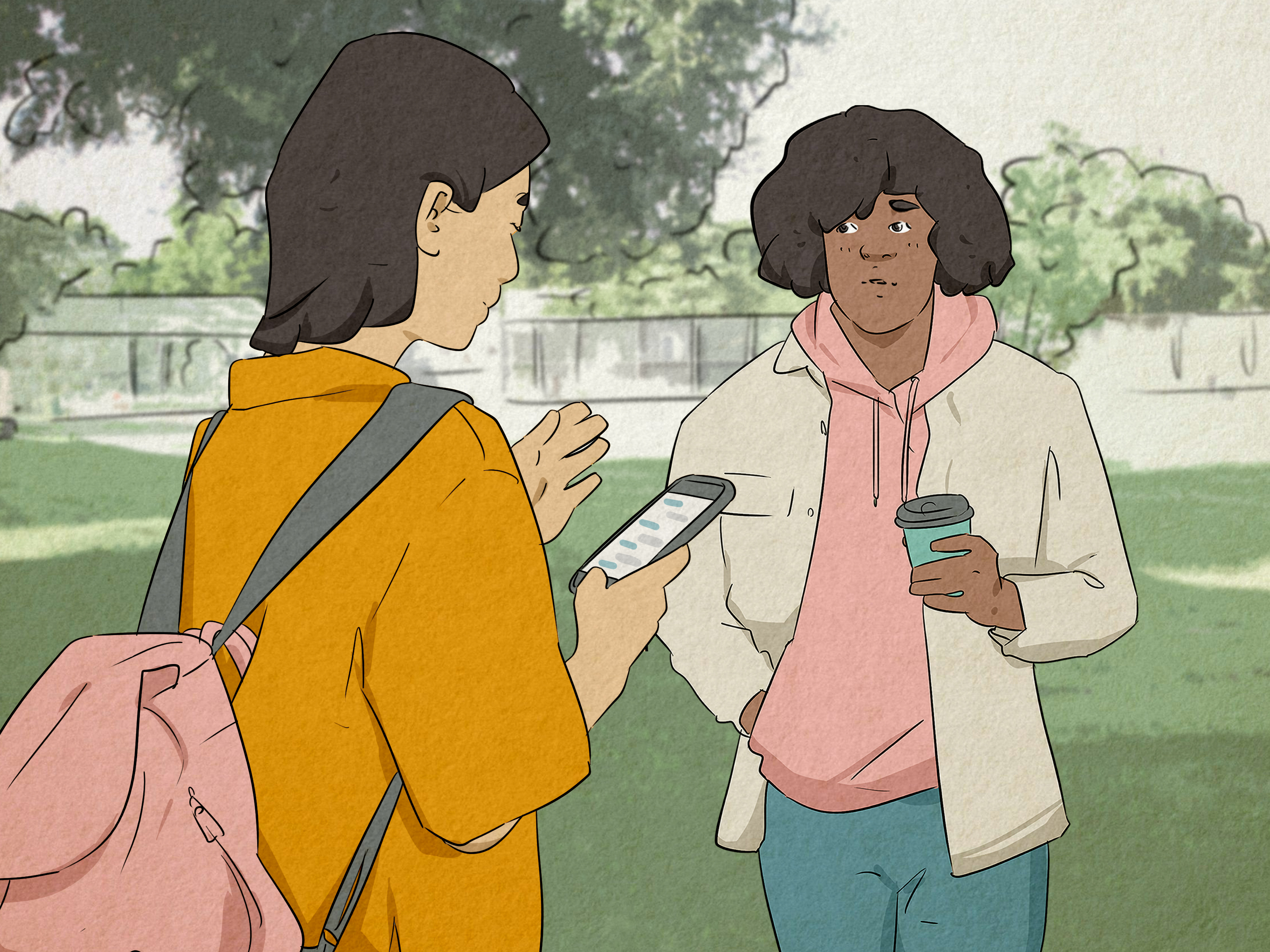
Ever stare at your phone like it owes you money, rereading a “K” and trying to decode whether it means
“Okay,” “I’m busy,” or “I’m joining a monastery”? Yeah. Same.
Here’s the truth: “texting like you don’t care” isn’t about being cold, cruel, or playing mind games.
It’s about sounding calm, confident, and unbotheredthe way you actually want to feel.
Think: low-drama energy, clear intent, and no emotional sprinting.
Below are 11 simple, practical ways to text like you have a life (because you do), plus examples you can
steal immediatelyno cringe, no robot scripts, no “alpha texting strategy” nonsense.
What “Text Like You Don’t Care” Actually Means
Let’s define it before we unleash it into the world.
“Texting like you don’t care” should mean: you’re not frantic, not needy, not trying to control someone’s response,
and not turning a normal delay into a courtroom drama.
It does not mean: ignoring people to punish them, playing hot-and-cold, or trying to “win” a relationship.
If your goal is to seem indifferent so someone feels insecure… that’s not confidence. That’s chaos with Wi-Fi.
The best vibe is secure: you communicate clearly, you don’t chase validation, and you don’t melt down
if someone takes time to respond.
1) Slow your roll (don’t race the reply)
If you respond in 4 seconds every time, you can accidentally project “I’ve been waiting here… breathing into a paper bag.”
Calm texting is about pacingnot pretending you’re too cool, just not acting like the message is a five-alarm fire.
Try this instead
- If you’re free, reply when you’re freejust don’t interrupt your life like a texting butler.
- If you’re busy, reply when you’re done. No apology essay required.
Example texts
- Instead of: “SORRY I WAS IN THE SHOWER!!!”
- Send: “Just saw thiswhat’s up?”
- Instead of: “I CAN TALK NOW IF YOU WANT” (at 11:58 PM)
- Send: “I’m around for a bit if you want to catch up.”
The point: your phone is a tool, not a cardiology test.
2) Keep messages short-ishand stop auditioning for a novel
Long texts aren’t automatically “too much,” but in early dating or casual conversations, giant paragraphs can feel intense.
If you want to sound unbothered, aim for messages that are easy to read and easy to reply to.
A simple rule
One main idea per text. If you have three topics, pick one now, save the others for later.
Example
- Instead of: “So I was thinking about what you said and then I remembered that one time…” (17 lines)
- Send: “That story you told was hilarious. How’d it end?”
Short doesn’t mean boring. It means you’re not dumping your entire emotional Dropbox in one upload.
3) Ask one question at a time
Nothing screams “I care a normal amount!” like a text that reads like a customer support ticket:
“How was your day? Did you eat? Are you mad? Are we okay? Are you alive?”
One question is confident. Five questions is a pop quiz nobody studied for.
Example
- Instead of: “What are you doing tonight and where and with who and what time?”
- Send: “What’s your evening look like?”
You’ll get better answersand you won’t sound like you’re building a case file.
4) Use neutral punctuation (and don’t weaponize ellipses)
Texting tone is fragile. A period can feel final. Ellipses can feel passive-aggressive. ALL CAPS can feel like you’re yelling from a helicopter.
If your goal is “unbothered,” keep your punctuation clean and neutral.
Easy upgrades
- Use periods normally in longer messages, but consider skipping them for one-word replies if you’re trying to sound casual.
- Avoid “…” unless you truly mean “I’m thinking” (and not “I’m judging”).
- One exclamation point is friendly. Seven is a haunted house.
Example
- Instead of: “Sure…”
- Send: “Sure” or “Yep” or “Works for me.”
5) Skip the emotional play-by-play
If you want to text like you don’t care (a normal amount), stop narrating every feeling in real time.
Save the deeper stuff for a real conversationespecially if you’re upset, anxious, or spiraling.
What this looks like
- Don’t: “I feel weird and I don’t know why but maybe it’s because you took 2 hours to reply…”
- Do: “All goodbeen a busy day. Want to talk later?”
This isn’t about suppressing emotions. It’s about choosing the right channel. Some feelings deserve a voice, not a keypad.
6) Don’t double-text like you’re chasing a runaway balloon
Double-texting isn’t a crime. But rapid-fire follow-ups can look anxiousespecially if they’re trying to force a response.
Calm energy gives space.
When a follow-up is totally fine
- You’re clarifying plans: “Running 10 mins late.”
- You forgot something important: “Alsoaddress is 14 Oak St.”
- You’re checking in after a reasonable gap: “Hey! How’s your week going?”
When it starts looking needy
- Multiple “??”
- “Hello?”
- “Did I do something?” (after 20 minutes)
Example follow-up that sounds chill
“No rushjust wanted to make sure you saw this.”
7) Match energy without mimicking
If they text casually, don’t respond like you’re writing a formal apology to the entire state of Ohio.
Matching energy means aligning with their vibewithout becoming a carbon copy.
How to do it
- If they keep it brief, keep it brief.
- If they use emojis lightly, you can too.
- If they’re playful, be playfulwithout trying too hard.
Example
- Them: “lol that’s wild”
- You: “Right?? I’m still recovering 😂”
You’re aiming for “comfortable,” not “performed.”
8) Avoid over-explaining (confidence doesn’t come with footnotes)
Over-explaining often reads like you’re seeking permission. Confident texting is clear and simple.
You can be polite without presenting a PowerPoint.
Examples
- Instead of: “I’m sorry I didn’t reply sooner, I was in a meeting and then traffic and then”
- Send: “Just got out of a meetingwhat’s up?”
- Instead of: “If you want, and it’s totally okay if you don’t, we could maybe…”
- Send: “Want to grab coffee this weekend?”
Clear invites are attractive. Wobbly maybes feel like you’re already bracing for rejection.
9) Use emojis like seasoning, not the whole meal
Emojis can soften tone and add warmth. But if every message looks like a slot machine win, you may come off overly eager.
A calm emoji here and there says “friendly,” not “frantic.”
A good middle ground
- Use one emoji to clarify tone: “Sounds good 🙂”
- Use one emoji to show playfulness: “You’re trouble 😂”
- Skip emoji storms: “OMG 😭😭😭💀💀💀😂😂😂” (save it for group chats)
If you’re unsure, default to fewer. You can always add more once the vibe is established.
10) Turn off read receipts if they make you spiral
Read receipts can turn perfectly normal human behavior into a reality show:
“They read it… and didn’t respond… and now I have invented 47 possible endings.”
If you want to text like you don’t care, remove the “minute-by-minute scoreboard.”
Calm communication thrives when you’re not tracking micro-signals.
Bonus: read receipts can create awkwardness
- You feel pressured to reply instantly because they’ll see you saw it.
- They feel rejected if you don’t reply quickly.
- It can trigger misunderstandings for no good reason.
Turning them off isn’t shady. It’s stress management.
11) Know when to switch to a call (or real conversation)
Texting is great for quick check-ins, flirting, and logistics. But it’s not always great for tone, nuance, or emotional topics.
If you keep going in circles, upgrade the channel.
Signs it’s time to stop texting
- You’re misreading tone (“Was that sarcastic?” “Are they mad?”)
- You’re discussing something important (feelings, conflict, expectations)
- The conversation keeps getting colder or weirder
Simple pivot lines
- “This might be easier to talk throughfree for a quick call?”
- “I don’t want to misread this over text. Can we chat later?”
Ironically, one of the best ways to text like you don’t care is to not rely on texting for everything.
Quick Cheat Sheet: Calm, Confident Texting
- Be brief: one idea per message.
- Be clear: ask direct questions, make direct plans.
- Be kind: neutral tone beats passive-aggression every time.
- Be busy: not as a tacticbecause your life matters.
- Be secure: you don’t need constant proof someone likes you.
Conclusion
Texting like you don’t care isn’t about acting uninterested. It’s about acting unshaken.
You communicate, you don’t chase. You’re warm, but not frantic. You’re present, but not possessed by your phone.
Start with one change: shorten your texts, slow your follow-ups, or turn off the features that make you overthink.
The goal isn’t to “win” textingit’s to feel steady while doing it.
Experiences: What This Looks Like in Real Life (500+ Words)
The first time I tried “texting like I didn’t care,” I misunderstood the assignment and went full iceberg.
You know the type: one-word replies, zero warmth, the emotional availability of a parking meter. It didn’t make me
look confidentit made me look like I was mad at civilization. The better lesson came later: calm texting isn’t cold texting.
It’s just not panicked texting.
One of the most common moments people run into is the “seen” spiral. You send something normal like,
“Want to do dinner this week?” Then the message gets read, and suddenly your brain becomes a conspiracy podcast.
“They saw it at 7:04. It’s 7:19. That’s 15 minutes. That’s basically a breakup.” What helped was removing the scoreboard:
read receipts off, notifications quiet, and a personal rule that I don’t re-open the same thread to stare at it.
If a response comes, great. If not, I’m still a functioning human with snacks and electricity.
Another real-life change: I stopped sending “apology novels.” I used to explain every delay like I was defending myself
in court: “Sorry, I was in the shower and then my coworker asked a question and then traffic and then…”
The day I switched to “Just saw thiswhat’s up?” my whole vibe improved. People didn’t need my timeline.
They needed my presence. Calm texts don’t over-justify. They simply arrive.
Then there’s the double-text dilemma. I used to treat double-texting like stepping on a sidewalk crack.
But real life isn’t a rulebookit’s context. If you’re coordinating plans, double-texting is normal.
If you’re trying to pull attention out of someone who isn’t responding, that’s where you start feeling anxious.
A personal experience that stuck with me was a time I sent three follow-ups in one hour because I felt uncertain.
The problem wasn’t the lack of responseit was my need to resolve discomfort instantly. Now, if I feel the urge to
“check again,” I pause, do something else for 20 minutes, and decide whether the second message adds value or just adds pressure.
Tone is another sneaky one. I learned the hard way that punctuation can change the temperature of a text.
“Sure.” can feel like a door closing, while “Sure” feels neutral, and “Sure!” feels friendly.
I’m not saying you have to type like a golden retriever, but small tweaks matter when you want to sound relaxed.
My favorite move is to write the first draft, then remove one unnecessary intensifier (like “literally” or “soooo”)
and one unnecessary apology. Instant calm.
The biggest experience-based takeaway: the most “I don’t care” energy comes from actually having things you care about.
When your day has substancework, friends, hobbies, rest, goalsyour texts naturally become less clingy.
You stop treating every reply as proof of your worth. And that’s the whole point: confident texting is a symptom of
a steady inner life, not a trick you perform with your thumbs.