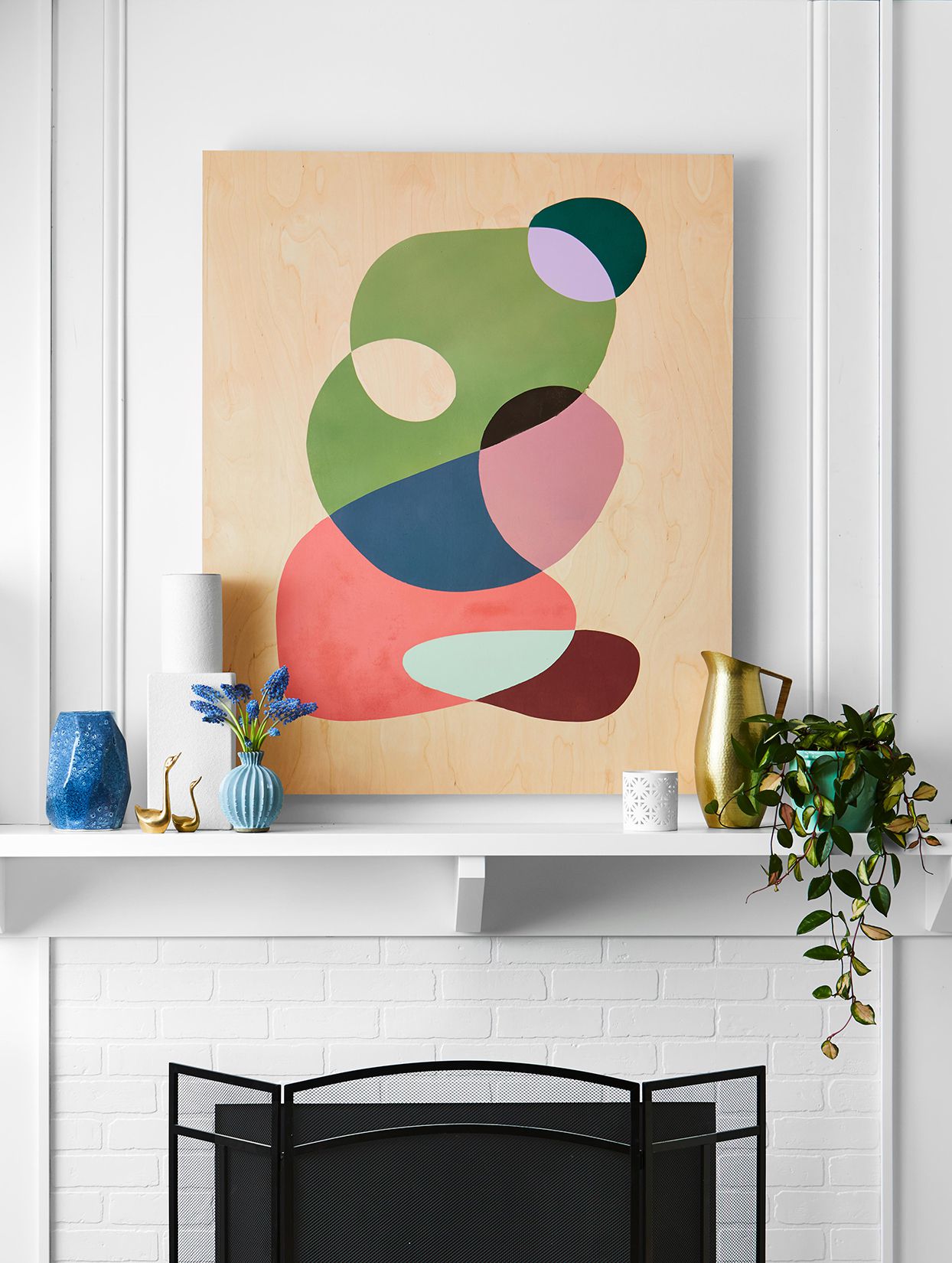
If your walls are looking a little… emotionally unavailable (blank, distant, giving “rental beige” vibes), you don’t need a five-figure art budget to fix it.
You need creativity, a tiny bit of patience, and the bravery to walk into a craft store without blacking out at the frame aisle.
The good news: DIY wall art can look custom, modern, and expensivewhile still costing less than a fancy brunch.
This guide walks you through 15 budget-friendly DIY wall art projects with specific materials, step-by-step approaches, and styling tipsplus a longer “real-life lessons” section at the end to help you dodge the most common DIY regrets (like “Why did I choose glitter?”).
Before You Start: How to Make Cheap DIY Look Custom
1) Choose a “room palette,” not a “random paint panic”
The fastest way to make DIY art look intentional is to repeat 2–4 colors already in your room (pillows, rug, curtains). If you want variety, keep at least one consistent element: a shared color, matching frame finish, or similar visual weight.
2) Think scale first, details second
A small piece on a big wall looks like it got lost on the way to another house. For large spaces, go oversized (one big statement) or grouped (gallery wall). When in doubt, bigger reads “designer.”
3) Upgrade the edges
Clean edges are what separate “cute DIY” from “museum gift shop in a good way.” Use painter’s tape, a sharp utility blade, a metal ruler, and a moment of self-control.
15 DIY Wall Art Projects for Stylish Looks on a Budget
1) Painter’s Tape Geometric Canvas
Style: modern, Scandinavian, bold-and-clean. Cost: $10–$25.
- Blank canvas or thrifted framed print (paint over it)
- Painter’s tape, acrylic paint, foam brush
- Tape off triangles/stripes in a pattern (keep it simple).
- Paint 2–3 colors; let dry fully.
- Peel tape slowly (the most satisfying part of adulthood).
Pro tip: Add one “unexpected” neutral (warm white, clay, charcoal) so it doesn’t look like a kindergarten flag design.
2) Oversized Drop-Cloth Canvas (Big Art, Small Budget)
Style: large-scale minimalist. Cost: $20–$45.
- Painter’s drop cloth, 1×2 wood strips, staples, acrylic paint
- Build a simple wood frame (or reuse a large stretcher frame).
- Stretch and staple the drop cloth tight.
- Paint abstract swirls, blocks, or a single bold shape.
Why it works: Size creates impact. Minimal shapes keep it looking intentional, not accidental.
3) “Half-Painted” Thrift Store Art Hack
Style: contemporary, colorblock. Cost: $8–$25.
- Cheap framed art from thrift store, acrylic paint, painter’s tape
- Pick any boring print with a decent frame.
- Tape a clean line across the art (half, third, diagonalyour call).
- Paint one section in a modern solid color and let dry.
Pro tip: Choose a paint color that matches a major room element (sofa, rug, or bedding) for instant cohesion.
4) Pressed Botanical Prints (Nature, But Make It Neat)
Style: cottagecore to modern organic. Cost: $12–$35.
- Leaves/flowers, heavy book, cardstock, floating frame or simple frame
- Press botanicals in a heavy book for 1–2 weeks.
- Arrange on cardstock and secure with tiny adhesive dots.
- Frame with plenty of “breathing space.”
Make it look expensive: Repeat the same frame style in a set of 3.
5) Frame Fabric or Wallpaper Panels
Style: tailored, designer-inspired. Cost: $10–$40.
- Remnant fabric/wallpaper, foam board, frames, staple gun or tape
- Wrap fabric tightly over foam board; secure on back.
- Pop it into a frame (no glass if the fabric is thick).
- Hang as a grid for a “custom textile art” look.
Pro tip: Linen, ticking stripe, or subtle plaid reads upscale fast.
6) Textured Plaster-Style Art (Without Real Plaster Drama)
Style: modern organic, “expensive neutral.” Cost: $15–$35.
- Joint compound/spackle, putty knife, canvas/board, paint
- Spread compound in waves, arcs, or simple raised shapes.
- Let dry completely (don’t rushcracking is not the aesthetic today).
- Paint monochrome (warm white, sand, soft gray) for a gallery look.
Optional: Dry-brush the texture with a slightly darker tone for depth.
7) Geometric Wood Wall Art (Scrap Wood Glow-Up)
Style: modern, warm, architectural. Cost: $20–$60.
- Thin plywood or scrap wood pieces, wood glue, stain/paint
- Cut strips/triangles and dry-fit your pattern first.
- Glue pieces to a backing board.
- Stain for warmth or paint for bold contrast.
Pro tip: A limited palette (two stains or one stain + one paint) keeps it crisp.
8) String Art Word or Simple Shape
Style: playful, retro, kid-friendly. Cost: $12–$30.
- Wood board, small nails, embroidery floss/yarn, printed template
- Print a word/shape template and tape it to the board.
- Hammer nails along the outline.
- Wrap string in crisscross patterns until it looks full.
Make it chic: Use one color of thread on a stained wood background.
9) Paper Cutout Collage (Easy, Bold, Surprisingly Cool)
Style: modern, graphic, artsy. Cost: $5–$20.
- Colored paper, scissors, glue stick, frames
- Cut organic blobs, arches, or simple geometric forms.
- Arrange on white or black backing for contrast.
- Frame as a diptych or trio.
Pro tip: Matte paper looks more “design studio” than glossy cardstock.
10) DIY Photo Ledge for Rotating Art
Style: flexible, renter-friendly. Cost: $15–$45.
- Picture ledge (DIY with molding or buy inexpensive), screws/anchors
- Install a slim ledge at eye level.
- Layer frames, small art, postcards, and a tiny plant.
- Swap seasonally without rehanging everything.
Why it’s smart: One install, infinite refreshes.
11) Framed Map or “Meaningful Place” Print
Style: personal, travel-inspired. Cost: $8–$35.
- Old map, scrapbook paper, or printed street grid, frame
- Choose a place with a story: hometown, first trip, dream city.
- Mount neatly on backing (use spray adhesive carefully).
- Frame with a wide mat for a polished finish.
Pro tip: Monochrome maps look modern; vintage maps feel cozy and classic.
12) Book Page or Sheet Music Gallery (Vintage Without the Price Tag)
Style: classic, academia, cozy. Cost: $10–$30.
- Old book pages or sheet music, frames, optional mat board
- Pick pages with attractive typography or illustrations.
- Use matching frames for a cohesive series.
- Hang in a grid for a “collected” look.
Keep it respectful: Use damaged or thrifted booksnot family heirlooms you’ll miss later.
13) No-Sew Yarn Wall Hanging (Soft Texture, Big Impact)
Style: boho, cozy, layered. Cost: $10–$30.
- Wood dowel or driftwood, yarn, scissors
- Cut yarn strands in varying lengths.
- Lark’s head knot them onto the dowel.
- Trim into a V-shape, curve, or blunt line.
Make it modern: Stick to neutrals + one accent color (like rust or sage).
14) Rope Sunburst Mirror (Instant Statement Piece)
Style: coastal to eclectic. Cost: $20–$55.
- Simple round mirror, jute rope or thick cord, hot glue
- Glue rope in rays around the mirror edge.
- Build layers for dimension (short rays, then longer rays).
- Seal with clear spray if shedding drives you nuts.
Pro tip: A mirror doubles as “art” and light-bouncergreat for small rooms.
15) Shadow Box “Found Object” Art (Your Life, Curated)
Style: eclectic, conversation-starting. Cost: $15–$50.
- Shadow box frame, small meaningful items (keys, shells, pins), glue dots
- Pick a theme: travel, family, hobbies, thrift treasures.
- Lay out before sticking anything down.
- Anchor larger items first, then fill gaps with smaller pieces.
Looks designer because: Texture + storytelling beats generic prints every time.
How to Hang and Arrange Your DIY Art Like a Pro (Without 27 Nail Holes)
Plan the layout on the floor first
For a gallery wall, place frames on the floor and shuffle until it looks balanced. Take a quick photo so you remember the arrangement once you start hanging.
Use paper templates (your future self will thank you)
Trace each frame on kraft paper or printer paper, mark the hanger spot, and tape templates to the wall. Step back, adjust, and only then commit with nails or hooks.
Try damage-minimizing tricks
Removable hanging strips can work well for lighter frames. For traditional hanging, small picture hooks are often sturdier than a single nail. If alignment stresses you out, use a level (or a laser level if you’re fancy).
Budget Cheats That Make DIY Wall Art Look High-End
- Repeat frames: Matching frames create a “gallery” vibe even if the art styles vary.
- Add a mat: A simple white mat instantly elevates prints, photos, and maps.
- Go matte: Matte finishes and muted tones often read more expensive than shiny finishes.
- Thrift + repaint: Spray paint mismatched frames one color (black, warm white, or bronze) for instant cohesion.
- Limit the chaos: One statement technique per walltexture OR bright color OR wild patternkeeps it stylish instead of “craft explosion.”
Common DIY Wall Art Mistakes (And How to Avoid Them)
Making everything too small
If your wall is large, your art should be largeor grouped. A single 8×10 floating alone on a big wall is basically a visual whisper.
Too many unrelated colors
More colors = harder to style. Keep your DIY palette consistent and let texture do the talking.
Rushing drying time
Paint and texture mediums need real drying time. If you stack, hang, or frame too soon, you’ll get dents, smears, or the dreaded “sticky forever” finish.
DIY Wall Art Experiences and Lessons (Extra 500+ Words)
If you’ve ever started a DIY wall art project feeling like a confident home-design hero and ended it feeling like a confused raccoon holding a glue gun, you’re not alone. A lot of “budget wall decor” success comes down to a few practical experiences that most DIYers only learn after at least one mildly chaotic weekend.
One big lesson: your first draft is allowed to be ugly. Not “ugly forever,” just “ugly while it’s becoming art.” When you’re painting abstract shapes or spreading texture paste, the middle stage can look like a mistake. That’s normal. The trick is to work in layerslet the first layer dry, then add a second pass with more intention. A wavy line becomes stylish when it’s balanced by negative space. Texture looks expensive when it’s deliberate and not covering every square inch like frosting on a panic cake.
Another real-world thing: lighting changes everything. Art that looks perfect at noon can look flat at night if it’s too similar to your wall color. That’s why contrast matters. If your wall is white, make sure your piece has either darker values (charcoal, navy) or real texture that catches shadows. If your wall is dark, lighter art pops, but you’ll want a frame that doesn’t disappear. When people say “this looks high-end,” they’re often reacting to contrast, scale, and how the piece reads from across the roomnot whether you used “professional” supplies.
Budget projects also teach you the sacred power of test scraps. Before painting a whole canvas, test your colors on a piece of cardboard. Before gluing fabric into a frame, check how it looks under the room’s lighting. Before committing to a gallery wall, tape paper outlines to the wall and live with them for a day. That little pause saves you from the most common DIY heartbreak: finishing a project and realizing it’s the wrong size or vibe.
And let’s talk about frames, because frames are the suit your art wears to the party. Even the simplest DIYlike cut-paper collage or thrifted book pagescan look “gallery-ready” with a clean frame and a mat. In real life, the best budget move is often buying frames secondhand and making them match. Spray paint is basically the great unifier: it turns a random mix of gold, oak, and “mystery brown” into a cohesive set that looks planned. If you want your wall to look curated, consistent frame color is a shortcut.
Finally, the most helpful experience-based tip: aim for “intentional,” not “perfect.” Handmade art has charm because it’s yours. A slightly imperfect brushstroke can still look stylish if the overall composition feels balanced. If a line wobbles, echo it somewhere else so it looks like a design choice. If you hate a piece after it dries, don’t throw it outflip it and paint the other side, or paint over it with a new colorblock layout. DIY wall art isn’t a one-shot performance; it’s a flexible system for making your home feel more like you, without paying designer prices.
Conclusion
Stylish walls don’t require expensive artworkthey require a smart plan. Pick a palette, choose the right scale, and use clean finishing details (frames, mats, crisp edges).
Whether you go geometric, textured, vintage, or cozy-boho, these DIY wall art projects can turn blank space into personalitywithout turning your bank account into a sad story.