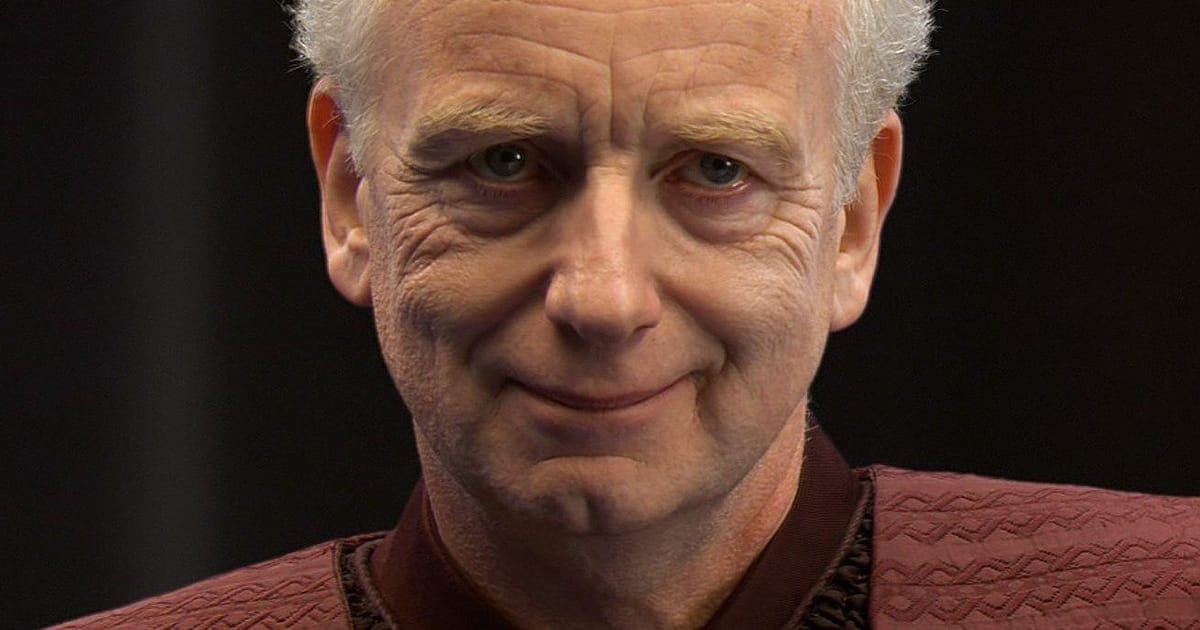
Emperor Palpatine is the kind of villain who doesn’t just enter a roomhe audits it, reorganizes it, then convinces everyone the room begged for tyranny.
He’s also the rare Star Wars character who can be read three ways at once: a Sith mastermind, a political animal, and a drama kid who discovered the Force and never emotionally recovered.
That mix is why Palpatine headcanons practically write themselves.
Quick note before we sharpen our ceremonial Senate pens: these are headcanonsfan-made interpretations meant to feel believable alongside established Star Wars lore.
They’re built on real character behaviors (the scheming, the patience, the manipulation), then gently nudged into “yeah, honestly, he would” territory.
If you’ve ever watched him smile mid-sentence like he’s getting paid per betrayal, you’re already halfway here.
Why Palpatine Is Peak Headcanon Material
In canon, Palpatine’s power isn’t just lightning and intimidationit’s timing, patience, and the ability to weaponize systems.
He’s equally comfortable delivering a soothing speech to a worried Senate and orchestrating galaxy-scale suffering with a calm, satisfied grin.
That split life makes him especially fun to interpret: every polite gesture can be read as a calculation, every pause as a trap being assembled.
The best Emperor Palpatine headcanons don’t contradict what we see. They fill in the blanks: how he manages the “double life,” what he does when no one’s watching,
and what kind of person wakes up and thinks, “Today feels like a great day to restructure democracy.”
The 15 Headcanons
1) He rehearsed “kindly old Chancellor” in the mirror like it was opening night.
Palpatine didn’t just become trustworthyhe performed trustworthy. He practiced the gentle cadence, the sympathetic head tilt, the “I’m just here to help” smile.
In his mind, politics and theater were the same sport, except in politics the critics disappear mysteriously and the reviews are mandatory.
Also, you cannot convince me he didn’t workshop that “concerned mentor” tone for Anakin like it was a monologue with a standing ovation at the end.
2) He kept separate “Palpatine” and “Sidious” wardrobes… in multiple buildings.
A double life requires logistics. Headcanon says he had emergency robes stashed everywhere: Senate office, private apartment, hidden safe rooms, maybe a tasteful little closet in his shuttle.
Not because he was paranoid (he was), but because it’s hard to be a “phantom menace” if you’re stuck wearing the same outfit as a public servant who attends committee meetings.
Also: the man loved a dramatic hood. Convenience is the true dark side.
3) He loved bureaucracy because it’s violence that doesn’t leave fingerprints.
Palpatine’s favorite weapon wasn’t a lightsaberit was “procedure.” He understood that paperwork can crush lives slowly, cleanly, and with everyone believing it was unavoidable.
If the Force is about influence, bureaucracy is just influence with stamps.
He didn’t fear red tape; he was red tape, and he probably enjoyed watching idealists burn out while he called it “governance.”
4) He collected political gossip the way Sith collect artifacts.
Palpatine’s real hobby wasn’t dark ritualsit was leverage. Headcanon: he knew which senators were in debt, who had secret romances, who plagiarized speeches,
and who couldn’t be trusted alone with a charitable donation box.
He didn’t always use the information immediately. He cataloged it, aged it like fine wine, and waited for the perfect moment to “helpfully” bring it up.
Sith holocrons? Cute. Try a scandal with receipts.
5) He used “public fear” like a Force power.
Palpatine understood that fear makes people beg for strong leadership, even when that leadership is a man who laughs like a haunted accordion.
Headcanon says he tracked public anxiety like a meteorologist tracks storms: not to avoid them, but to steer into them.
Every crisis became a campaign ad. Every emergency became a permission slip.
If the galaxy panicked, Palpatine considered it “excellent progress.”
6) He treated the Rule of Two like a business modeland a prank.
The Sith Rule of Two is supposed to be strict: one master, one apprentice. Palpatine, however, gives off “policy applies to others” energy.
Headcanon: he treated apprentices like departments. One handles fieldwork, one handles politics, one handles “if I need plausible deniability, you’re it.”
He wasn’t breaking traditionhe was “innovating.” (That’s what villains call cheating when they have a PowerPoint.)
7) He didn’t “trust” Vaderhe studied him like a lab experiment.
Palpatine never trusted anyone. He simply measured them. With Vader, he had the galaxy’s most powerful emotional weather system: grief, rage, loyalty, pride, shame.
Headcanon: Palpatine tested boundaries constantlysmall humiliations, strategic praise, calculated isolationto see what Vader would tolerate and what would ignite him.
Not because Palpatine feared Vader, but because he enjoyed owning the variables.
8) He had a petty streak a mile wide, and it fueled half his decisions.
Under the grand strategy, Palpatine is still a person who enjoys winning in a personal way.
Headcanon: if a senator corrected his grammar once, that senator’s career “mysteriously” plateaued.
If a Jedi didn’t treat him with enough deference, he remembered the slight for years.
The Empire wasn’t built solely on ideologyit was also built on a long list of grudges that Palpatine considered “personal development.”
9) He kept a private archive of Jedi philosophy… as a comedy collection.
Palpatine knew his enemies. Headcanon says he read Jedi texts the way some people read reviews of themselves online: with fascination and a little spite.
He quoted Jedi principles in private, not respectfully, but as punchlines“attachment is forbidden,” he’d mutter, while actively manipulating someone’s attachments for fun.
The Jedi weren’t a mystery to him. They were an instruction manual for exploitation.
10) He loved opera because it’s the only art form dramatic enough for him.
Palpatine talking about tragedy, power, and “unnatural abilities” in a fancy opera box is not subtle character writingit’s a confession delivered with velvet seating.
Headcanon: he adored high art because it let him feel refined while thinking monstrous thoughts.
He probably had strong opinions about vocal technique.
And yes, he absolutely enjoyed that the most important emotional turning point for Anakin happened in a place with chandeliers and orchestration.
11) He slept in micro-naps and called it “meditation.”
Running a Republic-turned-Empire is exhausting… unless you’re fueled by dark side ambition and spite.
Headcanon: Palpatine didn’t sleep normally. He took short, deliberate reststen minutes here, twenty therethen emerged acting refreshed and terrifying.
He told aides it was “discipline.” Secretly, it was because long sleep is vulnerable, and Palpatine treats vulnerability like a contagious disease.
12) He tested his own evil laugh in different rooms for acoustics.
Listen, the man’s laugh is a brand. Headcanon says he practiced it. Not just in generalspecifically.
Senate chamber laugh: restrained, pleased, “I’m a statesman.”
Throne room laugh: theatrical, unhinged, “I am the final boss.”
Private quarters laugh: quiet, satisfied, like someone who just got away with stealing your parking spot and your government.
13) He maintained “Plan Z” dossiers for everyone who ever annoyed him.
Palpatine didn’t make one planhe made a folder.
Headcanon: for every ally, he had two backup options and one “if you betray me, here’s how you vanish” contingency.
And he wasn’t above drafting a Plan Z for someone who was simply inconvenient.
His desk probably looked organized, but spiritually it was a spiderweb made of notes labeled “use later.”
14) He didn’t want to rule foreverhe wanted to be inevitable.
Being Emperor is status. Being the unavoidable center of galactic history is immortality.
Headcanon: Palpatine’s deepest obsession wasn’t just living longerit was ensuring every major conflict traced back to him.
If people said “the galaxy changed because of Palpatine,” that was better than a statue.
It’s why he loved shaping systems and successors: not just control, but authorship.
15) He believed redemption arcs were propaganda for people without ambition.
Palpatine doesn’t do remorse. He doesn’t even roleplay remorse. Headcanon: he viewed redemption stories as sentimental narratives the weak tell themselves
to make the universe feel fair.
He understood hope as a tactical resourceuseful when manipulating othersbut personally, he believed in one moral principle:
power is proof. Everything else is decoration.
Neat Conclusion: Why These Headcanons “Click”
The reason Emperor Palpatine headcanons work so well is that canon already gives us a villain who lives on subtext.
He’s a Sith Lord who thrives in daylight, a politician who treats fear like currency, and a manipulator who enjoys the performance almost as much as the outcome.
These 15 headcanons don’t rewrite who he isthey sharpen the edges we already see: the obsession with control, the flair for drama, the patience of someone who thinks in decades.
And if you’re now imagining him labeling a binder “Democracy, To Be Deleted,” congratulations.
You’re thinking like Palpatineplease use your powers for good. Or at least for memes.
Reader Experiences: of Palpatine-Fandom “Yeah, That Tracks” Moments
If you’ve ever fallen into a Star Wars rewatch spiral, you know the feeling: the first time you see Palpatine, he’s “a villain.”
The second time, he’s “a villain with a plan.” The third time, you start noticing the tiny choiceshow he pauses before answering, how he frames every situation
so someone else feels like the decision was theirs, how his politeness lands just a little too precisely. That’s where headcanons begin: not in inventing a new Palpatine,
but in paying attention to the one already on-screen and asking, “What’s he doing in the margins?”
A common fandom experience is realizing that Palpatine’s scariest skill isn’t Force lightningit’s narrative control. Watch any scene where he’s “helping.”
He rarely issues direct commands at first. Instead, he offers a story: the Jedi are hypocrites, the Senate is incompetent, the galaxy needs order, you deserve recognition,
you’re the only one who understands. If you’ve ever worked in an office with someone who turns every meeting into a subtle power grab, you know exactly why these headcanons
about rehearsed personas and dossier-building feel so believable. We’ve met lesser versions of this man at the level of “team lead,” and it was still exhausting.
Another familiar moment: the Palpatine laugh. Fans don’t just hear it; they react to it like a jump-scare that also happens to be hilarious.
It’s theatrical, confident, and weirdly celebratorylike he’s delighted that the universe is matching his internal playlist.
That’s why “he practices his laugh” headcanons are so sticky: they don’t come from nowhere. They come from noticing that his villainy has presentation.
Even if you’re not deep into Star Wars lore, you can sense that Palpatine enjoys the performance of power.
Headcanons also become a social sport. People swap them the way friends swap favorite lines: quick, punchy, and immediately testable.
You read one“he keeps multiple emergency robes”and suddenly you’re mentally checking every scene for evidence.
You share one“he loves bureaucracy”and someone responds with a dozen examples of how systems can be weaponized without a single blaster fired.
It’s not just fun; it’s a way of engaging with Star Wars themes (fear, authority, corruption, temptation) without turning the conversation into a lecture.
If you want to make these headcanons part of your own viewing experience, try a simple game: pick one headcanon and “watch for it.”
See how often Palpatine redirects responsibility, how he makes others feel special, how he waits to reveal information until it’s maximally useful.
The more you look, the more the character feels coherent across eras of the sagabecause his core pattern is consistent:
he doesn’t just seize power. He convinces everyone else to hand it to him, then thanks them for their cooperation.
That’s the kind of villain who makes headcanons feel less like inventions and more like… obvious footnotes.