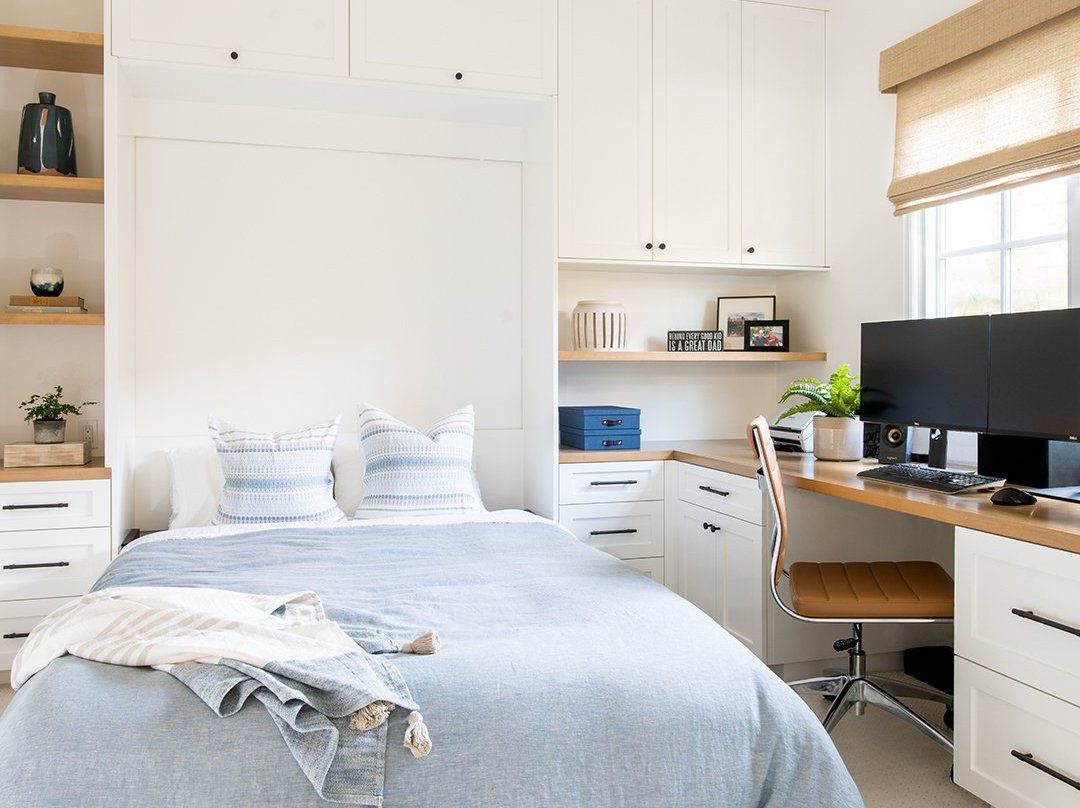
If your home doesn’t have room for a full-blown office with dramatic double doors and a chair that whispers “I invoice people,” a built-in desk may be your smartest move. These hardworking setups turn awkward corners, empty walls, shallow closets, underused landings, and even kitchen nooks into polished work zones that feel intentional instead of improvised. And unlike a random desk plopped into a room like it lost a bet, a built-in desk can blend right into your cabinetry, shelves, or architecture.
That’s the real beauty of built-in desk ideas: they can be scaled up or down for nearly any home. In a studio apartment, a slim floating desktop may be enough for a laptop and coffee. In a family home, a wall-to-wall built-in with drawers, upper cabinets, and bookcases can handle bills, homework, crafts, and the occasional emergency printer meltdown. The best designs don’t just save space. They make space work harder.
Below, you’ll find 22 built-in desk ideas for spaces of any size, plus practical tips for making them look custom, stay organized, and feel good to use every day. Whether you want a modern floating workstation, a cozy office nook, or a multitasking family command center, there’s something here that can fit your square footage and your sanity.
Why Built-In Desks Work So Well
A built-in desk earns its keep because it solves two design problems at once: function and clutter. It creates a dedicated place to work, study, or pay bills while also using vertical storage, hidden cabinetry, and tight dimensions more efficiently than most freestanding desks. That’s especially helpful in small homes, guest rooms, bedrooms, and open-plan living spaces where every inch needs to justify itself.
Built-ins also look calmer. Because they’re designed to fit the room, they tend to feel cleaner, more architectural, and less like office furniture wandered into your living room wearing sensible shoes. Match the finish to your trim or cabinetry, add shelves above, and suddenly the setup feels like part of the home instead of a temporary survival tactic.
22 Built-In Desk Ideas for Spaces of Any Size
1. Try a floating built-in desk in a narrow nook
A floating desk is one of the easiest ways to create a built-in look in a tight space. Mount a slim desktop between two walls or above a base cabinet, then skip bulky legs to keep the floor open. It feels lighter, looks cleaner, and gives tiny hallways or bedroom alcoves a chance to become useful.
2. Frame a desk with shelves for a mini library feel
If you love the look of custom millwork, flank your desk with bookshelves. This creates a built-in home office that feels polished and cozy without needing an entire room. It also gives you vertical storage for books, baskets, framed art, and those office supplies that multiply when no one is looking.
3. Convert a closet into a built-in desk station
The classic “cloffice” is popular for a reason. Remove the rod, add a desktop wall to wall, install a few upper shelves, and you’ve got a compact workstation that can disappear behind doors when the workday ends. It’s ideal for guest rooms, apartments, or homes where your office must occasionally pretend it doesn’t exist.
4. Build a desk between wardrobes in a bedroom
A desk installed between two tall wardrobes creates a custom look that feels straight out of a high-end built-in furniture catalog. This setup works beautifully in bedrooms because the storage towers visually frame the workspace while offering room for files, linens, accessories, or tech gear.
5. Use an under-window desk to borrow natural light
If you have a low window in a bedroom, living room, or landing, place the built-in desk directly beneath it. The daylight helps the space feel larger and more pleasant to use, and the view gives your eyes a break from screens. Just keep upper shelving to a minimum so you don’t block the light that makes the whole setup shine.
6. Add a wall-to-wall desktop for a family work zone
Sometimes one built-in desk is good, and two are better. A long wall-to-wall surface can support two workstations, making it perfect for siblings, spouses, or a homework-and-bills combo setup. Add drawers or cubbies underneath so everyone has their own zone and fewer arguments about whose charger is whose.
7. Tuck a built-in desk into the kitchen perimeter
A kitchen desk can still be incredibly useful when designed with intention. Instead of an old-fashioned catch-all nook, think of it as a compact household command center. Match the desk to the kitchen cabinetry, add file drawers for mail and school papers, and include charging outlets so it earns its footprint.
8. Create a built-in desk under the stairs
The space beneath a staircase is often wasted or turned into a closet for things you forgot you owned. A built-in desk can make that footprint productive. Go for a custom countertop, a chair that slides fully underneath, and tailored shelving that follows the slope for a design that feels clever rather than crammed.
9. Use a corner built-in desk to soften awkward layouts
Awkward corners can either collect dust or become surprisingly efficient workstations. An L-shaped built-in desk wraps the corner and gives you separate zones for a computer, paperwork, or creative projects. It’s especially practical in small bedrooms, bonus rooms, and shared spaces where a standard desk would feel too blunt.
10. Pair a slim desktop with upper cabinets
If you need storage but don’t want your built-in desk to sprawl across the room, build upward. A narrow desktop combined with upper cabinets or shelves creates a compact workstation with serious utility. This is a strong choice for kitchens, mudrooms, and small home office nooks where floor space is limited.
11. Blend the desk into a living room built-in wall
In open-plan homes, a built-in desk works best when it looks like part of the furniture. Integrate it into a wall of media cabinets or bookshelves so the workspace feels intentional and visually quiet. The trick is consistency: same finish, same trim details, same overall rhythm.
12. Make it disappear with cabinet-style doors
If visual clutter stresses you out, consider a built-in desk hidden behind fold-back or pocket-style doors. When open, you have a fully functional workspace. When closed, it reads like storage cabinetry. It’s a particularly smart option in dining rooms, guest rooms, or living spaces where “office vibes” are not invited after 6 p.m.
13. Add drawer bases for a furniture-like built-in
A desktop spanning two drawer units gives you the best of both worlds: easy storage and a tailored look. This approach works well for DIY built-in desks because the base units do much of the heavy lifting. Finish with a custom top and trim, and the whole thing looks far more expensive than it has any right to.
14. Choose a built-in desk with open cubbies for kids
For homework stations or craft corners, open cubbies can be easier than deep drawers. Kids can grab supplies quickly, and you can assign each child a basket or bin. It’s practical, flexible, and slightly lowers the odds of someone claiming they “literally couldn’t find a pencil” while standing next to 47 pencils.
15. Turn a landing into a compact office nook
An upstairs landing, hallway end, or extra-wide passage can often hold a slim built-in desk. Because the footprint is shallow, it doesn’t interrupt circulation, but it still creates a purposeful place to work. Add a sconce, a small corkboard, and one shelf above for a setup that feels complete.
16. Build around a window seat and desk combo
If your room includes a bump-out or wide window niche, consider combining a desk with surrounding built-ins or a nearby bench seat. This creates a flexible zone for reading, laptop work, and storage. It feels custom and charming, like a space designed for actual human life instead of just square footage math.
17. Go monochromatic to make a small desk disappear
Painting the built-in desk, shelves, and wall the same color is a great trick for small spaces. It reduces contrast, makes the setup feel quieter, and helps bulky storage blend in. This works especially well with soft whites, warm grays, muted greens, or deep blues if you want something moodier.
18. Use a wood top to warm up painted cabinetry
If you want your built-in desk to feel less like office millwork and more like furniture, add a stained wood top. The contrast brings warmth and texture, especially when paired with white or painted cabinetry. It’s a classic solution that works in farmhouse, transitional, and modern spaces alike.
19. Add a printer cabinet and hidden charging zone
A built-in desk looks beautiful in photos, but the real magic is what it hides. Dedicate one cabinet to a printer, router, or charging station so cords and equipment stay contained. A few cable grommets and an outlet inside the cabinet can save you from the dreaded spaghetti pile of mystery wires.
20. Make a guest room desk double as a vanity
In a guest room, a built-in desk can do double duty as a vanity or dressing table. Add a mirror, a comfortable chair, and a top drawer with dividers, and the piece becomes more flexible without taking up more room. Multifunctionality is the superhero cape of small-space design.
21. Use a fold-down built-in for ultra-tight spaces
If square footage is truly scarce, a fold-down built-in desk can give you a work surface only when you need it. Pair it with shallow shelving above or beside it for a streamlined setup. This is especially useful in studio apartments, tiny bedrooms, and multi-use rooms that can’t spare permanent floor depth.
22. Finish with lighting, art, and a real chair
Even the smartest built-in desk can feel unfinished if it looks too utilitarian. Add task lighting, one or two personal accessories, and a chair that’s actually comfortable. Good design is not just about fitting the desk into the room. It’s about making the room one you’ll want to sit in for more than twelve dramatic minutes.
How to Make a Built-In Desk Feel Custom, Not Cramped
The secret to a successful built-in desk isn’t just the layout. It’s the details. Keep the work surface deep enough for the tasks you actually do, and make sure your chair can tuck in cleanly. Use vertical storage thoughtfully rather than packing every inch with shelving. A little breathing room keeps the setup from feeling heavy.
Think about what should stay visible and what should disappear. Open shelves are great for books, pretty boxes, and decor. Closed cabinets are better for routers, paper, backup cords, and all the practical chaos that supports modern life. If possible, include layered lighting: natural light by day, a sconce or task lamp by night, and ambient lighting nearby so the nook doesn’t feel like a cave.
Material choices matter too. Matching the built-in desk to nearby trim or cabinetry helps it feel architectural, while contrast can make it a focal point. Paint can unify a small workspace, but wood brings warmth and personality. Either way, the goal is the same: a desk that belongs to the room rather than barging into it.
Real-Life Experiences With Built-In Desks: What Actually Works
Built-in desks look fantastic in inspiration photos, but living with one teaches you things Pinterest never warns you about. The first lesson is that location matters as much as style. A gorgeous built-in desk in the wrong place becomes an expensive decorative shelf for unopened mail. In one small house, a desk tucked into a bedroom alcove looked perfect on day one. By week three, it became clear that the angle of the afternoon sun turned the screen into a mirror and every video call into a squinting contest. The fix wasn’t dramatic. A woven shade, a task lamp, and moving the monitor slightly off-center made the setup far more comfortable.
The second lesson is that shallow desks are a gift right up until they are not. In a hallway nook, a slim built-in worked beautifully for laptop tasks, calendars, and quick emails. It kept traffic flowing and made an otherwise dead zone useful. But once paperwork, a printer, and a giant mug entered the chat, the surface felt tiny. That experience made one truth very clear: be honest about how you work. If your desk life includes dual monitors, piles of samples, or a permanent stack of “important papers” that follow you like a loyal pet, give yourself more depth and storage from the start.
Another real-world surprise is how much a chair changes the entire experience. People tend to obsess over millwork details, paint colors, and shelf styling, then grab whatever chair happens to exist in the house. That is a design plot twist with a sore-back ending. A built-in desk may look streamlined, but it still needs a chair with the right height, support, and ability to slide in smoothly. One compact office nook felt awkward for months until the bulky chair was swapped for a slimmer upholstered one. Suddenly, the desk looked better and worked better.
Storage habits also reveal themselves fast. Open shelves seem charming until every visible surface becomes a museum of chargers, sticky notes, half-used candles, and receipts from stores you do not even remember visiting. The best built-in desks usually mix open and closed storage. A few display shelves keep the space personal, but drawers and cabinets do the heavy lifting. In practice, that balance keeps the desk from looking busy even when life is, in fact, very busy.
Perhaps the most useful lesson is that built-in desks shine brightest when they serve more than one purpose. A desk in a guest room that doubles as a vanity gets used far more often. A living room built-in that holds a laptop by day and displays books and lamps by night feels less like an office takeover. A kitchen workstation that manages mail, devices, and school forms becomes a household MVP. In real homes, flexibility wins every time.
So yes, built-in desk ideas are beautiful. But the most successful ones are not just photogenic. They are thoughtful, forgiving, and tailored to everyday routines. The best design compliment is not “Wow, that looks expensive.” It is “Wait, why doesn’t my house have that?”
Final Thoughts
The best built-in desk ideas don’t depend on having a huge house or a dedicated office. They depend on noticing opportunity: a shallow niche, an empty wall, a spare closet, a window corner, an underused landing. When designed well, a built-in desk can add storage, improve flow, hide visual clutter, and make your home feel more intentional from top to bottom.
Whether you want a sleek floating workstation, a cozy office nook with shelves, or a hardworking family desk built into cabinetry, the smartest solution is the one that fits your routines as well as your room. In other words, choose the desk that matches your life, not just your mood board. Your future self, your back, and your rogue charging cables will all be grateful.