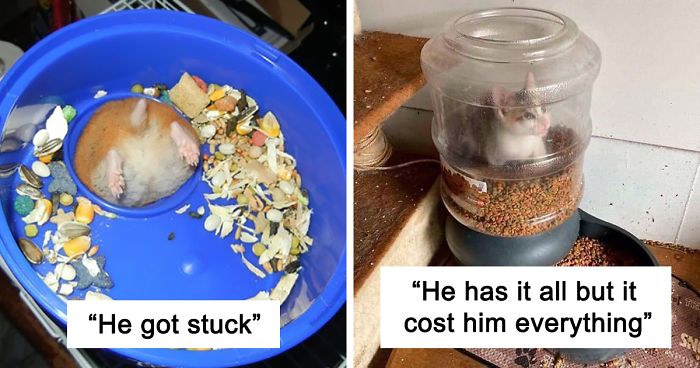
There are two ways to look at an animal stuck in a snack container. The first is, “Well, that is the most raccoon thing I’ve ever seen.” The second is, “Oh no, this is how a goofy photo turns into a rescue call.” Both reactions are fair. Hungry animals are excellent problem-solvers right up until a milkshake cup, baited hook, plastic ring, or leftover bone reminds them that the modern food chain comes with terrible packaging.
This is what makes stories about animals getting stuck while eating so oddly memorable. They can seem funny for a second, then deeply sad the next. Wildlife doesn’t understand wrappers, bucket handles, fishing line, balloon ribbon, or the deeply cursed engineering of a chip bag opening. Pets are not much better. A dog sees a corn cob and thinks “treasure.” A cat sees roast string and thinks “delicious chaos noodle.” The result is often the same: a snack mission goes sideways, and everybody involved suddenly wishes the animal had picked a normal berry bush instead.
Under the jokes, there is a serious pattern. Animal welfare groups, park agencies, veterinarians, and marine conservation experts all warn about the same basic problem: human food and human trash change animal behavior, create choking and blockage risks, and can turn normal foraging into injury, entanglement, or starvation. So yes, the title is clicky. But the lesson behind it is real.
Why animals get stuck while eating in the first place
Food is powerful, and hunger beats caution
Wild animals are opportunists. If calories are easy to reach, they will investigate. That is why raccoons raid bins, gulls patrol parking lots, deer nose around feeders, and bears treat coolers like gift baskets. They are not being foolish. They are being efficient. The trouble starts when easy calories come packaged inside cups, cans, rings, nets, wrappers, and bins designed for human convenience, not animal safety.
Packaging is the real villain
Much of the danger does not come from the food itself but from what comes attached to it. A creature licking residue from a container can get its head wedged. A bird chasing bait can end up with a hook and line. A sea turtle following the shape of prey can swallow plastic instead. Even tiny materials matter. Ribbon, twine, and string can act like saws inside the digestive tract. A snack becomes a blockage, and a joke becomes an emergency.
Pets repeat the same story indoors
Domestic animals run their own version of this disaster movie. Dogs gulp bones, cobs, and giant chew chunks. Cats swallow string, ribbon, and tinsel with the confidence of tiny surgeons who never went to school. Small pets dive into treat bags with total commitment and almost no long-term planning. Different species, same headline: “Thought this was food; turns out it was consequences.”
39 poor animals who ran out of luck and got stuck while eating
Backyard and neighborhood snack bandits
- The raccoon in the milkshake cup. Classic. One ambitious face-first dive for the last sweet drop, and suddenly the world is dark, sticky, and alarmingly portable.
- The skunk in the soup can. It started as leftover smell. It ended as a metal helmet nobody wanted to remove at close range.
- The squirrel in the peanut butter jar. Tiny acrobat, huge confidence, zero exit strategy.
- The opossum in the cat-food station. Outdoor pet food is basically an engraved dinner invitation for every nighttime visitor in the zip code.
- The fox in the takeout carton. One bold sniff, one narrow opening, one very undignified retreat attempt.
- The coyote in the chip bag. Crumbs are powerful motivators, especially when the bag smells like salt and bad decisions.
- The bear in the campground cooler. To a hungry bear, a latched food box is not a warning. It is a challenge round.
- The deer in the grain bucket. Deer can look graceful in a meadow and completely ridiculous with a feed container stuck over the muzzle.
- The crow with the sandwich wrapper. Smart birds are still birds, which means they occasionally lose arguments with shiny garbage.
- The pigeon in the café trash can. Urban survival skills are impressive until a bird hops in for fries and discovers vertical exits are not its best subject.
- The goat through the fence for lettuce. Goats treat boundaries as philosophical suggestions, especially when fresh greens are involved.
- The horse in the feed tub. Horses can turn a calm breakfast into a full production if the grain smells better than the container design performs.
- The cow in the feeder rails. One extra stretch for the sweeter mouthful, and suddenly the neck is in negotiations with geometry.
- The pig wedged at the trough. Pigs are brilliant, determined, and occasionally willing to body-check their way toward leftovers with astonishing optimism.
- The donkey in the treat bucket. Cute face, long nose, terrible understanding of container depth.
- The barn cat with its head in the feed sack. Because apparently the bag opening looked roomy right up until the turning-around part.
- The dog and the corn cob. This is the household classic: swallowed fast, lodged hard, and regretted by everyone with a car key and a veterinarian’s number.
- The dog and the leftover chicken bones. Crunchy to the dog, dangerous to the throat and gut, and never worth the “but he loved it” argument.
- The dog with the giant chew chunk. Some dogs do not chew treats so much as attempt to inhale them with personal pride.
- The dog that swallowed the greasy sock. It smelled like dinner, so in dog logic it became dinner.
- The cat and the roast twine. A little lick turns into a swallow, and a little swallow turns into a very expensive afternoon.
- The cat and the ribbon. Festive décor to humans, suspiciously noodle-like prey to a cat.
- The cat with the fishhook and bait. Fishing tackle was never intended to be a tasting menu.
- The ferret in the kibble bag. Ferrets are furry chaos in tube form, so naturally one eventually dives too deep into the pantry prize.
- The rabbit in the pellet container. Headfirst enthusiasm meets hard plastic reality.
- The guinea pig in the hay bag opening. One second of aggressive snacking, and the bag says, “Actually, you live here now.”
- The gull in the chip bag. If beaches had a mascot for bad food choices, it would probably be a gull wearing branded packaging like a shame bonnet.
- The pelican chasing bait into fishing line. Big beak, fast dive, and one human mistake waiting in the water.
- The heron hooked while stealing a fish. Elegant posture does not protect against monofilament nonsense.
- The duck pecking through a plastic ring. A few scraps around litter can become a neck or bill trap before anybody notices.
- The sea turtle that mistook a plastic bag for prey. In the water, shape and motion can be enough to make trash look edible.
- The turtle tangled in a mesh produce bag. Food scent says “come here,” the mesh says “terrible idea.”
- The fish inside a discarded glove. A tiny, tragic example of how even light litter can become a fatal trap.
- The seal pup with plastic in its stomach. Not all “stuck” is visible from the outside. Sometimes the blockage is hidden and devastating.
- The albatross chick fed bottle caps and lighters. Parents skim the surface for food and accidentally bring home a nightmare wrapped as a meal.
- The whale that swallowed a hard plastic shard. One floating piece of trash can interrupt feeding in an animal built to cross entire oceans.
- The sperm whale carrying nets and rope in its stomach. Few images sum up modern marine risk better than a giant predator slowly starved by debris.
- The dolphin in ghost gear while chasing fish. The meal is real, the net is abandoned, and the danger is immediate.
- The crab in the soda can. Crabs are brave little scavengers until a metal cylinder turns “free snack” into “rescue puzzle.”
What these 39 unlucky moments actually teach us
The big lesson is not that animals are silly. It is that they are adaptive. They follow scent, calories, motion, and opportunity. Humans create more of all four than any forest, shoreline, or field naturally would. A wrapper with food residue is basically a flashing sign. A baited hook is a trap disguised as lunch. A bag drifting in the surf can mimic prey well enough to fool creatures that evolved for entirely different oceans.
There is also a second lesson that matters even more for SEO-minded readers publishing content around animal stories: the most useful version of a viral animal post is the one that moves from amusement to understanding. Readers may click for the headline, but they stay when the article explains why these things happen and how to prevent them. That turns a disposable list into helpful content.
Prevention is not glamorous, but it works. Secure trash. Do not leave pet food outside. Store campground food correctly. Pick up fishing line. Avoid loose ribbon, string, and bones around pets. Clean up beach litter even when it is not yours. In other words, the best rescue story is the one that never needs to happen.
Experiences from the real world: when a “funny” animal story stops being funny
Anyone who has ever worked around animals knows the emotional whiplash these situations create. At first, there is often a burst of nervous laughter. A raccoon waddling around with a cup on its face looks absurd in the way only raccoons can. A dog strutting proudly after stealing a corn cob seems almost triumphant. A gull trying to act natural with a chip bag wrapped around its head looks like it has lost a bet with the entire beach. Then the second thought arrives, and the mood changes. The animal is not being goofy on purpose. It is frightened, uncomfortable, and in real danger.
That is why so many rescuers, pet owners, and park staff tell similar stories. The first challenge is getting close enough to help without making things worse. Wildlife panics when cornered. Pets, even beloved ones, can snap when choking or in pain. Birds twist into fishing line. Mammals bolt deeper into brush with containers still attached. Marine animals carry the damage out of sight, where the injury becomes harder to detect and far harder to fix. What looks like a simple “unstick the animal” problem often turns into a delicate, high-stress rescue.
Veterinary experiences are their own category of heartbreak. A pet owner may not even witness the moment something was swallowed. Instead, the story begins with vomiting, drooling, lethargy, pacing, or refusal to eat. By the time the clinic finds a cob, ribbon, bone fragment, or string, the household is replaying every meal, every holiday decoration, every moment the dog was suspiciously quiet. That is one reason these cases are memorable: they are so ordinary. The danger is often hidden in everyday life, not some dramatic wilderness scene.
People who live near parks, beaches, or wooded neighborhoods describe another common experience: realizing how much human convenience leaks into animal habitat. Trash day becomes wildlife buffet night. Outdoor pet food becomes a neighborhood rumor with paws. One careless picnic, one dropped bait container, one balloon ribbon, one food wrapper blown from a car, and suddenly the local ecosystem is hosting a ridiculous and preventable emergency. It does not take a landfill-sized mess. It takes a single object in the wrong place.
There is also a strange tenderness in these stories. People stop traffic for ducklings. They call rehabbers for gulls. They crawl under porches for opossums. They spend shocking amounts of money removing things their pets absolutely should not have swallowed. The same species that created most of the problem is also full of people willing to fix it. That tension sits at the center of almost every animal-rescue story online: humans made the mess, but humans also showed up with towels, carriers, bolt cutters, gloves, boats, leashes, pliers, and a very determined attitude.
Maybe that is why these stories stick with readers. They are weird, relatable, and a little embarrassing for everyone involved. They remind us that hunger is universal, packaging is often awful, and nature now has to navigate far too much human clutter. Most of all, they leave us with a practical truth: the smallest acts of prevention matter. Put the trash away. Cut the line. Pick up the wrapper. Hide the ribbon. Skip the bones. Respect the wild appetite, but do not tempt it with our leftovers and our laziness.
Conclusion
“39 Poor Animals Who Ran Out Of Luck And Got Stuck While Eating” may sound like pure internet chaos, but the real takeaway is surprisingly useful. Animals get stuck while eating because they are doing what animals do: following food. The unlucky part usually begins when that food is mixed with human waste, dangerous packaging, or unsafe leftovers. So laugh gently if you must; some of these scenarios are undeniably ridiculous. But finish the laugh by doing one smart thing today. Secure a bin. Clean a beach. Put away ribbon. Feed pets indoors. That is how you turn a headline into a habit, and a habit into fewer rescue stories.