Fruit flies have a special talent: they can appear out of nowhere, throw a tiny kitchen rave around your bananas,
and then act offended when you evict them. If you’ve ever waved a dish towel like you’re conducting an orchestra
(and still lost the battle), you’re not alone.
The good news: you don’t need fancy gadgets to win. You need two things:
(1) a trap that exploits what fruit flies love (fermenting smells), and
(2) a quick cleanup plan that removes what fruit flies need (moist, sugary, decaying gunk).
When you combine both, you can cut the swarm down fastoften in a couple of days.
Why Fruit Flies Multiply So Fast (and Why Traps Work)
Fruit flies are drawn to fermentationthink overripe fruit, sticky juice residue, recycling cans with a little wine
or soda left at the bottom, or the mystery sludge hiding in a drain or garbage disposal. Many common “baits” work
because they smell like fermenting food: apple cider vinegar, wine, beer, fruit juice, and sweet, yeasty mixtures.
They also develop quickly. Under typical indoor conditions, fruit flies can go from egg to adult in roughly
8–10 days. That’s why “I’ll deal with it later” turns into “Why are they doing laps around my face?” pretty fast.
Traps don’t magically erase the problem if breeding sites remainbut they’re excellent at reducing the adult
population while you remove the gunk where eggs and larvae grow. Most effective DIY traps follow one of two
strategies:
- Drown trap: attract flies to a liquid, then prevent escape (or break surface tension so they sink).
- Funnel trap: guide flies into a container through a narrow opening that’s hard to find on the way out.
Before You Set Any Trap: Do This 10-Minute “Cut Off the Buffet” Sweep
This is the unglamorous partbut it’s the part that actually ends the infestation. University extension guidance
consistently points to sanitation as the primary control: remove breeding sites and food sources, then trap the
remaining adults.
Fast checklist
- Put produce away: refrigerate ripe fruit, or store it in sealed containers/bags if it must stay out.
- Empty and rinse recycling: rinse cans/bottles before they sit indoors.
- Take out trash and compost: don’t let scraps “marinate” on the counter.
- Wipe sticky zones: around fruit bowls, under small appliances, and anywhere juice dripped and dried.
- Check sneaky offenders: a forgotten onion or potato can basically be a fruit fly resort.
- Give drains a quick attention: fruit flies can hang around sinks and drains if there’s organic buildup.
Safety note (the grown-up version): if you’re using boiling water for drains, handle it carefully to avoid burns.
Also, don’t mix household chemicals (especially bleach with other cleaners). If you’re not sure, stick with hot
water and gentle scrubbing.
Trap #1: The Classic Apple Cider Vinegar + Dish Soap Trap (Fastest “Emergency Trap”)
This is the trap people recommend because it’s simple, cheap, and weirdly satisfying. Apple cider vinegar smells
like fermentation, which pulls fruit flies in. A drop of dish soap helps by breaking surface tension so the flies
sink instead of standing on the liquid like tiny circus performers.
Best for
- Quick knockdown when you suddenly notice fruit flies
- Kitchens where the flies hover near fruit bowls, trash, or recycling
What you need
- A small jar, cup, or juice glass
- Apple cider vinegar
- Unscented dish soap (any brand works)
- Plastic wrap and a rubber band (or a snug lid)
- A toothpick or fork
How to make it
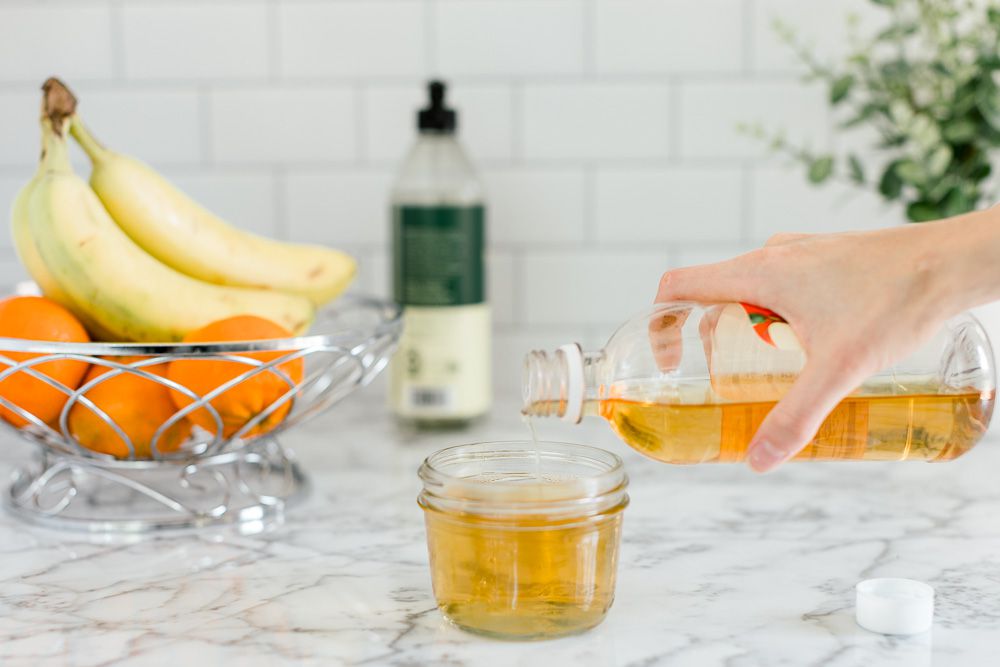
- Pour about 1/2 inch to 1 inch of apple cider vinegar into your container.
- Add 1–2 small drops of dish soap. Swirl gentlyno need to create a foam party.
- Cover tightly with plastic wrap and secure with a rubber band.
- Poke several tiny holes in the plastic wrap so flies can enter but have trouble escaping.
- Place the trap where you see the most activity (near fruit, trash, or recycling).
Pro tips (the difference between “meh” and “wow”)
- Tiny holes beat big holes: make them just large enough for fruit flies to get in.
- Use more traps, not more vinegar: 2–4 small traps around hotspots often outperform one giant trap.
- Refresh every day or two: especially if it gets diluted or starts looking… suspicious.
- Place strategically: one near the sink, one near the fruit, one near recycling if that’s a hotspot.
Common mistake
Leaving the vinegar trap out but keeping the breeding source (rotting produce, sticky recycling, gunky drain).
That’s like setting up a bouncer while keeping the nightclub open.
Trap #2: The Paper Cone Funnel Jar (Low-Mess, Classic “They Can’t Find the Exit” Trap)
This one is wonderfully low-tech: fruit flies follow the scent into the jar through a narrow funnel opening, then
struggle to escape because the exit is small and hard to locate from inside. Extension guidance often describes
paper cone/funnel traps baited with vinegar, juice, or a small piece of rotting fruit.
Best for
- People who dislike the “open bowl of vinegar” vibe
- Households where you want a reusable, tidy trap
What you need
- A jar (mason jar, jelly jar, baby food jaranything with an opening)
- Paper (printer paper works)
- Tape
- Bait: a splash of juice, a bit of overripe fruit, or apple cider vinegar
How to make it
- Add your bait to the jar (a small amount is enough).
- Roll paper into a cone with a small opening at the tip.
- Tape the cone so it keeps its shape.
- Insert the cone into the jar opening with the narrow tip pointing down.
- Use tape around the rim if needed to seal gaps (escape routes are the enemy).
- Place near the problem area and replace bait daily if it loses its smell.
Why it works
Fruit flies love fermenting odors. The funnel is basically a one-way door: easy to enter, annoying to exit. The jar
walls also keep the scent concentrated, which helps lure more flies in over time.
Pro tips
- Pair it with fruit bait for stubborn infestations: rotting fruit can be a strong lure.
- Use multiple jars: put one near fruit and one near recycling.
- Refresh bait regularly: some traps work best with daily refreshes, especially fruit or juice.
Optional (humane-ish) twist
Some guidance suggests you can carry the trap outside and release them by removing the coneif that’s your style.
If you prefer to dispose, you can submerge the trap contents in hot soapy water and rinse afterward.
Trap #3: The “Reusable Cup with Side Holes” Trap (Cleaner, Harder to Spill)
If you’ve ever knocked over an open bowl trap and briefly considered moving into the woods, this one is for you.
A lidded container with entry holes creates a tidy drowning trap that’s harder to tip. Extension guidance for
vinegar fly monitoring often uses a lidded cup or container with small holes near the top and a vinegar + soap
solution inside.
Best for
- Homes with kids or pets (less spill risk)
- People who want a trap they can refresh without rebuilding
What you need
- A plastic cup or container with a lid (yogurt tub, deli container, reusable snack container)
- Apple cider vinegar
- Dish soap (unscented is ideal)
- A way to make small holes (scissors tip, skewer, or a heated tool handled carefully by an adult)
How to make it
- Make several small holes around the upper side of the container (near the top, below the lid line).
- Add 1–2 inches of apple cider vinegar to the bottom.
- Add one small drop of dish soap and swirl gently.
- Snap the lid on.
- Place in a shady corner of the counter near the hotspot.
Why it works
The vinegar draws flies in, the holes make entry easy, and the lid + container shape makes it harder for them to
escape. The soap helps ensure they drown instead of floating.
Pro tips
- Keep holes small: large holes make escape easier.
- Refresh weekly (or sooner): if the vinegar gets cloudy, diluted, or the trap stops catching.
- Don’t over-soap: too much soap can reduce the vinegar smell.
Trap #4: The Yeast + Sugar “Fermentation” Trap (When Vinegar Isn’t Cutting It)
If vinegar traps aren’t pulling enough flies, a fermentation-style lure can help. Yeast + sugar in warm water
creates a fermenting smell and releases carbon dioxide, which can be attractive to vinegar/fruit flies because it
mimics the “something’s fermenting over here” signal. Extension sources describe yeast-and-sugar baits as
effective attractants, with the practical caveat that they can be messy and should be refreshed regularly.
Best for
- Stubborn infestations
- Kitchens where vinegar traps catch only a few flies
- People who don’t mind a slightly “bread dough” smell for a few days
What you need
- A jar or bottle
- Warm water (not boiling)
- Active dry yeast
- Sugar
- A funnel setup (paper cone or plastic wrap with holes)
How to make it
- Pour warm water into the jar (enough to cover the bottom well).
- Stir in a little sugar (about a teaspoon is plenty for a small jar).
- Add yeast (a small amount goes a long way). Let it sit and start bubbling.
- Use a paper cone funnel or plastic wrap with small holes to create a one-way entrance.
- Set near the hotspot and refresh the mixture as it slows down.
Pro tips
- Give it time: it often becomes more attractive after it starts actively fermenting (bubbling).
- Contain the mess: place the jar on a small plate or in a shallow tray just in case.
- Refresh weekly (or sooner): yeast baits can get slimy; replace before it becomes an experiment.
How to Place Traps for Maximum Catch (Without Turning Your Kitchen Into a Science Fair)
Placement matters as much as the recipe. Fruit flies follow scent trails to hotspots, and they often “commute”
between food sources and resting zones. Try this simple placement plan:
- One trap near fruit: especially if fruit sits on the counter.
- One trap near trash/recycling: because residue in bottles/cans is a common magnet.
- One trap near the sink/drain: especially if you see flies hovering there.
If you only place one trap, put it where you see the highest trafficusually near fruit or the trash/recycling
zone, not in the middle of an empty counter like it’s waiting for a bus.
What If Your “Fruit Flies” Are Actually Something Else?
This matters because drain flies and fungus gnats can look similar at a glance, and the best fix changes depending
on the pest. Fruit flies are often found around fermenting fruit, sweet liquids, recycling containers, and kitchen
trash.
- If they hover near drains: you may have organic buildup inside plumbing that needs cleaning.
- If they hover around houseplants: fungus gnats may be involved (different strategy: soil moisture control and sticky cards).
- If they look fuzzy/moth-like: drain flies are more likely (focus on drain cleaning and removing slime).
The Prevention Plan: Keep Fruit Flies From Coming Back
Once you’re catching fewer flies, lock it in with prevention. Extension guidance commonly recommends these habits:
store produce properly, keep counters and sinks clean, rinse recyclables, and watch hidden moisture/food sources.
Simple habits that work
- Refrigerate ripe produce or keep it sealed.
- Rinse bottles/cans before recycling.
- Don’t let wet rags sit (mops, sponges, dishcloths can be enough moisture + residue).
- Clean the garbage disposal and the drain area regularly.
Drain quick-care (especially if flies cluster near the sink)
Some guidance suggests flushing drains with boiling water to help break down organic matter. A baking soda + vinegar
treatment is also commonly recommended, followed by hot waterthough long-term success depends on removing the
buildup, not just deodorizing.
The main idea: drains shouldn’t smell like a smoothie bar. Keep them clean, and you remove one of the easiest
breeding/feeding zones.
Real-World Experiences: What People Usually Learn After Trying DIY Fruit Fly Traps (Extra Notes)
Let’s talk about the part nobody mentions until you’re already three traps deep and muttering, “Why do they like
my kitchen more than I do?” These are common, very normal experiences people run into when dealing with fruit
flies at homeand how to turn each one into a win.
Experience #1: “My trap works… but I still see flies.”
This is the most common moment of despair. You check your vinegar trap andyes!it’s catching flies. But the
swarm still seems alive and well. What’s happening is usually math: fruit flies develop quickly, and if there’s a
breeding source, new adults can keep emerging while you’re trapping the old ones. The fix is boring but powerful:
do a second sweep for breeding sites. People often discover one of these “hidden buffets”:
- A recycling bin with sticky cans or a bottle with a little wine/beer left in the bottom
- A compost container that’s “temporarily” sitting on the counter
- A forgotten potato/onion that turned into a soft science project
- A drain/garbage disposal that smells faintly like fermented fruit
Once that hidden source is removed, traps suddenly seem to “work overnight,” even though the trap was never the
only solution.
Experience #2: “I used vinegar but caught almost nothing.”
This happens, and it’s not because you’re cursed. It’s usually one of three issues:
- Wrong location: the trap is far from the hotspot, so flies never really “find” it.
- Too much airflow: a strong fan, open window, or vent disperses scent, so the lure is weaker.
- Stronger lure nearby: the real buffet is more appealing than your trap (like sweet residue in recycling).
The fix is to move the trap right next to where they gather and add a second trap. Many households find that
2–4 small traps placed in the right spots outperform one “perfect” trap placed in the wrong spot.
Experience #3: “The paper funnel trap caught a ton, but it looks… gross.”
Welcome to the club. Funnel traps are effective because they concentrate scent, but fruit or juice bait can turn
messy fast. A simple tweak people love is rotating two funnel jars: one in use, one being cleaned/refreshed.
Another trick is switching to a less messy bait (like vinegar) once the population drops. The big idea: you don’t
need the strongest-smelling bait foreverjust long enough to break the cycle.
Experience #4: “I’m pretty sure they’re coming from the sink.”
Many people notice fruit-fly-like bugs clustering near the sink or drain and assume the trap “isn’t working.”
In reality, you can have two things happening at once: adult fruit flies caught by traps, and additional flies
hanging around a drain area because organic buildup is providing food and moisture. In homes where drains are part
of the issue, people often report the biggest improvement after they:
- Scrubbed the drain opening and disposal splash guard (where gunk hides)
- Flushed the drain with hot water regularly for several days
- Kept the sink dry overnight (flies love moisture)
This is also when people realize they might be seeing drain flies rather than fruit flies. If the insects look
fuzzy or moth-like, the strategy shifts hard toward drain cleaning.
Experience #5: “The yeast trap is weirdly effective… and weirdly smelly.”
Yep. Fermentation traps can be strong, especially when vinegar traps underperform. The tradeoff is odor and
mess potential. People who love yeast traps usually do two things: keep the mixture small (so it’s not a big
stinky batch) and set it inside a shallow tray. Once the fly numbers drop, they often switch back to a vinegar
trap (lower odor) or stop trapping entirely if sanitation is solid.
The overall pattern is reassuring: most fruit fly battles aren’t won by a single magical trap. They’re won by a
one-two punchremove the breeding source, then run 2–4 traps for a few days to mop up the remaining adults.
After that, fruit flies usually stop feeling like a permanent roommate and go back to being a rare nuisance.
Conclusion
If you remember only one thing, make it this: DIY fruit fly traps work best when they’re paired with sanitation.
Put away produce, rinse recycling, take out trash, and clean the gunky zonesthen deploy 2–4 small traps where the
flies actually hang out. Start with the apple cider vinegar + dish soap trap for speed, use the paper funnel jar
for a tidy one-way entrance, switch to a lidded hole-entry trap to avoid spills, and bring out the yeast trap when
you need a stronger “fermentation signal.” With a little strategy (and a tiny bit of petty determination), your
kitchen can go back to being a place for snacksnot insects.