If you’ve ever looked at a dog and thought, “That’s a loaf of bread with legs,” or stared at a cat and wondered,
“Why does your face look like it was painted by two different artists who never spoke to each other?”congrats.
You’ve met the magic (and occasional chaos) of genetics in action.
Some pets are born with naturally occurring mutations; others are the result of humans selecting certain traits over many generations.
Either way, the result can be downright unforgettable: swirly coats, folded ears, extra toes, tiny legs, bright blue eyes, hairlessness,
dramatic patterns, and more. The key thing to remember: a distinctive look can be harmless… or it can come with health tradeoffs.
So we’re doing this the fun way and the responsible wayenjoying the “wow” factor while keeping welfare in the conversation.
How Genes Create Those “Wait, Is That Real?” Pet Looks
A pet’s appearance is shaped by a mix of genes that influence pigment, hair type, bone growth, cartilage formation, and development in the womb.
Sometimes a single genetic change has a big visual impact (think: folded ears or merle patterning). Other times, many genes stack together to create
a look (like very flat faces or extreme body types).
Genetics can work like a light switch (on/off), a dimmer (more/less), or a recipe with multiple ingredients (polygenic traits).
Add in chance, inheritance patterns, and occasional “copy-paste” DNA quirks, and suddenly nature’s styling options start looking endless.
The 40 Standouts (And the Genetic Story Behind Each Look)
Dogs: Built Like Icons, Powered by DNA
-
The “low-rider” Dachshund
Short legs aren’t just a vibemany dwarf-legged breeds carry genetic changes affecting cartilage and bone growth.
The result: a long, low silhouette that’s instantly recognizable. Fun fact: that body type can also increase risk for back issues,
so keeping these pups lean isn’t just a wellness trendit’s a structural strategy. -
The Corgi that looks like it’s wearing invisible roller skates
Same iconic short-leg blueprint, different brand of adorable. When genetics compress the “leg settings,” everything else looks extra plush.
Bonus: the waddle becomes mandatory and emotionally therapeutic. -
The Basset Hound with the legendary “gravity face”
Long ears, droopy skin, and that soulful expression are tied to inherited traits in skin structure and body conformation.
They don’t just look sleepythey look like they’ve read your diary and forgiven you. -
Chinese Shar-Pei: the wrinkle masterpiece
The famous folds come from genetics that drive extra hyaluronan in the skinbasically, the breed was born with built-in “extra fabric.”
It’s stunning, but deep wrinkles can require extra skin care, and the same region has been associated with an inherited fever syndrome in the breed. -
Rhodesian Ridgeback: the “reverse mohawk” stripe
That ridge of hair growing the opposite direction is linked to a genetic duplication affecting development.
It’s striking and uniquethough the same genetic change is also tied to a risk of dermoid sinus in some lines, which is why ethical breeding matters. -
Hairless dogs (Chinese Crested, Xoloitzcuintli, Peruvian Inca Orchid)
Hairlessness isn’t a haircut choiceit’s a developmental trait tied to genes that affect ectoderm (hair, teeth, etc.).
That’s why some hairless dogs also have dental quirks. They’re basically “skin-care influencers” by default. -
Merle-coated dogs (Aussies, Collies, Shelties, and friends)
Merle creates that marbled, patchy dilution patternone of the most photogenic coat effects in dogs.
The important PSA: two merle copies (“double merle”) can raise the risk of hearing and vision problems, so responsible breeding avoids merle-to-merle pairings. -
Harlequin-like “high-contrast” patchwork coats
Some dogs take patterning to comic-book levels: bold black, white, and gray splashes that look painted on.
These dramatic patterns can involve multiple genes interactingespecially those that influence pigment distribution and spotting. -
Natural bobtail dogs (no docking required)
Some breeds have an inherited short tail due to a mutation affecting tail development.
It’s a naturally occurring “factory setting,” and genetic testing can help breeders avoid risky pairings associated with homozygous lethality in some contexts. -
Siberian Huskies with electric blue eyes
Blue eyes can be tied to specific inherited changes that affect pigment and eye development.
Huskies can look like they’re staring into your future… and judging your snacks. -
Dogs with heterochromia (two different eye colors)
When pigment distribution differs between eyes, you can get one blue, one brown, or other combos.
It’s often harmlessjust outrageously aesthetic. -
Wirehaired terriers with “eyebrows and a mustache”
Those iconic furnishings (beard/eyebrows) are strongly genetic.
The result: a dog that looks like a Victorian detective solving crimes you didn’t know you committed. -
Poodles (and poodle-mixes) with tight curls
Curl pattern is strongly influenced by genes affecting hair structure.
The look is glamorous, but it can also mean grooming is not optionalit’s a lifestyle subscription. -
Long-haired dogs where the “floof gene” wins
Hair length is influenced by well-studied coat-length genes.
Long hair can be beautiful and practical in cold climates, but it also turns your vacuum cleaner into a full-time employee. -
Dogs with extreme white spotting (piebald patterns)
White spotting genes can create everything from small socks to nearly all-white coats.
In some cases, heavy white patterning is associated with increased risk of congenital deafnessso it’s another trait where health awareness matters. -
“Blue” (dilute) coated dogs
Dilution genes can shift black into slate gray (“blue”) and deepen that smoky, steel look.
In certain breeds, dilution can be linked with coat/skin issues, so a shiny gray coat is best paired with good breeding and good veterinary care. -
Whippets with the “bully” look
A mutation in a muscle-regulating gene can produce dramatically muscular whippetsbasically, a greyhound that accidentally joined a bodybuilding program.
It’s a striking example of how one gene can noticeably reshape an animal’s silhouette. -
Dalmatians: spots that became a brand
While the spot pattern is famously visual, Dalmatians are also known for an inherited difference in uric acid handling.
It’s a reminder that sometimes the most iconic-looking pets carry invisible genetic traits, tooones that owners should manage with guidance from a vet. -
Dogs with “saddle tan” and high-contrast markings
Coat color genes can create bold tan points, sable overlays, and dramatic contrast.
It’s the fashion equivalent of a tuxedo… except it’s permanent. -
Dogs with melanistic (“extra dark”) coats
Some genetic combinations increase eumelanin expression, leading to very dark coats.
The result: a pet that looks like a living shadowuntil the sunlight hits and the coat shines like polished velvet.
Cats: Nature’s Experimental Art Department
-
Scottish Fold: the folded ear signature
That “owl-like” ear shape is linked to a specific genetic variant affecting cartilage.
It’s undeniably cute, but it’s also associated with a painful joint/cartilage condition in many affected catsso many welfare groups urge extreme caution and ethical consideration. -
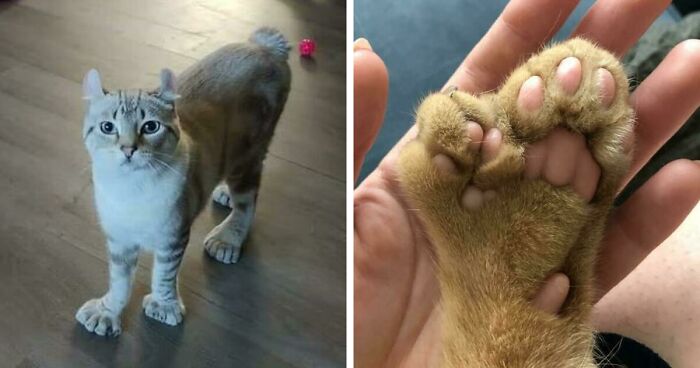
American Curl: ears that sweep backward
Curled ears are inherited and develop as kittens grow, giving them a permanently surprised, delighted expression.
Like, “Oh wow. A treat. For me? In this economy?” -
Munchkin cats: short legs, big opinions
The short-leg trait is driven by inherited changes affecting limb development.
They can be energetic and playful, but the trait is controversial because altered bone structure can raise welfare concerns. -
Manx cats: the tailless wonder
Taillessness is tied to mutations that affect spinal/tail development.
The look is iconic, but breeding practices matter because certain combinations can increase risk for spinal issues. -
Japanese Bobtail: the “pom-pom” tail
A short, kinked tail is a defining feature, shaped by inherited developmental changes.
It’s like the cat version of a signature accessoryno additional styling required. -
Polydactyl cats (a.k.a. “mitten paws”)
Extra toes can come from mutations in a regulatory region tied to limb development.
Hemingway’s famous polydactyl cats are a classic examplemore toes, more drama, more ability to grab your stuff. -
Sphynx: the “naked” cat aesthetic
Hairlessness in several cat lines involves mutations affecting hair/follicle structure.
These cats often feel warm to the touch and may need skin care (oils have nowhere to “hide” in fur). -
Devon Rex: pixie ears and soft waves
The curly/wavy coat comes from inherited hair-structure changes.
The vibe is “elf cosplay,” and the texture is “crushed velvet with a personality.” -
Cornish Rex: the sleek, rippled coat
Another rex-type coat mutation, resulting in a fine, wavy coat that looks sculpted.
They’re basically the runway models of the cat world. -
Selkirk Rex: curls that look like a perm
Curly coat genetics can produce thick, plush waves.
This is what happens when your cat’s hair says, “I woke up like this,” and actually means it. -
Lykoi: the “werewolf cat”
Lykoi cats have a distinctive partial hair coat and roaning look linked to variants affecting hair growth.
They look spooky-cool, but the genetics behind the coat are real and studiedno supernatural explanations needed (sorry). -
Colorpoint cats (Siamese/Himalayan-style “points”)
That darker face/ears/paws/tail pattern is classic temperature-sensitive pigment biology.
Cooler body areas get darker pigmentnature’s mood ring, but for cats. -
Blue (dilute) cats: gray coats and soft vibes
Dilution genes can lighten black into “blue” and red into cream.
It’s the cat equivalent of a perfect Instagram filterexcept it’s genetic. -
White cats with blue eyes
Some white-coat genetics are associated with a higher chance of congenital deafness, especially with blue eyes.
Many white cats hear just finebut it’s a known association worth checking early, so owners can adapt communication and safety. -
Heterochromia in cats
One blue eye, one gold? Totally possible when pigment distribution differs between eyes.
It’s like your cat couldn’t pick a theme and decided to win anyway. -
Calico and tortoiseshell cats: living mosaics
These patterns are tied to X-chromosome biology, which is why most calicos and torties are female.
Their coats are a patchwork “genetic collage” created during early development. -
Rare male calicos
When a male cat is calico, it usually reflects an uncommon chromosomal arrangement.
It’s rare, it’s real, and it’s a great example that “genes” sometimes means whole chromosomes, not just single letters in DNA. -
Chimera cats with split-face coloring
Some cats develop with two genetically distinct cell lines.
The result can be a dramatic half-and-half look that seems too perfect to be realyet biology can be a show-off. -
“Salmiak” / salty-licorice pattern cats
A recently described coat pattern involves a pigment-development gene change that creates a tuxedo-like look with expanding white areas.
It’s a reminder that new coat patterns can still be discovered in ordinary pet populations. -
Long-haired cats where the floof simply refuses to quit
Hair length is strongly influenced by well-studied coat-length genes.
The look is majestic… until shedding season arrives and your home becomes a snow globe of fur.
What to Love (and What to Watch) With Genetically Distinctive Pets
It’s okay to be amazed by unusual traitsnature and genetics are genuinely fascinating. But it’s also wise to pair the “wow” with a little reality:
some traits are linked with higher odds of health challenges (for example, certain pigment patterns and deafness risk, or some cartilage/bone traits and mobility concerns).
The best approach is simple: choose ethical breeders or rescues, ask questions, and get a solid veterinary checkup earlyespecially for hearing, vision, joints, and skin.
In other words: celebrate the uniqueness, but don’t ignore the fine print. Even the cutest features shouldn’t come with preventable suffering.
What It’s Like Living With a “Genetics Special” Pet (Owner Experiences)
Owners of genetically distinctive pets often describe a funny mix of pride, curiosity, and “Please stop asking me if my cat is real.”
If you share your life with a pet who looks unusual, strangers tend to treat every walk, vet visit, or casual photo as a pop-up museum exhibit.
People stop you to ask questions, kids point (usually with delight), and your camera roll becomes 80% close-ups of ears, paws, and whatever pattern your pet is serving that day.
A common theme is that unique looks can change how you plan daily care. Hairless cats and dogs, for example, can mean more skin maintenance:
owners often build gentle routines around bathing frequency, moisturizing (with vet guidance), and temperature comfortbecause a fur-free pet can get chilly faster.
On the flip side, long-haired pets can require a completely different lifestyle: detangling sessions, grooming schedules, and the ability to accept that black pants are now a “special occasion” item.
Then there are the “structure” traitsshort legs, long backs, bobtails, or folded cartilage featureswhere owners tend to become surprisingly knowledgeable about ramps,
non-slip flooring, safe play, and weight management. Many people talk about adding pet stairs near couches and beds, choosing harnesses that reduce strain, and
keeping play sessions active but not reckless. It’s not that these pets can’t have fun; it’s that their fun sometimes needs guardrails (literally).
Pigment-related traits can create their own mini learning curve. Owners of merle-patterned dogs, heavily white dogs, or white cats with blue eyes often mention
early hearing checks and being extra thoughtful about safety outdoors. If a pet is deaf or partially deaf, routines may shift toward hand signals, vibration cues,
consistent visual communication, and secure yards or leashes. Many owners say the bond can become even stronger because training relies on attention, trust, and routine
not just calling a name across the room.
And emotionally? People often report that living with a “distinctive” pet is a joy because it sparks connection. The pet becomes a conversation starter, a community magnet,
andlet’s be honestan algorithm-friendly celebrity. But the healthiest owner mindset is the one that keeps the pet’s comfort at the center.
The best stories aren’t “My pet looks rare,” but “My pet is thriving.” When owners treat the look as a bonus and the wellbeing as the goal,
genetically unique pets can be both astonishing and well cared for. That’s the real flex.
Final Thoughts
Genetics can produce pets that look like living artworkextra toes, curly coats, folded ears, dramatic patterns, and eye colors that could power a sci-fi movie poster.
Enjoy the wonder. Take the photos. Admire the quirks. Then do the most important part: support ethical practices, get early vet guidance for traits with known risks,
and choose wellbeing over extremes. Nature is amazingbut your pet’s comfort should always be the main character.