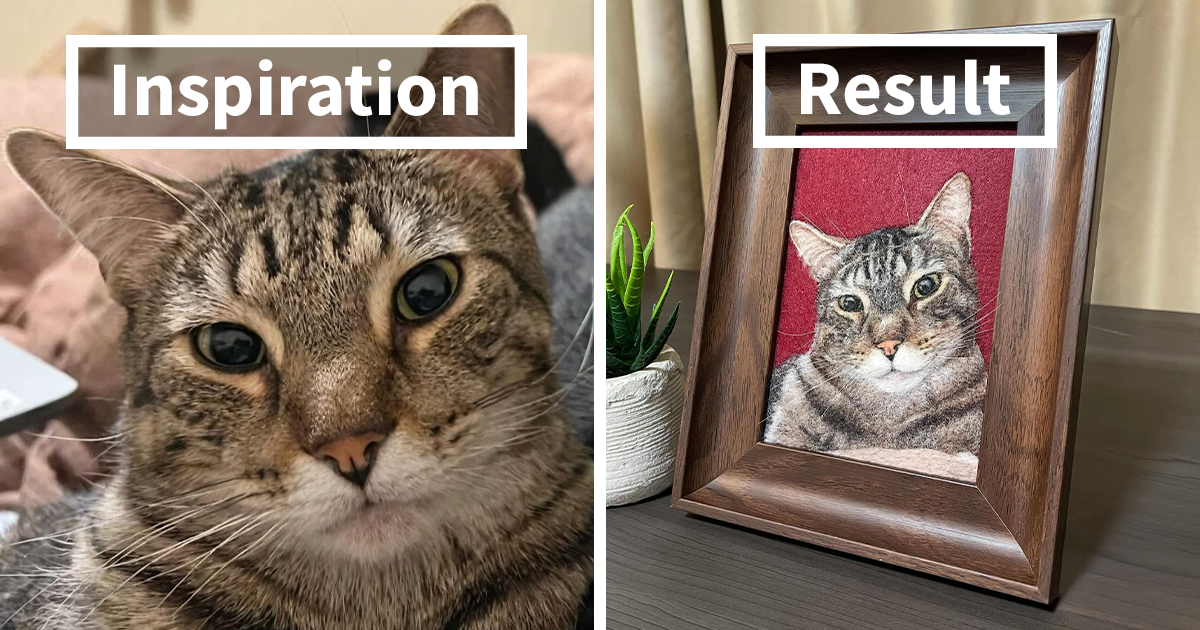
There are cute crafts, there are impressive crafts, and then there are wool felt pets so realistic that your brain briefly forgets what planet it lives on. One second you are looking at a tiny dog on a shelf, and the next second you are leaning in like, “Wait… is this little guy judging me?” That eerie, delightful, blink-twice reaction is exactly why realistic needle felting has become such a fascination for pet lovers, collectors, and people who have never once used the phrase “fiber art” in casual conversation.
What makes these creations so mesmerizing is not just the fluff factor. It is the precision. Skilled artists can build convincing eyes, layered fur, tiny paws, bent whiskers, sleepy expressions, and that oddly specific look every pet has when it knows it is not supposed to be on the sofa but is staying there anyway. Using wool roving, barbed needles, careful color blending, and an almost suspicious level of patience, makers turn loose fiber into miniature personalities. Some pieces are sweet and stylized. Others are so lifelike they look ready to sneeze.
In this article, we are diving into the wonderfully uncanny world of realistic felt animals, especially the pet-inspired kind that make people do a full cartoon-style double take. Below, you will find 40 wool felt pets that capture the funniest, fluffiest, most lovable details of real animals, plus a closer look at why these handmade sculptures feel so alive.
Why Realistic Wool Felt Pets Are So Weirdly Convincing
The magic starts with the material. Wool is ideal for sculpture because its fibers tangle and compact when worked with a barbed felting needle. That means artists can build forms slowly, shaping cheeks, paws, tails, and ears one poke at a time. It sounds gentle. It is not. Needle felting is basically tiny, controlled chaos with excellent results.
Realism comes from layering. Great felt artists do not just make a brown dog or a gray cat. They study how color actually behaves in fur. Cream slips into tan. Black softens into charcoal. Pink noses have peach, mauve, and shadow. Eyes carry highlights, dark rims, and depth. Many artists begin with the eyes and nose because those details anchor the expression, then work outward into fur, markings, and texture. That is also why the best felted pet portraits feel emotional instead of merely decorative.
Texture is another huge piece of the puzzle. Short coats need smooth transitions and tight surfaces. Long-haired pets require airy layers, trimming, and directional placement so the wool falls like actual fur instead of looking like a mop that lost a fight with static electricity. Some sculptors use wire armatures for pose, specialty fibers for long coats, and careful trimming for feathering around ears, paws, or whiskers. The result is a tiny sculpture that reads less like “craft project” and more like “this pet was shrunk by a wizard.”
40 Wool Felt Pets So Realistic You Might Want To Do A Double Take
Not every felt pet aims for photo realism, but the most memorable ones capture something even better: the exact personality of the animal. Here are 40 kinds of wool felt pets that look so convincing, charming, and full of attitude that they practically deserve their own treats.
- The sleepy tabby cat curled into a cinnamon roll. With tucked paws, a striped back, and half-closed eyes, this one looks like it has been napping in the same sunspot since 2019.
- The border collie with laser-beam eye contact. A realistic felt version of this breed often captures that intense “I know what the tennis ball did” expression that border collies seem to come factory-installed with.
- The golden retriever puppy with oversized paws. Nothing says emotional collapse quite like a fluffy felt puppy that looks one growth spurt away from stealing your sandwich and your heart.
- The grumpy Persian cat with a luxury-grade stare. If the fur is layered correctly and the face is slightly flattened, the sculpture can look both royal and deeply unimpressed by your life choices.
- The dachshund mid-strut. Long body, short legs, dramatic confidence. A great wool sculpture of a dachshund somehow communicates the energy of a parade and a misdemeanor at the same time.
- The tuxedo cat with one white sock slightly higher than the other. Tiny asymmetries like this are what make wool felt pets feel real instead of generic.
- The French bulldog with bat ears and big feelings. Felt artists love strong silhouettes, and few pets have a more instantly recognizable shape than a Frenchie looking mildly offended.
- The elderly beagle with wise eyes. Gray around the muzzle, slightly drooping ears, and a soft posture can make a small felt sculpture feel unexpectedly touching.
- The orange cat caught in a moment of pure chaos. One paw lifted, eyes wide, tail curved. You can practically hear the invisible crash in the next room.
- The ragdoll cat with cloud-level fluff. Long-haired felt work really shines here, especially when the chest ruff and soft blue eyes are handled with subtle shading.
- The schnauzer with a perfectly dramatic beard. This is where texture work gets to show off. Eyebrows, beard, and leg furnishings turn the sculpture into a tiny Victorian gentleman.
- The corgi with a loaf-like body and serious eyebrows. Realistic corgi sculptures are hilarious because they are both adorable and somehow always look like middle management.
- The black cat melting into a blanket. Artists who can build dimension in dark fur deserve applause, coffee, and probably a parade. It is hard to make black wool read as detailed rather than flat.
- The rescue mutt with one ear up and one ear down. Mixed-breed felt pets are often the most memorable because every unusual feature becomes part of the story.
- The Siamese cat with theatrical cheekbones. Strong facial contrast and sleek body lines make this a dream subject for artists who love clean transitions and expressive faces.
- The Pomeranian that looks like a sentient dandelion. A great felt Pom manages to be spherical, glamorous, and faintly chaotic all at once.
- The Labrador with a tennis-ball-ready grin. Broad forehead, friendly eyes, and a slightly open mouth can give this felt classic a ridiculously believable happy-dog expression.
- The bunny with translucent-looking ears. Good wool work can suggest softness, warmth, and delicate pink tones inside the ears without losing the tidy shape of the rabbit.
- The hairless cat with attitude for miles. Yes, even a less-furry pet can make a fantastic felt sculpture. Skin folds, posture, and expression do most of the heavy lifting here.
- The shih tzu with a topknot and a stare that says “carry me.” This is a masterclass in silky texture, facial symmetry, and tiny bits of high-maintenance elegance.
- The guinea pig shaped like a fuzzy potato. A realistic felt guinea pig is almost unfairly cute, especially when the round body and tiny feet are balanced with glossy, alert eyes.
- The Maine coon with majestic ear tufts. Few subjects show off layered fur better. When the mane, paws, and tail are done well, the piece feels like miniature wildlife with indoor plumbing.
- The chihuahua who is five inches tall and 98 percent opinion. Tiny dogs make excellent felt subjects because every ounce of personality has to fit into a very small frame.
- The cockatiel with a slightly dramatic crest. Felt birds can be shockingly realistic when artists build feather direction, cheek patches, and that wonderfully suspicious side-eye.
- The husky with snow-dog intensity. The contrast in coat color, mask pattern, and icy gaze makes this one a natural double-take magnet.
- The lop-eared rabbit in a relaxed flop. Long ears resting to the side instantly soften the silhouette, making the sculpture look calm, gentle, and impossible not to stare at.
- The calico cat with painterly patches. Calicos are proof that randomness is beautiful. Felt artists can spend ages getting those color placements to feel organic instead of pasted on.
- The pug with a tiny wrinkled forehead. Deep-set eyes, folded face, and compact body make pugs absurdly expressive in wool form.
- The ferret halfway through a sneaky investigation. Long body, curious pose, and bright eyes give this felt pet the energy of a noodle with a private agenda.
- The senior cat with a softer, slower posture. Sometimes realism is not about dramatic detail. It is about the way age changes how an animal rests, gazes, and carries itself.
- The parakeet perched like a tiny neighborhood gossip. Small felt birds feel especially convincing when the body tilt and head angle capture that constant state of curious eavesdropping.
- The toy poodle with sculpted curls. This is where wool becomes pure illusion. Tight texture placement can mimic clipped curls so well you want to ask who did the grooming.
- The rescue cat with a clipped ear and a queen’s confidence. Imperfections often make a sculpture more believable and more moving at the same time.
- The hamster with full cheek pouches. Round shape, shiny eyes, tiny hands. It is physically impossible to make this realistic and not have viewers whisper, “Oh my gosh.”
- The Australian shepherd in a head tilt. Merle-like color complexity, fluffy coat, and a listening expression create one of the most dynamic felt pet subjects around.
- The tortoise slowly minding its own business. Felt is not only for fur. With careful layering, artists can make shells, scales, and earthy shading feel surprisingly believable.
- The bearded dragon posed like a tiny desert king. A strong stance, textured body, and spiky silhouette can make this one look unexpectedly regal in wool.
- The chinchilla with impossible softness. If any animal was born to be interpreted in fiber, it is the chinchilla. The texture is basically nature showing off.
- The gecko peeking over a tiny felt ledge. Realistic felt reptiles have a special kind of charm because the medium seems unlikely, but the finished effect can be wildly persuasive.
- The custom memorial pet portrait that looks like it remembers you too. These are often the most powerful pieces of all: not just realistic, but emotionally accurate, down to the tilt of the head and the expression in the eyes.
What Separates a Good Felt Pet From a Jaw-Dropping One
Expression Comes First
People may notice the fur color first, but they remember the face. The strongest needle felted pet portraits capture expression: alertness, sleepiness, curiosity, stubbornness, mischief, or that deeply specific household look of “I heard the treat bag.”
Color Blending Does the Heavy Lifting
Real animals are full of subtle shifts in tone. The best artists layer wool in thin amounts, blending shade over shade until the fur looks alive instead of flat. Good luck faking that with one blob of beige.
Texture Has to Match the Animal
A short-haired cat, a wiry terrier, and a fluffy rabbit should not all be treated the same way. Realism depends on knowing when to smooth the surface, when to leave loft, and when to trim and feather the wool for motion.
Tiny Imperfections Make It More Real
A bent whisker, a white toe, one ear that sits slightly differently, or a little tilt in the head often makes the piece feel authentic. Perfect symmetry is great for robots. Pets usually bring more flavor to the table.
Why Pet Lovers Cannot Get Enough of These Sculptures
Realistic felted pet portraits sit at a sweet spot between art, nostalgia, and obsession. They are decorative, yes, but they are also intensely personal. A tiny felt dog on a shelf is not just a dog. It is your dog, including the floppy ear, the white chin, and the expression that says dinner should have happened five minutes ago.
That is why these pieces resonate so strongly online and in person. They are not mass-made lookalikes. They are slow, deliberate, handmade translations of the animals people adore. And because they are made from soft fiber rather than stone, resin, or metal, they carry a warmth that feels extra intimate. They look alive, but also tender. Strange combo. Extremely effective.
Experiences That Explain the Appeal of Realistic Wool Felt Pets
The first time you see a truly realistic wool felt pet in person, your reaction is rarely calm. It is usually some combination of confusion, delight, and an immediate need to lean six inches closer. From a distance, the sculpture reads like a very still animal. Up close, your brain starts trying to solve the mystery. The whiskers look real. The eyes have depth. The fur changes color in the right places. The paws are shaped with the kind of attention that suggests the artist either has a heroic level of patience or has made a private peace with spending an entire afternoon on two toes.
That double-take feeling gets even stronger when the piece is based on a real pet. Suddenly, this is not just a clever object. It becomes recognition. People laugh when they notice a familiar pose: the way a cat sits like a loaf of bread with opinions, or the way an old dog sinks into a resting position that says, “I have seen things, mostly squirrels.” Even tiny details can hit hard. A white patch under the chin. One ear that folds a little differently. A sleepy expression that looks so familiar it almost feels like the sculpture is about to move.
There is also something wonderfully personal about how people interact with these pieces. Some viewers become detectives, examining every angle to figure out how wool could possibly turn into a realistic muzzle or feathered tail. Others go full emotional without warning. They see a felt pet portrait and immediately start talking about the dog they had as a kid, the cat that ruled the apartment, or the rabbit that somehow trained the whole family instead of the other way around. Fiber art has a sneaky way of opening that door.
At craft fairs and online galleries, realistic felt pets often attract the same crowd pattern. Someone walks by quickly, stops mid-step, reverses direction, and then stares like they have just found evidence that tiny magic is real. Then comes the inevitable line: “No way. That is wool?” It is almost a ritual at this point. The answer is yes, it is wool, and yes, now everyone within ten feet must also come look at the tiny schnauzer with the excellent eyebrows.
What makes the experience memorable is that realistic wool felt pets are both impressive and oddly intimate. They do not feel cold or distant. They feel handmade in the most obvious, generous way. You can sense the time in them. The layering, poking, shaping, trimming, and correcting all become part of the emotional weight of the finished piece. That matters because pets themselves are made of routine, closeness, and attention. A handmade felt version captures that spirit better than something slick and factory-perfect ever could.
And, honestly, part of the appeal is plain old joy. There is a special kind of happiness in seeing an artist recreate a creature’s entire personality in a sculpture small enough to fit on a bookshelf. It feels a little ridiculous, a little sentimental, and completely wonderful. These pieces remind us that art does not have to be enormous or serious to be powerful. Sometimes it is enough for a tiny felt corgi to look so real that you half expect it to demand a snack.
Conclusion
Realistic wool felt pets are not just cute craft projects with good lighting. At their best, they are miniature character studies made from fiber, patience, and a frankly unreasonable amount of detail. Whether it is a curly poodle, a suspicious parakeet, or a sleepy senior cat, the most convincing pieces capture the thing people love most about pets: not just how they look, but who they seem to be.
So yes, a realistic felt pet may absolutely make you do a double take. That is the point. It is handmade illusion with heart, humor, and enough personality to turn loose wool into something that feels strangely alive. If that is not art doing its job, I do not know what is.