Wedding dress shopping is basically a choose-your-own-adventure book… except the hero is you, the plot twists are
lighting and sizing, and the villain is a strapless bra that swore it was “supportive.” The good news: picking the
right dress doesn’t require mind reading or a fairy godmother with a measuring tape. It requires a little strategy,
a little self-trust, and just enough planning to keep “panic-buying sequins” off the menu.
Below are five practical, feel-good ways to choose a wedding dress you’ll love on your wedding dayand still like
when you look at photos five, ten, or twenty years later. We’ll cover budget, silhouettes, timelines, fittings,
and the decision-making moment when your brain says “maybe” but your heart says “this is it.” (Your heart is dramatic.
We respect that.)
1) Start With Your “Big Three”: Budget, Venue, and Vibe
Before you try on a single gown, decide the three things that will steer every dress choice: budget,
venue, and overall vibe. This isn’t to limit youit’s to keep you from falling in love
with a gown that belongs at a winter ballroom gala when you’re getting married barefoot on a beach at noon.
Set a budget that includes the “extras”
The dress price tag is only the beginning of the story. Build a realistic range that includes
alterations, undergarments, shoes, veil/headpiece,
and potential rush fees. Alterations can cost a few hundred dollars and sometimes more, depending on
the gown structure, fabric, and what you’re changing. If your budget is tight, plan for fewer complex alterations
(for example, minimal beading changes or fewer structural modifications).
Match the dress to the venue (and the reality of the day)
Your venue is basically the dress’s stage. A heavy satin ball gown with a cathedral train can look magnificent…
until you’re navigating sand, grass, or a tight staircase. Ask yourself: Will you be outdoors? Will it be hot?
Is the floor uneven? Are there lots of stairs? These aren’t “buzzkill” questionsthey’re comfort insurance.
Example: If you’re having a coastal ceremony in late July, airy fabrics like chiffon, organza,
and lighter crepe styles may feel better than a heavily lined, fully beaded gown. For a formal evening wedding
in a grand hotel, richer fabrics and structured silhouettes can make senseespecially if you want that “entrance moment.”
Choose a vibe words list (yes, three words)
Pick 2–3 words that describe how you want to feel in your dress: “modern, clean, confident,” or “romantic, soft, classic,”
or “bold, glam, sparkle.” These become your filter when you’re torn between two beautiful options.
If one dress nails your vibe words and the other doesn’t, your decision just got easier.
2) Learn the Shortcuts: Silhouettes, Necklines, and Fabrics
You don’t need a fashion degree to choose a dress, but a little vocabulary saves time and helps your consultant
pull better options. Think of this as “wedding dress navigation.” You’re not memorizingjust learning enough to
say, “I like this shape, but less weight,” or “I love this neckline, but I want more movement.”
Silhouettes: pick a starting point, not a forever rule
- A-line: A classic for a reasoneasy to move in, flattering, and adaptable to many venues.
- Ball gown: Dramatic skirt, big presence. Great for formal settings; consider weight and bustle needs.
- Sheath/column: Sleek, modern, and often lighterperfect for minimalist styles and warmer climates.
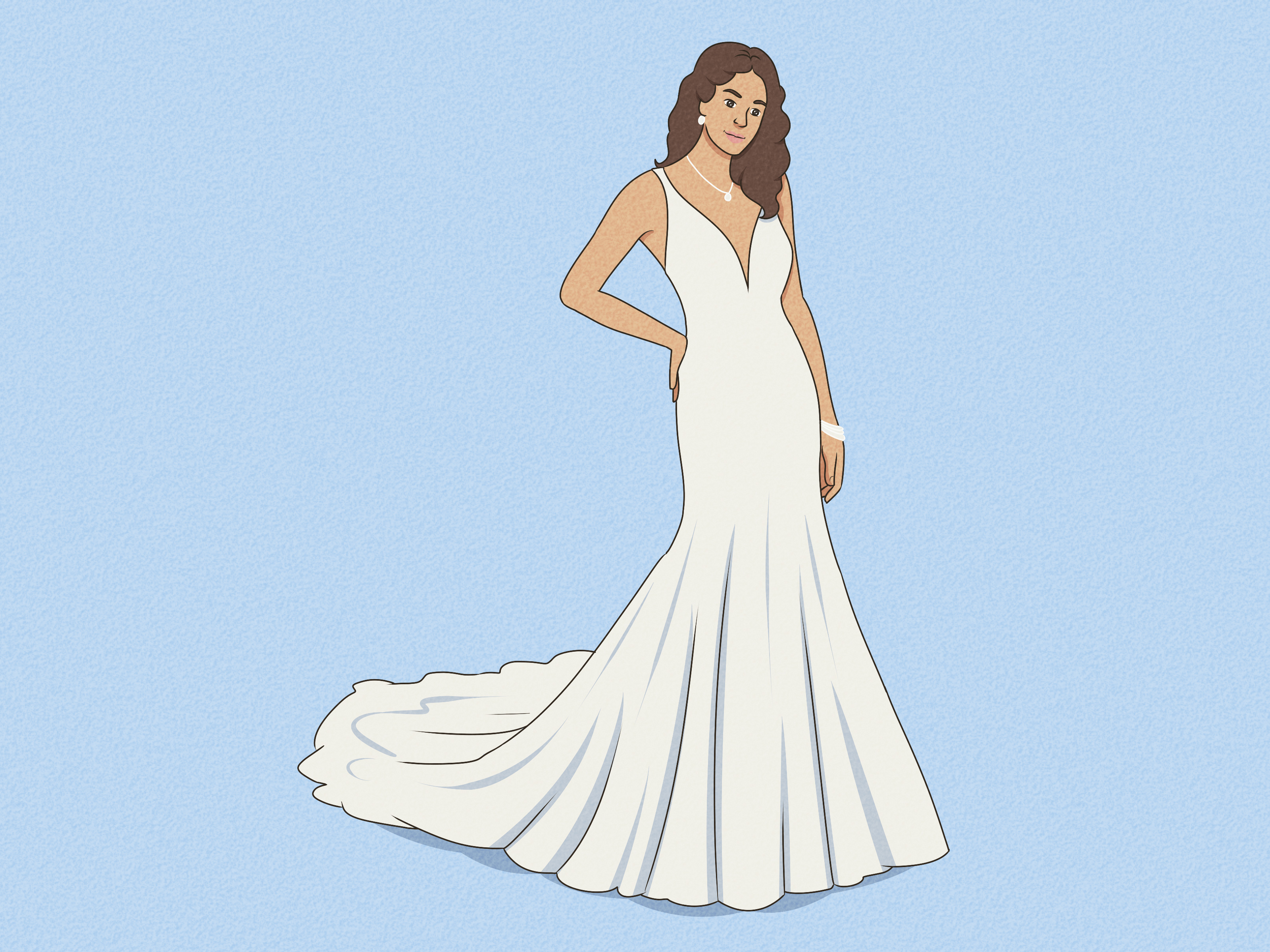
- Mermaid/trumpet: Curve-hugging and statement-making; check comfort for sitting and dancing.
- Fit-and-flare: A balanced middle ground: shape + movement without the full “mermaid commitment.”
Tip: Try at least two silhouettes you didn’t expect to like. Many brides end up choosing
a gown that surprises them because it fits their body and their day better than their Pinterest board predicted.
Necklines and sleeves: think about photos and comfort
Necklines frame your face and collarbone in photos, and sleeves change how the dress feels for a whole day of hugging,
raising your arms, and doing whatever dance move your friends insist is “iconic.” If you love strapless, greatjust
test the “jump, hug, sit, breathe” checklist in the fitting room. If you’re drawn to off-the-shoulder, make sure you can
comfortably lift your arms (a surprisingly important wedding skill).
Fabric: the secret to how a dress behaves
Fabric is why one dress feels like a cloud and another feels like a gorgeous, glamorous suit of armor.
Satin and mikado tend to look structured and polished. Tulle and organza create volume with less weight.
Crepe can look modern and clean. Lace can feel romantic and textured. If you’re getting married in a humid season,
ask about breathability, lining, and weight.
3) Shop Smart With a Timeline (So You Don’t Pay for Stress)
Wedding dresses often aren’t “grab it and go.” Many gowns are made-to-order and take months to arrive, and nearly all
require some tailoring. That means timing mattersnot because you should panic, but because planning keeps you in the
fun zone instead of the “overnight shipping a veil” zone.
A practical timeline you can actually follow
- 12–9 months out: Research styles, confirm venue/date, start appointments, narrow your vision.
- 10–8 months out: Aim to order your gown (especially if it’s made-to-order).
- 3–2 months out: Begin alterations (or at least your first fitting), depending on shop guidance.
- 4–2 weeks out: Final fittings, bustle practice, and “movement testing” for the big day.
If you’re working with a shorter timeline, you still have options: off-the-rack gowns, sample sales, pre-owned dresses,
or ready-to-wear styles that ship faster. The key is aligning expectations with the calendar, not trying to “willpower”
your way through production lead times.
Plan your appointments like a pro
Book salons with enough time between visits so you don’t blur dresses together in your memory. Bring a small set of
inspiration photos, but don’t force yourself to match a single look. Your goal is to identify patterns:
“I keep choosing clean crepe,” or “I love lace but not heavy beading,” or “I want straps that feel secure.”
Also: keep your entourage small and supportive. More opinions can mean more confusion. Choose people who will help
you hear your own voicenot drown it out with commentary like, “I saw a dress on TikTok that would fix this.”
(Nothing needs fixing. You’re shopping, not being renovated.)
4) Prioritize Fit, Then Use Alterations for Polish (Not a Full Personality Change)
Here’s the truth that saves money and stress: the best dress is the one that already feels close to right
before major tailoring. Alterations are normal, expected, and magicalbut they’re best for refining,
not rebuilding an entire gown from scratch.
What alterations usually do (and what they shouldn’t have to do)
Common alterations include hemming, taking in or letting out seams, adjusting straps, adding cups or support,
refining a neckline, adding a bustle, or tweaking sleeves. These are “make it perfect” changes.
Bigger redesigns (like turning a strapless gown into long sleeves with a new neckline and different back)
can be done, but they take time, money, and the right seamstressand the result depends heavily on the original construction.
Bring the right items to fittings
Alterations work best when you bring the shoes (or at least the correct heel height) and undergarments you plan to wear.
A hem is only accurate if the seamstress knows how tall you’ll be on the day. Undergarments matter tooespecially if you’re
wearing shapewear, a specific bra style, or cups sewn into the gown.
Do a “wedding day movement test”
In the dressing room and at fittings, try: sitting, standing, lifting your arms, hugging someone, and walking quickly.
If there’s a train, practice turning. If there’s a bustle, practice attaching it (yes, you should literally practice).
If you plan to dance a lot, ask your seamstress for advice on comfort and mobility. This is the difference between
feeling like a movie star and feeling like a very pretty lamp.
5) Decide Like a Calm Person (Even If You’re Not One)
The internet loves the idea of “The One” dress like it’s a soulmate. Real life is usually more practical:
there are often a few fantastic options, and the “right” one is the dress that fits your priorities, budget,
and wedding day realitywhile making you feel unmistakably like yourself.
Use a simple decision checklist
- Comfort: Can you wear it for hours without constant adjusting?
- Confidence: Do you feel like you’re wearing the dress, not the other way around?
- Logistics: Does it work for the venue, season, and schedule?
- Budget: Are you accounting for alterations and accessories?
- Photos: Do you love how it looks from multiple angles (front, side, back)?
Give yourself “one sleep” if you’re unsure
If you’re torn, step away for a night. Look at photos later when you’re not in the fitting-room adrenaline haze.
Often, one dress keeps calling your attention back. That’s a useful signal. If a gown only felt exciting under
salon spotlights but you don’t care for it later, that’s useful too.
Remember: you’re allowed to choose joy
It’s easy to get caught in “rules”: what you’re “supposed” to wear, what flatters what, what’s trending.
Here’s a better rule: choose the dress that makes you feel joyful, comfortable, and present.
When you feel good, you look good. It’s not a cliché; it’s physics. (Confidence has its own lighting.)
Extra Tips That Make Everything Easier
Budget-friendly paths that still feel special
- Sample sales: Great for savings; factor in cleaning and alterations.
- Pre-owned/consignment: Ideal if you know your measurements and can act quickly.
- Off-the-rack: Perfect for short timelines; prioritize fit and tailoring quality.
- Simple gown + statement accessories: A clean dress can become “wow” with veil, jewelry, and styling.
Keep a tiny “dress file”
Save photos of your top contenders, write two lines about how each one felt, and record the designer/style name.
Future-you will be grateful when everything starts to look like “white dress #47.”
Real Experiences: What Dress Shopping Actually Feels Like (and What People Learn)
Dress shopping looks like a montage in movies: happy tears, dramatic music, and a perfect dress appearing on the first rack.
Real life is usually messierand honestly, that’s where the best lessons come from.
One of the most common experiences is the “Pinterest vs. Reality” moment. Someone walks in convinced they want a fitted,
minimalist gown with zero lace. Then they try on an A-line with soft texture and suddenly they’re staring at the mirror like,
“Who gave me permission to look this good in something I didn’t plan?” It happens because photos can’t tell you how a gown
moves when you walk or how it feels when you breathe. Fabric, structure, and comfort are three-dimensional. Your body is too.
Another classic experience: the entourage effect. A supportive group can make the day feel like a celebrationsnacks,
compliments, and the kind of hype that turns a random Tuesday into a core memory. But a too-large group can turn the appointment
into a committee meeting with conflicting agendas. The bride loves Dress A. Aunt loves Dress B. Best friend loves Dress C.
Meanwhile, the mirror is showing a perfectly happy bride turning into a confused raccoon. Many people learn (the hard way)
that fewer voices make it easier to hear your own. The best companion isn’t the loudest opinionit’s the person who notices
when your posture changes because you feel confident.
Then there’s the “comfort reality check.” A dress can be stunning and still not be right for your day.
Plenty of brides describe putting on a gorgeous gown and realizing they can’t sit comfortably, lift their arms easily,
or walk without stepping on themselves. That’s not a failure; that’s information. The best dress is the one you can live in.
You’re not just posing in ityou’re hugging people you love, walking across different surfaces, maybe tearing up during vows,
and probably eating something delicious. (Yes, you should eat. Wedding days are long. Dresses should allow lunch.)
Alterations are another area where experience teaches faster than advice. Many people assume the dress should fit perfectly
the first time they zip it. In reality, fittings are the normal path to “made for you” magic. Brides often say the first
fitting feels like, “Okay, I see the potential,” and the final fitting feels like, “Oh, hello, main character.” They also
learn that the little details matter: bringing the right heel height, choosing the undergarments early, and practicing the
bustle so no one is frantically pinning fabric while the DJ announces your first dance.
Finally, there’s the experience of choosing a dress under time pressure. Some people plan far ahead and still feel rushed
because life is busy. Others are planning a wedding quickly and need a gown that can arrive fast. In both cases, the lesson
is the same: focus on what you can control. Off-the-rack, sample sales, and ready-to-wear options can be lifesavers, especially
when paired with a skilled seamstress. The “perfect” dress isn’t the one that takes the longest to arriveit’s the one that
shows up on time, fits your budget, and makes you feel excited to walk down the aisle.
If there’s one universal takeaway from real dress-shopping stories, it’s this: you’re not shopping for an outfit.
You’re choosing how you want to feel on a day you’ll remember forever. When a dress matches your life, your venue, your vibe,
and your comfort, it stops being “a dress” and becomes part of the memory. And that’s the point.
Conclusion
Choosing a wedding dress doesn’t have to be overwhelming. Start with your budget, venue, and vibe. Learn a few silhouette
and fabric basics. Shop with a timeline that protects your peace. Use alterations for refinement, not reinvention. Then
make the final call using comfort, confidence, and real-life practicality. The best wedding dress isn’t the one that wins
the internetit’s the one that helps you feel like yourself, fully and happily, on your wedding day.