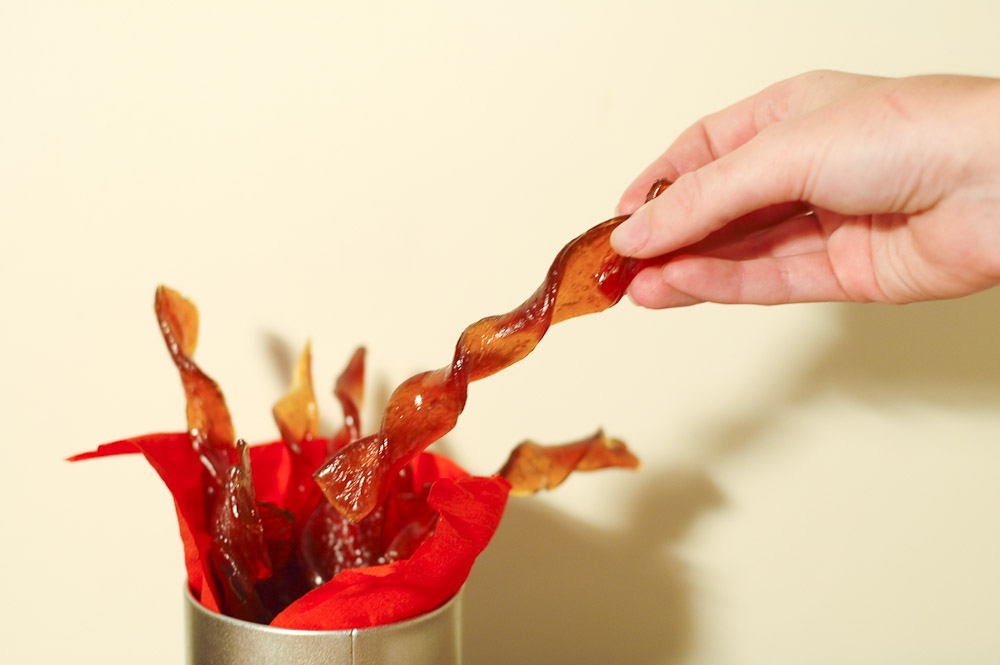
Old fashioned hard candy is basically edible stained glass: it’s shiny, snappy, and somehow makes any kitchen feel like it’s wearing an apron from 1952.
The ingredients are simple (sugar, corn syrup, water), but the process demands one thing in exchange for its retro glory: your attention.
Good news: once you understand the “why,” you can make hard tack candy, lollipops, ribbon candy, and even a microwave batch that your great-aunt
would absolutely side-eyeright up until she asks for seconds.
Below are five genuinely different ways to make homemade hard candy, plus the little pro moves that keep it crisp (not sticky), clear (not grainy),
and festive enough to become the most-requested “you HAVE to bring that again” treat.
A Quick Candy-Safety PSA (Because Molten Sugar Is Not a Personality Trait)
Sugar syrup at the hard-crack stage is around 300°F. That’s hotter than your average “oops” and it sticks like a grudge.
Wear long sleeves, use oven mitts, keep kids and pets at a safe distance, and don’t lean over the pot when you add flavoring (steam is sneaky).
Set up your workspace before you cook: molds ready, sheet pan ready, scissors oiled, wrappers nearby, and a clear landing zone where nobody
will “just reach past you real quick.”
The Old-Fashioned Hard Candy Rules That Save Your Batch
Rule 1: Hard candy is a temperature game, not a vibes game
For classic hard candy, you’re aiming for the hard-crack stagethat moment when the syrup cools into brittle threads instead of chewy ropes.
Too low and you’ll get sticky candy that never really hardens. Too high and you’ll get a caramelized “campfire” flavor you did not order.
Rule 2: Stir early, then stop stirring (seriously)
Stir only until the sugar dissolves, then let it boil without stirring. Stirring later encourages crystallization, which turns your candy gritty.
If crystals form on the sides of the pan, brush them down with a wet pastry brush instead of stirring the whole pot.
Rule 3: Corn syrup is not “cheating”it’s insurance
Light corn syrup helps prevent sugar crystals from forming so your old fashioned hard candy stays smooth and glassy.
Think of it as the calm friend who quietly stops drama before it starts.
Rule 4: Humidity is the villain in this story
Hard candy loves dry air. In high humidity, candy can absorb moisture and soften or turn sticky.
If you can, run your A/C or a dehumidifier before you cook. If you can’t, you may need to cook slightly hotter and package faster.
Rule 5: Don’t refrigerate hard candy
The fridge is basically a moisture spa, and hard candy is not looking for a self-care day. Cool candy at room temp, then store airtight.
The Base Old Fashioned Hard Candy Formula
Most traditional hard candy recipes use the same backbone: sugar + light corn syrup + water, cooked to hard-crack stage, then flavored and poured.
A common batch size looks like:
- 2 cups granulated sugar
- 2/3 cup light corn syrup
- 3/4 cup water
- Flavoring (extract or candy flavoring oil) + food coloring
- Optional: powdered sugar for dusting (especially for broken “hard tack” pieces)
Keep this base in mindyou’ll use it in different ways depending on the candy shape, texture, and how fancy you want to feel while doing it.
(Spoiler: ribbon candy makes you feel like a holiday wizard.)
Way 1: Classic Sheet-Pan Hard Tack Candy (The OG “Break-and-Share” Method)
If you picture grandma’s candy dish, this is it: glossy shards or squares, lightly dusted so they don’t glue themselves into a single sugar boulder.
This is also the best method if you want to make a big batch fast.
Best for
- Hard tack candy / rock candy style pieces
- Holiday gift jars, candy bowls, and “just one more piece” snacking
- Beginners (it’s forgiving on shaping)
How to do it
-
Prep: Line a rimmed sheet pan with foil or a silicone mat and lightly oil it (or use cooking spray).
If you’re dusting with powdered sugar, have it ready in a fine sieve. - Dissolve: Combine sugar, corn syrup, and water in a heavy saucepan. Stir over medium heat until the sugar dissolves and the mixture looks clearer.
-
Boil (hands off the spoon): Clip on a candy thermometer (not touching the pan bottom). Boil without stirring.
If crystals appear on the sides, brush them down with a wet pastry brush. - Hit hard-crack: Cook until the syrup reaches about 300°F. Remove from heat promptly (the temperature can keep climbing).
- Flavor + color: Once bubbling calms, stir in flavoring and coloring carefullysteam rises fast.
- Pour: Pour onto your prepared sheet pan in a thin stream for faster cooling.
- Score or shatter: When it’s partly set, score into squares with an oiled knife. Once fully cool, break into pieces.
- Finish: Dust lightly with powdered sugar (or a powdered sugar/cornstarch blend) to reduce stickiness.
Flavor ideas that scream “old fashioned”
- Peppermint or spearmint
- Cinnamon (use candy oil sparinglyit’s potent)
- Lemon, orange, anise, butter rum
Common mistake (and the fix)
Mistake: Candy turns chewy or sticky.
Fix: It likely didn’t reach true hard-crack stage. Next time, verify thermometer accuracy (boiling water test),
and cook to the correct temperature. Store airtight immediately once cool.
Way 2: Molded “Candy Gems” (Clean Shapes, Fancy Vibes)
Candy molds take the same old fashioned hard candy base and turn it into uniform little jewelsperfect for party favors,
cake toppers, or making people think you own tiny tweezers (optional, but very on-brand).
Best for
- Hard candy gems, drops, and themed shapes
- Consistent pieces for gifting
- Layered or two-tone effects
How to do it
- Prep molds: Use clean, dry molds. Lightly spray if needed. Place molds on a tray so you can move them safely.
- Cook base syrup: Make the syrup as in Way 1, cooking to hard-crack stage.
- Add flavor and color: Stir in your flavoring and coloring off heat. For super clear candy, use clear extracts or candy oils and gel color sparingly.
- Pour carefully: Transfer syrup to a heat-safe measuring cup for better control, then fill molds slowly.
- Cool and unmold: Let candies fully harden at room temperature, then pop out.
Level-up option: Layered “double gem” look
Want a more “handmade boutique candy shop” finish? Pour one batch into molds and let it harden.
Make a second small batch, let it cool a bit (so it’s thicker), then top or “seal” pieces together flat side to flat side.
It’s a little extra. It’s also extremely satisfying.
Way 3: Old-School Lollipops (Same Candy, Different Attitude)
Lollipops are just hard candy with a handlesuddenly it’s “a treat,” not “I ate five pieces while looking for the scissors.”
This method is great for birthdays, classroom-safe gifts (check allergy rules), and making your inner child feel financially irresponsible.
Best for
- Lollipop molds or free-pour circles
- Bright flavors and colors
- Party favors and bake-sale showstoppers
How to do it
- Prep: Place lollipop sticks on parchment or foil, or insert sticks into molds. Lightly oil molds if needed.
- Cook syrup: Make the base and cook to hard-crack stage (around 300°F).
- Flavor and color: Add off heat, carefully.
-
Pour: For molds, fill carefully. For free-pour, let the syrup cool just a touch so it thickens,
then pour 2-inch circles and lay sticks into the candy (or pour a little candy first, set the stick, then top it). - Cool and wrap: Once hard, wrap individually to prevent humidity from making them sticky.
Flavor combos that work ridiculously well
- Red + anise (classic)
- Green + peppermint
- Yellow + lemon
- Orange + orange (yes, it’s obviousno, it’s not boring)
Way 4: Ribbon Candy (The “Yes, I Made That” Showpiece)
Ribbon candy is the old-fashioned holiday flex: shiny, satiny, and curled like a sugar bow.
The trick is pulling the candy while it’s pliable, which means timing, warm hands, and a willingness to look like you’re auditioning
for a candy-making documentary.
Best for
- Holiday platters and cookie boxes
- Striped, twisted, or satin-finish candies
- People who enjoy crafts… but edible
What makes it different
You’ll still cook sugar syrup to the hard-candy range, but instead of pouring and breaking, you’ll work it as it cools:
folding, pulling, twisting, and shaping into ribbons. Many traditional approaches keep portions warm in a low oven so they stay workable.
How to do it (high-level roadmap)
- Cook a hard candy batch: Use your base syrup and cook to hard-crack stage.
- Divide and color: Split into portions for different colors (classic holiday ribbons often use red, white, and green).
- Pull: Once the candy is cool enough to handle (wear heat-resistant gloves), stretch and fold repeatedly until it turns satiny and more opaque.
- Keep it warm: If one portion stiffens too fast, warm it briefly so it becomes pliable againwithout melting it.
- Twist and cut: Pull colored ropes together, twist, cut, and immediately shape into ribbon curls.
- Wrap: Ribbon candy softens if left out too longwrap once set.
Pro tip
Ribbon candy is easier with two people: one to pull while the other cheers you on and reminds you not to absentmindedly touch molten sugar.
(That second job is underrated.)
Way 5: Microwave “Speed Run” Hard Candy (Small Batch, Big Results)
Traditionalists: take a deep breath. Microwave hard candy is real, it works, and it’s fantastic when you want a quick batch without babysitting a pot.
The trade-off is that microwaves vary wildly, so you follow timing ranges and watch closelylike it’s a reality show finale.
Best for
- Small batches and last-minute gifts
- Hard candy molds or quick sheet-pan “glass candy”
- People who like candy more than stirring
How to do it (microwave method)
-
Use the right container: A 4-cup heat-safe glass measuring cup designed for high temperatures (think Pyrex-style).
Don’t use plastic utensils. - Mix: Stir together sugar and light corn syrup (some recipes include a small amount of water).
- Cover: Cover with microwave-safe plastic wrap (venting handled by the recipe method).
-
Cook in bursts: Microwave on HIGH for a few minutes, stir carefully, re-cover with a fresh wrap, and microwave again.
Once boiling stops, stir in coloring and flavoring. - Pour fast: Pour into prepared molds or onto an oiled, foil-lined sheet pan. Let set at room temp.
- Store dry: Dust pieces if needed; wrap lollipops individually.
Microwave caution that matters
Microwave wattage changes everything. If your microwave runs hot, you can scorch sugar fast.
Start conservative, watch for vigorous boiling, and adjust your timing next batch like you’re dialing in espresso shotssweet, sticky espresso.
Troubleshooting: When Your Candy Has Opinions
“My hard candy is sticky.”
- Most likely: It didn’t reach true hard-crack stage, or it absorbed humidity while cooling/storing.
- Next time: Verify thermometer accuracy, cook to proper temperature, cool in a drier room, and package fast.
- Right now: Dust lightly with powdered sugar (or powdered sugar + cornstarch). Store airtight with wax paper between layers.
“My candy is grainy.”
- Most likely: Crystallization from stirring after boiling, stray sugar crystals on the pan sides, or using substitutions that don’t inhibit crystals well.
- Next time: Stop stirring once it boils; wash down crystals with a wet pastry brush; keep tools clean and dry.
“My candy tastes burnt.”
- Most likely: Cooked too hot or too long.
- Next time: Pull the pot off heat right at target tempcarryover heat can push it past the finish line.
“My pot looks like it’s coated in sugar cement.”
Skip the heroic scrubbing. Fill the pot with water and bring it to a boil (or soak with very hot water) until the hardened sugar dissolves.
Your sponge will thank you. Your wrists will write you a thank-you note.
Storage: Keep Old Fashioned Hard Candy Snappy
- Airtight is everything: Use jars or sealed containers with minimal air space.
- Separate layers: Wax paper between layers reduces sticking and scuffing.
- Wrap for long life: Individually wrap lollipops and ribbon candy to protect from humidity.
- Cool, dry place: Not the fridge, not next to the kettle, and definitely not on the windowsill in July.
Candy-Making Experiences: The Stuff You Only Learn After a Few Batches (About )
If you’ve never made old fashioned hard candy before, your first batch will teach you two things immediately:
(1) “hard-crack stage” is not a cute phrase, and (2) sugar can move from “not ready” to “oh no” faster than you can say “where did I put the thermometer?”
That last stretch of cooking is like a suspense moviequiet, bubbly, and then suddenly the plot twists.
One common early experience is the “mystery chew.” You did everything right (you swear), but the candy cools into something closer to taffy.
That’s when you learn the sacred truth: candy texture is mostly about water content, and water content is mostly about temperature.
It’s not personal. The syrup simply didn’t get hot enough to drive off enough water. The upside is that this mistake is memorable,
and after you’ve made “accidental chewy candy” once, you become a lot more attentive around 280°F and up.
Another universal moment: the steam wake-up call. The first time you add peppermint or cinnamon flavoring, the rising steam hits your face
like a winter breeze with an attitude. It’s not dangerous if you’re careful, but it is a strong reminder to stand back, stir gently,
and treat flavoring like it’s a tiny bottle of concentrated holiday.
Then there’s the shaping phase, where you discover that hard candy has exactly two settings: “lava” and “glass.”
The “perfectly pliable middle stage” exists, but it’s short and it does not wait for you to answer a text.
That’s why people fall in love with molds and sheet pansthey’re reliable, low-drama options.
Ribbon candy, on the other hand, is the thrilling hobby version. The first time you pull candy into satin ribbons,
you’ll feel wildly accomplished… and also slightly confused about how professional candy makers do it all day without turning into human space heaters.
Humidity adds its own personality. Make candy on a dry day and you’ll wonder why anyone finds it challenging.
Make it on a muggy day and you’ll start saying things like “the air feels wet” and “maybe the candy is absorbing vibes.”
You’ll also become weirdly strategic: running the A/C, sealing containers faster, and wrapping pieces like you’re packaging tiny edible artifacts.
It sounds fussy, but it’s actually empoweringonce you realize moisture is the culprit, you stop blaming yourself and start controlling the environment.
Finally, there’s the gift-factor experience: hard candy makes people disproportionately happy.
Something about a jar of glossy, colorful pieces triggers nostalgia at a deep level. Folks will ask what flavor it is,
then immediately tell you a story about their grandmother’s candy dish, a church bazaar, or a holiday tray from years ago.
That’s the real charm of old fashioned hard candy: you’re not just making sweetsyou’re making edible memories with a satisfying snap.
Final Thoughts
Old fashioned hard candy is simple on paper and magical in practice: a handful of pantry ingredients transformed into bright, glassy treats
with endless flavor options. Start with sheet-pan hard tack candy, graduate to molds or lollipops, and save ribbon candy for the day you want
to feel like a holiday legend. Keep your thermometer honest, your workspace ready, and your finished candy sealed up tightand you’ll get that
classic snap every time.