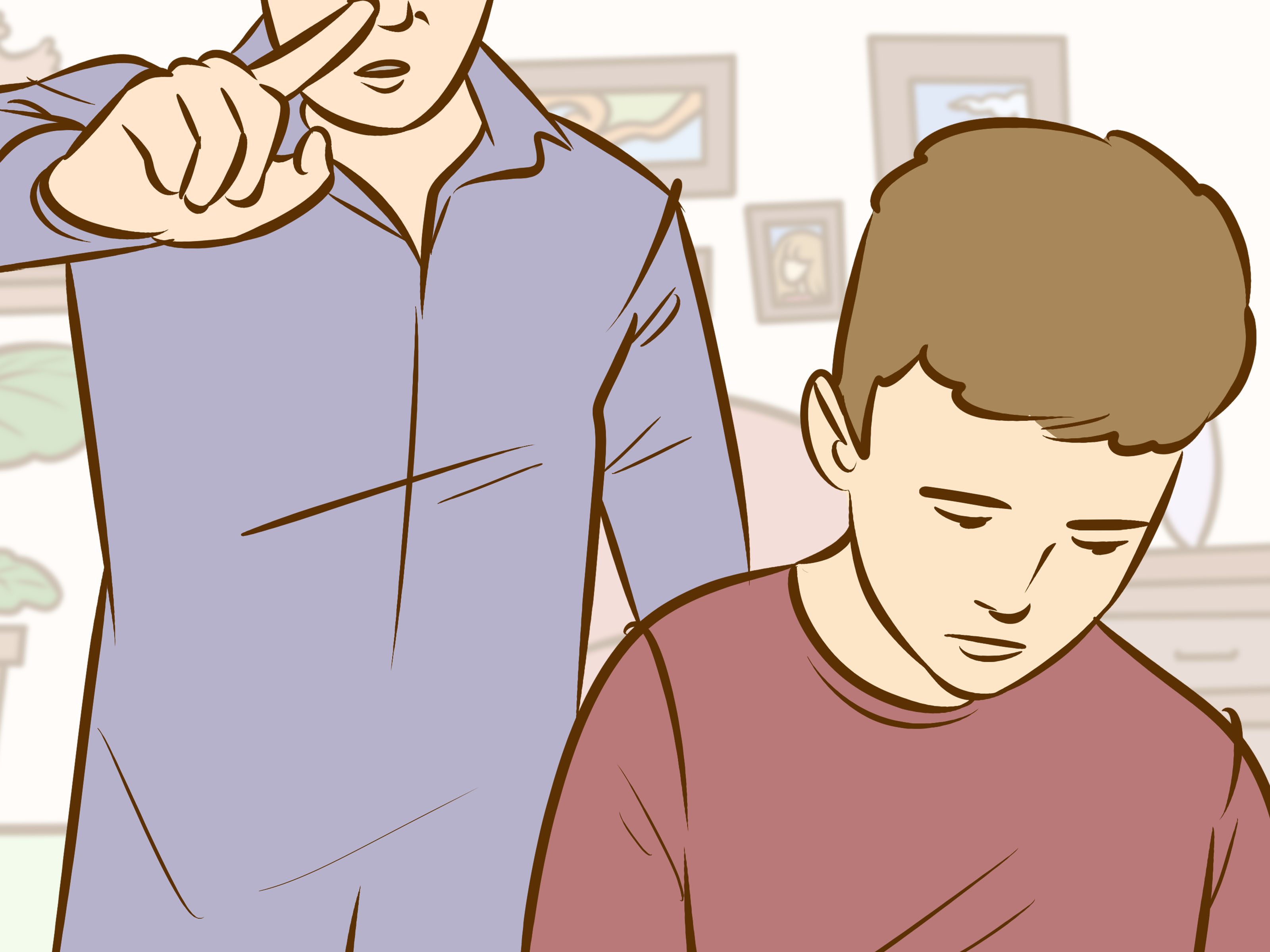
You’ve seen the TikToks. You’ve admired the flow on your favorite skater, rock guitarist, or soccer star. Maybe you’ve even pushed your bangs down in the mirror and thought, “Yeah… this could work.” There’s just one tiny problem: your parents are firmly on Team Short Hair.
If every family trip to the barbershop feels like you’re being drafted into the military, this guide is for you. We’ll walk through how to convince your parents to let you grow your hair, step by step. No sneaking behind their backs, no screaming matches, just solid strategy, good communication, and a game plan that shows you’re mature enough to handle a little extra length.
Let’s turn “Absolutely not” into “Okay, we can try it.”
Why Your Parents Care So Much About Your Hair
First, you need to understand something important: for most parents, this is not really about hair. It’s about what hair represents.
- Reputation: They worry teachers, coaches, or future bosses might judge you for long hair.
- Cleanliness: They picture greasy, unwashed hair hanging in your face and think, “No way.”
- Rules: They might be concerned about school dress codes or sports team policies.
- Safety and bullying: Some parents worry you’ll be teased or targeted because you look different.
- Control and change: Growing up is a big deal for them too. Long hair can feel like one more sign you’re not a little kid anymore.
Psychologists who study adolescence say that hair and clothing are often the first areas where teens want autonomythe power to make their own choices. That’s normal and healthy. It’s also normal for parents to feel a bit nervous when you start changing your look. Your job is to show them this isn’t a rebellion; it’s a reasonable, thought-out decision.
Step 1: Get Clear on What You Actually Want
“Long hair” can mean a lot of things, from just-below-the-ears surfer hair to full-on rock band mane. Before you talk to your parents, figure out what you’re actually asking for.
Pick a style, not just a length
- Look up styles for teen boys with long-ish hairshaggy cuts, middle parts, wavy shoulder-length, etc.
- Save a few specific pictures on your phone to show your parents. “I want this style” is much less scary than “I want long hair… you’ll see.”
- Think about your hair typestraight, wavy, curly, thick, thin. Choose styles that actually fit your texture so it looks intentional, not accidental.
Check the rules before you fight the wrong battle
- Look up your school’s dress code or team rules. If they allow long hair as long as it’s neat, highlight that.
- If there are limits (like “hair can’t touch the collar”), know those ahead of time so you don’t ask for something that’s clearly impossible.
When you show that you’ve done your homework, you look less like a kid chasing a trend and more like a young adult making a thoughtful choice.
Step 2: Build Your “Responsibility” Case
One of the biggest worries parents have is that long hair will turn into one more thing they have to nag you about. So your mission is simple: prove that long hair will not come with extra drama.
Create a simple hair-care plan
You don’t need a 20-step routine, but you do need a basic plan, especially as a teen when your scalp can get oilier.
- Washing: Explain how often you’ll wash your hair so it doesn’t look greasy (for most boys, every 1–2 days is realistic, depending on your hair and activity level).
- Brushing: Promise to brush or comb it so it doesn’t tangle or look wild.
- Face visibility: Agree to keep it out of your eyespulled back with a hair tie, clipped, or styled so you can see clearly.
- Trims: Let them know you’ll still go for regular trims to keep it healthy and shaped, not just “let it grow forever.”
You can literally write this on a note or in your phone and show it to them: “Here’s what I’ll do to keep it neat.” That one move alone already sounds more mature than most adults expect.
Show responsibility in other areas
Parents are much more likely to say yes when you’re already acting responsible. Long hair is a privilege, not a right. Strengthen your case by:
- Turning in homework on time.
- Helping with chores without being asked three times.
- Staying on top of hygieneshowering, deodorant, clean clothes.
- Being respectful in conversations, even when you disagree.
Think of it like unlocking a new “style perk” in real life. You prove you can handle Level 1 (basic responsibilities), then you request access to Level 2 (long hair privileges).
Step 3: Choose the Right Moment to Talk
Trying to negotiate the future of your hair while your dad is late for work and your mom is cleaning up dinner is… not your best move. Timing matters.
Pick a chill moment: maybe after dinner, on a weekend, or during a walk or car ride where no one is rushed. Then say something like:
“Hey, can we talk about something? It’s not an emergency, I just want to explain something that’s important to me.”
This signals that you’re serious and not just randomly complaining about hair for the hundredth time.
Step 4: Talk Like a Team, Not Like Enemies
If you go in with “It’s my hair, you can’t tell me what to do,” the conversation is over before it starts. Instead, approach it like you’re on the same side.
Start by listening
Ask your parents why they don’t want you to grow your hair. Then actually listen. You might hear things like:
- “I don’t want people judging you.”
- “You never style it now. Why would you style it when it’s longer?”
- “Your school might not allow it.”
- “I’m worried people will think you’re trying to be rebellious.”
Reply with something calm and respectful, like:
“I get why you feel that way. Can I tell you why it matters to me?”
Explain why it matters to you
You don’t have to give a dramatic speech, but you should be honest and specific:
- “I like how it looks on me and it makes me feel more confident.”
- “Hair is one way I can express my style without changing who I am.”
- “I know it’s not permanent. If I hate it, I can always cut it shorter again.”
Experts who study teen development say that controlled freedom in things like hair and clothes helps teens build self-confidence and identity. You’re not asking to skip school, get a tattoo, or move to another country. You’re asking for slightly longer hairsomething that can literally be reversed with one haircut.
Step 5: Offer Compromises That Make Them Comfortable
The fastest way to turn a “no” into a “maybe” is to meet in the middle. Try offering compromises such as:
- A time-limited trial: “Can we try it for three months and then re-evaluate?”
- A length limit: “I’ll grow it to just above my shoulders, not down my back.”
- Style boundaries: “I’ll keep it brushed, off my face at school, and tied back for sports.”
- Performance agreement: “If my grades drop or I stop taking care of it, I’ll agree to cut it shorter.”
Parents love seeing that you’re willing to be flexible. It shows you’re not just chasing a trendyou’re thinking like a partner in the decision.
Step 6: Handle Common Parent Objections (With Sample Responses)
Objection 1: “Long hair on boys looks messy and unprofessional.”
You: “I get that a lot of people still think that, but there are also plenty of guys with longer hair who look clean and put togetherathletes, musicians, even some professionals. I’m aiming for a neat style, not a wild one. I’m happy to show you the exact look I want and keep it trimmed so it stays tidy.”
Objection 2: “People will bully you.”
You: “You’re right that some people might say something. But people can tease you for being too tall, too short, wearing glassesanything. If someone is mean, that’s on them. I’d rather learn how to handle rude comments while I’m still at home with your support than be scared to try anything different.”
Objection 3: “Boys shouldn’t have long hair.”
You: “I know that’s how it used to be in a lot of places, but things are changing. You see guys with all kinds of hairstyles now. Hair doesn’t change who I am or what values you raised me with. I’ll still be the same son, just with slightly longer hair.”
Objection 4: “Your school or job won’t hire you like that.”
You: “I’ve checked the school dress code and they allow long hair as long as it’s clean and out of my eyes. When I start looking for jobs, I can always cut it shorter if I need to. Right now, while I’m still in school, seems like the best time to experiment with my style.”
Step 7: What If They Still Say No?
Sometimes, even after your best effort, your parents might still say nofor now. That doesn’t mean you failed. It just means the conversation isn’t over forever.
- Stay calm: Losing your temper only proves their point that you’re “not mature enough yet.”
- Ask what would need to change: “Is there anything I could do to earn your trust on this?”
- Suggest revisiting later: “Could we talk about it again in a few months if my grades and behavior stay good?”
- Use smaller wins: Maybe they’re okay with a slightly longer cut for now; that’s still progress.
Respecting their decisioneven when you don’t like itshows serious maturity. Ironically, that maturity is the exact thing that makes parents more likely to say yes next time.
Step 8: Once They Say Yes, Follow Through
Okay, imagine they finally say the magic words: “Fine, we’ll let you try it.” Do not blow this moment.
- Keep your hair clean and brushed.
- Stick to any agreement you made about length, style, or tying it back at school.
- Stay on top of your responsibilities at home and school.
- Thank them. Seriously. “Thanks for trusting me with this” goes a long way.
When they see that long hair doesn’t turn you into a different person, they’ll relax. Over time, it becomes normal. The more calmly and responsibly you handle it, the less it will be a big deal.
Real-Life Experiences From the Long Hair Journey (Bonus Section)
To help you picture how this might go, here are some real-world style scenarios and “lessons learned” that boys often discover when they grow their hair out.
Ethan, 15: The “Deal” That Actually Worked
Ethan always wanted shoulder-length hair. His dad was strict about “short on the sides, short on the back.” Instead of complaining every time they passed a barbershop, Ethan tried something different. He made a deal.
He told his parents: “If my math grade stays at a B or higher, and I don’t miss any homework for two months, can I grow my hair out to this length?” Then he showed them a picture of a clean, layered style that didn’t look wild or unkempt.
They agreed. He stuck to his side of the deal and, when report cards came out, his dad booked the appointment and even helped him find a stylist who knew how to cut longer hair. Today, his parents barely notice the lengththey mostly notice that he kept his word.
Jaden, 13: The “I’ll Take Care of It” Experiment
Jaden’s mom was convinced that long hair would mean knots, grease, and constant nagging. So Jaden went into full “hair care scientist” mode. He researched a simple teen hair routine, learned how often he should shampoo for his thick, wavy hair, and picked up a brush he actually liked using.
Then he did something surprising: he started following the routine before his hair was long. He kept his medium-length cut clean and styled like he already had the long hair he wanted. A few weeks later, his mom realized she wasn’t reminding him about showers or brushing anymore.
When he brought up long hair again, he said, “I’ve already proven I can take care of it. I’ll keep doing exactly what I’m doing now, just with a longer cut.” She didn’t say yes right away, but she stopped saying no automatically. Within a couple of monthsand a lot of responsible behaviorshe finally gave the green light.
The “Unexpected Reactions” Phase
Once you start growing your hair out, people will notice. Some will say it looks awesome. Some might joke about it. A few might not like it at all. That’s part of the process.
- Your friends: Some will say, “Bro, it looks sick.” Others might tease you for “going emo” or “starting a band.” Laugh it off and remember: it’s your head, not theirs.
- Adults: Teachers or relatives might need a while to adjust. If you’re respectful and keep your hair neat, most of them will move on after the initial surprise.
- You: There will be weird in-between stages where your hair flips out, won’t part right, or sticks to your forehead during gym. Stick with it. Every long-haired guy went through the awkward middle zone.
A lot of boys with long hair say the biggest lesson they learned wasn’t about hair products or styling tricksit was about confidence. When you commit to a look you like and handle criticism calmly, you build a kind of inner strength that lasts way longer than any hairstyle.
What Parents Notice Over Time
At first, your parents may see long hair as a threat: “Is this the beginning of rebellion?” Over time, if you stay polite, keep your responsibilities, and show up as the same kid they’ve always loved, the hair becomes background noise.
Many parents eventually realize a few key things:
- Their son can look responsible and respectful and have long hair.
- Hair really is temporaryif it becomes a problem, it can be cut.
- Letting you make decisions about your appearance helps you grow into a confident, independent adult.
That’s the real win here. Yes, you want the flow, the man bun, the surfer waves, or whatever look you’re after. But you’re also building skillsrespectful communication, compromise, responsibilitythat will help you negotiate bigger things later in life: curfews, driving, jobs, and more.
So if you’re dreaming of long hair, don’t just argue. Plan. Prepare. Communicate. Prove. When you do that, you’re not just growing your hairyou’re growing up.
SEO JSON block