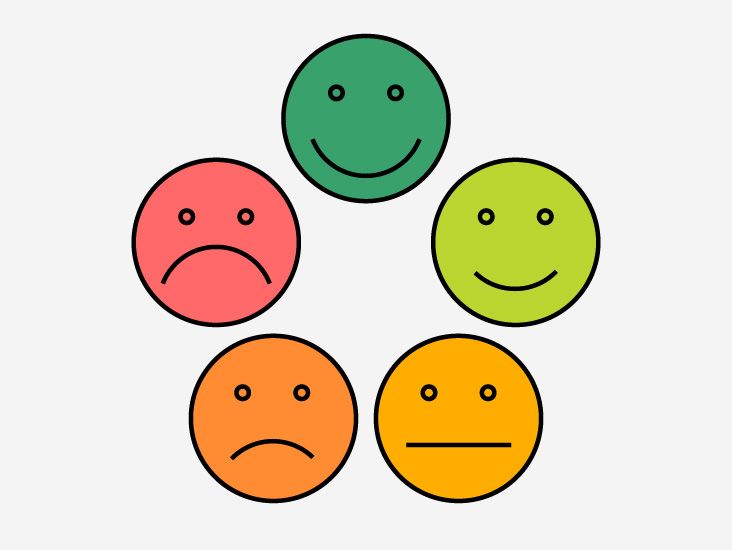
“On a scale of zero to 10, how bad is your pain?” It is one of the most familiar questions in health care, right up there with “Are you taking any medications?” and “When did this start?” The pain scale question sounds simple, but it is not asking you to win an Olympic event in toughness. It is a quick way to turn a private, hard-to-describe experience into useful information that you and a health care professional can discuss.
A pain scale does not diagnose appendicitis, explain a migraine, or magically reveal why your back decided to become a grumpy houseguest. What it can do is help track pain intensity, show whether treatment is helping, and give clinicians a clearer starting point for a fuller pain assessment. Used well, a pain score becomes more than a number. It becomes part of the story.
What Is a Pain Scale?
A pain scale is a tool used to measure how much pain a person feels. Because pain is personal, no blood test or scan can fully measure it. Two people may have the same injury and describe completely different levels of pain. That does not mean either person is exaggerating, being dramatic, or auditioning for a medical drama. It means pain is influenced by the body, nervous system, past experiences, stress, sleep, mood, and many other factors.
Most pain scales focus on pain intensity: how strong the pain feels at a particular moment. Others also consider the type of pain, where it occurs, how long it lasts, and whether it interferes with daily life. A good assessment may include questions such as:
- Where does it hurt?
- What does it feel like: sharp, throbbing, burning, cramping, aching, or electric?
- When did it begin?
- What makes it better or worse?
- Does it affect sleep, walking, work, school, appetite, or mood?
In other words, the number matters, but it is not the entire movie trailer. It is one scene in a much larger story.
Why Health Care Professionals Use Pain Scales
Pain scales create a shared language between patients and clinicians. Saying “my knee hurts a lot” is important, but a score can make it easier to record changes over time. For example, if your pain was an 8 before treatment and a 4 an hour later, that suggests something changed. The next question is whether that change helped you move, breathe, sleep, eat, or function more comfortably.
Hospitals, clinics, urgent care centers, dental offices, physical therapy practices, and home-care teams use pain scales for several reasons:
- To screen for pain during an appointment or hospital stay.
- To determine whether pain is improving, worsening, or staying steady.
- To evaluate how well medication, rest, ice, heat, movement, therapy, or another treatment is working.
- To identify when a more detailed evaluation may be needed.
- To document pain consistently across different members of a care team.
A pain scale is especially helpful after surgery, an injury, a procedure, or during treatment for an ongoing condition. It can also help people with chronic pain notice patterns that might otherwise hide in the background, like pain that spikes after poor sleep, a long car ride, a stressful week, or attempting to clean the garage in one heroic afternoon.
Common Types of Pain Scales
1. Numeric Rating Scale: The Familiar 0-to-10 Pain Scale
The Numeric Rating Scale, often called the NRS, is the pain scale most people recognize. You choose a number from 0 to 10:
- 0 means no pain.
- 10 means the worst pain imaginable or the worst pain possible for you.
A clinician may ask, “What is your pain right now?” or “What was your worst pain in the past 24 hours?” Those are different questions, so answer the one being asked. Your current pain might be a 3 while your worst pain earlier in the day was an 8. Both answers can be useful.
Some health systems loosely group scores into mild, moderate, and severe ranges. However, these categories are not universal, and a score should never be treated like a personality test result. A “6” is not automatically more urgent than a “4” without considering symptoms, cause, location, function, and other warning signs.
The numeric pain scale works best when you use the same personal reference point over time. Do not compare your pain to someone else’s broken ankle, labor story, tattoo session, or legendary sports injury. Your score should describe your pain as honestly as possible.
2. Visual Analog Scale: Marking Pain on a Line
A Visual Analog Scale, or VAS, uses a straight line with “no pain” at one end and “worst possible pain” at the other. Instead of picking a whole number, you mark a spot on the line. The farther your mark is from the “no pain” end, the stronger the pain is considered.
This type of pain assessment can be helpful in research, specialty care, and situations where a clinician wants to measure small changes. For example, moving from a mark near the far end of the line to the middle may show meaningful improvement, even if the pain is not completely gone.
The VAS can be a little less convenient than saying “seven,” especially when someone is tired, dizzy, in distress, or trying to fill out paperwork while wearing a hospital gown that has apparently been designed by an enemy of pockets.
3. Verbal Descriptor Scale: Mild, Moderate, or Severe
A Verbal Descriptor Scale uses words instead of numbers. A person may choose among options such as:
- No pain
- Mild pain
- Moderate pain
- Severe pain
- Very severe pain
- Worst possible pain
This approach can be useful for people who prefer words to numbers or who have difficulty with numerical scales. It may also be helpful when a patient speaks a different language, has limited vision, or feels that choosing a number does not capture the experience well.
The drawback is that one person’s “moderate” may be another person’s “severe.” That is why clinicians often ask follow-up questions about function, sleep, movement, and symptoms rather than relying on one word alone.
4. Faces Pain Scales
Faces pain scales use a series of drawings that show increasing levels of discomfort. They are commonly used with children and can also help adults who have difficulty describing pain with numbers or words.
The Wong-Baker FACES Pain Rating Scale is one well-known example. The person choosing from the scale should select the face that best represents how much physical pain they feel. It is a self-report tool, not a guessing game for parents, caregivers, teachers, or clinicians. Someone may look calm, smile politely, or keep scrolling on their phone while still having significant pain.
For children, it helps to explain the scale clearly: “These faces show how much something can hurt. Point to the face that shows how much you hurt right now.” Avoid framing it as happy versus sad. A child can be anxious, frustrated, tired, or scared without that being the same thing as pain.
5. Observational Pain Scales for Nonverbal Patients
When a person cannot reliably report pain because of age, illness, sedation, developmental differences, or a communication barrier, clinicians may use an observational pain scale. One common example is the FLACC scale, which looks at facial expression, leg movement, activity, crying, and consolability.
These tools are valuable, especially for infants and people who cannot speak for themselves. Still, observation is not a perfect window into pain. Some people become quiet when they hurt. Others move constantly. Some cry, while others freeze. Whenever a person can self-report pain, their own report should remain central to the assessment.
How to Use a Pain Scale Accurately
The goal is not to choose the “correct” number. There is no official pain-scale referee holding up scorecards. The goal is to give a consistent, useful answer.
Rate the Pain You Feel Right Now
Unless someone asks about your average or worst pain, rate what you feel at this moment. Think about the pain itself, not how worried you are about it, how inconvenient it is, or whether you feel guilty about missing work or school. Those things matter too, but they are separate pieces of the conversation.
Describe More Than the Number
After giving a number, add a few details. For example:
- “It is a 6 out of 10, mostly on the lower right side of my abdomen, and it is getting sharper.”
- “It is a 4 when I sit still, but an 8 when I take a deep breath.”
- “It is a 5 in my neck, but the tingling in my hand is new.”
- “It is a 7 at night, and I am waking up several times.”
These details often matter more than trying to decide whether your pain is technically a 6.5 or a 6.75. Your body is not filing a tax return.
Track Pain in a Simple Diary
If you have recurring or chronic pain, a pain diary can make appointments much more productive. It does not need to be fancy. A notes app, calendar, or small notebook works fine. Record:
- Date and time
- Pain score
- Location and quality of pain
- Possible trigger, such as activity, stress, sleep, food, or a long drive
- What you tried for relief
- Whether it helped
- What the pain stopped you from doing
For example: “Tuesday, 7:30 p.m.: headache 7/10, throbbing behind right eye, started after a missed lunch and long screen time. Rested in a dark room and drank water. Down to 4/10 after 45 minutes.” That is far more useful than arriving at an appointment three weeks later and saying, “I think it has been bad-ish.”
Include Function in Your Answer
For many people, a meaningful pain-management goal is not “zero pain forever.” It may be sleeping through the night, walking the dog, attending class, cooking dinner, taking a shower without needing a recovery period, or getting through physical therapy safely.
Try adding one functional detail to your score:
- “It is still a 5, but I can walk farther than yesterday.”
- “It dropped from an 8 to a 4, and now I can take a full breath.”
- “The number is unchanged, but I slept six hours instead of two.”
This helps clinicians understand whether a treatment is improving real life, not merely moving a number around.
What a Pain Scale Cannot Tell You
A pain score is useful, but it has limits. A 10 out of 10 does not automatically reveal the cause of pain, and a 2 out of 10 does not automatically mean a condition is harmless. Some dangerous problems may begin with relatively mild pain. Some long-term conditions can cause severe pain without producing obvious changes on an X-ray or blood test.
That is why clinicians consider pain alongside vital signs, examination findings, medical history, symptoms, and testing when needed. Do not downplay pain because you are worried about “bothering” someone, and do not inflate a score because you think a higher number is the only way to be taken seriously. Clear, specific, honest information gives you the best chance of getting appropriate care.
When Pain Needs Urgent Medical Attention
Seek emergency care or call 911 in the United States for pain accompanied by symptoms such as chest pressure or trouble breathing, fainting, new confusion, sudden weakness or numbness on one side of the body, difficulty speaking, a sudden severe headache unlike usual headaches, major injury, uncontrolled bleeding, severe burns, or severe abdominal pain with repeated vomiting or a rigid abdomen.
Urgent evaluation may also be important for rapidly worsening pain, pain during pregnancy with bleeding or concerning symptoms, new severe pain after surgery, or pain with fever, swelling, redness, weakness, loss of bladder or bowel control, or an inability to use part of the body normally. In these situations, the number on the scale matters less than the full symptom picture.
Real-World Experiences With Pain Scales: What People Often Learn
Using a pain scale can feel strange at first. Many people hesitate because they do not know what counts as a “real” 10. They may think a 10 must mean being unable to speak, crying constantly, or dramatically clutching a wall while dramatic music plays. In reality, a 10 is personal. It means the worst pain you can imagine or have experienced, not the worst pain another person thinks you should be having.
One common experience is realizing that pain changes depending on the question. Someone recovering from a sprained ankle might report a 2 while resting on the couch but a 7 when climbing stairs. A person with a migraine may describe a 4 in a dark room but an 8 under bright lights or while trying to concentrate in class. Neither answer is inconsistent. It simply shows that movement, light, posture, stress, or activity changes the pain experience.
People with chronic pain often discover that a number alone does not fully explain their day. A person may rate their pain as a 6 but still make breakfast, attend work, and take a short walk because they have learned pacing strategies. Another person may rate pain as a 4 but be unable to function well because fatigue, nausea, dizziness, poor sleep, or fear of triggering worse pain are part of the picture. This is why adding functional information can be so helpful.
Parents often notice that children respond better when a faces scale is introduced calmly and without pressure. Rather than asking, “Does it hurt a lot?” which can accidentally suggest an answer, it may work better to say, “Point to the face that matches how much you hurt right now.” Children can also benefit from being asked about location: “Show me where it hurts,” followed by gentle questions about whether the pain feels sharp, hot, sore, itchy, or like pressure.
After surgery or a procedure, people sometimes expect pain treatment to erase every sensation. In reality, the immediate goal may be to reduce pain enough to breathe deeply, rest, move safely, and participate in recovery. A person might say, “It is still a 5, but I can get out of bed and walk to the bathroom now.” That can represent meaningful progress, even if the score is not zero.
Another experience is learning that reassessment matters. If you receive a treatment for pain, it is reasonable to notice and report what happened afterward. Did the pain drop from a 7 to a 4? Did it stay the same? Did it return quickly? Did it make you sleepy, nauseated, dizzy, or more comfortable? These observations help a care team adjust the plan rather than guessing.
People also learn that looking “fine” does not always mean feeling fine. Some people stay quiet because they do not want to be a burden. Others have lived with pain so long that a high number feels normal to them. Clear reporting is not complaining. It is health information. Saying, “My pain is a 7, it is burning down my leg, and I cannot sleep,” gives a clinician something concrete to investigate.
The most useful habit is consistency. Use the same scale when possible, rate the same kind of pain at similar times, and include a short description of what changed. Over days or weeks, those small notes can reveal patterns that memory alone may miss. Pain may be complicated, but describing it does not have to be.
Conclusion
A pain scale is a practical communication tool, not a toughness contest and not a diagnosis. Whether you use a 0-to-10 numeric scale, a visual line, a verbal scale, or a faces chart, the most helpful answer is honest and specific. Pair your score with details about location, quality, timing, triggers, and daily function. That combination gives health care professionals a clearer picture and gives you a stronger voice in your own care.
Note: This article is for general education and is not a substitute for a medical evaluation. New, severe, rapidly worsening, or alarming symptoms should be assessed promptly by a qualified health professional.