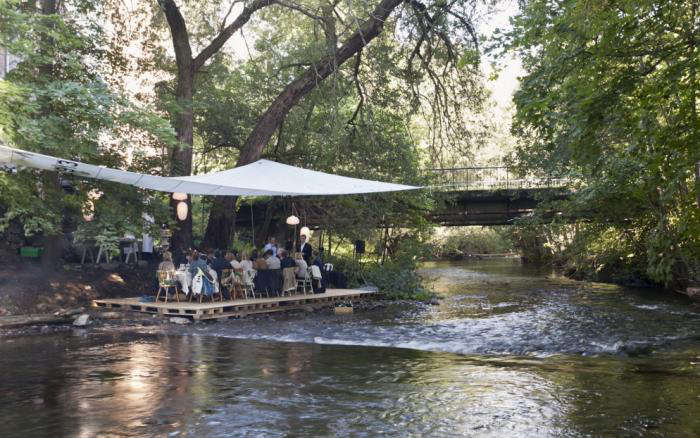
Some cities do dinner. Oslo, naturally, decided dinner should also drift, glow, smolder, and possibly make you reconsider every sad desk salad you have ever eaten. A floating dinner party in Oslo is not just a meal with a nice view. It is the kind of experience that turns a reservation into a story, a table into a stage, and the Oslofjord into the world’s most overqualified dinner guest. Add a Michelin-star chef to the mix, and suddenly the evening starts sounding less like travel planning and more like a Scandinavian fever dream with excellent wine pairings.
That, honestly, is the magic. Oslo is one of those rare capitals where urban cool and raw nature do not politely nod at each other from across town. They sit together at the same table. One minute you are standing on the roof of the Opera House, looking over the water like you personally designed the skyline. The next, you are heading toward a waterfront restaurant, a harbor sauna, or a silent electric cruise that makes the city feel as if it is floating right along with you. In that setting, a dinner party on the water does not feel gimmicky. It feels inevitable.
Why Oslo Is the Perfect City for a Floating Dinner Party
Oslo has spent the past decade polishing its waterfront into one of Europe’s most stylish urban playgrounds. The city’s relationship with water is not decorative; it is structural. Ferries crisscross the Oslofjord, locals jump into the water after sauna sessions, and waterfront neighborhoods such as Bjørvika and Aker Brygge make the shoreline feel like an extension of the dining room. That matters because a floating dinner party works best in a place where the water is not an afterthought. In Oslo, it is the whole mood.
Summer turns that mood up to eleven. Long daylight hours stretch the evening until your internal clock gives up and goes home. The harbor glows. The air stays bright well past the hour when most cities have already called it a night. Oslo in summer is deeply unfair to other cities, and that unfair advantage is exactly what makes outdoor dining feel cinematic rather than merely convenient.
Then there is the food culture. Oslo’s dining scene has matured into something sharp, self-assured, and deeply rooted in local ingredients. This is a city where modern Nordic cooking is not just a buzz phrase tossed around by people who own very expensive tweezers. It is a real culinary identity built on seafood, foraging, fermentation, seasonality, and an almost poetic attachment to landscape. Forest, fjord, fire, herbs, shellfish, berries, smoke, ice, and clean acidity all show up on the plate with the confidence of regular cast members.
The Real Story That Made This Idea Famous
The title is dramatic, but the concept is not imaginary. The now-famous floating dinner party in Oslo grew out of a real midsummer event staged on the Akerselva River. Guests gathered for a lamplit feast on floating pallets tethered to the riverbank. It was organized by Food Studio in collaboration with Maaemo and coffee roaster Tim Wendelboe, and it leaned hard into fresh seasonal ingredients, outdoor cooking, and an atmosphere that felt halfway between woodland theater and high-design supper club.
That original dinner has all the details a food writer dreams about and every host secretly envies. There was a long table on a pontoon by the river. There were glowing orbs in the trees. There was open fire cooking. There were formal place settings in the middle of nature, which is always delightful because it makes even the most composed guest behave like they have stumbled into a stylish fairy tale. One course featured langoustines cooked in pine butter over open flame, with pine-scented smoke drifting across the table. Another involved wild boar roasted in a pit. The evening ended with carefully sourced Kenyan coffee, because Oslo never misses a chance to remind you it takes coffee just as seriously as it takes tasting menus.
Most importantly, the event captured a version of Oslo that people still chase today: refined but not stiff, wildly beautiful without being overly precious, and cool in the literal as well as social sense. At the time, Maaemo was already one of the city’s culinary powerhouses. Today, it stands as one of Norway’s headline restaurants, proof that the city’s appetite for ambitious dining was never a passing phase.
What the Michelin-Star Chef Actually Adds
A Michelin-star chef changes the energy of a floating dinner party in ways that go beyond bragging rights. Yes, the phrase sounds fabulous. Yes, it looks excellent in a group chat. But the real difference is discipline. A chef working at that level knows how to build a menu around place, timing, and surprise. On land, that means a tightly choreographed tasting sequence. On water, it means designing food that can stand up to breeze, shifting light, transport logistics, and the slightly romantic chaos of dining outdoors.
In Oslo, that culinary logic often starts with ingredients that feel inseparable from Norway itself. Think shellfish still tasting faintly of cold salt water, cod so pristine it barely needs interference, herbs that smell as if they were clipped five minutes ago, berries that bring sharpness instead of syrupy sweetness, and sauces that suggest restraint instead of ego. A Michelin-starred approach does not necessarily mean making dinner fancier. It means making it more intentional.
That is also why the best floating dinner experiences in Norway feel immersive rather than flashy. The chef is not there just to hand you a beautiful plate and disappear back into the galley like a magician protecting trade secrets. The chef is there to translate the landscape. The menu becomes the travel narrative. Suddenly, pine smoke is not a dramatic garnish. It is a memory of the forest. A langoustine is not just seafood. It is Oslo explaining itself one bite at a time.
Oslo’s Food Scene Makes the Fantasy Feel Real
Part of the appeal of writing about a floating dinner party in Oslo is that the city already provides the supporting cast. Waterfront seafood institutions such as Solsiden prove that dining right by the harbor is not a novelty here. Restaurants like Lille Herbern lean into the idea that reaching dinner by a mix of city transit and water feels charming rather than inconvenient. Meanwhile, the broader Oslo restaurant scene has become a serious destination for travelers who plan entire itineraries around what they are going to eat.
Maaemo remains the crown jewel in that conversation, but it is hardly alone. Oslo’s range now spans polished tasting menus, inventive neighborhood restaurants, all-day café culture, exceptional coffee, and a growing number of places where sustainability is not just marketing wallpaper. That matters because the modern traveler wants dinner with a sense of place, not just a table with expensive cutlery and a vague speech about terroir. Oslo delivers that with unusual ease.
Even better, the city’s culinary identity fits the floating format beautifully. New Nordic food is built around contrast: land and sea, smoke and freshness, rustic memory and modern technique. A dinner party on the water amplifies those contrasts. The menu feels sharper. The setting feels more alive. The line between dining and landscape almost disappears.
The New Version: Electric Boats, Quiet Luxury, and Fjord Views
If the original floating dinner on the Akerselva felt like a one-night midsummer legend, Oslo’s newer water-based dining experiences make the concept easier to imagine in real life. Electric dinner cruises on the Oslofjord have added a more polished, bookable version of the fantasy. The idea is simple and extremely persuasive: get on a quiet boat, drift past the city’s shoreline and islands, eat a carefully prepared multi-course meal, and let the water do half the styling.
The quiet is a major part of the appeal. A noisy boat makes dinner feel like transportation. A nearly silent electric vessel makes dinner feel like a spell. Oslo understands this better than most cities. The harbor architecture, the soft northern light, the reflective water, and the clean visual lines of the city all combine into something that feels almost too composed to be accidental.
And if a full dinner cruise sounds too formal, Oslo still offers the same floating logic in more casual ways. Sauna rafts, harbor-side drinks, island ferries, and waterside seafood restaurants all feed into the same experience economy. You are not just eating in Oslo. You are eating with the fjord as a constant companion, and that changes everything.
What a Perfect Floating Dinner Party Menu in Oslo Would Look Like
Start with the Sea
The opening should be bright, cold, and crisp. Oysters with cucumber and dill. Raw scallops with tart apple. Small bites of crab on rye. Maybe a tiny sip of chilled aquavit if everyone is feeling brave and photogenic.
Move into Smoke and Fire
This is where Oslo gets playful. Grilled langoustines with pine butter. Flame-kissed leeks. A broth infused with forest herbs. Something smoky enough to feel primal, but still precise enough that nobody has to attack it with a steak knife like they are at a tailgate.
Let the Landscape Show Off
A great main course on the water should feel deeply Norwegian without turning into a tourism cliché. Halibut with browned butter and seaweed works. So does lamb with berries and root vegetables. Reindeer can work too, if handled with restraint and purpose. The key is elegance, not costume drama.
Finish with Nordic Calm
Dessert should be quiet, clean, and slightly surprising. Think berries, cream, spruce, or a delicate cake that tastes like summer in a language you do not speak but somehow understand. Then, of course, coffee. Oslo takes coffee seriously enough that ending a Michelin-adjacent dinner with a weak cup would probably qualify as a diplomatic incident.
Why This Kind of Dinner Resonates So Strongly Now
Travel has changed. People still want luxury, but they increasingly want it to feel meaningful, specific, and emotionally memorable. A floating dinner party in Oslo checks every box. It is scenic without being passive. It is luxurious without necessarily needing gold-plated nonsense. It is intimate, highly local, and wonderfully hard to copy-paste into another destination.
It also taps into something modern travelers love: the feeling of getting access to a city through atmosphere rather than checklists. Plenty of visitors can say they saw the Opera House. Fewer can say they watched the shoreline blur into twilight while a chef translated Norway into courses and the table seemed to hover between city and nature. One is an itinerary item. The other is a brag wrapped in poetry.
How to Recreate the Experience Today Without Copying It Poorly
If you wanted to stage your own version of this idea, the rule is simple: do not overdecorate what Oslo already does naturally. Let the water be the spectacle. Let the menu reflect the season. Choose a guest list small enough for conversation and large enough for laughter. Use candles, linen, and simple glassware. Skip anything too theme-heavy. No Viking helmets. No fake antlers. The city is elegant enough on its own.
The best version would combine three things: a chef who understands Nordic ingredients, a floating or waterfront setting that keeps the fjord central, and a pace slow enough to let the evening breathe. In Oslo, that is not fantasy. That is just good planning.
The Experience, Extended: What It Feels Like to Be There
Now imagine the evening from the guest’s side, because this is where the whole concept stops sounding like a stylish headline and starts feeling dangerously bookable. You arrive with that mix of curiosity and smugness unique to people who suspect they are about to have a very good night. The air is cool but not cold. The light is still hanging around, doing that Scandinavian summer thing where sunset refuses to commit. You step onto the floating platform or the quiet boat and immediately understand why normal restaurants suddenly seem a little underambitious.
The first sensation is motion, but barely. Just enough to remind you that you are not on land anymore. Glasses catch the light. Water taps softly against wood or hull. Somebody laughs a little too loudly because even elegant people lose their composure when a setting is this pretty. Then the first drink arrives, cold and sharp, and everything clicks into place.
The chef does not need to perform much because the setting is already doing half the work. Still, there is a particular thrill in knowing the menu is being guided by someone with Michelin credentials. Every plate lands with confidence. Nothing feels random. Tiny things matter. The butter tastes better than expected. The herbs smell newly awake. Smoke from the fire or the grill drifts through at exactly the right moment, as if the evening hired its own stylist.
Conversation changes on the water, too. It gets better. Slower. People look up more. Long pauses stop feeling awkward because there is always something to watch: the harbor lights, the shadow of the shoreline, the city reflecting itself in the fjord like it knows it looks good. You stop checking your phone because your phone, frankly, cannot compete.
By the middle of the meal, the whole thing starts to feel wonderfully disorienting. Are you at a dinner party, on a cruise, in a design magazine, or inside a particularly expensive dream? Oslo offers no clear answer. Instead, it sends another course. Maybe seafood with a bright acidic note that cuts through the richness. Maybe something smoky and earthy that tastes like the forest wandered down to the water just to show off. Every course seems to say the same thing: this city contains multitudes, and apparently they all pair well with wine.
Then comes the emotional pivot that great dinners always manage. The meal stops being about novelty and starts being about atmosphere. You realize nobody wants to leave. The water has turned dark and glassy. The skyline has softened. Even the most jaded traveler at the table has gone a little quiet. This is no longer content. It is memory in the making.
And that may be the real reason a floating dinner party in Oslo with a Michelin-star chef sounds so irresistible. It combines the city’s best qualities into one evening: nature, design, hospitality, ambition, and a kind of understated drama that never needs to shout. It is elegant without being icy, theatrical without becoming silly, and luxurious without losing its sense of place. In other words, it is exactly the kind of travel experience people remember for years and then describe badly to friends because the truth sounds too cinematic to be real.
Conclusion
A floating dinner party in Oslo is more than a clever setup. It is a distilled version of what makes the city special: water always within reach, a food culture that respects both wilderness and craft, and a hospitality scene smart enough to let the setting do some of the talking. Throw in a Michelin-star chef, and the result is not just dinner. It is Oslo at its most persuasive.
If you are chasing a travel experience that feels intimate, design-forward, and unmistakably local, this is it. The plates may change. The boat may change. The chef may change. But the appeal remains the same: in Oslo, dinner does not simply happen near the water. Sometimes, gloriously, it happens on it.