If you’ve ever watched a doctor calmly explain a scary diagnosis, you’ve seen medicine at its best. If you’ve ever watched a doctor
sprint into an exam room ten minutes late, half-apologize, half-defend the schedule, and then disappear faster than your co-pay,
you’ve also seen medicine at its… more realistic.
So what happens when a physician is clinically sharpgreat diagnoses, evidence-based care, solid procedural skillsbut struggles with
“customer service”? You know the version: the tone is flat, the bedside manner is awkward, the small talk is nonexistent, and the
follow-up message feels like it was typed with boxing gloves.
The short answer: yes, she can still be a good doctor. The real answer: she can be a good doctor, but she’ll be a better doctorand
her patients will do betterif she treats communication like a clinical skill, not a personality test.
First, Let’s Admit It: “Customer Service” Is a Loaded Term in Healthcare
Many clinicians bristle at the phrase customer service in healthcare, and not because they hate being nice. They hate
the implication that medicine is retail: “Would you like a diagnosis with a side of extra antibiotics today?” (No. Please. No.)
But there’s a useful idea hiding inside the annoying packaging: patients experience care the way humans experience
everythingthrough trust, respect, clarity, and whether they feel heard. Federal patient experience surveys like CAHPS focus heavily
on communication behaviors (listening, explaining clearly, showing respect), not whether the lobby has artisanal cucumber water.
In other words, the best “customer service” in medicine isn’t performative cheerfulness. It’s professionalism plus human connection:
setting an agenda, listening without interrupting, explaining in plain language, and following through.
What Makes a “Good Doctor,” Anyway?
Most patientsand most medical educatorsland on a similar definition:
a good doctor combines clinical competence with interpersonal competence.
That includes the obvious (accurate diagnoses, appropriate treatment, safe prescribing) and the less measurable (empathy, respect,
shared decision-making).
Clinical excellence is necessary, but rarely sufficient
You can deliver the “right” care and still lose a patient’s trust if they feel dismissed. That trust matters because it affects
whether patients share sensitive information, return for follow-up, and adhere to a plan that only works if they actually do it.
Communication is a safety tool, not a personality trait
Research and quality improvement work consistently link effective clinician communication with better patient understanding and
outcomes, higher patient-reported experience, and even clinician experience. That’s not fluff. That’s outcomes.
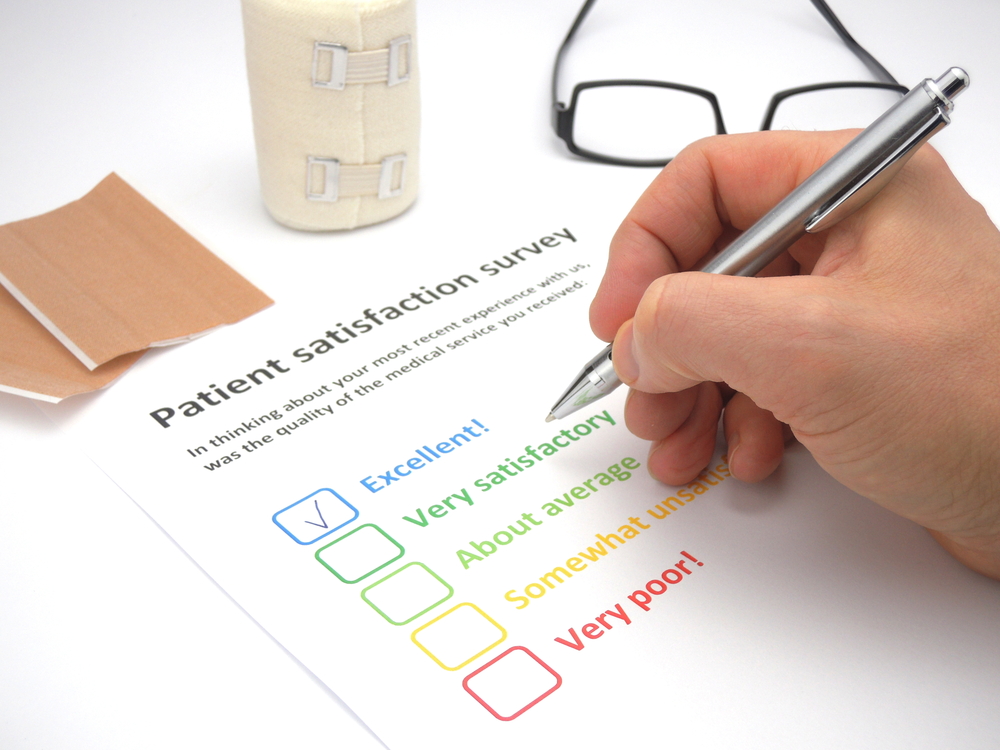
Why Patient Experience Matters (Even When Satisfaction Scores Are Messy)
“Patient satisfaction” gets a bad rap in medicine, sometimes deservedly. A patient can be satisfied because they got what they
wantedeven if what they wanted wasn’t medically appropriate. Some studies suggest satisfaction measures don’t always align neatly
with technical quality metrics, which is why responsible systems treat satisfaction as one signal, not the whole dashboard.
Still, it’s a mistake to shrug off patient experience entirely. Here’s what the evidence and lived reality suggest:
-
Communication reduces risk. Classic research found specific, teachable communication behaviors were associated with
fewer malpractice claims in certain settings. When patients feel ignored or disrespected, they complain moreand escalation becomes
more likely. -
Experience influences adherence. Patients are more likely to follow a plan they understand and helped create.
Empathy and clear explanations aren’t just “nice”; they’re adherence infrastructure. - Trust is the delivery system for care. A brilliant plan that a patient doesn’t trust is just a PDF that never gets opened.
The key is to focus on patient-centered communication rather than chasing ratings. The goal isn’t to “win” the visit.
The goal is to make the care understandable, respectful, and usable.
Why Some Doctors Struggle with “Customer Service” (And It Doesn’t Mean They’re Bad)
Before we prescribe a personality transplant, it helps to name the usual suspects:
1) Training emphasizes competence firstand humanity gets squeezed
Medical education increasingly includes communication and professionalism competencies, but the hidden curriculum still whispers:
“Be efficient. Don’t show uncertainty. Keep moving.” When time is scarce, warmth is often the first casualty.
2) The schedule is a pressure cooker
In primary care, a physician may have 15 minutes to do: rapport, agenda-setting, medication reconciliation, risk assessment, shared
decision-making, documentation, referrals, prior auths, and maybeif the planets alignactual breathing.
3) Burnout makes empathy feel like an extra tab your brain can’t load
When clinicians are depleted, they can sound curt, defensive, or robotic. That doesn’t excuse rude behavior, but it does explain why
some “customer service problems” are actually system problems showing up in a human voice.
4) Some physicians are simply more direct
Directness can be a gift. Many patients prefer clear, no-nonsense guidance. The issue is when directness turns into dismissal:
“You’re fine” instead of “Here’s why I’m not worried, and what to watch for.”
Can She Still Be a Good Doctor? YesBut Here’s the Catch
A physician who struggles with customer service can absolutely be a good doctor if she:
- Delivers safe, evidence-based care and stays within her competence.
- Communicates sufficiently for informed consent, shared decisions, and patient understanding.
- Treats patients with respect, even when saying “no” to inappropriate requests.
- Works on the skill gaps rather than insisting, “That’s just how I am.”
The standard isn’t “be charming.” The standard is “be trustworthy, clear, and respectful.”
The good news: those are learnable behaviors.
The Practical Playbook: Customer Service Skills That Actually Improve Care
The most effective upgrades are small, repeatable, and don’t require the doctor to become a motivational speaker.
Think: micro-skills.
1) Agenda-setting: start the visit like a pilot, not like a jump scare
A simple opener can change everything:
“Let’s make a plan for todaywhat are the top one or two things you want to be sure we cover?”
Patients feel respected, the visit gets structured, and fewer “Oh by the way…” issues explode at minute 14.
2) The “empathetic ear” isn’t therapyit’s clinical efficiency
Empathetic listening doesn’t mean unlimited time. It means a short, genuine recognition:
“That sounds frustrating.” “I can see why you’re worried.” “Thank you for telling me.”
Toolkits from major medical organizations emphasize that these statements help patients feel heardoften making the visit smoother,
not longer.
3) Sit down (yes, really)
Patient experience research and improvement work has repeatedly suggested that when clinicians sit rather than stand, patients often
perceive the clinician as spending more time and being more present. It’s a tiny behavior with outsized impactlike turning your
camera on during a virtual meeting and suddenly remembering everyone is a person.
4) Plain language + teach-back: the “anti-confusion” combo
A good doctor isn’t the one who can say “idiopathic thrombocytopenic purpura” at full speed. It’s the one who can explain the plan in
normal English and confirm the patient understood:
“Just so I know I explained it well, can you tell me how you’ll take this medication?”
5) Warmth without fake cheerfulness
Not everyone does bubbly. That’s fine. Many patients prefer calm competence. The goal is to add a small layer of human presence:
eye contact, a greeting with their name, and a closing line like
“What questions do you have?” (not “Any questions?” which sounds like a trap).
When Things Go Wrong: Service Recovery Without Selling Your Soul
“Service recovery” sounds like something a hotel offers when your room smells like regret. In healthcare, it means responding when a
patient has a bad experiencelong wait, poor communication, a mistake, or a misunderstandingso trust can be repaired.
Healthcare quality organizations describe effective apologies and recovery using clear components: acknowledgment, explanation,
expression of remorse/humility, and (when appropriate) reparation or follow-up.
A simple service-recovery script for clinicians
- Acknowledge: “You shouldn’t have had to wait that long. I hear you.”
- Explain (briefly, without excuses): “Our schedule ran behind because of an emergency case.”
- Apologize: “I’m sorry for the impact on your day.”
- Offer a next step: “Let’s make sure we cover your top concerns now, and if we can’t, I’ll schedule time to finish.”
Notice what’s missing: blaming staff, blaming the patient, or performing a TED Talk about how hard medicine is. (Even if it is hard.
Patients know it’s hard. They’re still sitting in paper shorts.)
How a Doctor Can Be Kindand Still Say “No”
Some physicians struggle with customer service because they feel it’s code for “give the patient whatever they ask for.”
But being a good doctor includes protecting patients from unnecessary, harmful, or low-value care.
Try the “yes-and” structure
“I can see why you’d want antibioticsbeing sick is miserable.
And based on your exam, this looks viral, so antibiotics won’t help and could cause side effects.
Here’s what will help, and here’s what would make me change course.”
This approach respects the patient’s goal while keeping the clinician’s integrity intact.
Team-Based Customer Service: The Doctor Shouldn’t Carry It Alone
Patients don’t experience a doctor in isolation. They experience the entire system: scheduling, check-in, rooming, follow-up calls,
portal messages, billing surprises, and the mysterious black hole where referrals go to retire.
If a physician struggles with “customer service,” the fix is often partly workflow:
- Front-desk scripting for delays and rescheduling, so frustration doesn’t boil over in the exam room.
- Nursing support for education, teach-back, and follow-up instructions.
- Clear portal-message norms (tone, response times, what requires a visit).
- Protected time for complex visits so the doctor isn’t forced into speedrunning empathy.
A physician can improve her interpersonal skills while also advocating for systems that make decent communication possible.
Otherwise, “be nicer” becomes “be nicer while drowning,” which is not a serious strategy.
Conclusion
A physician who struggles with customer service can still be a good doctorespecially if her clinical care is strong and her respect
for patients is non-negotiable. But in modern healthcare, communication isn’t a bonus feature; it’s part of the treatment.
The best doctors don’t necessarily entertain. They listen, explain, set expectations, repair misunderstandings, and help patients feel
safe enough to tell the truth.
The encouraging part is that “customer service” in medicine doesn’t require a personality rewrite. It requires a skills upgrade:
agenda-setting, empathetic listening, plain language, and service recovery. Small habits. Big returns. Fewer complaints. Better
outcomes. And a lot fewer patients leaving the visit thinking, “Well… I guess I’ll just Google it.”
Experience Add-On: 4 Realistic Snapshots from the Exam Room (Bonus ~)
Snapshot 1: The Brilliant Diagnostician with the “Email Tone” Voice.
Dr. K is famous in her clinic for catching what others miss. She notices subtle patterns: weight loss plus night sweats plus a lab
abnormality everyone else shrugged at. Patients get answersreal ones. But her tone is so clipped that people often leave unsure if
she likes them, believes them, or is angry at the concept of humanity in general. One day, a patient says, “You’re the first person
who’s helped me in years… but I’m terrified to ask questions.” Dr. K doesn’t need to become bubbly. She starts using one sentence
before data: “I’m glad you told me.” And one sentence after the plan: “What questions should we tackle first?” The complaints drop.
The clinical care stays excellent. The difference is not charmit’s psychological safety.
Snapshot 2: The Direct Surgeon and the Word “Cold.”
A post-op patient describes Dr. M as “cold” on a survey. Dr. M is confused. The incision healed beautifully. The complication risk was
managed. The follow-up was on schedule. But the patient remembers one moment: when she asked, “Will I be normal again?” Dr. M said,
“That’s not a medical term.” Truealso not helpful. At the next visit, Dr. M tries a different approach: “When you say ‘normal,’ tell
me what you’re hoping to get back towork, sleep, pain-free movement?” The surgeon stays precise while becoming more understandable.
“Normal” becomes a shared goal instead of a vocabulary fight.
Snapshot 3: The Burned-Out Primary Care Doctor and the Late-Visit Explosion.
Dr. S runs behind daily. Patients arrive already irritated. Dr. S walks in defensive: “I only have a few minutes.” The patient hears,
“You’re a problem.” The visit spirals. Eventually, the clinic adds a standard delay script at check-in (“We’re running about 20
minutes behindthank you for your patience”) and gives Dr. S a simple opening line: “Thanks for waiting. I know that’s frustrating.”
It takes five seconds. Patients exhale. Dr. S feels less attacked. The visit becomes cooperative again. It turns out “customer
service” was partly just acknowledging reality out loud.
Snapshot 4: The Portal Message That Went Sideways.
A patient sends a long message: symptoms, fear, and three questions. The physician replies with two words: “Schedule appointment.”
Efficient, yes. Human, no. The patient feels dismissed and posts an angry review. Later, the physician learns a middle path:
“I’m sorry you’re dealing with thisthose symptoms sound stressful. I want to make sure we evaluate this safely, so an appointment is
the best next step. If you have chest pain, fainting, or severe shortness of breath, please seek urgent care.” Same outcome (a visit),
totally different experience (supported, not brushed off). The lesson isn’t that the physician should do free medical care by message.
It’s that a sentence of empathy can prevent days of distrust.