Antarctica is many things: dazzling, brutal, scientifically priceless, and about as forgiving as a tax auditor riding a blizzard. It is the kind of place where courage and danger routinely share the same sleeping bag. That is exactly what makes the story of Dennis “Tink” Bell so haunting. Bell, a young British meteorologist, vanished into Antarctic ice in 1959 while helping survey one of the most remote places on Earth. For 66 years, his fate remained one of those cold, unfinished chapters that seem destined to stay buried forever. Then the glacier shifted, the rocks emerged, and science finally gave his family an answer.
More precisely, what scientists found were Bell’s remains and a remarkable scatter of personal belongings, enough to turn an old mystery into a documented identification. The discovery did not just recover a body from the ice. It recovered a person from history. Bell stopped being a tragic footnote in polar science and became, once again, a real human being: funny, capable, adventurous, and very much loved.
This is the true story behind the headline, and it deserves more than a gasp and a scroll. It is a story about early Antarctic science, hidden crevasses, weather observations in one of the harshest environments on the planet, and the strange way melting ice can return the past when nobody is expecting it.
Who Was Dennis “Tink” Bell?
Dennis Bell was only 25 when he died, but by all accounts he had already packed more curiosity into a quarter-century than many people manage in a full lifetime. He grew up in northwest London and was remembered by his brother as mechanically gifted, inventive, and endlessly hands-on. He liked photography, built radios, understood engines, and seemed like the sort of person who could fix your transmitter, cook your dinner, and crack a joke before dessert.
After a stint in the Royal Air Force for National Service, Bell joined the Falkland Islands Dependencies Survey, or FIDS, the organization that later became the British Antarctic Survey. In 1958, he headed south to Admiralty Bay on King George Island, off the Antarctic Peninsula, for what was supposed to be a two-year assignment. His job as a meteorologist was not glamorous in the Hollywood sense, but it was crucial. Meteorologists in polar stations helped collect and transmit weather data, often by launching balloon-borne instruments and relaying observations by radio. In a remote region where conditions can change with frightening speed, weather science is not a side quest. It is survival with paperwork.
Bell also lived the all-hands-on-deck life common in isolated research stations. Small Antarctic teams did not have the luxury of hyper-specialization. If the food needed managing, the dogs needed handling, or the survey team needed another capable set of hands, people pitched in. Bell reportedly became known as the best cook at the base. In Antarctica, that may be second only to “best person at fixing the heater” on the list of beloved traits.
The Day the Ice Opened
On July 26, 1959, Bell and three colleagues headed out with two dog sledges to climb and survey a glacier near Admiralty Bay. Conditions were difficult. The snow was deep, the dogs were tiring, and the team was crossing a crevassed area covered by soft snow. Bell moved ahead to encourage the dogs onward. Critically, he had taken off or left behind his skis.
Then Antarctica did what Antarctica has done to explorers, scientists, and the overconfident for generations: it exposed the cost of one vulnerable step. Bell fell through a hidden snow bridge into a crevasse, plunging roughly 100 feet.
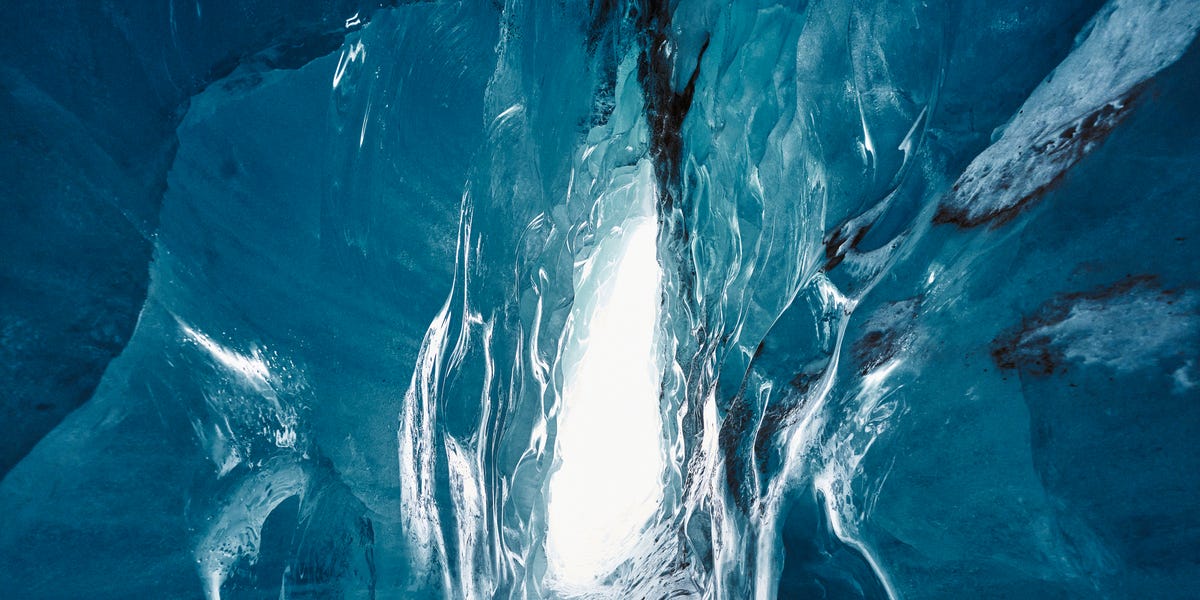
Crevasses are not tidy movie cracks in the ice with dramatic lighting and a helpful soundtrack. They are deep fractures in the brittle upper part of a moving glacier, and they can be concealed by thin layers of snow that look deceptively solid. On the surface, everything may appear calm and white and almost innocent. Underneath, there may be a vertical trap waiting like the planet’s least friendly surprise party.
Bell’s colleague Jeff Stokes heard him and attempted a rescue. He lowered a rope, and Bell tied it to his belt. With help from the dogs, Stokes began pulling him up. For a moment, it almost worked. Then, near the lip of the crevasse, Bell’s belt snapped. He fell back. After that, there was no response to Stokes’ calls.
Rescue teams returned, but the conditions were harsh, the location was difficult, and Bell’s body was never recovered. For his family, the loss remained suspended in a terrible kind of unfinished time. There was grief, of course, but not the closure that comes with bringing someone home.
Why It Took 66 Years to Find Him
The short answer is brutally simple: glaciers keep secrets well.
Bell disappeared into a dynamic icy environment where snow accumulates, ice shifts, and terrain changes slowly enough to mock a human lifetime. In 1959, field technology was limited compared with what researchers have now. Antarctic expeditions still relied on grit, practical skill, dog teams, rope work, and whatever margin of luck the continent felt like allowing. Once Bell was lost inside that system of snow and ice, recovery became overwhelmingly difficult.
For decades, nothing changed publicly. Then, in January 2025, personnel from the Henryk Arctowski Polish Antarctic Station found human remains and personal artifacts near Ecology Glacier on King George Island. A larger team later returned and recovered more remains and more than 200 items, including radio equipment, a flashlight, ski poles, a watch, a knife, and part of a pipe stem. That collection did something powerful: it transformed a grim possibility into a deeply personal historical reconstruction.
The discovery also fits a broader pattern scientists and journalists have noted in recent years. As glaciers and ice patches retreat, they sometimes expose long-hidden bodies, tools, and artifacts. That does not make the process less tragic. If anything, it makes it stranger. Ice preserves, but once it reveals something, the clock starts ticking. Objects degrade. Context can be lost. Recovery suddenly becomes urgent.
How Scientists Confirmed the Identity
Finding remains in Antarctica is one thing. Proving who they belong to is another.
After the remains were recovered, they were transported and subjected to forensic DNA testing. Samples from Bell’s brother David and his sister Valerie were used for comparison. The testing confirmed that the remains were Dennis Bell’s, with the results showing the relationship was more than one billion times more likely than not. In science-speak, that is the opposite of “maybe.”
That confirmation matters because stories like this can drift into legend if they are not anchored by evidence. DNA turned an emotionally compelling discovery into a formally established fact. Bell was no longer just likely found. He was identified.
And that changed everything for the people who had carried his absence for more than half a century. Suddenly this was not only polar history. It was family history coming home at last.
Why a Meteorologist in Antarctica Matters More Than You Might Think
At first glance, the words meteorologist in Antarctica may sound niche. But Bell’s work sat at the intersection of exploration, safety, and global science. Weather balloons and upper-air observations help scientists measure temperature, humidity, pressure, and wind through the atmosphere. That kind of data has long been essential for forecasting and atmospheric research. In Antarctica, where weather is not merely inconvenient but operationally decisive, it becomes even more important.
Bell’s daily routine likely looked less like a cinematic adventure and more like disciplined scientific persistence: observations, radios, launches, logs, transmissions, and the repetitive labor that makes knowledge possible. That is one of the most compelling details in this story. Bell was not chasing fame. He was doing the practical, demanding work that helps humanity understand a planet that does not explain itself willingly.
Modern Antarctic programs still depend on meteorological measurements and balloon-based observations, whether for atmospheric chemistry, ozone monitoring, climate science, or operational weather forecasting. In that sense, Bell belongs to a longer scientific lineage. He was part of the era that helped build Antarctica from a blank white mystery into one of the world’s most important research frontiers.
The Hidden Horror of Crevasses
Bell’s death also reminds us that Antarctica’s danger is often invisible until it is not. Crevasses form because glaciers move. Different parts of the ice travel at different speeds, causing the brittle surface to crack. Some crevasses are obvious and terrifying. Others are masked by snow bridges so thin they can collapse under a person’s weight without warning.
That is why modern polar programs invest so much in glacier travel, crevasse awareness, and field safety. Today’s teams use better training, improved logistics, and far more advanced equipment. Yet even now, Antarctic fieldwork is not casual. It requires planning, discipline, and a profound respect for terrain that looks smooth from a distance and lethal up close.
Bell’s story is heartbreaking partly because the rescue nearly succeeded. That detail lands with a thud. It was not a clean disappearance into the unknown. It was the kind of loss that feels close enough to touch, and therefore impossible to stop thinking about.
What This Discovery Says About Antarctica, Memory, and Time
There is something almost literary about a glacier releasing its evidence 66 years later. Antarctica already plays tricks on time. Sunlight can linger forever in summer and vanish for long stretches in winter. Human beings come and go. The ice remains. Then, all at once, it doesn’t. A few rocks emerge, a few bones appear, and history gets revised.
Bell’s recovery also arrives in a period when researchers are paying close attention to glacial retreat across Antarctica and beyond. Scientists have long documented that some Antarctic glaciers are thinning and retreating, though rates vary by location and underlying conditions. The point is not to force Bell’s tragedy into a simplistic climate slogan. The point is that the polar landscape is active, changing, and increasingly revealing what it once locked away.
That makes this discovery emotionally layered. On one hand, Bell’s family finally has certainty. On the other, the very processes that can expose the past also signal a changing cryosphere with enormous consequences for science and society. Antarctica never offers just one story at a time.
Experiences Related to This Story: What the Ice Really Holds
Stories like Bell’s resonate so strongly because they compress several human experiences into one unforgettable arc. First there is the experience of the field scientist: the isolation, the routine, the dependence on teammates, and the constant awareness that even ordinary tasks can become extraordinary risks. In Antarctica, “going out to do the job” is never just going out to do the job. Every movement across snow involves judgment. Every weather shift changes the equation. Every safe return is a quiet success.
Then there is the experience of the colleague who survives. Jeff Stokes was not a distant witness to Bell’s accident; he was a man who heard his coworker’s voice, tried to save him, and came agonizingly close. That kind of experience leaves a mark no expedition summary can capture. Polar history is often told through maps, dates, and scientific milestones, but behind those neat records are people who carried fear, guilt, grief, and memory for decades. The cold may preserve objects, but it does not preserve anyone from sorrow.
There is also the family experience, and this may be the most universal part of the story. A disappearance freezes grief in a different way than a confirmed death. Without a body, without a final goodbye, loved ones can remain emotionally suspended between loss and waiting. Bell’s siblings lived long enough to provide DNA and help identify him. Imagine that moment: a telephone call arriving after more than six decades, not with a rumor, not with speculation, but with scientific confirmation. It must have felt surreal, devastating, and healing all at once.
Another experience wrapped into this story is the researcher’s encounter with the past. The Polish team who found Bell’s remains did not just discover bones. They encountered a human life suddenly returned by the landscape: a watch, a knife, radio gear, the practical objects of a working scientist caught in time. Discoveries like that are not treasure hunts. They are acts of responsibility. Once the ice reveals something, the people who find it have to become caretakers of memory.
And finally, there is the reader’s experience, which is why this headline sticks. Bell’s story unsettles us because it reminds us that science is carried out by real people with bodies, families, habits, jokes, and ambitions. We sometimes treat historical researchers as if they were made of archive paper and sepia tones. They were not. They were young. They got tired. They made choices under pressure. They laughed at dinner. They hoped to come home.
That is why this story matters beyond its icy drama. It is not simply about a body found after 66 years. It is about how extreme places test ordinary human qualities: courage, patience, teamwork, grief, and the stubborn hope that one day an unanswered question might finally receive an answer. Bell’s remains emerged from the glacier, but what truly surfaced was recognition. After all those years, the world was reminded that one meteorologist’s life was not lost to history after all.
Conclusion
The story of Dennis “Tink” Bell is riveting because it operates on two levels at once. On one level, it is an extraordinary real-life mystery solved by persistence, changing ice, and forensic science. On another, it is a deeply human reminder that exploration has always demanded real sacrifice from real people. Bell was not a mythic figure carved from ice and legend. He was a young meteorologist doing hard scientific work in a punishing environment, and then, in a matter of seconds, he was gone.
For 66 years, Antarctica kept the final chapter to itself. Now, at last, that chapter has been returned. Bell’s family has an answer. Polar history has a recovered name. And readers today get something rare in stories about the frozen frontier: not just awe, but closure.