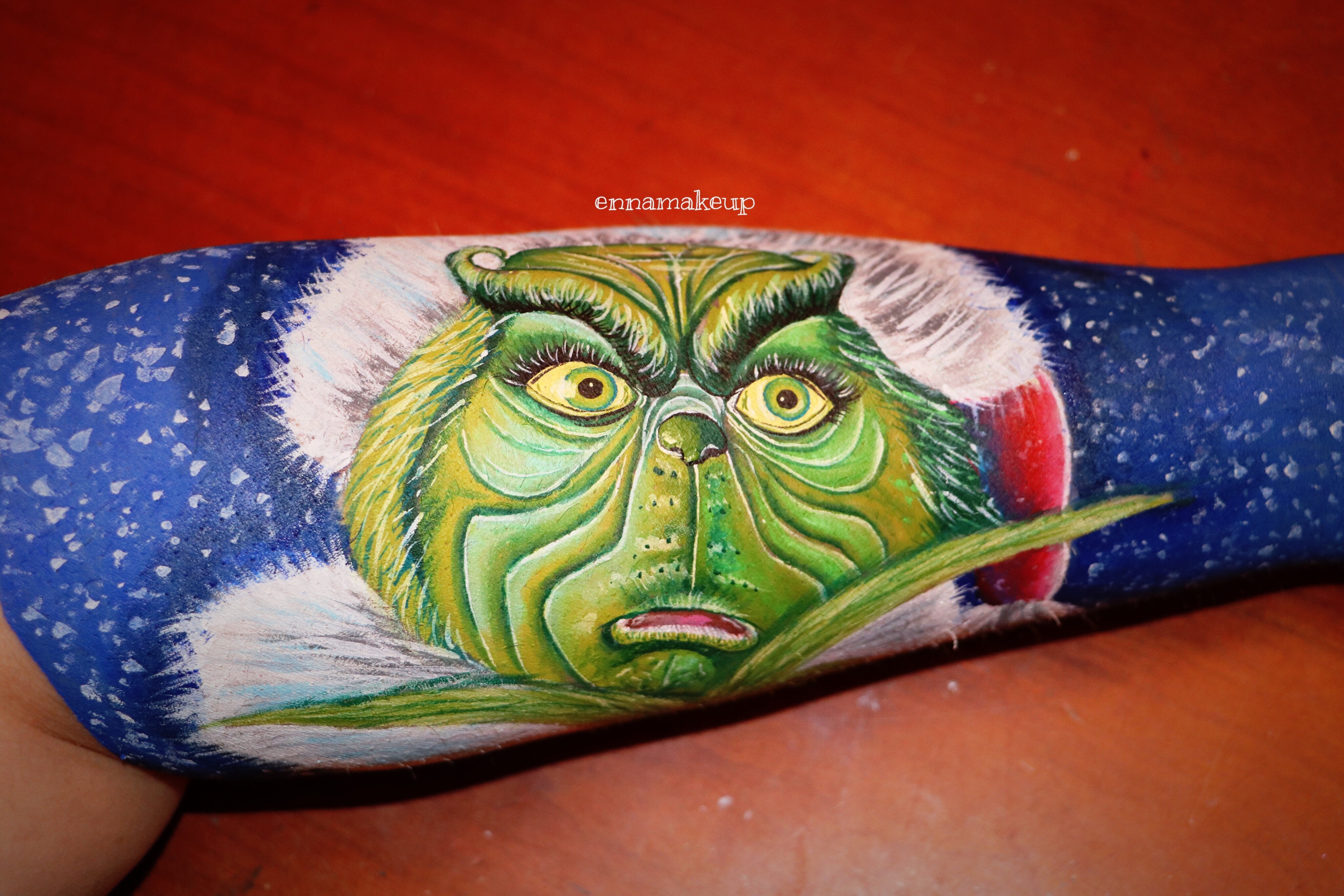
If you’ve ever heard someone say a disabled artist is “inspiring,” there’s a decent chance they meant it as a compliment
and a decent chance the artist rolled their eyes so hard they almost invented a new kind of performance art.
Because the real story isn’t “look what they can do despite disability.”
It’s “look what they make with their bodymind, their tools, their timing, their community, and their point of view.”
“Disabled artist” and “artist with a disability” both show up in disability culture; different people prefer different language.
What stays consistent is this: disability isn’t a creative footnote. It can shape process, aesthetics, themes, access needs, and even the entire
architecture of how art is shared. In the U.S., disability arts has grown into a powerful movementpart studio practice, part civil rights,
part design innovation, and part “please stop putting the ramp behind the trash cans.”
What Disability Changes (And What It Doesn’t)
Disability changes the logistics of art-making more than the legitimacy of art-making. The urge to create doesn’t require a “fully able” body,
a pain-free day, or a brain that never goes off-script. What it does require is a way to translate ideas into materialssometimes with
adaptive tools, sometimes with assistants, sometimes with a completely different workflow than what art school posters implied.
In practice, disabled artists often develop a signature relationship with time and energy. A session might be 20 minutes because fatigue is real.
Or it might be five hours because hyperfocus is also real. Some artists build around tremors, limited grip, low vision, chronic pain, Deaf culture,
neurodiversity, or mobility limitations. Others are intermittently disabled and create in cycles.
None of that reduces the work; it simply changes the path.
From “Accommodation” to Aesthetic
Here’s the part many people miss: access isn’t only a checklistit can become an aesthetic choice.
Audio description can be poetic. Tactile elements can be central rather than “added for accessibility.”
Captions can be designed as typography, not an afterthought.
Disability culture has long argued that access can be creative, not merely corrective.
The Studio: Adaptive Tools, Smart Setups, and “Work With Your Body, Not Against It”
The public often imagines adaptive art as a single gadget that “fixes” everything. Real life is usually a mashup:
a few tools, a few settings, a few habits, and a lot of experimentation. In U.S. disability arts spaces, the goal is often simple:
make the studio fit the artistrather than forcing the artist to fit the studio.
Common Adaptive Approaches
- Stabilizing the workspace: weighted bases for easels, non-slip mats, clamps, and angled tables to reduce strain.
- Grip and reach solutions: built-up handles for brushes, wrist cuffs, extended tools, or switch-friendly devices.
- Digital creation that respects access needs: tablets, styluses, zoom tools, speech-to-text, and customizable interfaces.
- Energy-aware workflows: batching tasks (sketch one day, paint another), working seated, pacing with timers, and planning rest.
- Collaborative making: an assistant sets materials and the artist leads creative directionlike a film director, but with paint.
Community studios such as Creative Growth Art Center in Oakland have become well-known for supporting artists with disabilities
with studio space, supplies, and professional presentationtreating artists as artists, not “therapy projects.”
That professional framing matters: it changes how the work is collected, exhibited, and discussed.
“Access Needs” Are Not a Personality Flaw
Needing an adjustable desk isn’t “high maintenance.” It’s ergonomic reality.
Requesting captions isn’t “extra.” It’s communication.
Asking for fragrance-free space isn’t “too sensitive.” It’s about being able to stay in the room long enough to make the artor see it.
Disability Arts Isn’t a NicheIt’s a Whole Ecosystem
In the U.S., disability arts lives across galleries, museums, theaters, dance studios, classrooms, and online spaces.
It’s also supported (sometimes imperfectly, but meaningfully) by institutions that build infrastructure around access and opportunity.
Programs That Build Pathways
The National Endowment for the Arts (NEA) has published accessibility resources and career-focused guidance aimed at disability inclusion,
emphasizing that access is part of planningnot something sprinkled on at the end.
Meanwhile, centers like UCLA’s National Arts and Disability Center (NADC) have long provided consultation, resources,
and professional development that strengthen the arts community’s capacity to include artists with disabilities.
On the performing arts side, the Kennedy Center’s disability arts and accessibility effortsincluding programs connected to
VSAhighlight disabled artists, emerging talent, and inclusive practice in music, theater, and beyond.
Disability Justice and Performance
Disability arts doesn’t only ask “Is the door wide enough?” It also asks “Who gets to be seen as beautiful, complex, and fully human?”
Disability-justice-rooted performance projects in the U.S., such as Sins Invalid, emphasize liberation, representation,
and cross-movement solidarityusing art to challenge ableism and expand cultural imagination.
When the Stage Moves Differently: Dance, Theater, and Body-Truth
Dance is a perfect place to watch ableist assumptions fall apart in real time. If you believe dance is only about a narrow kind of body,
inclusive companies will politely (and rhythmically) prove you wrong.
Consider integrated dance ensembles such as AXIS Dance Company, which bring disabled and non-disabled performers together
and treat disability as part of the choreographic vocabularynot a problem to hide.
The movement language changes: weight-sharing looks different, balance looks different, partnering looks different.
The result isn’t “lesser.” It’s simply new, and often surprisingly innovative.
Access in Performing Arts
Accessible performance isn’t only “nice to have.” It’s part of audience inclusion. That can include:
- ASL interpretation and open captions (or caption devices)
- Assistive listening systems
- Audio description for blind and low-vision audience members
- Sensory-friendly performances with adjusted lighting/sound and quiet areas
- Wheelchair seating that isn’t in the “bad seat penalty box”
When venues treat these as standard, disabled audience members become regularsnot rare exceptions who have to negotiate every visit like it’s a custom contract.
Museums, Galleries, and the “Access Is Part of the Art” Mindset
Museums in the United States have increasingly expanded disability accessbecause visitors with disabilities are not a special-interest group.
They’re part of the public. That means access to buildings, collections, and experiences.
How Big Institutions Make Access Real
The Smithsonian has publicly described a wide range of visitor accessibility supports (think: accessible entrances,
wheelchair loans, captioning, and more), and it also publishes guidance on accessible exhibition design that encourages multi-sensory,
inclusive planning from the start. This matters because exhibitions aren’t just “objects on walls.”
They’re learning environmentsand disabled people use many different learning styles.
Major art museums like MoMA and The Metropolitan Museum of Art outline accessibility services and
host programs designed for visitors with disabilitiesincluding structured access programs and resources that help visitors plan a smoother experience.
Even the basics (clear info, predictable entrances, respectful staff, seating options) can be the difference between “I left after 10 minutes”
and “I’m coming back next month.”
Design Meets Disability
Disability isn’t only something design should “accommodate.” Disability also creates design.
Museums like the Cooper Hewitt have hosted programming that centers disabled perspectives
as essential to inclusive, innovative designhighlighting how disability experience can lead to better systems and better aesthetics.
The Law, the Standards, and Why Access Isn’t Optional
If you run an arts venue, access is not just good mannersit can be a legal requirement.
Under the Americans with Disabilities Act (ADA), many public-facing spaces (including places of entertainment)
have responsibilities to prevent disability discrimination in how goods and services are offered.
Translation: “We didn’t think about it” is not a reliable strategy.
Organizations like the ADA National Network provide guidance and technical assistance that can help arts administrators
understand practical compliance and better inclusion. Regional arts groups (for example, South Arts) also curate
accessibility resources aimed at arts organizations that want to build access as a core value, not a last-minute scramble.
Meanwhile, disability-focused arts resource hubs (including toolkits and guidance compiled through arts and ADA networks)
emphasize a key point: accessibility works best when it’s built into mission, budget, staffing, marketing, and program designbecause
“we’ll figure it out later” usually becomes “we didn’t budget for it,” which then becomes “sorry, not this time.”
How to Support the Art Of A Disabled Artist (Without Being Weird About It)
If you’re an art lover, curator, teacher, or just a person with functioning internet access, you can support disability arts in practical ways:
For Audiences and Collectors
- Follow disabled artists and disabled-led projectsnot only when a disability awareness month arrives like a seasonal latte.
- Pay for the work. Exposure is not a currency accepted at the pharmacy or the rent office.
- Respect access requests in studio visits, openings, and interviews (captions, seating, pacing, fragrance awareness).
For Curators, Galleries, and Venues
- Budget for access from day one: captioning, interpretation, audio description, ramps, seating, printed materials, and staff training.
- Plan exhibitions for multiple senses: tactile components where appropriate, clear text hierarchy, readable labels, and quiet zones.
- Offer flexible participation: remote options, alternative formats, and predictable schedules when possible.
For Educators
- Teach disability arts history and contemporary practice as part of “art,” not an elective sidebar.
- Provide multiple ways to create: analog, digital, collaborative, and assistive-tech-friendly options.
- Build critique culture with access in mind: clear expectations, multiple formats, and respectful communication norms.
Conclusion: The Art Isn’t “Despite” DisabilityIt’s In Conversation With It
The art of a disabled artist is not a genre defined by limitation. It’s a field defined by perspective, craft, adaptation, and culture.
It includes studio practices shaped by real bodies and real access needs. It includes performing arts that expand what movement can be.
It includes museums learning (sometimes slowly) that “do not touch” is not the only way to experience meaning.
And it includes a growing U.S. ecosystemprograms, toolkits, resource centers, and disabled-led projectsworking to make sure
disabled artists are not just invited into the arts, but recognized as people who actively transform it.
If you want one takeaway: don’t treat access like the boring part you rush through to get to the “real art.”
Access is part of the real artbecause it decides who gets to make, who gets to attend, and who gets to belong.
Experiences Disabled Artists Commonly Share (Added 500+ Words)
When disabled artists talk about their creative lives, the stories often sound less like a single dramatic breakthrough
and more like an ongoing practice of problem-solving with style. One common theme is pacing.
Many artists describe building a rhythm around fluctuating energy: creating in shorter sessions, setting up materials in advance,
or dividing a project into “good-hand days” and “rest-and-plan days.” The result can be surprisingly sustainable.
Instead of waiting for perfect conditions (which, honestly, is a trap for every artist), they plan for reality.
Another frequent experience is the invisible labor of access. Before the first brushstroke or rehearsal,
there may be emails about ramps, seating, lighting triggers, captioning, scent policies, or transportation.
That work is exhaustingand often unpaidbut it’s also the difference between participating and being excluded.
Artists regularly describe the emotional whiplash of being celebrated publicly while privately needing to advocate for basic access.
The win isn’t “being allowed to attend.” The win is when access becomes normal enough that the artist can focus on the art.
Many disabled artists also talk about being misread. A mobility aid might be treated like a tragedy symbol.
A communication device might be treated like a barrier rather than a bridge. A need for captions might be framed as a “special request”
instead of a standard part of audience service. Over time, artists often develop a strong internal filter:
keep the feedback that helps the work, and discard the nonsense that tries to turn disability into a marketing storyline.
In studios and rehearsals, there’s often a practical creativity that becomes its own kind of craft.
Some artists describe building “access kits” the way other artists pack paint: extra charging cables, backup medication schedules,
noise-reducing headphones, tinted lenses, grip supports, snacks for blood sugar stability, or printed communication cards.
These aren’t distractions from art-making. They’re tools that protect the conditions required for art-making.
Community shows up repeatedly in these experiences. Disabled artists often describe the relief of working in spaces where they don’t have to explain
themselves from scratchwhere access needs are treated as normal, where collaboration is respected, and where disabled leadership exists.
In disability arts communities, it’s common to share solutions: which venues actually honor accommodations, how to write access riders,
which grant opportunities understand disability-related costs, and how to pace a project without burning out.
That knowledge-sharing is cultural wealth.
Finally, many artists describe a deep satisfaction in making work that changes the room.
Sometimes it’s an audience member saying, “I’ve never seen my experience on a stage like that.”
Sometimes it’s a curator realizing that multi-sensory interpretation helps everyone engage.
Sometimes it’s simply the quiet power of being presentmaking, showing, teaching, leadingwithout apology.
The art of a disabled artist isn’t only the finished piece. It’s the method, the access craft, and the insistence that creativity belongs to everyone.