If you feel like anxiety has quietly become your full-time job, you’re not alone. Between never-ending notifications, world news, and the daily “did I lock the door?” loop, it’s no wonder so many people are looking at CBD oil for a little extra calm.
CBD (short for cannabidiol) has become one of the most talked-about wellness trends of the decade, and 2025 is the year the market finally grew up: better testing, clearer labels, and a lot more transparency. At the same time, the science is still evolving, and CBD is not an FDA-approved treatment for anxiety. Think of it as a supportive tool, not a magic off-switch.
In this guide, we’ll walk through what the research actually says about CBD for anxiety, how to choose a high-quality oil, and seven standout CBD oils that major U.S. publications and testers have put through their paces. Then we’ll finish with real-world “how it actually feels” experiences to help you decide if CBD belongs in your 2025 self-care toolkit.
Important disclaimer before we dive in
Let’s get the serious stuff out of the way first:
- This article is for general information only and is not medical advice.
- CBD oil sold over the counter is not FDA-approved for treating anxiety. In the U.S., the only FDA-approved CBD drug (Epidiolex) is for certain seizure disorders.
- CBD can cause side effects and interact with medications (especially blood thinners, seizure meds, and some antidepressants).
- Laws around CBD and THC vary by state and country. Always check your local regulations.
Before using CBD oil for anxiety, it’s smart to talk with a healthcare professional who knows your medical history. And if you ever have suicidal thoughts, severe panic, or feel like you might hurt yourself or others, skip the supplements and seek emergency care or mental health support immediately.
Does CBD really help with anxiety?
Short answer: maybe – for some people – and the evidence is promising but not definitive.
Research suggests that CBD interacts with the body’s endocannabinoid system and may influence serotonin receptors involved in mood and anxiety. Several small randomized controlled trials and open-label studies have found that moderate to high doses of CBD (often in the 300–600 mg per day range in research settings) can reduce anxiety symptoms in conditions like social anxiety and generalized anxiety, and can ease situation-specific anxiety such as public speaking or scan-related anxiety in cancer patients.
Systematic reviews and meta-analyses generally conclude that CBD shows potential for anxiety disorders but that the studies are small, use different doses, and don’t give us a clear “standard dose” or long-term safety picture yet. In other words: CBD looks helpful for some people, but it’s not a guaranteed anxiety treatment and shouldn’t replace therapy or prescribed medications without your doctor’s guidance.
CBD oil safety: side effects and risks
While many people tolerate CBD well, “natural” doesn’t mean “risk-free.” Commonly reported side effects include:
- Drowsiness or fatigue
- Dry mouth
- Diarrhea or digestive upset
- Reduced appetite or mild nausea
- Changes in mood or irritability
Higher doses are more likely to cause problems, and CBD can raise liver enzymes, especially at doses similar to those used in prescription CBD (Epidiolex). That’s one reason regular lab monitoring is recommended for people on high-dose CBD medications.
Another big issue is quality control. Independent surveys of CBD products have found that many don’t contain the amount of CBD listed on the label, and some have more THC than advertised or are contaminated with pesticides or heavy metals. That’s why third-party testing and certificates of analysis (COAs) are non-negotiable when choosing a CBD oil.
How we chose the best CBD oils for anxiety in 2025
This 2025 list isn’t just “brands everyone talks about on TikTok.” It’s based on:
- Independent testing and editorial reviews from U.S.-based outlets like Medical News Today, Healthline, and other major health publications that ran hands-on testing panels and product vetting.
- Third-party lab reports – brands must provide recent COAs that confirm cannabinoid content and screen for contaminants like heavy metals, solvents, and microbes.
- Clear labeling and transparency – including hemp source, CBD type (full-spectrum, broad-spectrum, or isolate), potency per serving, and batch numbers.
- Reputation and customer feedback – we favored brands with consistently strong ratings and detailed, authentic reviews about stress or anxiety support.
- Reasonable potencies for anxiety support – usually in the low to moderate range per serving, with options to titrate up gradually.
- Extras that matter – organic or U.S.-grown hemp, thoughtful flavoring, and in some cases added botanicals linked to calm or sleep support.
None of these oils are guaranteed to work for everyone, but they represent some of the most credible, “tried and tested” options available to U.S. consumers in 2025.
The 7 best CBD oils for anxiety in 2025 (U.S. picks)
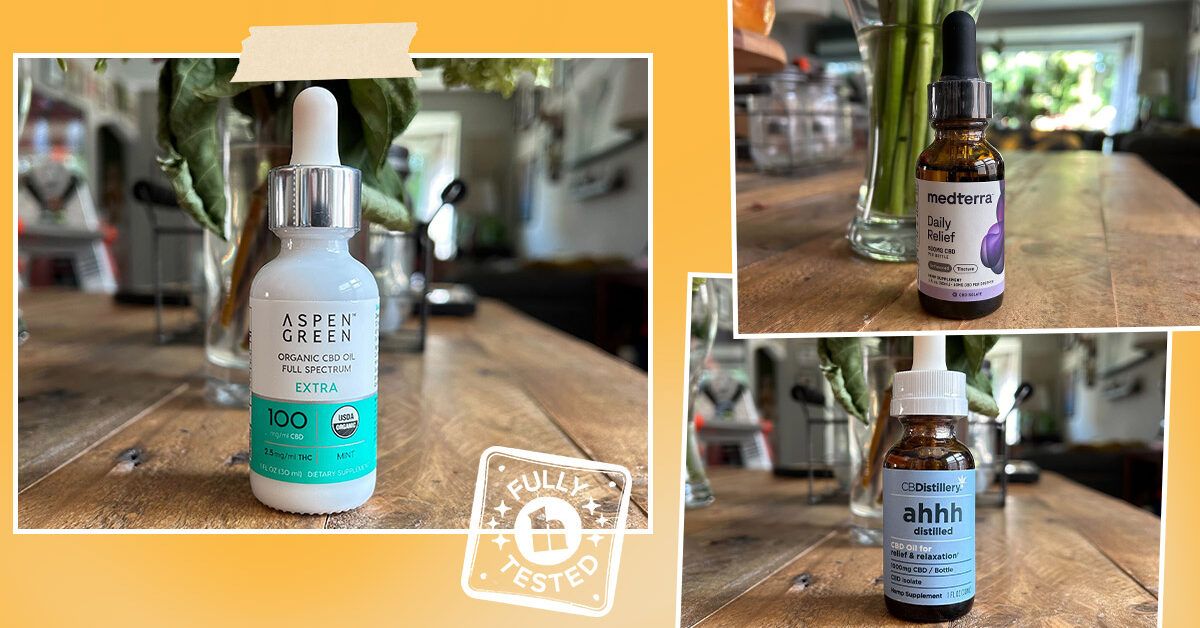
1. CBDistillery Ahhh Distilled Full Spectrum CBD Oil – Best overall for everyday anxiety support
Medical News Today’s 2025 shortlist names this full-spectrum tincture as its “best CBD oil for anxiety,” highlighting its moderate potency and strong user feedback around relaxation and stress relief. It’s made with non-GMO hemp and MCT oil, and each serving provides a gentle dose that suits people who want noticeable calm without feeling knocked out.
- Best for: People who want a classic full-spectrum oil with a middle-of-the-road dose.
- Why it stands out: Full-spectrum formula, U.S. Hemp Authority-certified hemp, and a long track record in the U.S. market.
- Things to note: MCT oil is coconut-derived, so it’s not ideal for those with coconut allergies.
2. Joy Organics Broad Spectrum CBD Oil (Tranquil Mint) – Best THC-free option
Joy Organics frequently appears at the top of “best overall CBD oil” and “best organic CBD” lists, thanks to its USDA-certified organic ingredients and clean formulations. The Tranquil Mint broad-spectrum tincture is a favorite for anxiety-sensitive users who want CBD plus other hemp compounds, but with 0% THC.
- Best for: People who want a THC-free formula (for work, drug testing, or personal preference) while still getting a broad cannabinoid profile.
- Why it stands out: Organic olive oil base, pleasant mint flavor, and multiple strengths so you can scale from mild to more robust doses over time.
- Things to note: Slightly pricier than some competitors, but often praised for taste and consistency.
3. Lazarus Naturals Full Spectrum CBD Tincture – Best for fast-acting support
In hands-on testing, Lazarus Naturals often earns praise for providing more noticeable, quicker-onset effects, which is exactly what some people look for when anxiety spikes. Full-spectrum hemp extract plus higher potencies per serving make this a go-to for experienced CBD users and those who feel that “micro doses” don’t cut it.
- Best for: People who have tried milder oils and felt nothing, or who deal with more intense stress episodes.
- Why it stands out: Potent full-spectrum formula and a strong reputation for affordability relative to strength.
- Things to note: Higher potency means you should start with a very small dose and increase slowly.
4. Medterra Daily Relief CBD Oil – Best for beginners nervous about CBD
Both Medical News Today and Healthline’s product roundups flag Medterra’s Daily Relief oil as a gentle, approachable entry point. It uses CBD isolate, so you’re getting pure CBD without other cannabinoids or terpenes, which some beginners like while they figure out how CBD affects them.
- Best for: CBD newcomers or people sensitive to THC who want a straightforward starting point.
- Why it stands out: Clear dosing, simple ingredient list, and lower-potency options to help you follow the “start low, go slow” rule.
- Things to note: Because it’s an isolate, some people find it less effective than full- or broad-spectrum oils for anxiety relief.
5. Bluebird Botanicals Complete CBD + CBDA Oil – Best for the “entourage effect”
This oil pairs CBD with CBDA (the acidic “raw” form of CBD) plus other naturally occurring hemp compounds. Reviewers and editors often highlight it for people who want to lean into the entourage effect – the idea that cannabinoids and terpenes may work better together than CBD alone.
- Best for: More experienced CBD users who are curious about multi-cannabinoid formulas.
- Why it stands out: Emphasis on whole-plant synergy and detailed lab reports that show exactly what’s in each batch.
- Things to note: The hemp-forward flavor may be strong if you’re used to sweet, flavored oils.
6. Cornbread Hemp Whole Flower / Distilled CBD Oil – Best organic full-spectrum option
Cornbread Hemp shows up repeatedly in independent testing lists for anxiety, stress, sleep, and even recovery products. Its full-spectrum oils are made from USDA-certified organic hemp, with formulas tailored for both daytime clarity and nighttime wind-down.
- Best for: People who want an organic, full-spectrum oil and don’t mind trace THC (within legal hemp limits).
- Why it stands out: Strong editor and user feedback around tension relief and relaxation, plus a “whole flower” philosophy that focuses on the more resin-rich parts of the plant.
- Things to note: Because these are full-spectrum products, consider drug testing policies at work before using them regularly.
7. NuLeaf Naturals Full Spectrum CBD Oil – Best high-strength option
NuLeaf Naturals is known for dialing up potency while keeping ingredient lists minimal. Its full-spectrum oil is often recommended in “strongest CBD oil” categories and can be a fit for people who’ve already experimented with moderate-strength oils and want fewer drops per dose.
- Best for: Long-time CBD users who need higher milligrams per serving and are comfortable titrating carefully.
- Why it stands out: Robust cannabinoid profile and high concentration per bottle, which can make it more cost-effective at higher daily doses.
- Things to note: Definitely not a beginner oil; it’s easy to overshoot your ideal dose if you’re not careful.
How to use CBD oil for anxiety safely in 2025
You’ve picked a bottle. Great. Now what? Here’s a practical, no-drama approach to using CBD oil for anxiety:
1. Start low and go slow
There’s no universal “best CBD dose for anxiety.” Research trials that showed benefits often used 300–600 mg per day, but that’s much higher than what most people use at home – and high doses may also bring more side effects. For everyday use, many experts recommend starting as low as about 5–10 mg once or twice daily, then slowly increasing your dose every few days while tracking how you feel.
2. Choose timing based on your anxiety pattern
- All-day background anxiety: Try splitting your dose into morning and late afternoon or evening.
- Event-based anxiety (presentations, flights, social gatherings): Some people take a dose 30–90 minutes before the trigger, under medical guidance.
- Nighttime “brain won’t shut up” anxiety: A slightly higher evening dose (if tolerated) may help relaxation and sleep onset.
3. Use sublingual dosing correctly
To use CBD oil under the tongue:
- Measure your dose with the dropper.
- Hold the oil under your tongue for 30–60 seconds before swallowing. This allows some CBD to absorb through the tissues in your mouth.
- Avoid chugging water immediately afterward so you don’t wash it away too quickly.
4. Watch for red flags and interactions
Stop using CBD and talk to a healthcare professional if you notice:
- Worsening mood, irritability, or depressive thoughts
- Severe fatigue or dizziness
- Yellowing of the skin or eyes, dark urine, or persistent nausea (possible liver issues)
- Any unusual symptoms after starting CBD alongside prescription medications
Who should be especially careful (or avoid CBD)?
CBD oil isn’t right for everyone. Use extra caution or avoid CBD altogether if:
- You’re pregnant or breastfeeding – there isn’t enough safety data.
- You have significant liver disease or take medications that affect the liver.
- You take blood thinners, certain seizure meds, or immunosuppressants – CBD may raise drug levels.
- You’re in a safety-sensitive job with strict drug testing and are considering full-spectrum products.
When in doubt, a quick conversation with a doctor or pharmacist is worth it before you add CBD on top of an existing treatment plan.
How to read CBD labels like a pro in 2025
With so many brands, the label can feel like a foreign language. Here’s the mini cheat sheet:
- CBD type:
- Full-spectrum – CBD plus other cannabinoids (including up to 0.3% THC), terpenes, flavonoids.
- Broad-spectrum – Similar to full-spectrum but typically with THC removed.
- Isolate – Pure CBD, no other cannabinoids.
- Total CBD vs. CBD per serving: The big number on the front of the bottle is usually total CBD in the bottle. Check the “per mL” or “per serving” line for your actual dose.
- COA (Certificate of Analysis): Look for a recent, batch-specific COA from an independent lab that verifies potency and tests for contaminants.
- Hemp source: U.S.-grown, organically farmed hemp is generally preferred for quality and traceability.
Real-world experiences: what “tried and tested” feels like
Lab tests and clinical trials are important, but let’s be honest: what most people really want to know is, “Will this actually make me feel less like my brain is on fire?”
While everyone’s experience is different, there are a few patterns you’ll hear again and again from people using high-quality CBD oil for anxiety:
First, the effects are usually subtle, not dramatic. Most users don’t describe a sudden wave of euphoria or sedation (and if you do, you may have taken too much or ended up with more THC than expected). Instead, people often say things like, “I still had the same workload, but I wasn’t spiraling about it,” or “The anxiety was still there, but it felt turned down a notch.”
Second, consistency matters. Some people notice a calming effect within an hour of sublingual dosing, especially with full-spectrum oils at moderate doses. Others describe CBD as something that helps more when it’s taken regularly – it becomes part of a daily routine, like exercise or meditation, rather than a one-time fix. Users who track their symptoms often find that sleep improves first, followed by daytime stress resilience.
Third, dosage is a journey, not a one-and-done decision. Many people start with a low dose (for example, 10–15 mg once or twice daily), feel nothing for a week, and assume CBD “doesn’t work.” But those who increase slowly – adding 5–10 mg at a time and giving each change several days – are more likely to find a “sweet spot” where they feel calmer but still clear-headed. It’s common to land somewhere between 20–50 mg per day for mild to moderate anxiety, though some people stay lower and others go higher under professional guidance.
Fourth, CBD works best when it’s not doing all the heavy lifting alone. People who get the most value from CBD tend to pair it with other anxiety-management tools: therapy, regular sleep, movement, breathwork, time outdoors, or even simple habits like not drinking three espressos before a big meeting. CBD becomes a supporting actor in a bigger mental health strategy, not the star of the show.
There are also perfectly valid stories of CBD not being helpful. Some users report no change in anxiety despite trying several brands and doses. Others find that while CBD helps them sleep, it doesn’t touch their daytime racing thoughts. A few notice side effects like grogginess or digestive issues that make them decide the trade-off isn’t worth it. All of this is normal – CBD is not a universal solution, and listening to your own body matters more than any success story online.
Finally, the people who have the best long-term experiences tend to treat CBD like an experiment they’re running on themselves – with data. They keep a short note in a journal or app: what brand they used, dose, timing, what they ate or drank that day, and how their anxiety felt on a 1–10 scale. Over a few weeks, patterns appear: maybe mornings work better than evenings, or maybe a slightly lower dose actually feels calmer than pushing the milligrams higher. In 2025, with so many options on the market, that kind of thoughtful, “scientist of your own life” approach is the best way to figure out whether CBD oil deserves a permanent spot in your anxiety toolkit.
Conclusion: should you try a CBD oil for anxiety in 2025?
CBD oils have come a long way from unmarked dropper bottles and sketchy labels. In 2025, reputable brands are easier to find, lab testing is more transparent, and editors and testers have put dozens of products through real-world use. At the same time, anxiety is a complex condition, and CBD is just one possible tool – not a cure, not a replacement for professional care, and not something to self-prescribe in crisis.
If you’re curious and your doctor gives the green light, starting with a third-party tested oil from a trusted brand, using a low dose, and combining CBD with lifestyle strategies and therapy can be a reasonable experiment. Go in with realistic expectations: you’re aiming for “less overwhelmed,” not “permanently zen with zero worries.”
SEO wrap-up: meta tags and key takeaways
sapo:
Anxiety in 2025 feels louder than ever, and CBD oil has quickly become one of the most popular ways to turn the volume down. This in-depth guide breaks down what the science really says about CBD for anxiety, how to use it safely, and which U.S. brands have actually been tested by editors, health writers, and real users. From gentle THC-free formulas for beginners to robust full-spectrum tinctures for seasoned CBD fans, you’ll find seven standout oils, plus practical advice on dosing, side effects, and reading labels like a pro. If you’re considering adding CBD to your anxiety toolkit this year, start here instead of scrolling through endless product pages in the dark at 2 a.m.