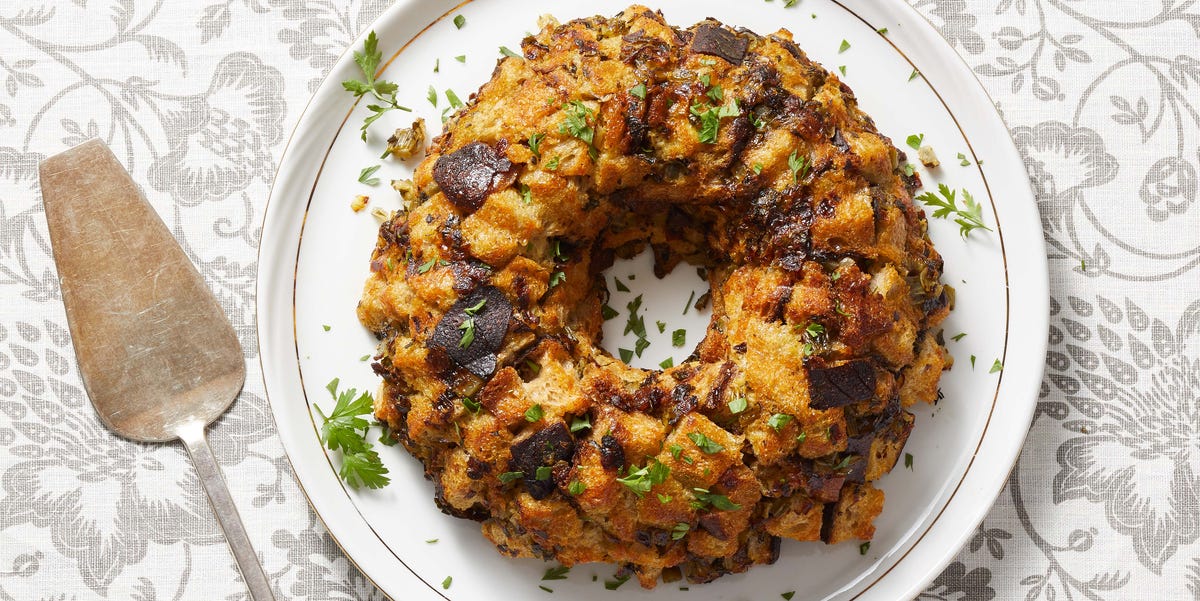
If classic Thanksgiving stuffing and a festive centerpiece had a delicious little baby, it would be this herb stuffing ring recipe. It has everything people love about traditional stuffing: buttery bread cubes, tender celery and onion, cozy poultry-seasoning vibes, and enough fresh herbs to make the kitchen smell like a holiday movie. But instead of scooping it from a casserole dish, you bake it in a Bundt pan and turn it out as a golden, sliceable ring. Suddenly, the side dish has stage presence.
The best part? A herb stuffing ring looks fancy without behaving like a fussy recipe. You do not need culinary school confidence, a professional kitchen, or a dramatic apron toss. You just need dried bread, butter, vegetables, broth, eggs, herbs, and a well-greased Bundt pan. The result is crisp around the edges, moist in the middle, and pretty enough to make mashed potatoes question their life choices.
This guide walks you through how to make the best herb stuffing ring from scratch, including ingredient tips, step-by-step instructions, make-ahead advice, flavor variations, serving ideas, and real-world experience for getting that beautiful ring out of the pan without a holiday meltdown.
What Is a Herb Stuffing Ring?
A herb stuffing ring is a baked stuffing or dressing mixture pressed into a Bundt pan, cooked until golden, then inverted onto a serving platter. Think of it as traditional bread stuffing with better architecture. The hole in the center gives you a dramatic presentation, and the ridges of the pan create extra crispy edges.
Technically, many people call this dish “stuffing,” even when it is baked outside the turkey. Food traditionalists may call it “dressing.” Around the dinner table, however, nobody will be checking vocabulary when the buttery herb aroma arrives. Serve it with turkey, chicken, ham, roasted vegetables, mushroom gravy, or cranberry sauce. It fits beautifully on Thanksgiving, Christmas, Friendsgiving, Sunday dinner, or any meal that needs a little edible applause.
Why This Is the Best Herb Stuffing Ring Recipe
The secret to the best herb stuffing ring recipe is balance. Too much liquid and the stuffing collapses into bread pudding with commitment issues. Too little liquid and it crumbles like a dry speech at a long banquet. This version uses dried bread cubes, sautéed aromatics, fresh herbs, broth added gradually, and eggs for structure. The eggs help the ring hold its shape, while the broth keeps the center tender.
The Bundt pan gives the stuffing more surface area than a deep casserole dish. That means more browned, crisp bites. The inside stays soft and savory, while the outer crust becomes golden and slightly chewy. It is the kind of side dish that makes guests ask, “Wait, who made this?” which is a lovely moment unless you were hoping to keep leftovers for yourself.
Ingredients for Herb Stuffing Ring
Bread
Use sturdy bread such as Italian bread, French bread, sourdough, country white bread, or challah. Avoid very soft sandwich bread unless you dry it thoroughly, because fresh soft bread can become gummy. Cut the bread into 1-inch cubes and dry it overnight, or bake it at a low temperature until crisp but not deeply browned.
Butter
Butter carries the flavor of the onions, celery, and herbs into every bite. It also helps the edges brown beautifully. Use unsalted butter if possible, so you can control the salt level.
Celery and Onion
This is the classic aromatic base. Celery brings freshness and crunch, while onion adds sweetness and depth. Cook them until softened but not burned. If the onion starts looking too brown, lower the heat and remind yourself that stuffing is a side dish, not a campfire.
Fresh Herbs
A winning herb blend includes parsley, sage, thyme, and rosemary. Sage gives that unmistakable holiday stuffing flavor, thyme adds earthiness, rosemary brings piney fragrance, and parsley brightens everything up. Fresh herbs are ideal, but dried herbs can work in a pinch. Use about one-third the amount if substituting dried herbs for fresh.
Broth
Low-sodium chicken broth, turkey broth, or vegetable broth all work. Add the broth gradually so the bread absorbs moisture evenly. The mixture should feel moist and clump together lightly, but it should not be swimming.
Eggs
Eggs help bind the stuffing ring so it slices cleanly. Without eggs, the flavor may still be great, but the ring may fall apart when unmolded. Delicious rubble is still delicious, but it does not have quite the same centerpiece energy.
Best Herb Stuffing Ring Recipe
Ingredients
- 12 cups dried bread cubes, about 1 large loaf
- 10 tablespoons unsalted butter, plus more for greasing the pan
- 1 large yellow onion, finely chopped
- 3 celery stalks, finely chopped
- 3 garlic cloves, minced
- 1/2 cup chopped fresh parsley
- 2 tablespoons chopped fresh sage
- 1 tablespoon chopped fresh thyme
- 1 teaspoon chopped fresh rosemary
- 1 1/2 teaspoons kosher salt, plus more to taste
- 1 teaspoon black pepper
- 2 1/2 to 3 cups low-sodium chicken, turkey, or vegetable broth
- 3 large eggs, lightly beaten
- Optional: 1/2 cup dried cranberries, toasted pecans, cooked sausage, or sautéed mushrooms
Instructions
- Dry the bread. Cut bread into 1-inch cubes and spread on baking sheets. Let sit uncovered overnight, or bake at 300°F for 30 to 40 minutes, tossing occasionally, until dry.
- Prepare the pan. Generously butter a 10- to 12-cup Bundt pan. Be thorough, especially in the ridges. A stuffing ring that refuses to leave the pan is not a personality trait we need today.
- Sauté the aromatics. Melt butter in a large skillet over medium heat. Add onion and celery. Cook for 8 to 10 minutes, stirring often, until softened. Add garlic and cook for 1 minute more.
- Mix the stuffing. Place dried bread cubes in a large bowl. Add the cooked vegetables, parsley, sage, thyme, rosemary, salt, and pepper. Toss gently.
- Add broth gradually. Pour in 2 1/2 cups broth and toss. Let the mixture sit for 5 minutes so the bread can absorb the liquid. Add more broth only if the mixture seems dry.
- Add eggs. Stir in the beaten eggs until evenly distributed. The stuffing should be moist, cohesive, and spoonable, not soupy.
- Fill the Bundt pan. Spoon the stuffing into the prepared pan. Press gently to remove air pockets, but do not smash it into a brick. Cover loosely with foil.
- Bake. Bake at 375°F for 30 minutes. Remove foil and bake another 20 to 25 minutes, until the top is golden and the center reaches 165°F.
- Rest and unmold. Let the stuffing ring cool in the pan for 10 to 15 minutes. Run a thin spatula around the edges if needed, place a platter over the pan, and carefully invert.
- Serve. Garnish with extra parsley or fried sage leaves. Slice and serve warm with gravy.
How to Make Herb Stuffing Ring Without It Falling Apart
Structure matters. The ring shape depends on three things: dry bread, enough moisture, and binders. Dry bread absorbs broth without turning mushy. Eggs hold the mixture together. A short resting time before unmolding helps the stuffing settle and firm up.
Do not rush the release. Letting the ring cool for 10 to 15 minutes makes a real difference. If you flip it immediately, steam and softness can work against you. If you wait too long, it may stick. The sweet spot is warm, settled, and still flexible.
Tips for the Best Flavor and Texture
Use Day-Old or Oven-Dried Bread
Dry bread is the foundation of great stuffing. It soaks up butter, broth, and herb flavor while keeping its shape. Fresh bread absorbs liquid too quickly and can become pasty.
Do Not Skip the Fresh Herbs
Fresh sage, thyme, parsley, and rosemary make the stuffing taste vibrant and homemade. Dried herbs are useful, but fresh herbs give the dish that “someone cared about this” flavor.
Grease the Bundt Pan Like You Mean It
Every ridge needs butter. You can also use nonstick baking spray, but butter adds flavor. A pastry brush helps coat the grooves evenly.
Add Broth Slowly
Different breads absorb liquid differently. Start with less broth, let it sit, then add more as needed. The bread should feel damp and tender, not drenched.
Check the Temperature
For food safety, the center of the stuffing should reach 165°F. This is especially important because the recipe contains eggs and broth.
Make-Ahead Herb Stuffing Ring
This holiday stuffing ring is friendly to busy cooks. You can dry the bread up to several days ahead and store it in an airtight container. You can also chop the vegetables and herbs a day ahead.
To assemble in advance, prepare the stuffing mixture, spoon it into the greased Bundt pan, cover tightly, and refrigerate for up to 24 hours. Before baking, let it sit at room temperature for 30 minutes while the oven preheats. Add 5 to 10 extra minutes to the baking time if it is still cold from the refrigerator.
You can also bake the stuffing ring earlier in the day, unmold it, cover loosely, and reheat at 325°F until warmed through. To revive the crisp edges, uncover it for the last 10 minutes.
Flavor Variations
Sausage Herb Stuffing Ring
Brown 12 ounces of breakfast sausage or Italian sausage, drain excess fat, and fold it into the bread mixture. Sausage adds savory richness and turns the side dish into something dangerously close to the main event.
Mushroom Herb Stuffing Ring
Sauté 8 ounces of chopped mushrooms with the onion and celery. Mushrooms add earthiness and make the dish feel hearty without meat.
Cranberry Pecan Stuffing Ring
Add 1/2 cup dried cranberries and 1/2 cup toasted pecans. The cranberries bring tart sweetness, while pecans add crunch. This variation looks especially festive for Christmas dinner.
Vegetarian Herb Stuffing Ring
Use vegetable broth and add mushrooms, leeks, or roasted butternut squash. The flavor stays rich, and the dish becomes a crowd-friendly vegetarian side.
What to Serve With Herb Stuffing Ring
This Bundt pan stuffing pairs beautifully with roasted turkey, turkey breast, roast chicken, glazed ham, prime rib, or a vegetarian mushroom Wellington. For sauces, classic turkey gravy is the obvious winner, but mushroom gravy, cranberry-orange relish, or even a drizzle of brown butter can be excellent.
For a full holiday plate, serve it with mashed potatoes, green bean casserole, roasted Brussels sprouts, sweet potato casserole, and cranberry sauce. If your plate looks like a cheerful traffic jam, you are doing Thanksgiving correctly.
How to Store and Reheat Leftovers
Store leftover herb stuffing ring in an airtight container in the refrigerator for up to 4 days. Reheat slices in a 325°F oven until warmed through. For faster reheating, microwave individual slices, then crisp them briefly in a skillet with a little butter.
You can freeze stuffing slices for up to 2 months. Wrap tightly and thaw overnight in the refrigerator before reheating. The texture may be slightly softer after freezing, but a hot oven helps restore the edges.
Common Mistakes to Avoid
Using Bread That Is Too Fresh
Fresh bread may sound charming, but it often turns stuffing heavy and gummy. Dry it first for better texture.
Adding Too Much Broth
If broth pools at the bottom of the bowl, you have gone too far. Add more dry bread cubes to rescue the mixture.
Underseasoning
Bread needs salt, herbs, and aromatics. Taste the mixture before adding eggs, then adjust seasoning.
Not Letting It Rest
A few minutes of resting time makes unmolding easier and helps slices hold together.
Experience Notes: What I Learned Making Herb Stuffing Ring
The first time you make a herb stuffing ring, it feels slightly risky. Traditional stuffing in a casserole dish is forgiving. It just sits there, golden and cozy, asking very little from you. A stuffing ring, however, has a dramatic final act: the flip. That moment when you place the platter over the Bundt pan and turn everything upside down can feel like a cooking show finale, except nobody edited out the nervous sweating.
The biggest lesson is that pan preparation is everything. A Bundt pan has beautiful ridges, but those ridges can become tiny bread traps if you do not grease them properly. Butter works well because it adds flavor, but it must reach every curve. A pastry brush is useful, and so is patience. This is not the time for a casual swipe of butter and positive thinking.
The second lesson is to trust dried bread. When the bread cubes look too dry, they are probably perfect. Stuffing is not about fresh, fluffy bread. It is about bread that can absorb broth, butter, onion, celery, and herbs without collapsing. Day-old or oven-dried bread gives you a tender center and a ring that actually holds together.
Another useful experience is learning the feel of the mixture. Recipes can give exact broth measurements, but bread has a mind of its own. Sourdough, Italian bread, challah, and French bread all absorb liquid differently. After adding broth, let the mixture sit for a few minutes. Then pick up a spoonful. It should hold together lightly and feel moist, but it should not drip. If it looks like soup, pause immediately and add more bread. If it looks like a crouton salad, add more broth.
Fresh herbs also make a bigger difference than people expect. Sage is the star, but it can become too strong if used aggressively. Thyme and parsley balance it, while rosemary should be used with confidence but not recklessness. Rosemary is delicious, but it can walk into a dish wearing boots. Chop it finely so it blends into the stuffing instead of shouting from one bite.
Serving the stuffing ring is genuinely fun. You can fill the center with fresh herbs, roasted vegetables, cranberry sauce, or even a small bowl of gravy. It immediately makes the table look more intentional. Guests notice it because it is familiar and surprising at the same time. It tastes like the stuffing they know, but the shape makes it feel special.
Leftovers may be the best secret. Sliced stuffing ring reheats beautifully in a skillet with a little butter. The outside crisps like savory French toast, while the inside stays soft. Add a fried egg on top the next morning, and you have a holiday breakfast that deserves its own applause. Honestly, leftovers are one reason to make a larger ring than you think you need.
The final lesson is simple: do not be intimidated by presentation. A herb stuffing ring looks impressive, but the process is practical. Dry the bread, season generously, moisten carefully, bind with eggs, grease the pan, bake until golden, rest, and flip. That is it. It is classic stuffing wearing its fancy holiday outfit.
Conclusion
The best herb stuffing ring recipe turns a beloved holiday side dish into a true centerpiece. It keeps the comforting flavor of traditional stuffing while adding crisp edges, a tender middle, and a beautiful Bundt-pan shape. With dry bread, buttery aromatics, fresh herbs, gradual broth, and a little patience during unmolding, you can make a stuffing ring that tastes homemade, slices neatly, and looks impressive on the table.
Whether you serve it for Thanksgiving, Christmas, Friendsgiving, or a cozy Sunday roast, this herb stuffing ring brings both flavor and fun. It is familiar enough for traditional guests and special enough for anyone who loves a good “wow” moment. Just remember to grease the pan well, let the bread dry properly, and save at least one leftover slice for yourself. That is not selfish. That is cook’s privilege.