Winter has a way of turning otherwise reasonable adults into blanket burritos who negotiate thermostat settings like they’re drafting a peace treaty.
If you’ve ever whispered “just five more degrees” to a hallway vent that clearly doesn’t respect you, an infrared heater might be your new best friend.
This guide focuses on infrared space heatersthe ones that aim warmth at you and the things around you (instead of trying to heat the
entire zip code). We’ll cover the top styles for 2025, what actually matters when buying, and how to stay cozy without turning your living room into a
firefighter training scenario.
Quick Picks: The Best Infrared Heaters for 2025
If you just want the highlights (because your fingers are cold and your patience is colder), here are the standouts:
| Pick | Best For | Why It Wins |
|---|---|---|
| Duraflame 3D Infrared Electric Fireplace Stove | Living rooms, “cozy vibes,” shared spaces | Warmth + fireplace ambiance + independent flame/heat control |
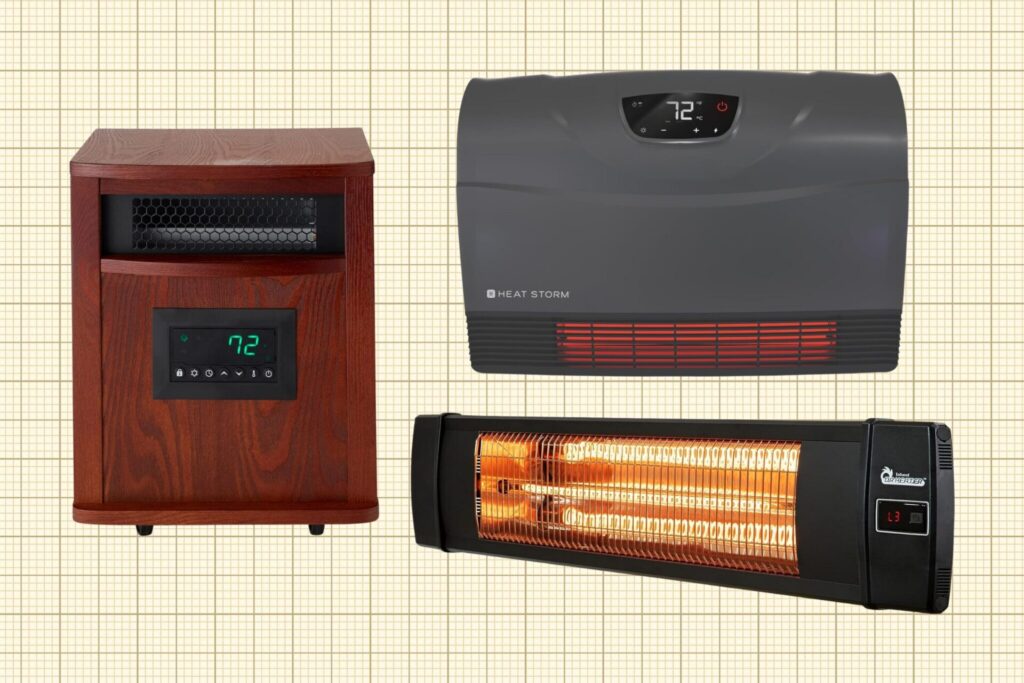
| Heat Storm Phoenix (Wall-Mount) | Small rooms, apartments, space-saving installs | Mounts on wall, slim profile, kid-lock options on some versions |
| Dr. Infrared Heater (Cabinet-Style) | Larger rooms, steady supplemental heat | Cabinet form factor, wheels, thermostat + eco modes |
| Heat Storm 1500W Portable (Toaster-Style) | Home office, desk-adjacent warmth | Fast comfort, compact footprint, adjustable display brightness |
| Modern Ember Rolling Infrared Heater | Bedrooms, set-it-and-forget-it nights | Remote + timer, steady heat, shuts off with tip-over protection |
| Dr. Infrared DR-238 (Outdoor Infrared) | Patios, covered outdoor seating | Directional radiant heat you can actually feel outdoors |
How Infrared Heaters Work (And Why They Feel So Good)
Radiant heat: the “sunbeam on the couch” effect
An infrared heater uses radiant heat to warm people and objects in its line of “sight.” Think: standing near a campfire, minus the smoke,
plus the ability to keep your eyebrows.
This is different from many fan-forced convection heaters that mostly warm the air, then rely on airflow to spread it around.
Reality check: watts are watts
Here’s the truth nobody puts on the box: most standard plug-in electric heaters in the U.S. top out around 1,500 watts.
That’s not an “infrared limitation”it’s an “average household circuit” reality. So the real advantage isn’t magical extra heat.
It’s how the warmth is delivered and how quickly you feel comfortable when you’re in the heater’s zone.
Quartz vs carbon vs “marketing poetry”
You’ll see terms like quartz infrared and carbon infrared. In practice, both are ways to generate radiant warmth.
Quartz systems are common indoors; carbon styles show up often in outdoor infrared heaters where directional heat matters.
Don’t get hypnotized by buzzwords like “hyper wave thermodynamic turbo rays.”
Focus on the boring stuff: safety certifications, thermostat control, and whether it fits your room and your lifestyle.
What to Look For in the Best Infrared Space Heater
1) Room size (and the difference between “rated for” and “will actually do it”)
Many infrared heaters are marketed with big-room numbers. A common rating you’ll see is around 5,200 BTU on 1,500-watt models,
sometimes paired with claims like “up to 1,000 sq. ft.”
That can be true in ideal conditions (insulation, layout, ceiling height, doorways that stay shut, and a universe that’s feeling generous).
In the real world, assume you’ll get the best results as supplemental heat for a single room or a defined zone.
2) Thermostat accuracy and “eco” modes
An adjustable thermostat is not just a luxuryit’s how you avoid cooking your shins while the rest of the room stays in a chilly conspiracy.
Many top models include an “eco” setting that cycles power to maintain a target temperature.
It’s not wizardry, but it can help keep comfort steady (and keep you from manually turning the heater on and off like a human thermostat).
3) Noise level (the underrated dealbreaker)
Infrared heaters can be quieter than fan-heavy designs, but many still use a blower to move warmth.
If you’re heating a bedroom, a nursery, or a “please don’t make me listen to machinery while I sleep” situation,
look for reviewers who talk about noise in actual usenot just marketing claims.
4) Safety: certifications, tip-over shutoff, and cord sanity
Space heaters are useful, but they demand respect.
Prioritize units with UL or ETL safety certification and built-in protections like
tip-over shutoff and overheat protection.
Practice the “three-foot rule”: keep heaters away from bedding, curtains, paper piles, and that hoodie you swear you’ll hang up later.
And yesplug into the wall when possible. Your heater should not be powered through a shaky tower of adapters like it’s auditioning for a circus act.
5) Portability vs wall-mount: choose your commitment level
Cabinet heaters on casters are great for moving between rooms.
Wall-mounted infrared heaters are amazing for small spaces where floor real estate is scarce.
If you want “set it and forget it,” wall-mount can feel like a lifestyle upgradelike buying shelves, but warmer.
Best Infrared Heaters (2025): Detailed Reviews
1) Duraflame 3D Infrared Electric Fireplace Stove Best Overall for Cozy Rooms
If your goal is “warm and charming,” this is the heater that understands the assignment.
The Duraflame 3D infrared stove blends practical heat with fireplace vibeswithout requiring you to chop wood or pretend you know what a flue is.
- Why it’s great: You can run the flame effect separately from the heat, so the ambiance doesn’t force you into a tropical climate.
- Comfort perks: Adjustable thermostat, timer, and a remote so you can stay on the couch like the winter monarch you are.
- Good to know: Many reviewers note it’s relatively quiet for its class and the exterior stays reasonably safe to touch on most surfaces, but keep hands away from vents/grilles.
Best for: Living rooms, finished basements, and anyone who wants their heater to look less like a “garage appliance” and more like “home décor.”
2) Heat Storm Phoenix Infrared (Wall-Mounted) Best Space Saver
The Heat Storm Phoenix is for people who look at a cluttered room and think, “What if the heater… wasn’t on the floor at all?”
Mounted on the wall, it stays out of traffic paths and away from curious pets who believe everything is a new bed.
- Why it’s great: Wall-mountable and slim, with a digital thermostat and remote control on many versions.
- Family-friendly touches: Models commonly include safety shutoffs; some versions include a child lock and adjustable display brightnesshelpful if the bedroom is your “no glowing LEDs” sanctuary.
- Tradeoff: It’s not an oscillating heater, and depending on placement it can bias heat toward the lower part of the room.
Best for: Apartments, small bedrooms, home offices, and anyone who hates tripping over heater cords like it’s an annual winter tradition.
3) Dr. Infrared Heater Portable (Cabinet Style, e.g., DR-968) Best for Larger Rooms (With Practical Cautions)
Cabinet-style infrared heaters are popular because they feel substantial: a bigger box, wheels, a front display, and a “this will handle winter” vibe.
Many Dr. Infrared models combine quartz infrared with PTC heating, aiming for steady comfort and easier temperature maintenance.
- Why it’s great: Often includes multiple heat modes (including eco), a thermostat, a remote, and casters for moving room to room.
- Comfort profile: Great for “whole-room supplemental heat” where you want the space to feel evenly comfortable, not just “toasty in one chair.”
- Important caution: Independent testing from some outlets has raised concerns about how certain units behave under extreme safety stress tests (like obstructed airflow tests). This doesn’t mean “never buy,” but it does mean “use correctly, maintain clearance, and don’t treat it like an unattended overnight solution.”
Best for: Big bedrooms, family rooms, and users who want a rolling “comfort box” they can park where the cold is most annoying.
4) Heat Storm 1500W Infrared Portable (Toaster-Style) Best for Home Office Comfort
This style looks like a toaster that went to the gym and discovered purpose.
It’s compact, easy to carry, and great when your hands are cold but your central heat is doing that “I’m trying my best” thing.
- Why it’s great: Quick warmth, simple controls, and portability (usually a top handle).
- Sleep-friendly extras: Display brightness controls can matter more than you think at 2 a.m. when the heater looks like a small lighthouse.
- Watch-outs: Some compact infrared units can have hot grilleskeep distance and don’t let blankets “accidentally” migrate onto it.
Best for: Office desks, hobby rooms, and anyone who wants a personal “warmth zone” without heating the whole house.
5) Modern Ember Rolling Infrared Heater Best for Bedrooms
Bedrooms have different priorities: quiet, stable warmth, and controls you can use without fully waking up and questioning every life decision.
This rolling cabinet style is built for that rhythmwarm the room, set a timer, fall asleep, repeat.
- Why it’s great: Remote control + timer options are bedroom gold. Many users like setting the room temperature before bed and letting the unit cycle down.
- Safety angle: Tip-over protection is a must in bedrooms (especially if you have pets with midnight zoomies).
- Tradeoff: It’s bulky and heavier than it looks in photos. Wheels help, but it’s still a “move it with intention” kind of heater.
Best for: Bedrooms, nurseries (with proper clearance), and anyone who wants warmth without a lot of fiddling.
6) Dr. Infrared Heater DR-238 Carbon Infrared Outdoor Heater Best for Patios & Covered Outdoor Areas
Outdoor heating is where infrared really flexes.
Convection heat outside mostly warms the atmosphere (congratulations to the atmosphere, I guess).
Infrared can actually warm people in its pathespecially when mounted properly and aimed where folks sit.
- Why it’s great: Fast radiant warmth you can feel from a short distance, multiple heat levels, and remote control convenience.
- Install options: Wall-mount is common; tripod options may exist depending on the package or accessory availability.
- Weather notes: Look for splash resistance ratings and treat “outdoor-rated” as “still deserves protection,” especially in heavy rain.
Best for: Covered patios, pergolas, gazebos, and outdoor gatherings where everyone is holding a mug like it’s emotional support.
Infrared Heater Safety (Because Cozy Shouldn’t Be Spicy)
Let’s keep this simple and non-dramaticmostly because fire is already dramatic enough.
Use these rules as your baseline:
- Keep 3 feet of clearance from curtains, bedding, furniture, paper, and anything that can burn.
- Place on a hard, level surface (or mount per instructions). No balancing acts on shag rugs.
- Plug directly into the wall outlet when possible. Avoid power strips and questionable extension cords.
- Don’t run unattended for long periods, and be extra cautious with overnight use.
- Choose certified models (UL/ETL) with tip-over and overheat shutoff.
- Dust is not décor: keep intake areas clean so airflow isn’t blocked and the heater doesn’t overheat.
So… Which Infrared Heater Should You Buy in 2025?
Here’s the cheat sheet:
- If you want the most “homey” option for shared spaces: Duraflame 3D stove.
- If you need floor space and want a clean install: Heat Storm Phoenix wall-mount.
- If you want a bigger-room supplemental heater you can roll around: Dr. Infrared cabinet style (use safely and follow clearance rules).
- If you want quick warmth at your desk: Heat Storm portable toaster-style.
- If your bedroom needs consistent comfort on a timer: Modern Ember rolling heater.
- If you’re heating humans outdoors (not the entire neighborhood): Dr. Infrared DR-238.
No matter what you choose, remember: the “best infrared heater” is the one that matches your room, your habits, and your tolerance for buttons, beeps,
and glowing displays that look like a tiny UFO landed on your dresser.
Real-World Experiences with Infrared Heaters (Extra Notes for 2025 Shoppers)
The internet loves a clean, simple answer“buy this one”but real homes are messy, drafty, full of doorways, and occasionally occupied by pets who treat
warm air like a personal invitation. So here are the most common “lived experience” lessons people discover after the unboxing confetti settles.
The best spot is rarely the obvious spot
Most buyers plop a heater near the coldest wall and call it a day. Then they wonder why their feet are warm but the room still feels chilly.
Infrared heat works best when it has a clear line toward where people actually sit. If the heater is blasting a sofa arm, congratulations
you’ve invented the world’s most comfortable upholstery.
A small repositionaiming across the room rather than into a corneroften makes the heater feel twice as effective.
“Up to 1,000 sq. ft.” is a mood, not a promise
In open floorplans, heat escapes into the next room like it has places to be. In older homes, drafts sneak in around windows and doors like tiny winter ninjas.
In both cases, users tend to be happiest when they treat infrared heaters as zone heaters:
warm the office during work hours, the living room during TV time, the bedroom before sleep.
If you’re trying to heat a whole level of a home with one plug-in unit, you’re basically asking a toaster to do HVAC’s job.
It’s heroic, but not always realistic.
Eco modes are relationship counselors for you and your electric bill
People often start with the heater on “High,” because cold makes us impulsive.
Then the room warms up, and suddenly it’s too hot, and now you’re in a cycle of turning it off, forgetting it’s off, turning it back on, and repeating.
Eco modes and thermostats reduce that drama. Set a target temperature, let the heater cycle, and enjoy fewer “why am I sweating in January?” moments.
Bedroom success is mostly about lights, noise, and timers
The #1 surprise in bedrooms isn’t heat outputit’s annoyance.
A bright display can feel like a tiny billboard in the dark. A blower can become the world’s least soothing white noise.
That’s why bedroom-friendly models tend to win with features like adjustable display brightness, quieter operation, and a timer.
The “timer + remote” combo is especially beloved: you warm the room, set shutoff, and don’t have to leave your blanket cocoon to do it.
Pet and kid households learn the same lesson: clearance is non-negotiable
Families quickly discover that “tip-over protection” isn’t a free pass to place the heater anywhere. It’s a safety backup, not a lifestyle.
People with pets often create a heater “parking spot” that’s naturally protectedlike near a wall with open space in front, away from play zones.
And almost everyone eventually adopts the three-foot buffer rule after one close call with a blanket, a curtain, or a curious tail.
Maintenance is boringuntil it isn’t
Dust buildup can reduce airflow and increase heat stress on components.
Owners who vacuum filters or wipe intake vents occasionally report more consistent performance and fewer weird smells on startup.
It’s not glamorous, but neither is mid-winter troubleshooting while wearing two hoodies and a look of regret.
Bottom line: infrared heaters can be fantastic in 2025especially for targeted comfort and fast “I want to feel warm now” relief.
Choose the right style, place it thoughtfully, respect safety basics, and you’ll get the kind of winter comfort that makes you briefly forget
your heating bill exists. (Briefly. Let’s not get carried away.)