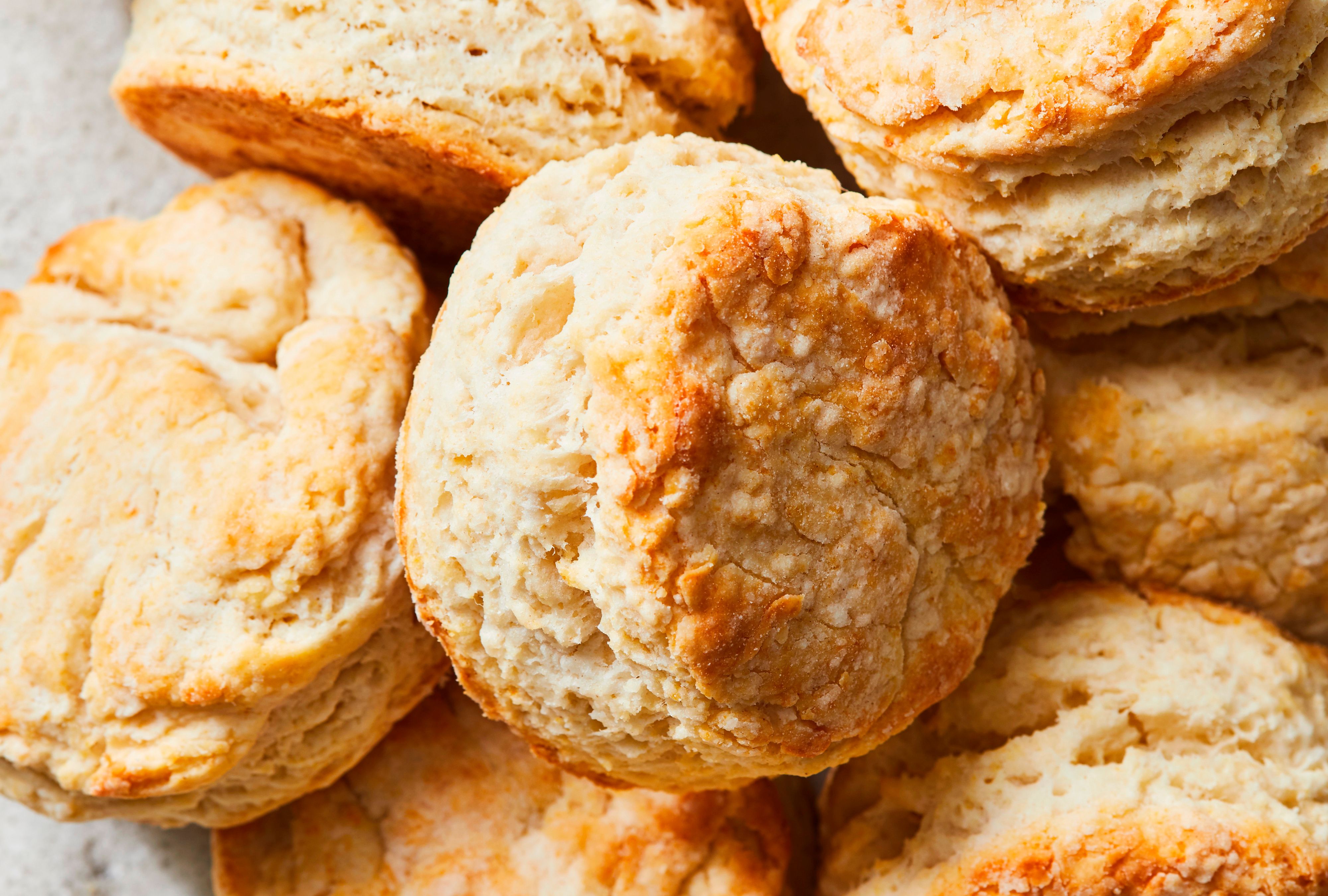
There are two kinds of people in the world: the ones who think biscuits are “just bread,” and the ones who have
eaten a truly great biscuit and immediately started planning a life around it. If you’re reading this, I’m
guessing you’re aiming for Group Twospecifically, for the kind of biscuit that’s tall, flaky, buttery, and
dramatically photogenic when you pull it apart (the culinary equivalent of a mic-drop).
This Biscuits Supreme recipe is built for maximum lift, crisp golden edges, and tender layers you
can peel like pages in a delicious little book. It’s not fussy, but it is particularlike a cat that demands
attention but only on its schedule. Follow the technique, keep things cold, and you’ll get
sky-high buttermilk biscuits that make store-bought tubes feel personally attacked.
What Makes a Biscuit “Supreme”?
“Supreme” isn’t a fancy ingredient. It’s a result. A supreme biscuit hits a sweet spot of contrasts:
crisp outside, tender inside, and flaky layers that separate cleanly.
It’s rich without being heavy, sturdy enough for gravy, and soft enough for jam to melt into the crumb like it
was always meant to live there.
The secret isn’t secret at all: it’s cold fat, minimal mixing, smart folding, and a hot oven. We’re basically
creating tiny butter “elevators” that puff the dough upward using steam. Yes, your biscuits are powered by
science. Delicious, buttery science.
Ingredients That Earn the Crown
Flour
All-purpose flour makes a reliable, widely available base. If you’ve got a favorite brand, use it consistently
so you learn how your dough “feels.” (Biscuit dough does not text you back; it communicates through vibes.)
Leaveners
Baking powder provides lift. Baking soda adds extra rise and helps neutralize the acidity in buttermilk for a
tender crumb and better browning. Together, they create the biscuit equivalent of a trampoline.
Fat (a.k.a. the Flaky Layer Factory)
Cold butter is the headline. As it melts in the oven, it releases steam, creating pockets that form layers.
Keeping the butter cold is non-negotiable: warm butter blends in and makes biscuits dense instead of lofty.
Buttermilk (Tang + Tender)
Buttermilk brings a gentle tang and helps keep the crumb tender. Cold buttermilk also keeps the butter from
softening too soon while you mix.
Salt + a Touch of Sugar
Salt makes everything taste like itselfonly better. A small amount of sugar is optional, but it helps with
browning and rounds out flavor without making the biscuits “sweet.”
Biscuits Supreme Recipe
This recipe makes about 10 biscuits (2.5-inch rounds) or 8 larger biscuits.
You can cut squares to avoid scraps if you’re on Team “No Dough Left Behind.”
Ingredients
- 2 1/2 cups (300g) all-purpose flour, plus more for dusting
- 1 tablespoon baking powder
- 1/2 teaspoon baking soda
- 1 tablespoon granulated sugar (optional, but recommended for browning)
- 1 1/4 teaspoons kosher salt (or 3/4 teaspoon fine sea salt)
- 10 tablespoons (142g) unsalted butter, very cold (freeze 10–15 minutes if your kitchen is warm)
- 1 cup + 2 tablespoons (270ml) cold buttermilk, plus a splash for brushing (optional)
- 1–2 tablespoons melted butter for finishing (highly encouraged)
Equipment
- Large mixing bowl
- Pastry cutter or box grater (or a food processor, used briefly)
- Bench scraper (nice to have)
- Biscuit cutter (2.5-inch) or sharp knife for squares
- Baking sheet (or cast-iron skillet for cozy, soft sides)
Step-by-Step Instructions
-
Preheat like you mean it.
Set oven to 450°F. Line a baking sheet with parchment (or lightly grease a skillet). A hot oven
gives fast lift before the butter fully melts into the dough. -
Mix the dry ingredients.
In a large bowl, whisk flour, baking powder, baking soda, sugar (if using), and salt until evenly combined. -
Work in the cold butter.
Grate the butter on a box grater directly into the flour mixture or cut it in with a pastry cutter.
Stop when you have a mix of pea-size bits and some larger, flat shards. Those larger pieces = future flaky layers. -
Add buttermilk gently.
Pour in the cold buttermilk. Stir with a fork or rubber spatula just until you see a shaggy dough. If it looks
dry, add 1 tablespoon more buttermilk at a time. If it looks wet, sprinkle in a little flour. Aim for “shaggy,
slightly messy, still hopeful.” -
Laminate for layers (the “Supreme” move).
Turn dough onto a lightly floured surface. Pat into a rectangle about 3/4-inch thick. Fold into thirds like a
letter. Rotate 90 degrees, pat again, and fold again. Do this 3–4 folds total. Keep your touch
lightthis is biscuit yoga, not CrossFit. -
Final pat + cut.
Pat dough to about 1-inch thick. Cut straight down with a floured biscuit cutter.
Do not twisttwisting seals edges and reduces rise. If cutting squares, use a sharp knife and
press straight down. -
Arrange for height.
Place biscuits close together (nearly touching) for taller, softer sides. Space them apart for crispier edges. -
Bake.
Bake 10–14 minutes until tall and deeply golden on top. Ovens varystart checking at 10. -
Finish like a legend.
Brush hot biscuits with melted butter. Let cool 3–5 minutes (if you can), then split and serve warm.
The Biscuit Science (In Plain English)
Why cold butter matters
Butter contains water. When cold butter hits a hot oven, that water turns to steam quickly. Steam expands,
pushing dough apart and creating airy layers. If the butter warms too much before baking, it blends into the
flour and you lose that steam-powered lift.
Why gentle mixing matters
Mixing develops gluten. Gluten is great for chewy bread, but biscuits want tenderness. Stir just until combined,
then stop. The dough should look imperfect. You’re not failing; you’re making biscuits.
Why folding creates flakiness
Folding stacks butter and dough into layers. Each layer separates as the butter melts and steams, giving you
that pull-apart structure. It’s like giving your biscuit a tiny internal staircase.
Troubleshooting: When Biscuits Get Emotional
My biscuits are flat
- Butter got too warm (chill dough 10 minutes before baking next time).
- Overmixed dough (stop earlier; shaggy is good).
- Cutter was twisted (press straight down).
- Oven wasn’t fully preheated (biscuits need instant heat).
My biscuits are tough
- Too much kneading or re-rolling scraps (handle less; cut squares to reduce waste).
- Too much flour added during shaping (use a light dusting).
My biscuits taste bitter or “too baking powder-y”
- Check baking powder freshness and measure carefully.
- Use buttermilk (or add a teaspoon of lemon juice to milk if substituting) for balance.
Supreme Variations (Because Biscuits Love a Costume Change)
Cheddar-Chive Supreme
Add 1 cup shredded sharp cheddar and 2 tablespoons chopped chives to the dry mix.
Toss cheese with a teaspoon of flour first so it disperses instead of clumping like it’s forming a union.
Black Pepper + Bacon Supreme
Add 1 teaspoon coarse black pepper and 1/2 cup cooked crumbled bacon. These were
basically invented to sit under sausage gravy and feel important.
Sweet Shortcake Supreme
Increase sugar to 2 tablespoons, add 1 teaspoon vanilla to the buttermilk, and
bake as directed. Split, then pile with berries and whipped cream. Suddenly it’s dessert.
Serving Ideas That Deserve a Standing Ovation
- Classic: butter + jam (strawberry, peach, or whatever makes you happiest).
- Southern comfort: biscuits and sausage gravy.
- Breakfast sandwich: egg, cheese, and baconor fried chicken if you’re living boldly.
- Supper hero: alongside chili, soup, or pot pie filling.
- Snack mode: honey butter and a quiet moment where nobody asks you to share.
Make-Ahead, Freezing, and Reheating
The best biscuits are fresh, but life is busy and breakfast happens whether you’re ready or not. Good news:
biscuit dough is friendly to planning.
Make-ahead (overnight)
Shape and cut the biscuits, place on the tray, cover, and refrigerate overnight. Bake straight from cold in a
hot oven, adding a minute or two if needed.
Freeze for later
Freeze unbaked biscuits on a tray until solid, then store in a freezer bag. Bake from frozen at 450°F, adding
about 3–5 minutes. (Future-you will feel like a genius.)
Reheat leftovers
Warm at 350°F for 6–8 minutes. Split first if you want crisp edges. Microwave works in an emergency, but it can
soften the exteriorstill tasty, just less “Supreme.”
FAQ: Biscuit Questions People Whisper at the Flour Aisle
Can I make biscuits without buttermilk?
Yes. Use cold whole milk, or make a quick substitute by adding 1 tablespoon lemon juice or vinegar
to 1 cup milk and letting it sit 5–10 minutes. True buttermilk has the best flavor and texture,
but substitutes can still produce excellent homemade biscuits.
Should I use a rolling pin?
You can, but hands are often gentler. Patting helps avoid overworking and keeps the dough from compressing. If you
use a rolling pin, use a light touch.
Why do some recipes use grated or sliced butter?
It distributes cold butter quickly without warming it too much, helping you keep distinct pieces for steam and
layers. It’s a smart shortcutlike meal prep, but for flakiness.
Round biscuits or square biscuits?
Round feels classic. Square wastes less dough. Both taste like butter and victory, so you can’t truly lose.
Conclusion
A Biscuits Supreme recipe isn’t about fancy ingredientsit’s about doing a few simple things on
purpose: keep everything cold, mix gently, fold for layers, cut cleanly, and bake hot. Master that rhythm and you
get biscuits that rise high, pull apart in flakes, and make any meal feel like it has a theme song.
And if your first batch is merely “very good” instead of “life-changing,” congratulations: you’re now officially
a biscuit person. The next batch will be even betterbecause biscuits reward practice with immediate, edible
feedback. (Unlike most of adulthood.)
Real-World Biscuit Experiences (The Stuff That Actually Happens)
Biscuits have a funny way of turning your kitchen into a tiny reality show. One minute, you’re calmly whisking
flour; the next, you’re negotiating with a shaggy dough that looks like it needs a nap. This is normal. In fact,
the “messy stage” is often the exact moment when great biscuits are bornright before the dough transforms into
those golden, flaky rounds that disappear faster than your willpower at a brunch buffet.
One common experience: the warm-kitchen struggle. If your room feels like it could host a houseplant spa day,
your butter is probably softening just by being perceived. Bakers quickly learn the “cold hacks”freezing butter,
chilling the bowl, pouring icy buttermilk, even sliding the tray of cut biscuits into the fridge for 10 minutes
before baking. The payoff is dramatic: biscuits rise taller and separate into layers instead of baking up like
polite little pucks. It’s the difference between “nice” and “whoa, did you buy these from a bakery?”
Another classic moment is the Biscuit Cutter Betrayal. Many people twist the cutter like they’re trying to open a
stubborn jar. Then they wonder why the biscuits don’t rise. The first time you cut straight down and lift
straight up, it feels too simplealmost suspicious. But then the biscuits climb like they’re late for a meeting,
and suddenly you’re telling everyone at the table, “NO TWISTING,” like you’ve joined a very buttery cult.
Biscuit dough also teaches restraint. Scraps are tempting: you want to gather, knead, reroll, and squeeze out
every last biscuit like you’re saving the planet one dough ball at a time. But rerolling too much often makes the
last biscuits tougher. Many home bakers eventually switch to squares because it’s easier, faster, and produces
consistently tender results. Plus, square biscuits have a charming, rustic looklike they were made by someone
who definitely owns an heirloom cast-iron skillet (even if they don’t).
Then there’s the “crowding vs. spacing” discovery. Place biscuits close together and they rise upward with softer
sidesperfect for gravy and jam. Space them apart and you get more crispness around the edges, which is fantastic
when you want a biscuit that crunches a little before it melts. People often develop strong opinions here. Some
households become “touching biscuits” families. Others are “crispy-edge independents.” Either way, everyone wins.
Finally, the most universal biscuit experience: the first warm bite. You split one open and see those layers, and
it’s hard not to feel like you just pulled off a magic trick. Even if a batch isn’t perfect, it’s still a fresh,
buttery homemade biscuitmeaning it’s already doing more for your day than most emails ever will. Once you’ve made
Biscuits Supreme a couple times, you’ll start finding excuses to bake them: chili night, soup night, brunch,
“I deserve a biscuit” night, and the always-popular “I have buttermilk left” night. That’s not a problem. That’s
a lifestyle.