Note: This article is written for publication in standard American English and is based on real information from Bluetooth SIG documentation and reputable technology-industry sources. It avoids copied text, unnecessary citation markup, and source-link clutter so it can be pasted cleanly into a website editor.
Bluetooth 6.0 Is Here, and It Is More Than a Number Bump
Bluetooth Version 6.0 Core Specification has officially arrived, and no, it is not just another tiny update designed to make spec sheets look more impressive. This release represents a meaningful step forward for Bluetooth Low Energy, especially in the areas of distance awareness, device discovery, power efficiency, latency management, and security-focused proximity features.
For most people, Bluetooth is the quiet background hero that connects earbuds, keyboards, fitness trackers, smartwatches, speakers, game controllers, cars, laptops, and the mysterious wireless mouse that always seems to vanish five minutes before a meeting. But behind that everyday convenience is a highly engineered wireless standard that keeps evolving. Bluetooth 6.0 continues that evolution with a new set of features designed for a world where devices do not just connect; they understand how close they are to one another.
The headline feature is Bluetooth Channel Sounding, a technology that allows compatible Bluetooth Low Energy devices to estimate distance with far greater accuracy than older signal-strength methods. In practical terms, Bluetooth is getting better at answering a very human question: “Where exactly is my stuff?” Your phone, tag, lock, car key, wearable, or smart-home device may eventually use this capability to behave more intelligently based on actual proximity rather than vague wireless guesswork.
What Is the Bluetooth Version 6.0 Core Specification?
The Bluetooth Core Specification is the technical foundation that defines how Bluetooth devices communicate. It covers everything from radio behavior and connection procedures to security, advertising, timing, and data transport. When the Bluetooth Special Interest Group releases a new core specification, chipmakers, device manufacturers, software developers, and platform companies gain a new rulebook for building interoperable wireless products.
Bluetooth 6.0 is especially important because it introduces new capabilities without throwing away the massive ecosystem that already exists. Backward compatibility remains one of Bluetooth’s greatest strengths. Your older headphones will not suddenly pack their tiny bags and leave because Bluetooth 6.0 showed up. However, the newest features require compatible hardware and software on both sides of the connection. In other words, Bluetooth 6.0 is not a magic software fairy dust update for every gadget already sitting on your desk.
The release focuses heavily on Bluetooth Low Energy, the branch of Bluetooth used by many modern connected devices that need long battery life, compact radios, and efficient communication. That makes Bluetooth 6.0 particularly relevant for item trackers, smart locks, automotive access, wearables, industrial sensors, indoor positioning systems, and connected accessories.
The Big Star: Bluetooth Channel Sounding
Bluetooth Channel Sounding is the feature getting the most attention, and for good reason. Traditional Bluetooth proximity often relied on RSSI, or Received Signal Strength Indicator. RSSI can roughly estimate distance by measuring how strong a signal appears to be. The problem is that signal strength is a drama queen. Walls, furniture, pockets, backpacks, bodies, metal shelves, and even the angle of a device can confuse it.
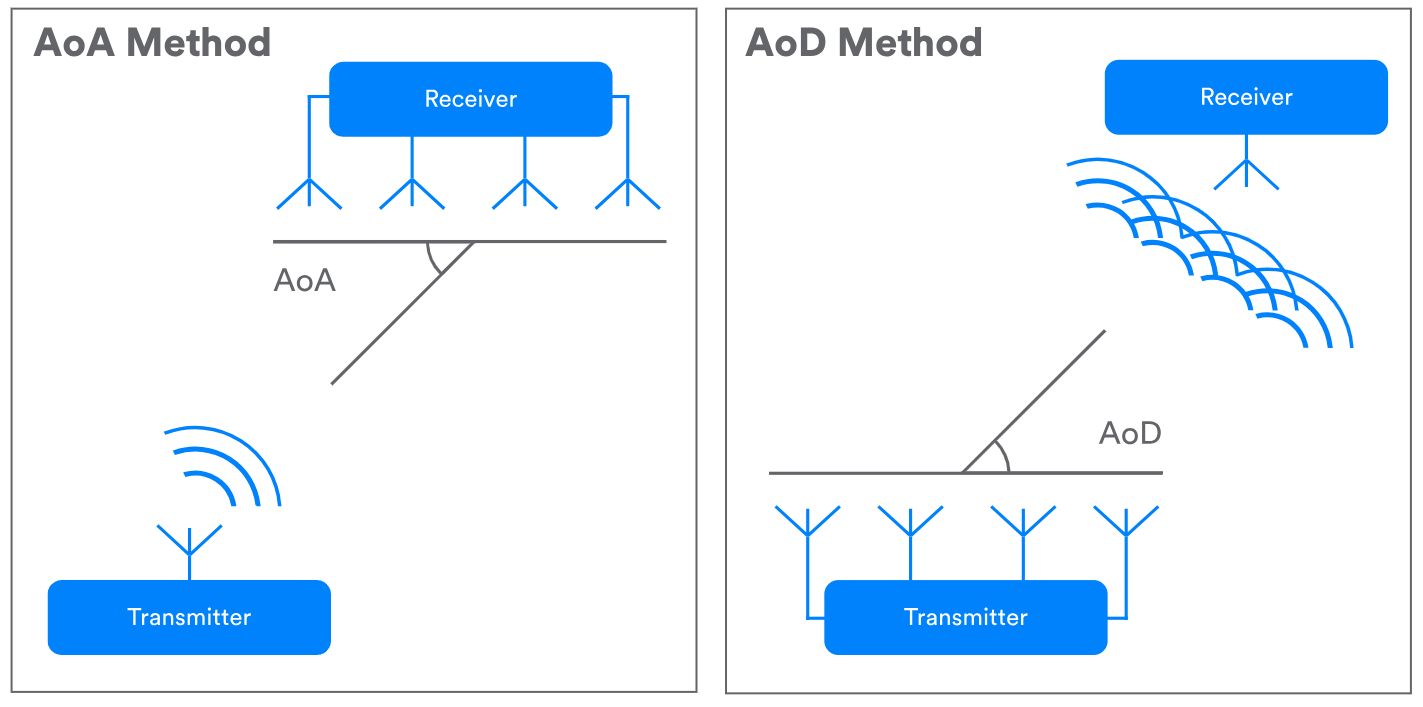
Channel Sounding takes a more advanced approach. It uses techniques such as Phase-Based Ranging and Round-Trip Time to help compatible devices estimate distance more accurately. Instead of simply asking, “How loud is the signal?” Bluetooth 6.0 can help devices analyze signal behavior across radio channels and timing information. That gives developers better raw data for distance estimation.
This matters because modern connected devices increasingly need spatial awareness. A smart lock should know whether your phone is truly near the door, not just somewhere yelling from across the wireless neighborhood. A car digital key should unlock only when the authorized device is within a safe, expected range. An item tracker should guide you closer to your keys without turning the search into a Bluetooth-powered treasure hunt where the treasure is under yesterday’s hoodie.
Why Channel Sounding Improves Proximity Experiences
Channel Sounding can support more accurate personal item finding, presence detection, access control, and indoor location use cases. For example, a luggage tracker could provide better short-range guidance in a crowded airport. A warehouse system could monitor assets with improved reliability. A smart-home system could trigger actions based on whether a device is genuinely close to a specific area.
Another promising area is digital key security. Relay attacks have long been a concern for systems that unlock cars, doors, hotel rooms, or restricted spaces based on wireless credentials. If a system cannot reliably verify distance, attackers may try to trick it into thinking a legitimate device is nearby. Bluetooth Channel Sounding gives developers a standardized method for building stronger proximity checks into future products.
That does not mean Bluetooth 6.0 instantly solves every security challenge. The specification provides methods for collecting measurement data, while manufacturers still need strong algorithms, secure hardware design, authentication, encryption, and careful product testing. Technology is useful; careless implementation is how we get “smart” products that need a timeout.
Decision-Based Advertising Filtering: Less Noise, More Sense
Bluetooth devices often discover one another through advertising packets. These are small wireless announcements that say, in effect, “Hello, I exist, and here is some information about me.” In busy environments, there can be a lot of these announcements flying around. Think conference halls, airports, malls, apartment buildings, hospitals, schools, factories, and offices full of wireless devices politely shouting into the 2.4 GHz void.
Bluetooth 6.0 introduces Decision-Based Advertising Filtering, a feature designed to make scanning more efficient. Instead of forcing a device to process more advertising data than necessary, this enhancement helps a scanner make smarter decisions about whether additional related packets are worth receiving. The result can be lower power consumption and less unnecessary radio activity.
This may sound small, but wireless efficiency is often built from small wins. For battery-powered devices, every avoided radio event matters. A smartwatch, tracker, medical sensor, or smart-home device does not have the luxury of wasting energy like a gaming laptop plugged into the wall and pretending it is a space heater.
Monitoring Advertisers: Better Awareness Without Constant Chatter
Another Bluetooth 6.0 improvement is Monitoring Advertisers. This feature helps devices monitor when certain advertising devices move in or out of range. Instead of constantly scanning in a power-hungry way, devices can manage advertiser monitoring more intelligently.
For the user, this could translate into smoother experiences. A phone might better recognize when a trusted accessory is nearby. A wearable might handle nearby sensors more efficiently. A smart-home controller could detect the presence or absence of specific devices with less battery drain. In industrial environments, monitoring advertisers can help systems track beacons, tags, or equipment without constant manual reconnection behavior.
The benefit is not flashy in the way “new camera megapixels” or “giant folding screen” gets attention. But it is the kind of under-the-hood improvement that makes wireless systems feel more reliable and less needy.
ISOAL Enhancement: Better Handling for Time-Sensitive Data
Bluetooth 6.0 also includes an enhancement to the Isochronous Adaptation Layer, commonly shortened to ISOAL. Isochronous channels are important for time-sensitive data, including audio and other synchronized streams. Timing matters when devices need to deliver information smoothly rather than eventually, casually, whenever the radio feels emotionally available.
The ISOAL enhancement in Bluetooth 6.0 improves how certain data is framed and handled. The practical goal is better efficiency and potentially lower latency for specific use cases. For connected devices that depend on timely delivery, even small improvements can contribute to smoother performance.
This does not mean every Bluetooth 6.0 device automatically delivers studio-perfect audio or zero-lag gaming. Audio quality and latency depend on codecs, chips, operating systems, antennas, drivers, product design, and software support. Bluetooth 6.0 provides better tools, but manufacturers still need to use them well.
LL Extended Feature Set: Helping Devices Know What They Can Do
Bluetooth 6.0 includes an LL Extended Feature Set, which improves how devices communicate supported features at the Link Layer. As Bluetooth grows more capable, devices need a better way to say, “Here are the features I support,” without creating confusion or compatibility headaches.
This is especially important because Bluetooth products do not all support every possible feature. A simple sensor, a premium smartphone, a car access module, and a pair of earbuds may all use Bluetooth, but they have very different jobs. Better feature discovery helps devices negotiate capabilities more cleanly and allows developers to build products that behave properly across mixed environments.
For consumers, this is one of those improvements they may never notice directly, which is exactly the point. Good compatibility is like good plumbing: nobody applauds it until it fails.
Frame Space Update: More Flexible Timing
The Bluetooth 6.0 Core Specification also adds a Frame Space Update. In simple terms, frame spacing relates to the timing between packets in certain Bluetooth communication scenarios. Earlier behavior was more fixed, while Bluetooth 6.0 allows frame spacing to be negotiated in supported contexts.
Flexible timing can help optimize performance for different device types and use cases. Some applications may benefit from shorter spacing, while others may need longer spacing for practical reasons. This is a deeply technical feature, but it reflects a broader theme in Bluetooth 6.0: smarter adaptation. The standard is giving product designers more ways to tune wireless behavior for real-world needs.
Why Bluetooth 6.0 Matters for Everyday Users
The average person may not wake up excited about Link Layer features. That is understandable. Most people do not pour coffee and say, “Today feels like a great day for enhanced advertiser monitoring.” But Bluetooth 6.0 matters because its features can eventually improve products people use every day.
Imagine finding your earbuds case with more precise direction and distance hints. Imagine a smart lock that is less likely to unlock when your phone is technically nearby but not actually at the door. Imagine a car digital key that better understands whether you are standing beside the vehicle or still inside the house. Imagine a warehouse where Bluetooth tags help locate tools and inventory with better accuracy and lower power consumption.
These are not fantasy use cases. They are exactly the kinds of problems Bluetooth 6.0 is designed to help solve. The catch is adoption. A specification release is the starting line, not the finish line. Chipmakers must support the features. Device manufacturers must build them into products. Operating systems must expose the right software support. App developers must create useful experiences. Then consumers must buy the devices. Technology adoption is less like flipping a switch and more like organizing a group project where everyone has different calendars.
Bluetooth 6.0 vs. Bluetooth 5.x: What Actually Changes?
Bluetooth 5.x brought important improvements over the years, including longer range options, higher Low Energy data rates, better advertising capabilities, improved periodic advertising, and more efficient connections. Bluetooth 6.0 does not replace those foundations. Instead, it expands what Bluetooth can do, especially around proximity and precision.
The biggest conceptual shift is that Bluetooth is moving from simple connectivity toward more context-aware connectivity. Older Bluetooth could connect your headphones. Newer Bluetooth can help products understand whether another device is close enough, far away, moving into range, or worth paying attention to during scanning.
That shift is important for the Internet of Things. In an IoT-heavy world, billions of devices need to communicate efficiently without draining batteries or flooding the air with unnecessary traffic. Bluetooth 6.0 aims to make those interactions more intelligent.
Will Existing Devices Get Bluetooth 6.0?
Some Bluetooth improvements can arrive through firmware or software updates, but major features often require compatible radio hardware. Bluetooth Channel Sounding, in particular, may require new chip-level support depending on the product design. That means your current phone, laptop, tracker, or earbuds may not receive the full Bluetooth 6.0 feature set simply because a settings menu update appears.
The safest way to understand support is to check the actual product specifications from the manufacturer. Look for explicit mentions of Bluetooth 6.0 and, more importantly, the specific features you care about, such as Channel Sounding. Version numbers are useful, but feature support is what determines real-world capability.
Also remember that both devices involved in a feature usually need to support it. A Bluetooth 6.0 phone paired with an older tracker may still work, but the pair may not deliver the newest precision ranging behavior. Compatibility keeps things connected; feature matching makes things powerful.
Developer and Industry Impact
For developers and product teams, Bluetooth 6.0 opens the door to more sophisticated applications. Item tracking companies can improve short-range finding. Automotive suppliers can explore stronger phone-as-key systems. Smart-home brands can create presence-based automation that feels less random. Industrial companies can design asset monitoring systems that combine low power, scalability, and better spatial awareness.
Chipmakers are already positioning Bluetooth 6.0 and Channel Sounding as important tools for next-generation wireless products. Development boards, wireless microcontrollers, software stacks, and reference designs will play a major role in how quickly these features move from specification documents into real devices.
For businesses, the opportunity is not simply “add Bluetooth 6.0” as a marketing bullet. The better opportunity is to solve practical problems: reduce false unlocks, improve indoor tracking, lower power consumption, simplify device discovery, and create smoother handoffs between accessories and host devices.
Examples of Bluetooth 6.0 Use Cases
Smarter Item Trackers
Bluetooth trackers could become more precise when helping users find keys, wallets, backpacks, remotes, luggage, bikes, or pet accessories. Instead of only saying “nearby,” future systems may provide better distance-based guidance.
More Secure Smart Locks
Smart locks could use distance checks to reduce the chance of unlocking when the authorized device is not actually close enough. This is useful for homes, offices, hotels, dorms, and shared spaces.
Automotive Digital Keys
Cars using phone-based access can benefit from improved proximity verification. Bluetooth 6.0 features may help vehicles determine whether a driver is approaching, standing beside the car, or moving away.
Industrial Asset Tracking
Warehouses, hospitals, factories, and logistics centers can use improved Bluetooth ranging to track tools, carts, medical equipment, inventory, and mobile assets with better reliability.
Context-Aware Accessories
Keyboards, mice, controllers, and other accessories could become smarter about sleeping, waking, switching devices, or changing behavior based on distance from a phone, tablet, laptop, or hub.
Limitations and Realistic Expectations
Bluetooth 6.0 is exciting, but it is not a teleportation device, a universal tracking spell, or a cure for earbuds falling between couch cushions. Performance will depend on hardware, antennas, software, algorithms, physical environment, and product quality.
Distance estimation can still be affected by indoor reflections, human bodies, device orientation, interference, and materials in the environment. Channel Sounding improves the measurement toolbox, but manufacturers need strong algorithms to turn radio data into dependable user experiences.
Consumers should also be careful with marketing claims. “Bluetooth 6.0” on a box does not automatically guarantee every feature in the specification is supported. Look for named features, certified capabilities, and real product testing. The version number starts the conversation; the implementation finishes it.
Why This Release Feels Important
Bluetooth 6.0 feels important because it addresses a major weakness in everyday wireless technology: knowing distance with confidence. Bluetooth has always been great at connecting nearby devices, but “nearby” is a fuzzy word. A device can be nearby in signal terms while still being across a room, behind a wall, inside a bag, or in the wrong person’s hand.
By adding standardized high-accuracy ranging tools, Bluetooth 6.0 helps the ecosystem build products that respond to physical space more intelligently. That is a big deal for security, automation, tracking, and convenience.
It also helps Bluetooth compete and cooperate with other positioning technologies. Ultra-Wideband has gained attention for precise ranging, especially in premium phones and trackers. Wi-Fi positioning, GPS, cellular location, NFC, and camera-based systems all have roles too. Bluetooth 6.0 does not need to replace every technology. Its strength is that Bluetooth is already everywhere, power-efficient, familiar, and supported by a huge device ecosystem.
Experience Notes: What Bluetooth 6.0 Means in Real Life
Anyone who has used Bluetooth for years knows the relationship can be both magical and mildly comedic. One day your earbuds connect before you even remove them from the case. The next day your laptop insists the speaker is connected, the speaker insists it is connected to your phone, and your phone is quietly pretending it has never met either of them. Bluetooth 6.0 does not erase every weird wireless moment, but it does show where the technology is heading: less guessing, more awareness, and smarter behavior.
From a user-experience perspective, the most interesting part of Bluetooth 6.0 is not the version number. It is the idea that devices can make better decisions because they understand proximity more accurately. Think about how many daily frustrations are really distance problems. Your tracker says your keys are nearby, but “nearby” apparently includes three rooms, two bags, and the emotional support drawer where random cables go to retire. Your smart lock detects your phone, but does it know you are outside the door or sitting on the sofa near the entryway? Your wireless keyboard stays awake because your tablet is somewhere in the house, even though you are not using it.
Bluetooth Channel Sounding gives manufacturers a better foundation for solving those little annoyances. If implemented well, future products may feel less like passive accessories and more like aware companions. A tracker could guide you with improved confidence. A lock could make more cautious decisions. A controller could wake when you approach and sleep when you walk away. These are small experiences, but small experiences are exactly where good technology becomes invisible.
For shoppers, the best advice is to be patient and specific. Do not buy a product only because the package says Bluetooth 6.0. Look for the actual feature you want. If you care about precise finding, search for Channel Sounding support. If you care about smart locks or car access, look for security-focused ranging features. If you care about battery life, check real reviews instead of trusting heroic battery claims written by someone who may never have met a low-battery warning in the wild.
For developers and businesses, Bluetooth 6.0 is a reminder that the next wave of connected products will be judged by usefulness, not buzzwords. A smart device should not just connect; it should behave appropriately. It should save power when nothing important is happening. It should detect meaningful proximity. It should avoid false triggers. It should explain itself through good app design. The best Bluetooth 6.0 products will not shout about the specification every five seconds. They will simply work better, and users will wonder why older gadgets felt so clumsy.
In that sense, Bluetooth 6.0 is less about replacing Bluetooth 5.x overnight and more about giving the industry a smarter foundation. The release sets the stage for better find-my-device networks, stronger digital keys, more efficient sensors, and accessories that understand context. The future of Bluetooth is not just wireless. It is spatial, efficient, and hopefully a little less likely to make us crawl under the couch looking for one missing earbud while questioning our life choices.
Conclusion
The release of the Bluetooth Version 6.0 Core Specification is a major milestone for wireless connectivity. Its most talked-about feature, Bluetooth Channel Sounding, gives compatible devices a standardized way to support more accurate distance awareness. Combined with improvements such as Decision-Based Advertising Filtering, Monitoring Advertisers, ISOAL Enhancement, LL Extended Feature Set, and Frame Space Update, Bluetooth 6.0 is designed for smarter, more efficient, and more secure connected experiences.
For everyday users, the benefits will appear gradually as new phones, trackers, locks, wearables, cars, computers, and smart-home devices adopt the technology. For developers and manufacturers, Bluetooth 6.0 provides a stronger platform for building products that understand proximity, conserve energy, and interact more intelligently. It is not just a new number. It is a step toward Bluetooth devices that know not only that something is connected, but where it is, how close it is, and whether it should act.