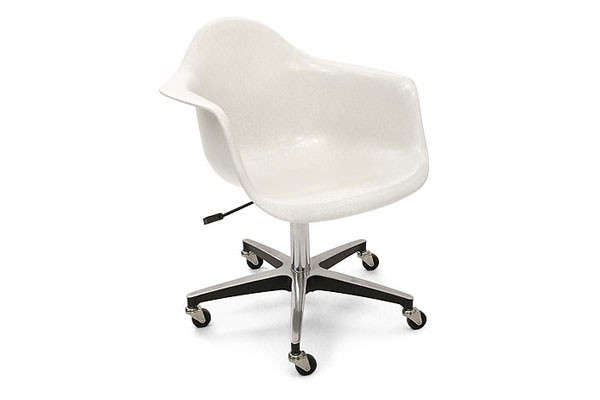
The Case Study Fiberglass Rolling Chair is what happens when mid-century cool puts on office shoes and decides to get some work done. It has the clean, sculptural look of a classic molded fiberglass shell chair, but instead of staying politely planted at a dining table, it swivels, rolls, adjusts, tilts, and quietly says, “Yes, I can take a Zoom call and still look like I belong in an architecture magazine.”
At its core, this chair sits at the intersection of three ideas: timeless modern design, practical office function, and the tactile charm of fiberglass. Unlike bulky executive chairs that look as if they were designed by a committee of tired briefcases, the Case Study Fiberglass Rolling Chair keeps the silhouette simple. The shell is compact. The base is mobile. The attitude is confident but not shouty. It is a desk chair for people who care about how a workspace feels, not just whether the chair can survive another Monday.
This case study explores the chair’s design background, materials, ergonomic value, office performance, styling potential, maintenance needs, and real-world user experience. Whether you are furnishing a home office, studio, reception area, creative workspace, or design-forward conference nook, the Case Study Fiberglass Rolling Chair deserves a closer look.
What Is the Case Study Fiberglass Rolling Chair?
The Case Study Fiberglass Rolling Chair is a rolling office version of the molded fiberglass shell chair format associated with American mid-century modern furniture. It is commonly connected with Modernica’s Case Study furniture line, which emphasizes handcrafted modernist pieces made in Los Angeles. The chair combines a molded fiberglass seat shell with a rolling metal base, adding office-friendly features such as height adjustment, swivel movement, tilt control, and casters.
The product became especially interesting because it updates an older four-star rolling base concept with a more stable five-star base. That detail sounds tiny until you remember that a chair with wheels is basically a small vehicle you operate while holding coffee. Stability matters. A five-star caster base spreads weight more evenly, improves balance, and makes the chair better suited to everyday desk use.
The fiberglass shell gives the chair its identity. Instead of hiding under thick padding, the material becomes part of the visual story. You can often see subtle fiber texture in the surface, giving each shell a slightly handmade, organic look. It is not cold plastic pretending to be fancy; it is a composite material with character, history, and a little bit of “I know a good design store when I see one” energy.
The Design Lineage: From Eames Inspiration to Modern Office Use
A Short History of Molded Fiberglass Seating
To understand the Case Study Fiberglass Rolling Chair, you need to understand why molded fiberglass chairs became iconic in the first place. In the postwar era, designers Charles and Ray Eames explored new materials and manufacturing methods that could make good design more accessible. Their molded shell chairs, introduced around 1950, helped popularize the idea of a one-piece seat and backrest made from reinforced material.
The genius of the shell chair was not just that it looked modern. It solved several practical problems at once. It was lightweight, adaptable to different bases, relatively easy to clean, and comfortable enough for everyday use. A single shell could become a dining chair, side chair, rocker, stacking chair, or office chair depending on the base attached underneath. In furniture terms, that is not just versatility; that is a wardrobe change worthy of Broadway.
Why “Case Study” Matters
The phrase “Case Study” also carries architectural meaning. The Case Study House Program, launched in California in the mid-1940s, encouraged architects and designers to explore affordable, modern, efficient living. The Eames House, also known as Case Study House No. 8, became one of the most famous examples of this spirit: practical, industrial, beautiful, and deeply livable.
The Case Study Fiberglass Rolling Chair borrows from that same philosophy. It is not overloaded with decoration. It does not need carved legs, nailhead trim, or a back shaped like a throne. Its appeal comes from proportion, material honesty, and utility. In plain English: it looks good because it works well, and it works well because the design is not trying to win a costume contest.
Material Analysis: Why Fiberglass Still Feels Special
Fiberglass is a composite material made by reinforcing resin with glass fibers. In chair design, that combination creates a shell that can be strong, relatively lightweight, and slightly flexible. This balance is important. A chair shell should not feel like a stone slab, but it also should not flex so much that you wonder whether it is filing a complaint.
The appeal of fiberglass goes beyond performance. It has visual depth. Many fiberglass chairs show tiny strands and variations across the surface, giving the shell a warm, textured quality. Compared with flat molded plastic, fiberglass often feels more crafted and dimensional. In a minimalist office, that texture prevents the chair from looking sterile. In a colorful studio, it adds vintage charm without becoming cartoonish.
Another advantage is durability. Fiberglass shells can handle daily use well when cared for properly. They resist many of the small indignities of office life: sliding in and out, shifting posture, light bumps against a desk, and the occasional dramatic spin after finishing a spreadsheet. The material is not indestructible, of course. Scratches, chips, and stress around mounting points can occur, especially with rough handling. But with normal use, fiberglass has a reputation for aging with personality rather than simply looking worn out.
Key Features of the Rolling Chair Base
Height Adjustment
One of the major improvements in the rolling version is adjustable height. A gas-lift mechanism allows users to raise or lower the seat quickly, helping the chair work with different desks and body types. This is a major benefit over fixed-height shell chairs, which may look fantastic but can leave your knees and desk at war.
For a healthy workstation, your feet should rest flat on the floor or on a footrest, with your thighs supported and your shoulders relaxed. The height-adjustable base makes this easier to achieve. It also makes the chair more flexible in shared workspaces, where one person may be tall enough to change a ceiling lightbulb without a ladder and another may need the chair at its lowest setting.
360-Degree Swivel
The swivel function gives the chair office practicality. You can turn toward a monitor, reach a side table, grab a notebook, or politely rotate away from a bad idea in a meeting. A smooth swivel is especially valuable in compact offices because it reduces the need to drag the chair around. Less dragging means less noise, fewer floor marks, and fewer moments when your chair sounds like a raccoon moving furniture upstairs.
Tilt Control
Tilt control adds movement, which is important for comfort. Static sitting can become tiring, even in a beautiful chair. A tilt feature lets the user shift posture during the day. Some versions include weight-adjustable tilt tension and a lockable position, allowing the chair to feel more customized than a simple fixed shell.
Five-Star Caster Base
The five-star base is a smart update for office safety and durability. Office seating standards and ergonomic guidance commonly favor stable multi-leg caster bases because they support easy movement and reduce tipping risk. In everyday use, this means the chair feels more planted when you reach, lean, swivel, or roll backward after discovering that your lunch meeting was moved to 4:30 p.m.
Comfort Review: Beautiful, But Is It Sit-All-Day Comfortable?
The honest answer is: it depends on how you use it. The Case Study Fiberglass Rolling Chair is comfortable for task work, creative sessions, short meetings, and stylish home office use. The molded shell cradles the body better than a flat seat, and the slight give of fiberglass can feel more forgiving than hard plastic. However, it is not the same as a fully adjustable ergonomic chair with thick foam, adjustable lumbar support, armrest controls, seat-depth adjustment, and a headrest.
If you spend eight to ten hours a day at a desk, especially with back issues, you may prefer a dedicated ergonomic task chair. The Case Study Fiberglass Rolling Chair is best understood as a design-forward office chair rather than a medical-grade ergonomic solution. It supports movement, adjusts in height, and looks excellent, but it does not offer every ergonomic feature available in high-end mesh task chairs.
That said, many people do not want their home office to look like a call center command station. For hybrid workers, designers, writers, architects, photographers, and style-conscious professionals, the chair offers a rare compromise: enough function for real work and enough beauty that you do not feel the need to hide it before guests arrive.
Best Uses for the Case Study Fiberglass Rolling Chair
Home Offices
This chair shines in a home office because it does not visually dominate the room. Many office chairs are bulky, black, and aggressively padded, as if designed to survive reentry from space. The Case Study Fiberglass Rolling Chair has a lighter profile, making it ideal for apartments, bedrooms, studio corners, and open-plan living spaces where the desk is visible.
Creative Studios
In a design studio, photography workspace, or architecture office, the chair feels especially appropriate. It communicates taste without trying too hard. The fiberglass shell also pairs well with drafting tables, work tables, metal shelving, wood storage, concrete floors, and vintage lighting.
Reception and Meeting Areas
Because the chair has a polished modern silhouette, it can also work in reception spaces or casual meeting rooms. Rolling chairs are useful in collaborative settings where people need to shift around a table, look at samples, or gather around a screen. The chair adds mobility without sacrificing visual clarity.
Compact Workstations
Small spaces benefit from furniture that does more than one job. This chair can serve as a desk chair during the day and an attractive side chair after hours. It does not look like office equipment that accidentally escaped from a cubicle farm.
Style Guide: How to Decorate Around It
The Case Study Fiberglass Rolling Chair works with a surprisingly wide range of interiors. In a mid-century modern room, it feels right at home with walnut desks, low storage credenzas, globe lamps, and warm neutral textiles. In a minimalist office, it can add shape and texture without clutter. In an industrial loft, the fiberglass shell and metal base connect naturally with concrete, steel, exposed brick, and big windows.
Color choice matters. A neutral shell, such as white, cream, gray, parchment, or black, creates a calm and flexible look. Brighter colors like orange, red, green, or blue turn the chair into a focal point. If your office is mostly beige and you worry it has the emotional range of oatmeal, a colorful fiberglass shell can fix that faster than buying another motivational print.
For desks, consider simple forms. A heavy traditional executive desk may fight the chair’s light modern profile. Better pairings include slim wood desks, steel-frame work tables, wall-mounted desks, glass surfaces, and simple laminate or plywood tops. The chair also looks excellent with plants, woven rugs, ceramic accessories, and warm task lighting.
Buying Considerations Before You Choose One
Check the Seat Shape
Molded shell chairs have a distinctive sitting posture. Some users love the cradled feel; others prefer more padding. If possible, test the chair before buying. Pay attention to how your lower back, thighs, and shoulders feel after at least 15 minutes. A chair can feel delightful for 30 seconds and suspicious after an hour, much like certain shoes and certain people.
Think About Armchair vs. Side Chair
Fiberglass rolling chairs may come in side shell or arm shell versions. A side shell is cleaner and easier to tuck under a desk. An arm shell offers more support and a lounge-like feel but may not fit under every desktop. Measure your desk height and clearance before choosing.
Match Casters to Flooring
Casters should suit the floor. Hard casters may work well on carpet but can scratch wood or roll too freely on smooth surfaces. Soft or rubberized casters are often better for hardwood, tile, and polished concrete. A chair mat can also protect floors, though admittedly it is not the most glamorous object in the design universe.
Review Warranty and Assembly
Look closely at warranty terms, return policies, and assembly requirements. A rolling chair has more moving parts than a fixed chair, including the gas lift, caster wheels, tilt mechanism, and mounting hardware. These parts should feel stable, not wobbly. When assembled correctly, the chair should rotate smoothly, roll evenly, and sit level.
Maintenance and Care Tips
Fiberglass is durable, but it deserves thoughtful care. Clean the shell with a soft cloth and mild soap solution. Avoid harsh abrasives, bleach, or aggressive scrubbing pads that can dull the surface. For dust, a microfiber cloth works well. For smudges, warm water and gentle cleaner are usually enough.
Inspect the mounting points occasionally, especially if the chair is used daily. Tighten hardware if needed, but do not overtighten bolts into the shell. The caster base should also be checked for hair, thread, dust, and other debris wrapped around the wheels. Office chair casters have a secret hobby: collecting every loose fiber in the room like tiny rolling museums.
If the chair has a vintage or lightly textured fiberglass finish, preserve the patina rather than trying to make it look factory-new. Part of the appeal is the material’s depth and variation. A good fiberglass shell should look lived with, not laminated into silence.
Pros and Cons
Pros
- Timeless mid-century modern appearance
- Fiberglass shell with visible texture and character
- Height adjustment for practical desk use
- Swivel and caster movement for flexible workspaces
- Five-star base improves office stability
- Works well in home offices, studios, and design-forward interiors
Cons
- Not as adjustable as a full ergonomic task chair
- Minimal padding may not suit all-day sitting for every user
- Arm shell versions may not fit under every desk
- Fiberglass can scratch or chip if handled roughly
- Quality versions may cost more than ordinary office chairs
Case Study Analysis: Why This Chair Works
The strongest argument for the Case Study Fiberglass Rolling Chair is that it successfully translates a design icon into a functional office object. Many beautiful chairs fail when asked to do real work. They look wonderful in photos but become uncomfortable, unstable, or impractical when used daily. This chair avoids that trap by pairing a proven shell form with a practical rolling base.
Its design also solves a common home office problem: visual compromise. People want ergonomic function, but they also want a room that feels personal and intentional. A giant task chair may offer excellent adjustability, but in a small apartment it can look like a parked appliance. The Case Study Fiberglass Rolling Chair keeps the workspace light, flexible, and visually connected to the rest of the home.
The chair is not perfect for everyone. Users who need intense lumbar customization, thick cushioning, or long-duration support may need a more technical ergonomic chair. But for many people, especially those who alternate sitting and standing, work in shorter sessions, or value design as part of their daily environment, the chair offers a persuasive balance.
Real-World Experience Notes: Living With a Case Study Fiberglass Rolling Chair
Using a Case Study Fiberglass Rolling Chair in a real workspace feels different from using a standard office chair. The first thing you notice is visual lightness. It does not lumber into the room like a padded office beast. It sits there with clean curves, a slim base, and enough personality to make even a basic desk look more intentional. In a small home office, that matters. Furniture has to earn its square footage, and this chair earns it by being useful without visually crowding the room.
The rolling base changes the way the shell chair behaves. A fixed fiberglass side chair is charming, but it asks you to scoot, lift, and reposition it manually. The rolling version feels more natural at a desk. You can move from keyboard to notebook, pivot toward a shelf, or slide back to stand up without doing that awkward chair-hop dance. The swivel also makes the chair feel more relaxed. It has movement, and movement helps prevent the stiff, trapped feeling that comes from sitting in one fixed position too long.
Comfort depends heavily on expectations. If you expect a plush executive chair, the fiberglass shell will feel firm. If you expect a sculpted modern chair with a little flex and a supportive shape, it feels satisfying. For writing, browsing, sketching, light editing, and shorter work sessions, the chair performs well. For marathon spreadsheet days, a seat pad or alternating with a standing desk may be a smart idea. The chair encourages active sitting rather than sleepy sinking, which can be a benefit if you do not want your office chair to gently turn you into a croissant.
The material also affects the daily experience. Fiberglass has a warmer, more tactile personality than ordinary molded plastic. It catches light softly and gives the chair a handcrafted look. Small variations in the shell make it feel less mass-produced, even when the shape itself is highly refined. That makes the chair especially appealing in rooms with natural wood, books, art, ceramics, and plants.
Maintenance is simple but not nonexistent. The shell wipes clean easily, but the base and casters need occasional attention. Dust and hair can collect around the wheels, especially if the chair lives on a rug. On hard floors, choosing the right caster or using a protective mat can prevent scratches. After a few months of use, checking the bolts and base connection is wise. A stylish chair is still a chair, and gravity is not impressed by design history.
The best experience comes when the chair is used in the right role: a beautiful, functional, mobile desk chair for people who value both design and practicality. It is not trying to replace every ergonomic chair on earth. It is trying to make work feel less visually depressing. On that mission, it succeeds with style.
Conclusion
The Case Study Fiberglass Rolling Chair is a smart choice for anyone who wants a desk chair with authentic modernist character and useful office features. Its fiberglass shell connects it to one of the most important furniture design stories of the twentieth century, while its rolling base, height adjustment, swivel, and tilt control bring it into everyday work life.
It is best for home offices, creative studios, compact work areas, and design-conscious workspaces where appearance matters as much as function. It may not replace a fully adjustable ergonomic task chair for every user, but it offers something many office chairs lack: soul. And in a world full of dull desk chairs, a little soul is not a luxury. It is lumbar support for the eyes.
Note: This article is based on synthesized research from real product descriptions, modern furniture history, office ergonomics guidance, and fiberglass chair design references. Product pricing, availability, color options, and warranty terms may change over time, so buyers should verify current details before purchasing.