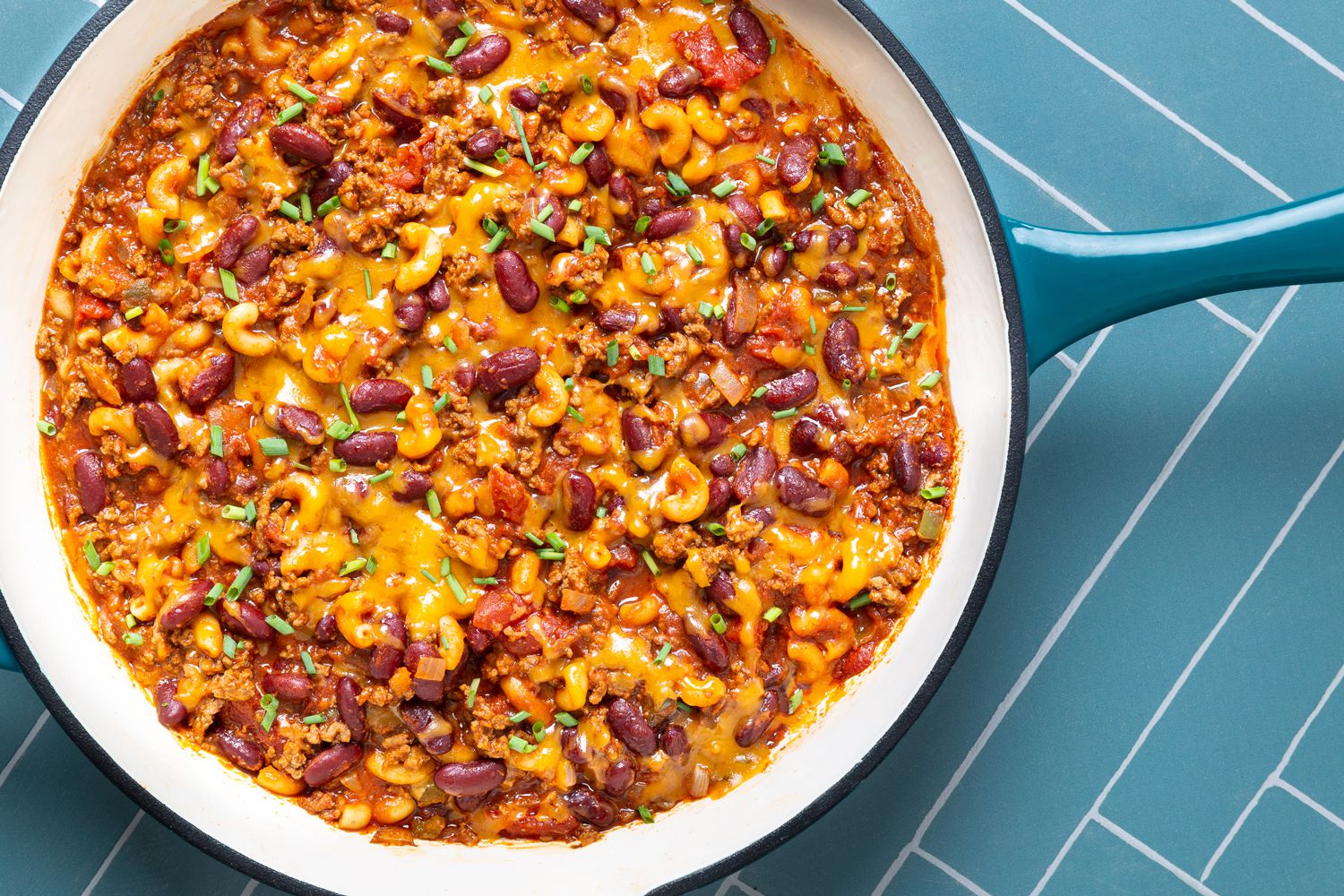
If chili is a hug in a bowl, and pasta is a hug in a different bowl, then a chili-pasta skillet is basically a group hug that only uses one pan.
It’s hearty, saucy, a little spicy, and unapologetically cheesyexactly what you want on a weeknight when your energy level is “microwave beep.”
The best part? The pasta cooks right in the chili-ish sauce, soaking up flavor like it’s getting paid per ounce.
This guide gives you a foolproof Chili-Pasta Skillet Recipe with smart technique (so the pasta turns out tender, not tragic),
plus variations, topping ideas, and fixes for the most common skillet crimes (too soupy, too dry, too bland, too “help, I used the wrong noodle”).
What Exactly Is a Chili-Pasta Skillet?
Think of it as the weeknight-friendly cousin of chili mac, American goulash, and that boxed “helper” dinner you ate in college and swore you’d outgrow.
In one skillet, you brown meat (or go meatless), sauté aromatics, bloom spices, then simmer pasta directly in a tomato-and-broth base with beans and chiles.
The starch from the pasta naturally thickens the sauce, and cheese finishes the job like a delicious, melty mic drop.
Why This One-Pan Method Works
1) The pasta thickens the sauce for you
When pasta cooks in the skillet, it releases starch into the liquid. That starch helps turn broth + tomatoes into a glossy, clingy sauce without needing flour, roux,
or an existential crisis.
2) Blooming spices = bigger flavor
Chili powder, cumin, smoked paprikathese aren’t shy; they just need a warm introduction. Toasting them briefly in oil before adding liquids wakes up their aroma
and makes the dish taste like it spent all day simmering (even if it definitely did not).
3) One skillet means fewer dishes (and fewer regrets)
You’ll use one pan, one spoon, and about one-third of your usual patience. This is a weeknight skillet meal designed for real life:
hungry people, busy schedules, and the universal desire to avoid doing more dishes than absolutely necessary.
Ingredients
This recipe makes about 4 to 6 servings, depending on whether your household believes in “portion sizes” or “seconds as a lifestyle.”
Base ingredients
- 1 tablespoon olive oil (or any neutral oil)
- 1 medium onion, diced
- 1 bell pepper, diced (optional, but adds sweetness and color)
- 3 cloves garlic, minced
- 1 pound ground beef (or turkey/chicken)
- 2 to 3 tablespoons chili powder (adjust to taste)
- 2 teaspoons ground cumin
- 1 teaspoon smoked paprika (optional but highly recommended)
- 1 teaspoon dried oregano
- Salt and black pepper
Skillet “chili sauce”
- 1 (14.5-ounce) can diced tomatoes, with juices
- 1 (8-ounce) can tomato sauce (or 1 cup marinara for a slightly sweeter vibe)
- 1 (4-ounce) can diced green chiles (optional, but very on-theme)
- 1 (15-ounce) can beans (kidney, pinto, or black beans), drained and rinsed
- 2 1/2 to 3 cups broth (beef or chicken; water works in a pinch)
- 8 to 10 ounces short pasta (elbows, rotini, shells, small penne)
Cheesy finish + toppings
- 1 1/2 to 2 cups shredded cheese (cheddar, Monterey Jack, Mexican blend, or pepper jack)
- Sour cream or Greek yogurt
- Sliced scallions or chopped cilantro
- Jalapeños (fresh or pickled)
- Crushed tortilla chips (for crunch)
- Hot sauce (for the brave and/or caffeinated)
Chili-Pasta Skillet Recipe: Step-by-Step
Use a large, deep skillet or a Dutch ovensomething with enough room to simmer pasta without launching sauce onto your stovetop like a tiny volcano.
-
Brown the meat and build the base
Heat oil over medium-high heat. Add onion (and bell pepper if using) and cook 2–3 minutes until slightly softened.
Add ground beef and cook until browned, breaking it up as you go. If there’s a lot of fat, drain most of itbut leave a little for flavor. -
Bloom the garlic and spices
Add garlic and stir for about 30 seconds (fragrant, not burntburnt garlic tastes like regret).
Sprinkle in chili powder, cumin, smoked paprika, oregano, plus a pinch of salt and pepper. Stir for 30–60 seconds to toast the spices. -
Add tomatoes, beans, broth, and pasta
Pour in diced tomatoes, tomato sauce, green chiles, and beans. Stir, then add broth.
Bring everything to a strong simmer, then stir in the pasta. Make sure pasta is mostly submerged. -
Simmer until pasta is tender
Reduce heat to medium or medium-low (you want a steady simmer, not a sauce geyser). Cover and cook 10–14 minutes, stirring every couple minutes so pasta
doesn’t stick. If it looks too thick before pasta is done, splash in a little more broth. -
Finish with cheese (the best part)
Once pasta is al dente, lower heat to low. Stir in about half the cheese until melted and creamy.
Sprinkle the rest on top, cover for 2–3 minutes until gooey. Taste and adjust: salt, pepper, chili powder, or hot sauce. -
Rest, top, and serve
Let the skillet rest 3–5 minutes. This helps the sauce thicken and cling to the pasta instead of running away like it has a meeting.
Top with sour cream, scallions, jalapeños, and crunchy chips. Serve straight from the skillet for maximum cozy.
Flavor Variations (Because Your Pantry Has Opinions)
Tex-Mex chili mac skillet
Add corn, swap beans to black beans, and finish with pepper jack + a squeeze of lime. Top with crushed tortilla chips and salsa.
Bonus points for avocado if it’s not priced like a luxury handbag.
White chicken chili pasta skillet
Use shredded rotisserie chicken, white beans, green chiles, and broth with a little salsa verde.
Stir in Monterey Jack and a spoonful of cream cheese for extra creamy “I deserve this” energy.
Vegetarian one-pot chili pasta
Skip meat and use two kinds of beans plus diced mushrooms for savory depth. Add smoked paprika for that “meaty” vibe.
Finish with cheddar or a good melting vegan cheese, and don’t forget the toppingstoppings are a vegetable if you believe hard enough.
Spicy fusion twist
Want something bolder? Add a teaspoon of fermented chile paste (start small), swap beef for ground pork, and garnish with scallions and sesame.
It’s not “traditional,” but neither are most weeknights.
Smart Swaps and Pro Tips
Pasta choice matters
Short pasta works best: elbows, rotini, shells, or small penne. They cook evenly and grab sauce.
Very tiny pasta can get mushy; very large pasta can cook unevenly.
Broth-to-pasta ratio is your steering wheel
Start with about 2 1/2 cups broth for 8 ounces pasta. Add more as needed while simmering.
Different pasta shapes and brands absorb differently, and your stovetop might run hotter than your neighbor’s.
Don’t rush the rest time
A short rest after cooking lets starch settle and sauce thicken. It’s the difference between “cozy skillet dinner” and “spoonable soup with noodles.”
Cheese goes in at low heat
High heat can make cheese grainy or oily. Low and slow keeps it smooth, melty, and worthy of your camera roll.
Serving Ideas
- Simple side salad with a tangy vinaigrette to cut the richness
- Garlic bread (because carbs supporting carbs is teamwork)
- Roasted broccoli or sautéed green beans for something green and smug
- Cornbread for peak chili-night vibes
Make-Ahead, Storage, and Reheating
This dish stores well, but pasta keeps absorbing liquid over time. Translation: leftovers get thicker. Not badjust different.
- Refrigerate: Store in an airtight container up to 4 days.
- Reheat: Warm on the stovetop or microwave with a splash of broth or water, stirring halfway through.
- Freeze: You can, but pasta texture softens. If freezing is the plan, slightly undercook the pasta and thaw gently.
Troubleshooting (Skillet Therapy)
“It’s too soupy.”
Simmer uncovered for a few minutes, stirring often. The liquid will reduce and starch will thicken it.
If you’re in a rush, stir in a little extra cheesenobody’s mad about that.
“It’s too thick / pasta isn’t done.”
Add broth 1/4 cup at a time, stir, cover, and keep simmering until pasta is tender.
A dry skillet is just chili jerky with noodles (and that’s not the vibe).
“It tastes flat.”
Add salt first. Then try: a splash of hot sauce, a squeeze of lime, a pinch of sugar (yes), or a spoon of tomato paste for deeper richness.
Toppings also add contrast: sour cream, scallions, and crunch are flavor boosters in disguise.
“My pasta got mushy.”
Next time, cook only until al dente and rest off heat. Also stir more often while simmeringpasta likes attention.
For leftovers, reheat gently with added liquid instead of blasting it into submission.
FAQ
Can I make this gluten-free?
Yesuse gluten-free short pasta, but watch the liquid and cook time closely. Some GF pastas absorb liquid differently, so add broth gradually and stir often.
Can I use leftover chili?
Absolutely. Thin leftover chili with broth, bring to a simmer, then cook pasta in it. Stir often and add liquid as needed.
It’s basically “leftovers, but make it exciting.”
How spicy is it?
Depends on your chili powder and green chiles. Start with 2 tablespoons chili powder and add heat at the end with cayenne or hot sauce.
You can always make it hotter; making it less spicy usually involves dairy and apologies.
Conclusion
A chili-pasta skillet is comfort food with a strategy: build flavor fast, simmer pasta right in the sauce, and finish with cheese and toppings that
make it feel like a full-on event. It’s weeknight-friendly, crowd-pleasing, and flexible enough to handle whatever’s in your fridgebecause cooking shouldn’t require
a second pan or a second personality.
Experience Notes: What You Learn After Making Chili-Pasta Skillet a Few Times
People fall in love with this dish for one reason: it’s reliable. Not “fancy dinner party” reliablemore like “it’s 6:42 p.m., everyone is hungry, and I need a win”
reliable. After a few rounds of making a chili-pasta skillet, you start noticing tiny moves that turn a good skillet into a great one.
First, browning the meat matters more than you think. If you rush it, you get cooked ground beef. If you let it actually brown, you get deep, savory flavor that
makes the whole pan taste like it simmered all afternoon. The trick is giving the meat contact with the panspread it out, let it sit for a minute, then break it up.
You’re not just cooking meat; you’re building the base note of the entire dish.
Second, simmer control is everything. A rolling boil can beat pasta into mush while also splattering sauce across your stovetop like modern art you didn’t ask for.
A steady simmer cooks pasta evenly and keeps the sauce thick and glossy. If your stove runs hot, don’t be shy about dialing the heat down and stirring more often.
Stirring isn’t busywork here; it’s the difference between “perfectly saucy” and “why is the bottom glued to my pan.”
Third, the broth isn’t a fixed numberit’s a conversation. Pasta brands, shapes, and even humidity can change absorption (yes, your pasta has feelings).
If the skillet looks dry halfway through cooking, add broth. If it looks too loose at the end, simmer uncovered for a minute or two.
This is why one-pan pasta is so forgiving: you can steer it in real time.
Then there’s cheese timing, which is basically the skillet’s love language. Cheese stirred in over high heat can turn grainy or separate.
When you fold it in over low heat, it melts smoothly and thickens the sauce without getting greasy. If you want the top extra melty,
sprinkle cheese, cover the pan, and let steam do the work. It’s like a tiny sauna for cheddar.
You also learn the power of contrast. Chili-pasta skillet is rich and savory, so the best toppings add brightness and crunch.
Sour cream (or Greek yogurt) cools heat and makes everything taste more “finished.” Scallions add bite. Pickled jalapeños add tang.
Crushed tortilla chips bring that snacky crunch that makes people go back for “just one more” scoop. Even a squeeze of lime can wake the whole dish up.
If your skillet ever tastes heavy, don’t add more cheese firstadd something bright.
Finally, leftovers teach you the “second-day rule”: pasta absorbs sauce overnight and the dish thickens. That’s not a flaw; it’s just a different texture.
Reheat with a splash of broth, stir, and it turns creamy again. Some people even prefer it the next day because flavors settle and deepen.
In other words, this dinner doesn’t just feed you onceit quietly sets you up for an easier tomorrow.