You’re staring at your dashboard like it personally offended you. Leads are soft. Pipeline is… “aspirational.”
And your marketing team? They seem busySlack is popping, meetings are multiplying, someone is always “circling back”
but revenue is not getting the memo.
So the question lands with the subtlety of a falling anvil: Should I fire them?
Let’s slow down for a secondbecause “fire the whole team” is a bit like fixing a leaky faucet by selling the house.
Sometimes it’s the right call. Most of the time, it’s the wrong first move.
The Real Problem Might Not Be Effort
When founders say “my marketing team doesn’t do enough,” they usually mean one of three things:
(1) I don’t see output, (2) I don’t see impact, or (3) I don’t see urgency.
Effort is invisible. Outcomes aren’t.
Here’s the uncomfortable truth: marketing can look “busy” while being strategically lost. And it can look “quiet”
while building the foundations that make growth predictable. Your job is to figure out which one you’re dealing with.
Quick gut-check: Are you measuring activity or results?
If your marketing reporting is mostly: “posts published,” “emails sent,” “events attended,” “traffic up,”
you’re tracking motionnot momentum. The board does not fund motion. The board funds outcomes.
In SaaS, marketing outcomes usually connect to: pipeline creation, revenue influence,
and efficiency (how much it costs and how long payback takes).
Before You Fire Anyone, Diagnose the Situation Like a Pro
1) Are expectations written downor living in your head?
A shocking number of teams are failing a test they were never given. If you haven’t clearly defined
what “good marketing” looks like at your stage, you’ll default to vibes. Vibes are not a management system.
Write down expectations in plain English. Not “drive awareness.” Try:
“Generate $X in qualified pipeline per quarter,” or “Increase demo conversion rate from A% to B%,” or
“Lower CAC payback by improving conversion and reducing waste.”
2) Is your go-to-market motion actually ready for marketing?
Marketing can’t compensate for broken fundamentals. If your product positioning is fuzzy, your ICP is “anyone with a pulse,”
your pricing is a guessing game, or sales follow-up is slow and inconsistent, marketing will look ineffective
because the machine downstream is eating leads like a paper shredder.
3) Do you have the right kind of marketers for your stage?
Early-stage SaaS marketing is not “brand campaigns and vibes.” It’s hands-on, scrappy, and tied to learning loops:
messaging, channels, conversion rates, and pipeline. Growth-stage marketing adds scaling muscle:
attribution, lifecycle, multi-channel programs, and repeatability.
If you hired a team built for a later chapter (or an earlier one), you’ll get frustration on both sides.
4) Is leadership the bottleneck?
If you have marketers executing tasks but no strong marketing leader owning strategy, prioritization,
and cross-functional alignment, the team can look like it’s “doing stuff” without moving the company.
That’s often not a “fire the team” problemit’s a “you need real marketing leadership” problem.
What to Measure So You’re Not Managing by Gut Feel
You don’t need 47 dashboards. You need a small set of metrics that tie marketing work to business reality,
and that your sales leader and CFO won’t laugh out of the room.
Pipeline and revenue impact
- Marketing-sourced pipeline: opportunities created from marketing-driven demand.
- Marketing-influenced pipeline: deals where marketing touches helped move it along.
- Win rate by source: do marketing-sourced deals close better, worse, or the same?
Funnel quality (not just lead volume)
- MQL → SQL conversion: are leads turning into real sales conversations?
- SQL → Opportunity conversion: are those conversations turning into pipeline?
- Speed to follow-up: if sales takes two days to respond, your “bad marketing” might be “slow sales.”
Efficiency and payback
- CAC: what you spend in sales + marketing to acquire customers.
- CAC payback period: how long it takes to earn that spend back.
- Unit economics trend: are things improving over time, or drifting into “expensive hobby” territory?
One more thing: attribution is helpful, but it’s not a miracle. Multi-touch attribution can improve decision-making,
yet it still requires clean data, consistent tracking, and agreement on definitions. If your CRM is messy,
your attribution will be a beautifully designed fiction.
Common Scenarios and What to Do Instead of “Fire Everyone”
Scenario A: “They’re doing content, but it’s not moving revenue.”
Fix: turn content into a pipeline tool, not a creative writing club.
Tie content to a specific ICP pain, a stage of the funnel, and a clear call to action.
Then measure conversion: landing page CVR, demo request rate, assisted conversions, and influenced pipeline.
Example: If you sell compliance software to mid-market healthcare, stop publishing
“5 productivity tips for teams.” Build assets that a real buyer would forward internally:
checklists, implementation timelines, ROI calculators, and “what changes in 2026” explainers.
Scenario B: “They run campaigns, but sales says the leads stink.”
Fix: define MQL and SQL together, and close the loop.
Marketing shouldn’t throw leads over the wall. Sales shouldn’t reject leads with “meh.”
Create shared definitions, add lead scoring aligned to actual buying intent, and require feedback.
Scenario C: “They seem slow, passive, and not urgent.”
Fix: install an operating cadence.
Weekly pipeline review with sales. Monthly experiment plan (what are we testing, why, and what’s the success metric?).
Quarterly planning tied to revenue goals. Urgency comes from clarity and ownership, not motivational posters.
Scenario D: “We hired an agency/freelancers and it’s still not working.”
Fix: don’t outsource accountability.
Agencies can execute, but they can’t own your strategy the way an internal leader can.
If you’re relying on external help because you don’t have in-house leadership, that’s your signal.
Consider upgrading leadership before you judge the entire function.
A Fair Decision Framework: Coach, Change, or Cut
If you want to make the decision cleanly, use a structured approachespecially if you’re managing humans,
not just headcount in a spreadsheet.
Step 1: Define the gap with evidence
Replace “doesn’t do enough” with observable statements:
“We committed to X experiments per month; we ran Y.”
“We targeted $500k in pipeline; we produced $120k.”
“MQL→SQL is 8% and trending down.”
Step 2: Check for fixable blockers
- Do they have the right tools (CRM, automation, analytics)?
- Is the ICP and positioning clear?
- Is sales actually following up quickly and consistently?
- Are goals realistic for your stage and budget?
Step 3: Run a short, measurable improvement sprint
You don’t need to be dramatic. You need to be specific.
A focused improvement period can clarify whether you have a capability problem, a leadership problem,
or simply a misalignment problem.
A good improvement plan sets measurable expectations, timelines, support, and consequences.
The point is not punishmentit’s clarity. If performance improves, great. If it doesn’t,
you’ll have confidence you’re making the right call for the business.
Step 4: Decide what’s actually broken
- Skill gap? Upskill, hire complementary talent, or change roles.
- Leadership gap? Replace or hire a stronger marketing leader.
- Motivation/ownership gap? Reset expectations and accountability; if it persists, exit.
- Strategy gap? Rebuild the plan around ICP, positioning, and pipeline math.
So… Should You Fire Them?
Sometimes, yes. But usually not “all of them,” and usually not “today,” unless you’re dealing with clear issues like:
- No measurable output despite clear goals and support.
- Chronic excuse-making with no experiments, no learning, no iteration.
- Obvious mismatch for stage and inability to adapt.
- Leadership failure where priorities are random and outcomes are consistently missed.
More often, the right move is: upgrade leadership, tighten measurement,
align with sales, and run a focused improvement sprint.
If the team rises to that structure, you keep people and gain performance.
If they don’t, you’ve earned the right to make changes quicklywithout guilt, and without chaos.
Field Notes: of Real-World “This Is What Usually Happens”
Across SaaS companies, the “marketing isn’t doing enough” complaint often pops up at the exact moment
the company transitions from founder-led growth to team-led growth. Early on, the CEO’s hustle covers a lot:
personal networks, scrappy outbound, founder credibility, and a product story delivered live on sales calls.
Then you hire marketing and expect that messy founder magic to turn into predictable pipeline overnight.
It rarely doesat least not without structure.
One common pattern: the team spends months polishing outputs that feel safewebsite refreshes, brand decks,
content calendarsbecause no one wants to get yelled at for launching a campaign that flops. Meanwhile,
sales is hungry, so the company starts demanding “more leads,” which pressures marketing to chase cheap volume.
Lead volume goes up. Lead quality goes down. Sales gets angry. Marketing gets defensive. Everyone becomes
an expert in explaining why it’s someone else’s fault. It’s basically a workplace sitcom, except the laugh track is cash burn.
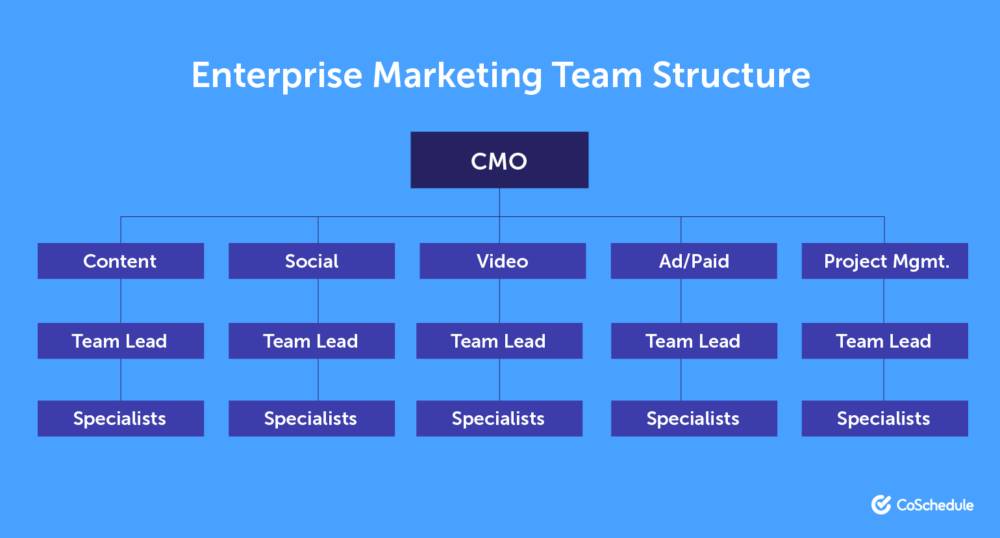
Another pattern: a well-meaning founder hires specialists too early. You end up with a content writer,
a paid search contractor, and a social media person… but nobody owns positioning, lifecycle, or pipeline math.
Specialists need a system. Without a system, they produce “nice work” that doesn’t connect to revenue.
This is why many companies improve faster by hiring (or promoting) a strong marketing leader who can
pick a few bets, set weekly priorities, and build a measurement habitbefore adding more headcount.
The third pattern is the “silent killer”: weak handoffs. Marketing actually generates decent demand,
but sales follow-up is inconsistent or slow. Leads cool off. Conversions drop. Marketing gets blamed.
The fix is often boring but powerful: a shared SLA (service-level agreement), a tight definition of
what qualifies as an SQL, and a feedback loop where sales disposition data is reviewed weekly.
When teams do this, pipeline quality improves even without increasing spendbecause the same leads
finally get handled like they matter.
Finally, there’s the “good people, wrong stage” situation. A marketer who’s fantastic at scaling
a mature demand gen engine may struggle in a chaotic early-stage environment where speed and experimentation
matter more than process. Conversely, a scrappy early-stage generalist may struggle when the company needs
multi-touch attribution, tighter forecasting, and cross-channel orchestration. In those cases, “firing”
isn’t the only option. Sometimes it’s a role shift, a new manager, or a deliberate re-scope.
The goal isn’t to win an argumentit’s to build a marketing function that produces revenue reality, not marketing theater.