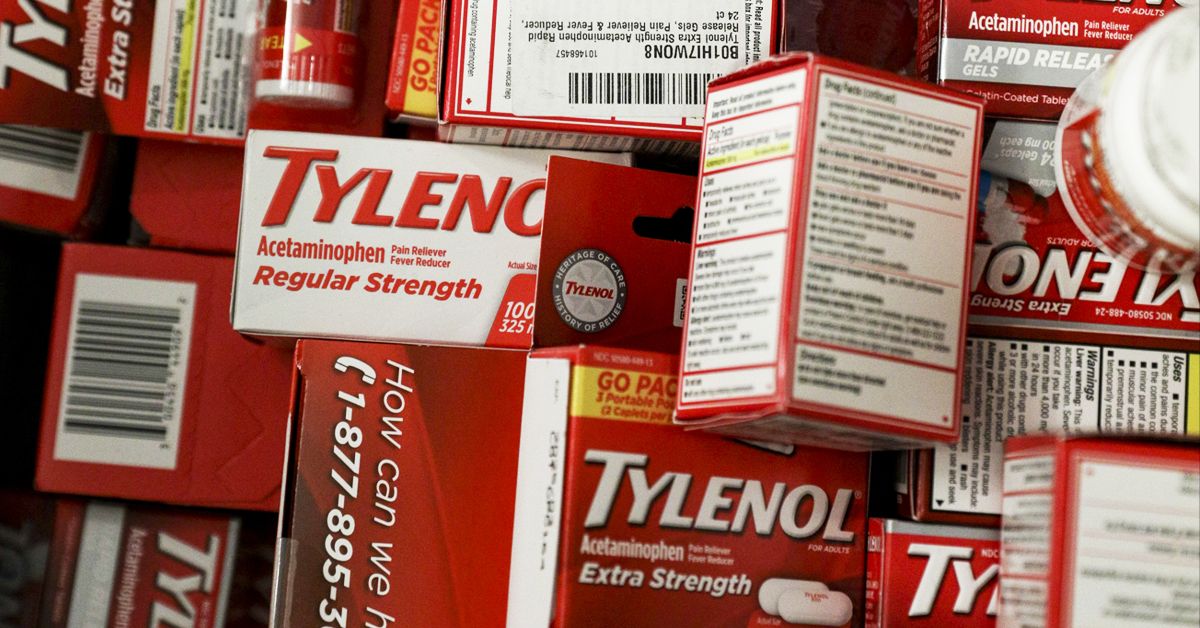
Tylenol (aka acetaminophen) is the “friend who always shows up” in medicine cabinetsheadache? Tylenol. Fever? Tylenol. That weird ache you got from sleeping “artistically” on your neck? Tylenol. So when headlines (and lawsuits, and social media threads with 4,000 comments) ask whether Tylenol can cause autism, it lands like a jump-scare in the parenting aisle.
Let’s take a deep breath, put the doom-scrolling down for a second, and talk like adults with Wi-Fi and an attention span. This article breaks down what researchers have found, what they haven’t proved, why some studies disagree, and what major medical groups generally adviseespecially for pregnancy decisions where “do nothing” can sometimes be risky too.
The Short Answer (Because You’re Busy)
- There is no scientific consensus that Tylenol causes autism.
- Some studies have reported an association between prenatal acetaminophen exposure and autism/ADHD, but association is not the same as causation.
- Better-controlled research (including sibling-comparison designs) has found no evidence of increased autism risk when family factors are accounted for.
- Most U.S. clinical guidance still treats acetaminophen as the preferred first-line option for fever/pain in pregnancy when used appropriatelybecause untreated fever can be dangerous.
Now, the longer answerbecause this topic deserves more than a meme and a panic.
Why People Think There Might Be a Link
1) Observational studies sometimes show a relationship
Over the last decade, researchers have run large observational studies asking questions like: “If a pregnant person used acetaminophen, are their children diagnosed with autism or ADHD more often later?” Some studies reported small increases in risk, sometimes stronger with longer or more frequent use.
A few studies used “real-world” data that feels extra convincinglike measuring acetaminophen-related compounds in umbilical cord blood and linking higher exposure to later neurodevelopmental diagnoses. That’s the kind of detail that makes headlines purr: “We literally found it in the cord blood!”
But observational studies are like watching footprints in snow: you can see that something happened, but not always who made the footprints or why they went that way.
2) Confounding by indication: the “why you took it” problem
This is the biggest reason the Tylenol-autism question is so tricky. People take acetaminophen for a reason: fever, infections, migraines, inflammation, chronic pain, flu-like illness, and more. Some of those underlying conditionsespecially fever and infectionmay themselves be associated with pregnancy risks or neurodevelopmental outcomes.
So if you compare “people who took acetaminophen” vs. “people who didn’t,” you might actually be comparing “people who were sick or in pain” vs. “people who weren’t.” That’s not a fair fight.
In other words: the medicine might be getting blamed for the party it attended, not the mess it made.
3) Legal headlines don’t equal scientific proof
Tylenol-related autism/ADHD lawsuits have added fuel to the fire. Lawsuits can raise important questions, but they don’t settle biology. Courts evaluate evidence under legal standards, which can include rulings about expert testimony and methodologynot the same thing as a new discovery in neuroscience.
It’s completely fair to say: “I want clearer answers.” It’s not fair to jump straight to: “It’s proven.”
What the Stronger Studies Show (And Why They Matter)
Siblings are the ultimate “control group” you didn’t ask for
One of the most persuasive tools in this debate is the sibling-comparison study. Here’s the idea: compare siblings in the same familywhere one pregnancy had acetaminophen exposure and another didn’t. This controls for a ton of shared factors (genetics, home environment, socioeconomic background, many parental health patterns) that regular observational studies can’t fully untangle.
In a large population-based sibling-control analysis, researchers found that while simple models suggested a small increased risk, the association disappeared when comparing matched full siblings. That points toward familial confoundingmeaning the family’s underlying factors may explain the earlier association, not the medication itself.
That doesn’t mean acetaminophen is magically perfect. It means that when the science gets more careful, the “smoking gun” starts to look more like a fog machine.
Biomarkers (like cord blood) are interestingbut still not causation
Studies measuring acetaminophen exposure via biological samples can reduce recall bias (no one has to remember exactly how many doses they took three trimesters ago). That’s a plus.
But it’s still observational. A higher biomarker level might correlate with more severe illness, higher inflammation, longer duration of fever, or other exposures that ride along with the original reason for taking medication. A biomarker can sharpen the measurement. It can’t automatically answer the “what caused what?” question.
Why “dose-response” is a big deal
When scientists suspect causation, they often look for a dose-response pattern: more exposure → more risk, in a consistent way. Some analyses have suggested patterns like that; others haven’tespecially when using stronger controls. Mixed evidence here is one reason many expert groups label the overall picture as inconclusive.
Could There Be a Biological Mechanism?
Mechanisms are the “how” behind causation. Researchers have proposed several plausible pathways (none proven as “the answer”), including:
Placental transfer
Acetaminophen can cross the placenta and has been detected in cord blood. That’s not shockinglots of substances cross. But it does mean fetal exposure is biologically plausible.
Oxidative stress and inflammation
Some hypotheses focus on how acetaminophen is metabolized and whether heavy or prolonged exposure could affect oxidative balance or inflammatory signaling during critical windows of neurodevelopment.
Endocrine and immune signaling theories
Other proposals explore whether acetaminophen could interact with hormone or immune pathways that influence brain development. Again: plausible on paper, not the same as proven in humans.
Here’s the key point: biological plausibility is not proof. It’s more like a “possible route on the map,” not a timestamped GPS record of the trip.
What Major U.S. Health Sources Generally Say
FDA: association described, causality not established
U.S. regulators have acknowledged that studies have described an association between acetaminophen use in pregnancy and later neurodevelopmental diagnoses in children, while also emphasizing that a causal relationship has not been established. Importantly, acetaminophen is widely regarded as the main over-the-counter option for treating fever during pregnancyand untreated high fever can pose its own risks.
Pregnancy specialists: the evidence is inconclusive, and fever matters
Maternal-fetal medicine groups have repeatedly emphasized that the overall evidence for causation is inconclusive and that acetaminophen remains a reasonable option for treating pain and fever in pregnancy when used appropriately and in consultation with a clinician.
Pediatricians: no causal link, use as directed
Pediatric guidance generally stresses that acetaminophen is safe for children when used as directed and that research does not show a causal link between acetaminophen and autism.
Teratology counseling resources: possible links reported, with important limitations
Pregnancy medication fact sheets often take a balanced approach: they note that some studies have suggested possible links between prolonged prenatal acetaminophen use and developmental outcomes, while also flagging limitations (including confounding by illness severity and other factors). Translation: “Interesting signals, not a verdict.”
So… Should Pregnant People Avoid Tylenol?
If you’re pregnant (or trying), the best answer is annoyingly responsible: it dependson your symptoms, your health history, your trimester, and your provider’s advice.
When treating fever is the priority
Feverespecially high fever early in pregnancyhas been associated with certain pregnancy risks. Managing fever is not just about comfort; sometimes it’s about reducing risk. If you’re running hot, don’t white-knuckle it based on a scary headline.
Practical “use it wisely” tips (the boring stuff that actually helps)
- Use the lowest effective dose for the shortest necessary time. This is a common-sense principle in pregnancy medication decisions.
- Avoid accidental double-dosing. Many cold/flu combo products contain acetaminophen, so read labels like you’re defusing a bomb with tiny print.
- Don’t exceed daily maximums on the label or as advised by your clinician (overdose can cause severe liver injury).
- Call your provider if fever is high, persistent, or accompanied by concerning symptomsbecause the underlying infection may matter more than the fever reducer.
- If you need frequent or long-term pain control, ask for a plan. The “chronic daily use” scenario is a different conversation than “two doses for a migraine.”
Important: Don’t stop or start medication during pregnancy based solely on internet contentincluding this article. Use it as a science-informed guide for a better conversation with your clinician.
What About Taking Tylenol for KidsDoes That Cause Autism?
This question shows up a lot, and it’s usually powered by the same emotional engine: “I gave my child a medicine; did I do something irreversible?”
Current pediatric messaging from major medical sources generally indicates that acetaminophen is considered safe for children when taken as directed, and that research does not show a causal relationship between acetaminophen use in children and autism.
If you’re worried about dosing, that’s a different issueand a very real one. The biggest known risk with acetaminophen is not autism; it’s liver toxicity from overdose, especially from combining multiple acetaminophen-containing products.
FAQ: The Questions Everyone Asks at 2:00 a.m.
“If some studies show a link, why don’t we just warn everyone?”
Because a warning should be based on solid evidence of harmnot a shaky possibilityespecially when the alternative (untreated fever) can also be harmful. Public health guidance is a balancing act, not a courtroom drama.
“Does ‘no proven causation’ mean ‘100% safe’?”
No. It means scientists haven’t shown that acetaminophen causes autism. Medicine is full of trade-offs. The goal is smart, limited, appropriate useespecially during pregnancy.
“What kind of study would prove it?”
A randomized trial assigning pregnant people to long-term acetaminophen vs. none would be ethically complicated (to put it mildly). So researchers rely on observational methods and stronger designs (like sibling comparisons, negative controls, and careful adjustment). That’s why you’ll see uncertainty persist longer than anyone would like.
“I took Tylenol while pregnant and my child is autisticdid I cause it?”
Autism is influenced by a complex mix of genetic and environmental factors. Most evidence does not support blaming a single common over-the-counter medication as “the cause.” If you’re carrying guilt, please know: guilt is not data.
Real-World Experiences (The Human Side of the Tylenol-Autism Debate)
Science is essential, but so is the messy reality of living in a body that gets headaches during pregnancy and a brain that can spiral after reading one dramatic headline. Here are some common experiences people run intoplus what tends to help.
1) The “I read one thread and now I’m a full-time epidemiologist” moment.
A lot of people first meet this topic through social media: a post claims “Tylenol causes autism,” comments explode, and suddenly you’re cross-referencing screenshots like you’re in a spy movie. The emotional whiplash is real. What helps? Returning to the basics: association is not causation, and higher-quality studies often weaken the scary narrative. Also: if a post uses the words “PROVEN” and “BIG PHARMA” in all caps, it’s probably selling fear, not clarity.
2) The “fever math” dilemma.
Picture it: you’re pregnant, it’s midnight, you’re shivering under three blankets, and the thermometer says you’re running a real fever. Now you’re doing mental gymnastics: “Fever is bad… but what if Tylenol is bad?” This is where context matters. Many clinicians emphasize that untreated high fever can be a serious concern in pregnancy, particularly early on. In practice, lots of providers recommend treating fever promptly and also focusing on the cause of the fever (infection, dehydration, etc.). People often feel relief when they realize the decision isn’t “Tylenol or perfect purity”it’s “reduce fever risk and get medical guidance.”
3) The label-reading Olympics.
If there were an Olympic event for “reading tiny print while exhausted,” pregnancy would dominate. Many people learnoften the hard waythat acetaminophen shows up in unexpected places: cold/flu formulas, migraine mixes, “nighttime” products, and more. The most common real-world safety mistake isn’t taking one or two doses; it’s accidental stacking. People who create a simple routine (write down doses, avoid combination products unless advised, keep one clearly labeled bottle) often feel far more confident and less anxious.
4) The “mom guilt” trap.
Parents are basically handed a lifetime subscription to guilt, and the billing starts early. Many autistic adults and parents of autistic kids describe how painful it is to watch blame get pinned on a single behavior or medication. The truth is: autism isn’t a morality play. It’s a neurodevelopmental condition shaped by multiple factors, many of them not in anyone’s control. What helps is shifting from “What did I do wrong?” to “What support helps my child thrive?” That’s a better use of your energyand your nervous system.
5) The best conversations are boring (and that’s good).
The most helpful experiences people report are surprisingly un-dramatic: a calm clinician explaining the evidence, a pharmacist helping decode labels, and a clear plan for fever or migraines. It’s not flashy. It’s reassuring. If you can, bring specific questions to appointments: “How should I treat fever?” “What daily max should I follow?” “What should I avoid combining?” “When should I call you?” Practical clarity beats internet chaos every time.
Bottom line from the lived-experience side: most people aren’t looking for a perfect answerthey’re looking for permission to make a reasonable decision without fear. Reasonable decisions exist here, and they usually look like limited, purposeful use plus medical guidance, not panic.
Conclusion: What the Science Says (Without the Drama)
So, does Tylenol cause autism? Based on the best available evidence, we do not have proof that acetaminophen causes autism. Some research has reported associationsespecially in certain observational designsbut stronger methods that better control for shared family factors have found no increased risk.
If you’re pregnant, the decision is not “Tylenol vs. nothing.” It’s often “treat fever and pain safely vs. let illness run unchecked.” Most clinical guidance still treats acetaminophen as the preferred over-the-counter option for fever and pain in pregnancy when used appropriately. And if you’re parenting a child, the main safety issue with acetaminophen is dose and accidental double-dosing, not autism.
In short: stay curious, stay cautious, and don’t outsource your health decisions to the loudest headline on the internet.