If you have ever looked at a tray of macarons and thought, “Those little cookies seem fancy enough to judge me,” welcome. You are among friends. The good news is that a double-almond macarons recipe is absolutely doable at home. The even better news is that the payoff is glorious: crisp tops, frilly little feet, chewy centers, and a creamy almond filling that tastes like a bakery decided to wear perfume.
This version leans hard into almond flavor, which is exactly what makes it special. The shells are made with almond flour, and the filling gets an extra hit of almond extract for that unmistakable sweet, nutty finish. The result is elegant without being fussy in flavor. It is basically the dessert version of showing up in a tailored blazer and sneakers: impressive, but still fun.
Below, you will find everything you need to know about making double-almond macarons, from ingredients and method to troubleshooting, storage, and the real-life experience of baking them. Whether this is your first macaron adventure or your tenth, this guide is designed to help you get bakery-style results in your own kitchen.
Why This Double-Almond Macarons Recipe Works
A great almond macarons recipe depends on precision, but it does not need to feel intimidating. This recipe works because it follows the technique cues that show up again and again in reliable macaron methods: finely ground almond flour, sifted dry ingredients, a stable meringue, and careful folding until the batter flows slowly rather than plops like pancake mix.
The “double almond” part comes from two places. First, almond flour gives the shells their signature delicate structure and naturally nutty flavor. Second, almond extract in the shells and the filling adds a sweeter, more aromatic almond note. That combination creates macarons that taste richer and more layered than plain vanilla shells, but still refined enough for tea, showers, brunch tables, or any moment when you want your dessert to look like it has a graduate degree.
What Double-Almond Macarons Taste Like
If you have never had a proper French macaron, the texture is part of the magic. The outside should be lightly crisp, the inside should be tender and chewy, and the filling should soften the shells just enough after resting. With this double-almond macarons recipe, the flavor is sweet, fragrant, and distinctly almond-forward without tasting like marzipan went overboard.
The buttercream-style almond filling adds richness, while the shells stay light and airy. In other words, these macarons are small, but they have main-character energy.
Ingredients for Double-Almond Macarons
For the shells
- 100 grams egg whites, at room temperature (about 3 large egg whites)
- 125 grams fine blanched almond flour
- 125 grams powdered sugar
- 50 grams granulated sugar
- 1/8 teaspoon cream of tartar
- 1/4 teaspoon almond extract
- Optional: a drop or two of ivory or pale beige gel food coloring
For the almond filling
- 6 tablespoons unsalted butter, softened
- 1 1/2 to 2 cups powdered sugar, sifted
- 1 to 2 tablespoons milk or cream
- 1/2 teaspoon almond extract
- Pinch of salt
Helpful equipment
- Food processor
- Fine-mesh sieve
- Stand mixer or hand mixer
- Large piping bag
- Large round piping tip
- Parchment paper or silicone baking mats
- Baking sheets
- Kitchen scale
Can you make macarons with measuring cups instead of a scale? Technically yes. Should you, if you want fewer surprises? Not unless chaos is part of your brand. A scale is the easiest way to improve consistency.
How to Make Double-Almond Macarons
1. Prep the egg whites and pans
Let the egg whites sit at room temperature for about 30 minutes. This helps them whip more easily and evenly. Line two baking sheets with parchment paper. If you want perfectly uniform shells, trace 1 1/4-inch circles on the underside of the parchment as a guide.
2. Process and sift the dry ingredients
Add the almond flour and powdered sugar to a food processor. Pulse several times until the mixture looks extra fine and evenly combined. Then sift it through a fine-mesh sieve into a bowl. Discard any large bits that refuse to cooperate. This step is not glamorous, but it helps create smooth macaron tops instead of lumpy little moons.
3. Make the meringue
In a very clean glass or metal bowl, beat the egg whites with cream of tartar until foamy. Gradually add the granulated sugar and keep beating until the meringue becomes glossy and forms stiff peaks. The mixture should hold its shape but still look smooth, not dry or clumpy. Add the almond extract near the end of whipping.
4. Fold to the right consistency
Add the almond flour mixture to the meringue in two additions. Fold gently with a spatula, scraping around the sides and cutting through the center. This stage is called macaronage, which sounds adorable and is also where many batches go to drama school.
You are looking for a batter that flows slowly from the spatula in a thick ribbon. It should settle back into itself within about 10 to 20 seconds. If the batter is too stiff, the macarons may bake up peaked or hollow. If it is too loose, they may spread too much and lose their shape.
5. Pipe the shells
Transfer the batter to a piping bag fitted with a large round tip. Pipe small rounds onto the prepared baking sheets, leaving a little space between them. When you finish piping, firmly tap the baking sheets on the counter several times to release trapped air bubbles. Pop any visible bubbles with a toothpick.
6. Let the shells rest
Leave the piped shells at room temperature for 30 to 45 minutes, or until the tops feel dry to the touch and are no longer sticky. This resting period helps create the classic macaron “feet,” those ruffled edges that make you feel like you have unlocked a pastry achievement.
7. Bake
Preheat the oven to 300°F. Bake one sheet at a time for 14 to 18 minutes, depending on your oven and shell size. Rotate the pan halfway through if needed. The shells are done when the tops are set and do not wobble when gently nudged. Let them cool completely before removing them from the parchment.
8. Make the almond filling
Beat the softened butter until smooth. Add 1 1/2 cups powdered sugar, 1 tablespoon milk, the almond extract, and a pinch of salt. Beat until creamy. Add more powdered sugar for a thicker filling or more milk for a softer one. You want it pipeable, not soupy.
9. Assemble the macarons
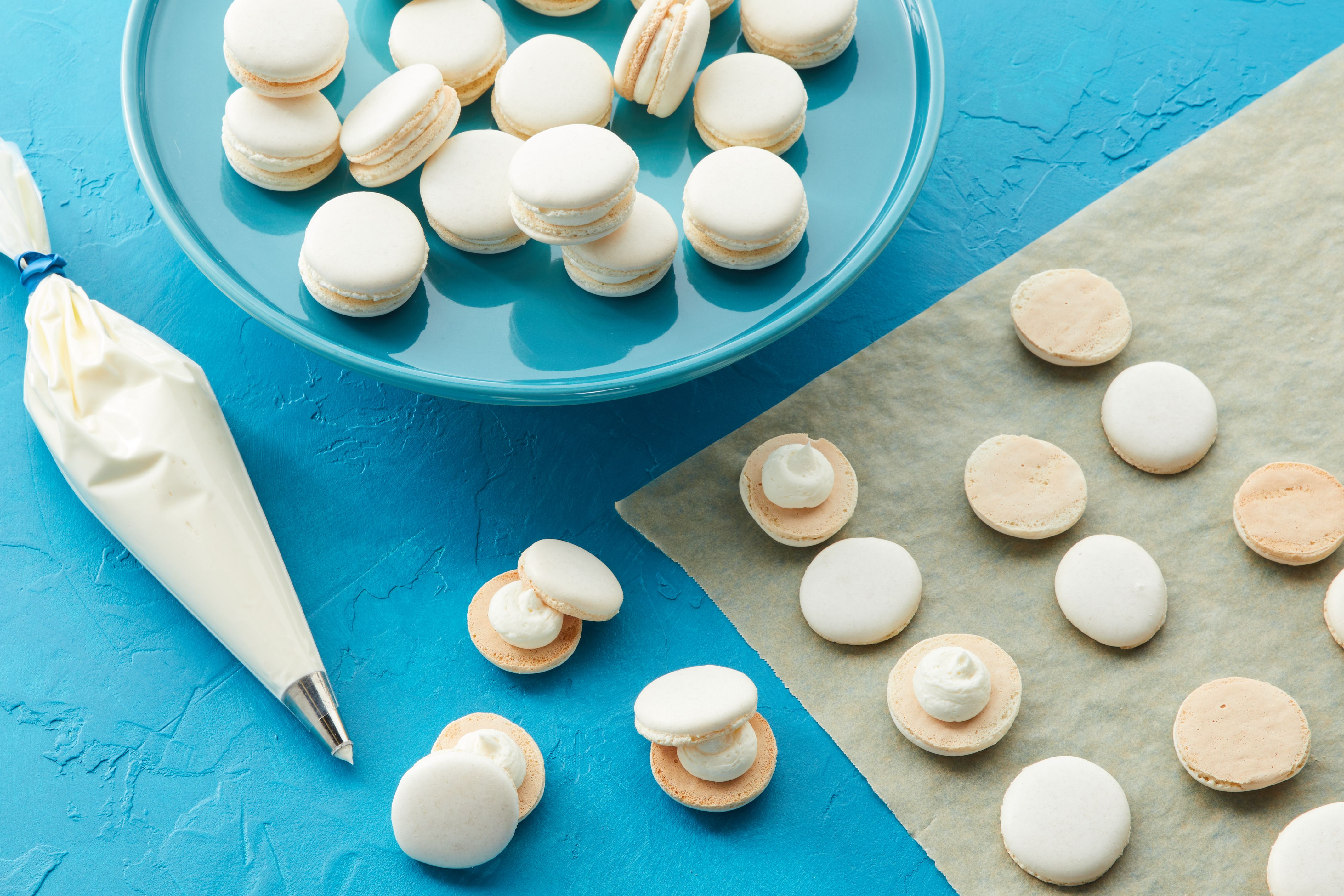
Match similar-sized shells together. Pipe or spread almond filling onto the flat side of half the shells, then top with the remaining shells. Press gently so the filling reaches the edges without squishing out like it is trying to escape the relationship.
10. Rest for the best texture
For the very best flavor and chew, refrigerate the filled macarons for at least 8 hours or overnight. Then let them sit at room temperature for about 20 to 30 minutes before serving. This resting period helps the shells and filling meld into that ideal bakery-style texture.
Tips for Perfect Almond Flour Macarons
- Use fine blanched almond flour: Almond meal is too coarse and can create rough shells.
- Keep everything grease-free: Even a little fat can interfere with whipping the egg whites properly.
- Use gel coloring, not liquid: Extra liquid can throw off the batter.
- Do not rush the resting step: Dry tops help create feet and smoother shells.
- Learn your oven: Macarons are sensitive. An oven thermometer is genuinely helpful here.
- Cool them completely: Warm shells are fragile and more likely to stick.
Common Macaron Problems and How to Fix Them
Why are my macarons cracked?
Cracked tops usually mean the shells did not rest long enough, the oven was too hot, or there were too many air bubbles left in the batter. Tap the trays firmly and make sure the tops are dry before baking.
Why do my macarons not have feet?
The batter may have been overmixed, the shells may not have rested properly, or the oven temperature may have been off. Feet need structure, steam, and timing. Macarons are tiny, but they are not casual about their entrance.
Why are the shells hollow?
Hollow shells can come from overbeaten meringue, overmixed batter, or underbaking. Try slightly less folding, slightly longer baking, or both.
Why are my macarons sticking to the parchment?
They are probably underbaked or not fully cooled. Give them a little more oven time next round, then let them cool completely before lifting.
Serving Ideas for Double-Almond Macarons
These macarons are elegant enough for showers, holidays, wedding dessert tables, and afternoon tea, but they are also just delightful with coffee on a Tuesday when life needs a little polish. Serve them on a cake stand, stack them in gift boxes, or pair them with raspberries, apricot jam, or dark chocolate for a more dramatic dessert spread.
Because the flavor is almond-forward, they pair especially well with espresso, black tea, berry desserts, and citrus. A plate of these next to a cup of coffee is the sort of situation that makes you quietly proud of yourself.
How to Store Double-Almond Macarons
Store filled macarons in an airtight container in the refrigerator for up to 4 or 5 days, depending on the filling. For longer storage, freeze them in a single layer until firm, then transfer them to a freezer-safe container. Let them thaw in the refrigerator, then bring them to room temperature before serving.
If you want to prep ahead, the shells can be made in advance and filled later. That is especially handy if you are making these for an event and prefer to avoid last-minute pastry suspense.
Are Double-Almond Macarons Gluten-Free?
The shells are made with almond flour rather than wheat flour, so macarons are often considered naturally gluten-free by ingredients. That said, always check your almond flour, powdered sugar, extracts, and filling ingredients if you need them to be fully gluten-free for dietary reasons. Labels matter. Surprise gluten is nobody’s favorite baking plot twist.
What the Experience of Making Double-Almond Macarons Is Really Like
There is a reason macarons have a reputation. They are not difficult in the way a wedding cake is difficult, but they do require a kind of attention that modern life does not always encourage. You cannot half-watch a show, answer three texts, wonder where your missing measuring spoon went, and expect your macarons to salute you for the effort. They want focus. They want calm. They want you to act like the batter matters, because it does.
That is part of what makes the experience so satisfying. A good double-almond macarons recipe teaches you to notice small things. You pay attention to whether the almond flour is truly fine enough. You notice when the meringue changes from foamy to glossy. You learn the difference between batter that falls in clumps and batter that slides off the spatula in one slow ribbon. These are subtle cues, but once you see them, you start to feel more like a baker and less like someone just following a recipe.
The aroma is another reward. Even before the macarons are assembled, the kitchen smells sweet and nutty in that unmistakable almond way that feels equal parts bakery and holiday. When the filling comes together, the almond extract lifts everything. Suddenly the whole process feels worth it, including the sifting, the piping, and the moment you stared at the tray as though your concentration alone could force the feet to appear.
Making these macarons is also a lesson in patience. The shells need to rest. The baked cookies need to cool. The filled macarons need time in the refrigerator to mature and develop their best texture. If you try to rush the process, the macarons usually let you know. They crack, stick, flatten, or simply refuse to become what you hoped. That sounds harsh, but it is oddly helpful. Macarons are honest. They tell you when you nailed it and when you took a shortcut.
For many home bakers, the first successful batch feels disproportionately triumphant, and rightly so. Pulling a tray of smooth, delicate shells from the oven with ruffled feet intact is one of those kitchen moments that makes you want to text someone a photo immediately. Not because it is flashy, but because it proves you learned a real technique. You paid attention, adjusted, and got better.
And when the flavor is double almond, the reward feels even bigger. Almond is cozy, elegant, and just a little nostalgic. It turns the macarons from merely pretty into genuinely memorable. They taste like the sort of dessert people pause over. The kind of dessert that makes someone say, “Wait, you made these?” in a tone that is half disbelief and half admiration.
That is really the experience of these macarons in a nutshell, pun absolutely intended. They ask for care, but they give back beauty, texture, aroma, and a serious sense of accomplishment. Once you make a batch that works, you stop seeing macarons as untouchable pastry-shop treasures. You start seeing them for what they are: precise, charming little cookies that reward patience and make your kitchen feel much fancier than it did an hour earlier.
Final Thoughts
This double-almond macarons recipe proves that homemade French macarons do not have to stay on the “someday” list. With the right ingredients, a little patience, and attention to texture, you can make beautiful almond flour macarons with crisp shells, chewy centers, and a creamy almond filling that tastes every bit as polished as it looks.
If you are new to macarons, start here. If you already love them, this almond-forward version deserves a permanent place in your baking rotation. They are elegant, fragrant, and just challenging enough to feel exciting. In other words, they are the overachievers of the cookie world, and for once, we are thrilled about it.