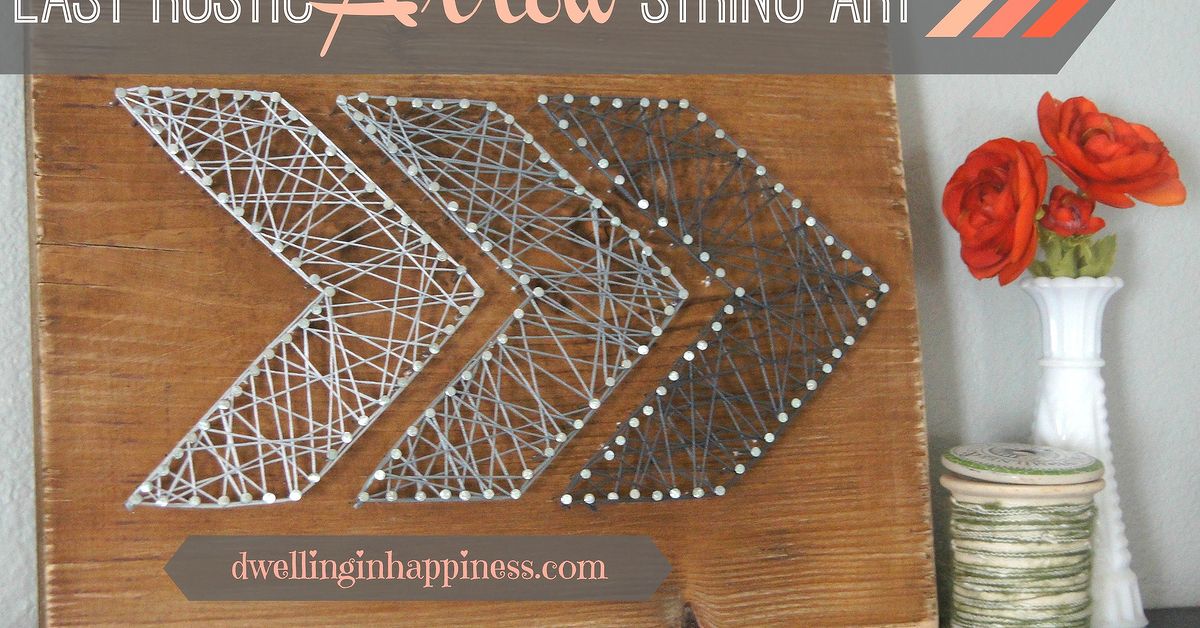
Some crafts are relaxing. Some crafts are productive. And then there’s string artthe rare DIY
unicorn that’s both oddly soothing and makes you look like you own a cabin, a flannel collection, and
at least one impressive cast-iron skillet.
This guide walks you through an easy rustic arrow string art project that looks boutique-worthy,
but is beginner-friendly enough that you don’t need a “craft room” (or a Pinterest degree). You’ll learn how to
prep a wood board for that warm, weathered vibe, place nails cleanly, wrap thread like a pro, and finish your piece
so it survives real lifedusting, moving day, and the occasional curious pet.
Why an Arrow Works So Well in Rustic String Art
An arrow is basically the Swiss Army knife of decor shapes: it’s simple, graphic, and instantly recognizable.
It also plays nicely with farmhouse, boho, modern rustic, and “I just moved and my walls are echoing” aesthetics.
Plus, the geometry is forgiving. If your line isn’t perfectly straight, it still reads as handmade charmnot a
trigonometry crime scene.
Design bonus: arrows let you control “busyness”
Want minimalist? Outline only. Want bold? Fill it in with a dense weave. Want extra rustic? Add a faux “woodgrain”
look by mixing twine and embroidery floss. The arrow shape stays readable through all of it.
Materials and Tools
Core supplies (the “please don’t overthink it” list)
- Wood board (common sizes: 6"x12", 8"x16", or 10"x20")
- Small nails (brad nails or wire nails; choose a length that won’t poke through the back)
- String: embroidery floss, craft yarn, cotton cord, or thin twine
- Arrow pattern (printable template or hand-drawn)
- Hammer
- Painter’s tape or masking tape
- Pencil + ruler
- Scissors
For the rustic finish (optional, but highly recommended)
- Sandpaper (120 grit and 180–220 grit)
- Wood stain (classic rustic tones: Early American, Walnut, Weathered Oak)
- Pre-stain wood conditioner (helpful for softwoods like pine)
- Rag or foam brush
- Clear sealer (matte or satin polyurethane is popular)
Nice-to-have helpers
- Needle-nose pliers (for straightening or pulling a nail)
- Awl or pushpin (to pre-mark nail points through the template)
- Small clamps (to hold your board steady)
- Picture hanger hardware or sawtooth hanger
Pick the Right Board for a “Rustic” Look (Without Buying a Tree)
Rustic doesn’t mean “rough enough to file your taxes on.” It means warm tones, visible grain, and a slightly
imperfect, lived-in vibe. You can get there with almost any craft boardespecially pineif you prep it correctly.
Wood choice cheat sheet
- Pine: affordable, easy to find, stains can turn blotchy (conditioner helps).
- Poplar: smoother, more consistent staining, slightly pricier.
- Plywood: works fine for wall decor; choose a nicer face veneer.
- Reclaimed wood: peak rustic, but can be harder (and splinterier) to nail into.
Rustic finish basics (keep it simple)
- Sand lightly to remove fuzz and factory stamps. Start around 120 grit, then finish with 180–220.
- Remove dust (a clean cloth works; a tack cloth is even better).
- Condition (if using softwood), then stain. Conditioner helps the board absorb stain more evenly.
- Wipe excess stain off to control darkness and avoid sticky patches.
- Seal once dry if you want extra durability (especially if this will hang in a kitchen or entryway).
Step-by-Step: Easy Rustic Arrow String Art
Step 1: Choose your arrow style
Decide what kind of arrow you’re making before you commit to nails like they’re a life choice:
- Outline arrow: crisp, modern-rustic, quickest build.
- Filled arrow: more dramatic; uses more thread and looks “store-bought.”
- Double-line arrow: an outline plus an inner outline for dimension.
- Arrow + heart/initial: great for gifts or wedding decor.
Step 2: Prep and stain the board (if you’re staining)
If you’re going rustic, do your sanding and staining before nails go in. Staining after is possible, but it’s
like trying to paint around 70 tiny obstacles you personally installed. Don’t do that to yourself.
After staining, let the board dry completely. If you’re sealing, do it now (or wait until after stringing if you want
a more natural, matte wood feel).
Step 3: Transfer the arrow pattern
- Print an arrow template sized to your board (or draw one using a ruler).
- Tape the template onto the board so it doesn’t drift mid-mark.
-
Mark nail locations along the lines. Keep spacing consistent so the final string work looks intentional.
(Most beginners do great around 1/2" spacing.)
Quick symmetry trick: If you’re drawing your own arrow, draw a centerline first. Build the arrow
around it. A centered arrow reads polished even when your stringing is slightly wild.
Step 4: Hammer in the nails (the “tiny thunder” phase)
- Remove the template after marking (or leave it on and tear it away laterboth work).
- Hammer nails in straight, leaving about 1/4"–3/8" of nail exposed above the wood for wrapping.
- Keep nail height as consistent as possible. Uneven heights can make string slide downward and create gaps.
Beginner win: If you’re nervous, start nails by tapping them in just enough to stand, then go back
around and set them to a consistent height. It’s slower, but your fingers will thank you.
Step 5: Stringing the outline (clean and classic)
- Tie a knot around a corner nail (double-knot it so it won’t slip).
- Wrap the string around the nail 1–2 times, then move to the next nail.
- Keep tension consistentsnug, not “I’m trying to lasso the moon.”
- Work your way around the arrow shape until the outline looks bold and even.
- Finish by knotting off on a corner nail and trimming the tail close.
Step 6: Filling the arrow (optional, but extra satisfying)
Filling is where your project goes from “cute” to “how much did that cost at the boutique?” The secret is not a
complicated math patternit’s controlled chaos.
-
Random weave: Jump across the arrow interior between nails at varying angles until it looks full.
This is the easiest method and hides small spacing errors. - Section fill: Fill one triangle/section at a time (arrowhead, shaft, fletching). Keeps it neat.
- Ombre fill: Use two or three colors and transition gradually by alternating strands.
Pro-looking move: For a clean edge, keep wrapping around the perimeter nails often. That reinforces
the outline so your fill doesn’t look “fluffy” at the borders.
Step 7: Rustic finishing touches
- Add twine accents: Wrap just the arrowhead or the tail in twine for a farmhouse texture mix.
- Distress the board: Lightly sand edges/corners after staining for a worn-in look.
-
Seal (optional): If the string might get dusty or handled, a light coat of matte/satin sealer on the
wood (not the string) helps. - Hang it straight: Add a sawtooth hanger or picture wire. Center the hardware so the arrow doesn’t tilt.
Color Palettes That Look Rustic (Not Random)
Rustic color is less about “brown everything” and more about natural contrast. Here are combos that read intentional:
- Weathered oak stain + black floss: modern rustic, high contrast, very Instagram-friendly.
- Walnut stain + cream twine: soft farmhouse vibe, great for bedrooms.
- Natural wood + forest green: cabin-core without the actual cabin.
- Gray wash + navy: coastal rustic, surprisingly classy.
- Dark stain + metallic copper thread: “rustic, but make it fancy.”
Troubleshooting: Fixes for the Most Common “Oops” Moments
My string keeps slipping down the nails
- Wrap each nail at least once before moving on.
- Check nail height consistencyre-tap any nail sitting too high.
- Increase tension slightly, but avoid pulling so hard you bend nails.
I split the wood near the edge
- Move nail placement slightly inward next time (edges split more easily).
- Use thinner nails and avoid overly hard hammering.
- If the split is minor, wood glue + clamp can stabilize it before you continue.
My arrow looks crooked
- Measure and mark a centerline before placing the template.
- Step back and eyeball alignment after placing the first few nails.
- If it’s already strung: add a bolder outline passstrong outlines visually “straighten” minor wobbles.
The fill looks messy, not “artsy”
- Reinforce the outline: loop the perimeter again.
- Fill in sections so density looks even.
- Limit your angles: try mostly diagonals (/) and (\) for a cleaner look.
Safety Notes (Because We Like Fingers)
String art is low-drama, but you’re still working with sharp nails, tensioned thread, and a hammer that has no
emotional attachment to your thumb.
- Eye protection is smartnails and wood can surprise you.
- If kids are helping: adults do the hammering, kids do the stringing. It’s more fun that way anyway.
- Read labels on stains/finishes and work in a ventilated area. Keep snacks away from your workspace (wood dust is not a seasoning).
Where to Display Your Arrow String Art
Arrows are versatile, so you can hang them almost anywhere:
- Entryway: points toward the rest of the homesubtle “welcome” energy.
- Gallery wall: mix with framed prints and a small shelf for layered texture.
- Nursery or kid room: use soft colors and thicker yarn for a cozy look.
- Office: arrows quietly say “forward momentum,” which beats motivational posters yelling at you.
Conclusion: A Rustic Win You Can Finish in an Afternoon
Easy rustic arrow string art is one of those projects that feels bigger than the time it takes.
With a simple template, consistent nail spacing, and a relaxed stringing method, you get bold wall decor that
looks custom and personal. Keep it minimal with an outline, go dramatic with a filled weave, or add texture by
combining floss and twine. Either way, you’ll end up with a piece that’s equal parts handmade charm and “yes, I did that.”
Experience Notes: What Making This Actually Feels Like (500+ Words)
Here’s the part most tutorials don’t say out loud: the first 10 minutes of string art can feel suspiciously simple,
like you’re definitely missing a crucial step that involves geometry, a spreadsheet, or a secret handshake. You’re not.
The “magic” is mostly repetitionand a few tiny decisions that make the finished arrow look clean instead of chaotic.
Most first-timers notice that hammering nails is oddly loud for such a small project. If you’re in an apartment,
you’ll suddenly understand why people bake apology cookies for their neighbors. A practical workaround is to place
a folded towel under the board to reduce vibration, and to hammer in short, controlled taps rather than full swings.
The project goes slower, but it feels calmerand your accuracy improves because you’re not trying to win a nail-driving
competition no one scheduled.
The next “aha” moment is nail height. Even when you swear you’re hammering every nail to the same depth, you’ll get
a few rebels that sit taller. When you start wrapping thread, those taller nails steal attention because the string
naturally slides and gathers there. What experienced crafters tend to do is a quick “level check” before stringing:
run your fingertips gently across the nail tops (carefully), find the high ones, and tap them down a hair. That one
minute of fussing can make the final arrow look dramatically more polished.
Then comes string tensionaka the moment you discover that your hands have opinions. Pull too lightly and the fill
looks droopy; pull too hard and you can bend a nail or warp a thin board. The sweet spot feels like tightening a shoelace:
firm enough to hold shape, not so tight that you’re fighting the material. A trick people use is to wrap the string
around a nail once before moving on; that “locks” the line so you don’t lose tension as you reposition your hand.
If you choose a filled arrow, your experience will probably go through three emotional stages. Stage one: confidence,
because the first few lines instantly look cool. Stage two: doubt, because the middle looks messy and you’re convinced
you ruined it. Stage three: redemption, because once the density builds, the pattern suddenly snaps into place and looks
intentional. The key is simply to keep going until the fill is evenly dense. It’s like frosting a cake: the first swipe
looks rough, and then it becomes a masterpiece once you commit.
Color choice changes the “feel” more than people expect. Black thread on stained wood looks graphic and modern; cream
or natural twine feels softer and more farmhouse. Many crafters end up making a second arrow after the first because
it’s such an easy “win craft”you learn the technique quickly, and the result is giftable. A popular real-life use case
is making arrows in a few sizes as a set: one large piece for a statement wall and two smaller ones for a shelf or
entryway nook. The set looks curated, but it’s really just you repeating a design you already figured out.
Finally, the most relatable experience: the stray thread tail. If you cut too close, a knot can loosen later. If you
leave it too long, your eye goes straight to it like it’s a neon sign. The tidy compromise is to knot securely, trim
close, and tuck the tail behind nearby wraps. It disappears, and you don’t have to pretend it’s an “intentional design
flourish.” When you hang the finished arrow and step back, you’ll notice something satisfying: the piece reads bold
from across the room, but up close it’s full of handmade texture. That’s the sweet spotrustic, but not rough.