Picture this: you want a lawn that looks like it drinks green smoothies, but you don’t want to feed it a cocktail of synthetic chemicals. Good newsyour grass is not demanding. It just wants the basics: healthy soil, steady nutrition, and a little consistency. (And yes, it will still judge you if you scalp it in July.)
This guide walks you through natural ways to fertilize your lawnthink compost, slow-release organic nutrients, “grasscycling,” and smarter lawn habits that reduce the need for any fertilizer at all. You’ll also get a simple seasonal game plan and real-life experience notes at the end so you can avoid the classic mistakes we all pretend we didn’t make.
First: Define “Without Chemicals” (Because Everything Is Chemicals)
Let’s clear the awkward science thing: water is a chemical, and so is oxygen. When most people say “fertilize without chemicals,” they mean no synthetic fertilizers and a focus on natural/organic inputs that feed soil life and release nutrients slowly.
So in this article, “without chemicals” means:
- No conventional synthetic fertilizer blends as your primary nutrition strategy
- Leaning on compost, organic fertilizers, and natural soil amendments
- Using lawn practices that recycle nutrients so you need less added input
Start With a Soil Test: The Most “Organic” Thing You Can Do
If you want the cleanest, most natural approach, don’t guesstest. A soil test tells you what’s actually missing (and what’s already excessive). This is especially important for:
- pH (many lawns perform best around mildly acidic to near-neutral conditions)
- Phosphorus (often overapplied, and runoff is an environmental problem)
- Potassium (important for stress tolerance, drought, and winter hardiness)
Why this matters: adding nutrients “just because” is how lawns end up overfed, weak, and dependentlike a toddler who only eats crackers. Soil testing helps you target what your lawn needs and skip what it doesn’t.
Quick soil-test takeaway
If your test says phosphorus is already high, choose fertilizers that are N-only (nitrogen only) or low-P. Many regions encourage minimizing phosphorus use unless a test shows a needthis is one of the simplest ways to go greener in every sense of the word.
Feed the Soil, Not Just the Grass
Natural lawn fertility is more like building a savings account than winning the lottery. Synthetic fertilizers can “green up” quickly, but organic approaches focus on long-term soil improvement so your lawn becomes naturally resilient.
The goal is to increase:
- Organic matter (improves nutrient storage and water retention)
- Microbial activity (helps cycle nutrients into plant-available forms)
- Root depth (deeper roots = less stress and fewer inputs)
Top Natural Ways to Fertilize a Lawn Without Synthetic Fertilizers
1) Compost Topdressing: The “Multivitamin” for Your Lawn
If there’s one natural move that makes almost every lawn better, it’s compost. Compost doesn’t just add nutrientsit improves soil structure and boosts the biology that makes nutrients available over time.
How to do it (simple version):
- Mow normally (don’t scalp).
- Spread a thin layer of screened compost over the lawn.
- Rake lightly so compost falls between grass blades and contacts the soil.
- Water lightly if it’s dry and dusty.
Pro tip: “Thin” is key. You’re not burying your lawn. You’re seasoning itlike salting fries, not packing them in sand.
2) Grasscycling: Free Fertilizer That Falls Out of Your Mower
Grass clippings are not trash. They’re nutrient-rich plant material that breaks down quickly and returns nitrogen (and other goodies) to the soil. Multiple university extension sources note that leaving clippings can reduce fertilizer needs while helping reduce nutrient runoff.
Grasscycling rules that actually work:
- Follow the one-third rule: never remove more than about 1/3 of the grass height at once.
- Mow often enough that clippings are short and disappear into the canopy.
- Use a sharp blade (torn grass tips = stress and disease risk).
- If clumps form, you waited too longrake them up or mow again.
Reality check: grasscycling is not messy when mowing is frequent. It’s only messy when you mow like you’re trying to clear a jungle in one pass.
3) Mulching Leaves: Fall’s Secret Lawn Fertilizer
In autumn, fallen leaves are basically free organic matter delivery. Shred them with your mower and let them sift into the turf. The result: added carbon, improved soil structure, and less waste in bags.
Keep it safe: don’t smother the lawn under thick mats. Shred and mulch gradually; if leaves are deep, mulch in multiple passes or remove excess.
4) Organic Fertilizers: Slow, Steady, and Less “Boom-and-Bust”
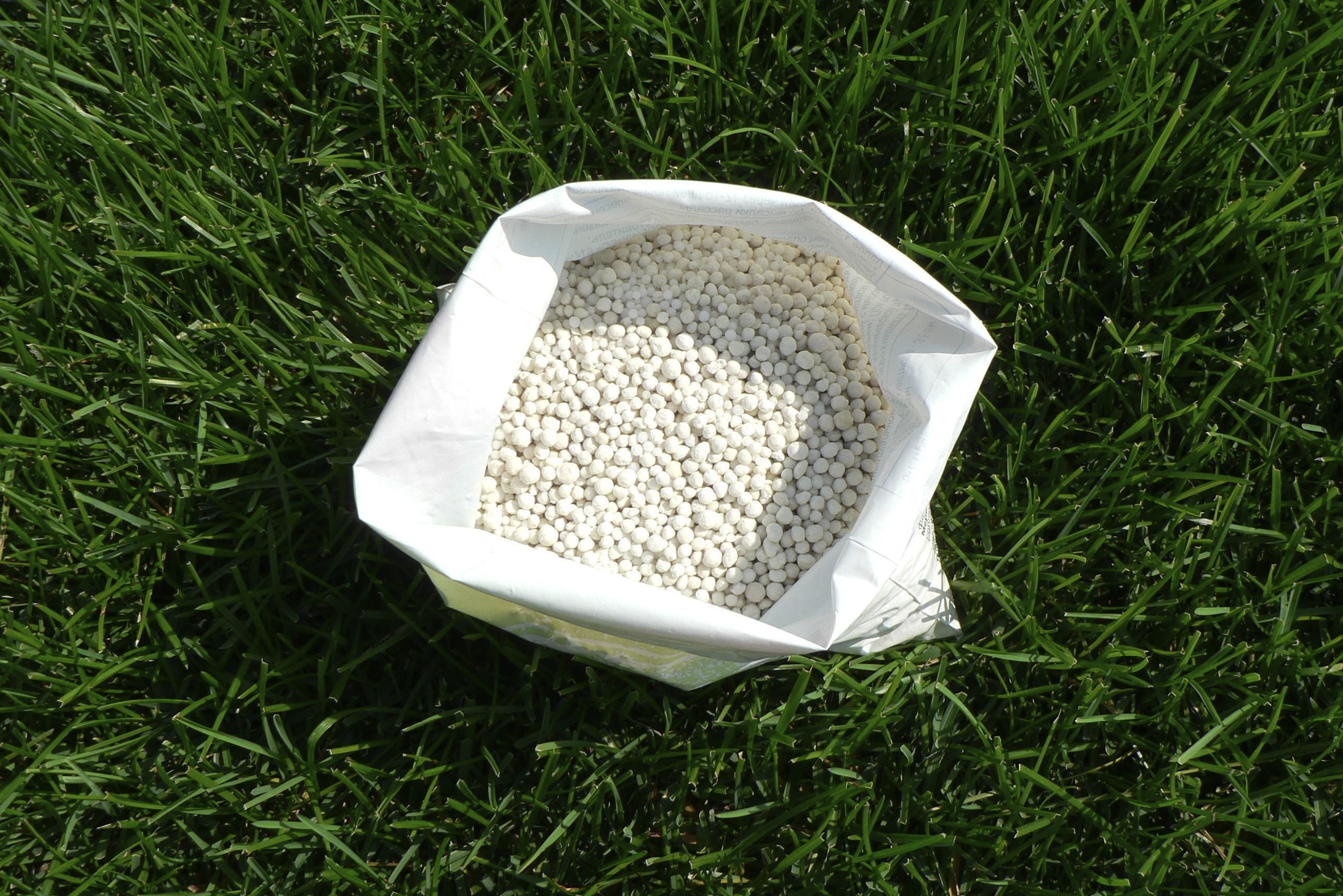
When your lawn needs more nitrogen than compost and clippings provide, organic fertilizers can help. Common natural/organic options include:
- Alfalfa meal/pellets
- Feather meal (high nitrogen, slow-release)
- Bone meal (more phosphorususe only if soil test says you need it)
- Composted manure (must be properly composted; follow product guidance)
- Seaweed/kelp products (often used as a soil/plant “tonic,” not a major N source)
What to look for on the bag: a lower, slower-release nitrogen profile and clear application directions. Organic fertilizers typically release nutrients as microbes break them down, which is why soil health and moisture matter.
5) “Natural Weed & Feed” Products: Corn Gluten Meal (Use With Caution)
Corn gluten meal is often marketed as an organic pre-emergent weed control that also contains nitrogen. Here’s the honest version: research and extension guidance are mixed. Some sources describe how it can inhibit germination under the right conditions, while others emphasize inconsistent results and do not recommend it as a reliable weed-control strategy for lawns.
If you try it anyway:
- Don’t apply where you plan to seedit can interfere with desirable seed germination too.
- Think of it primarily as a light fertilizer with a possible side benefit, not a guaranteed crabgrass solution.
- Consistency matters; one application rarely “fixes” weeds.
Better weed prevention without chemicals: dense turf, correct mowing height, overseeding when needed, and soil health. A thick lawn is the best bouncer at the weed club.
The Big Three Nutrients: What Your Lawn Actually Eats
Most lawn fertility conversations revolve around N-P-K:
- Nitrogen (N): drives green growth. Too much = fast growth, thatch, disease, and more mowing.
- Phosphorus (P): supports roots and early growth. Often already adequate; excess is linked to water pollution.
- Potassium (K): supports stress tolerance and overall vigor.
Organic strategy: supply nitrogen gradually, avoid phosphorus unless your soil test shows a need, and support potassium through balanced organic inputs if your test indicates low K.
Timing Matters: A Simple Seasonal Plan (Without Overthinking It)
Cool-season grasses (common in much of the North)
- Spring: light feeding if needed; focus on mowing and soil health.
- Late summer / fall: prime time for natural feeding, overseeding, and compost topdressing.
- Late fall: optional “winterizer” approach using a slow-release organic nitrogen source if your lawn needs it.
Warm-season grasses (common in the South)
- Late spring through summer: feed during active growth (when grass is actually using nutrients).
- Fall: ease off as growth slows; focus on healthy mowing and soil improvement.
Rule of thumb: fertilize (even organically) when the grass is actively growing. Feeding dormant grass is like delivering pizza to an empty house.
Watering + Mowing: Two “Fertilizers” You Already Own
If you want a naturally lush lawn, you can’t ignore management basics. These don’t add nutrients directly, but they make nutrients usable and reduce stress so the lawn needs less help.
Mow higher (usually)
Taller grass shades soil, discourages weeds, and supports deeper roots. Scalping stresses turf and invites weeds like it’s sending them engraved invitations.
Water deeply, not constantly
Frequent shallow watering encourages shallow roots. Deep, less frequent watering helps roots chase moisture down into the soilmaking your lawn tougher and less dependent on constant inputs.
Common Natural-Lawn Mistakes (So You Don’t Have to Learn the Hard Way)
- Overapplying “organic” fertilizer: natural doesn’t mean unlimited. Too much nitrogen is still too much nitrogen.
- Ignoring soil pH: if pH is off, nutrients can be “present” but poorly available.
- Using phosphorus “just because”: skip it unless your soil test says you need it.
- Expecting instant results: organic lawn care is a slow build. Think “steady improvement,” not “overnight neon.”
- Mowing like a once-a-month hobby: grasscycling only works when clippings are small and frequent.
A Practical “No-Chemical” Fertility Checklist
- Get a soil test and correct pH if needed.
- Grasscycle every mow.
- Mulch leaves in fall.
- Topdress compost (especially during renovation or fall maintenance).
- Use a slow-release organic fertilizer only where your lawn truly needs nitrogen.
- Adjust mowing height and water deeply for stronger roots.
So… Will an Organic Lawn Look as Good?
In many cases, yesand often better over time. The difference is the timeline. Synthetic programs can create fast, cosmetic greening. Natural programs build a lawn that holds its color and density through stress because the soil is improving, not just being “stimulated.”
If your goal is a healthy lawn that’s kid/pet friendly, resilient, and less dependent on constant applications, natural fertilization is a strong path. And if your goal is to win a neighborhood “greenest lawn” contest in 14 days… you may need to redefine happiness.
Real-Life Experiences: From the “I’ve Actually Tried This” Department
Experience #1: The Compost Convert (a.k.a. “Why Didn’t I Do This Earlier?”)
The first time I topdressed compost, I expected fireworkslike the lawn would immediately start sparkling and a choir would appear. Instead, the change was subtle: the grass looked a little more even, and the soil felt less like baked clay after a couple of weeks. The real payoff showed up later. By midsummer, the lawn held up better between waterings, and the thin areas didn’t look quite so defeated. Lesson learned: compost is less “energy drink” and more “balanced breakfast.” You don’t notice it after one bite, but over time you’re not crashing at 2 p.m.
Experience #2: The Grasscycling Skeptic (a.k.a. “Clippings Are Not the Enemy”)
I used to bag clippings because I thought leaving them was “lazy.” Then I tried mulching them for a month. Nothing exploded. The lawn didn’t turn into a thatch monster. What did happen was… less work. Also, the lawn stayed greener during a stretch when I didn’t fertilize at all. The key was mowing more often. The one time I waited too long, the mower left clumps like little hay balesmy lawn looked like it had started a farm. I raked, learned my lesson, and now I mow before the grass gets tall enough to audition for a wheat field.
Experience #3: The “Organic Fertilizer Fix-It” (a.k.a. “More Isn’t Better”)
Organic fertilizer felt safeso I got ambitious. I applied “a little extra,” because surely natural stuff can’t hurt, right? Wrong. The lawn surged with growth, but it also became more prone to disease during humid weather, and I was mowing constantly. Turns out, nitrogen is nitrogen, and grass can’t read your intentions. The next season, I followed the bag directions, used compost instead of extra fertilizer, and focused on watering deeply. The lawn looked steadier and required less constant fussing.
Experience #4: The Corn Gluten Experiment (a.k.a. “It’s Complicated”)
I tried corn gluten meal hoping it would be a magical organic weed shield. What I got was a mild green-up and… mixed weed results. Some areas seemed improved, others not so much. The biggest “aha” was this: it’s not a shortcut for weak turf. Where the grass was already thin, weeds still showed up. Where the grass was thick, weeds struggledcorn gluten or not. My takeaway: if you use corn gluten, treat it as a supplemental nitrogen source with a possible bonus, not a guaranteed pre-emergent replacement. And definitely don’t apply it right before you plan to seed, unless you enjoy disappointment as a hobby.
Bottom line from the field: the most reliable “no-chemical fertilizer program” is a systemsoil test + compost + nutrient recycling + smart mowing/watering. The products can help, but the habits do the heavy lifting.
Conclusion
To fertilize your lawn without synthetic chemicals, think like a soil builder. Start with a soil test, increase organic matter, recycle clippings and leaves, and use slow-release organic fertilizers only when needed. Your lawn becomes less dependent, more resilient, and (with a little patience) impressively green in a way that doesn’t require a chemistry set.
And remember: the most “natural” lawn is usually the one that’s managed consistentlynot the one that gets panic-fed every time it looks slightly less than Instagram-perfect.