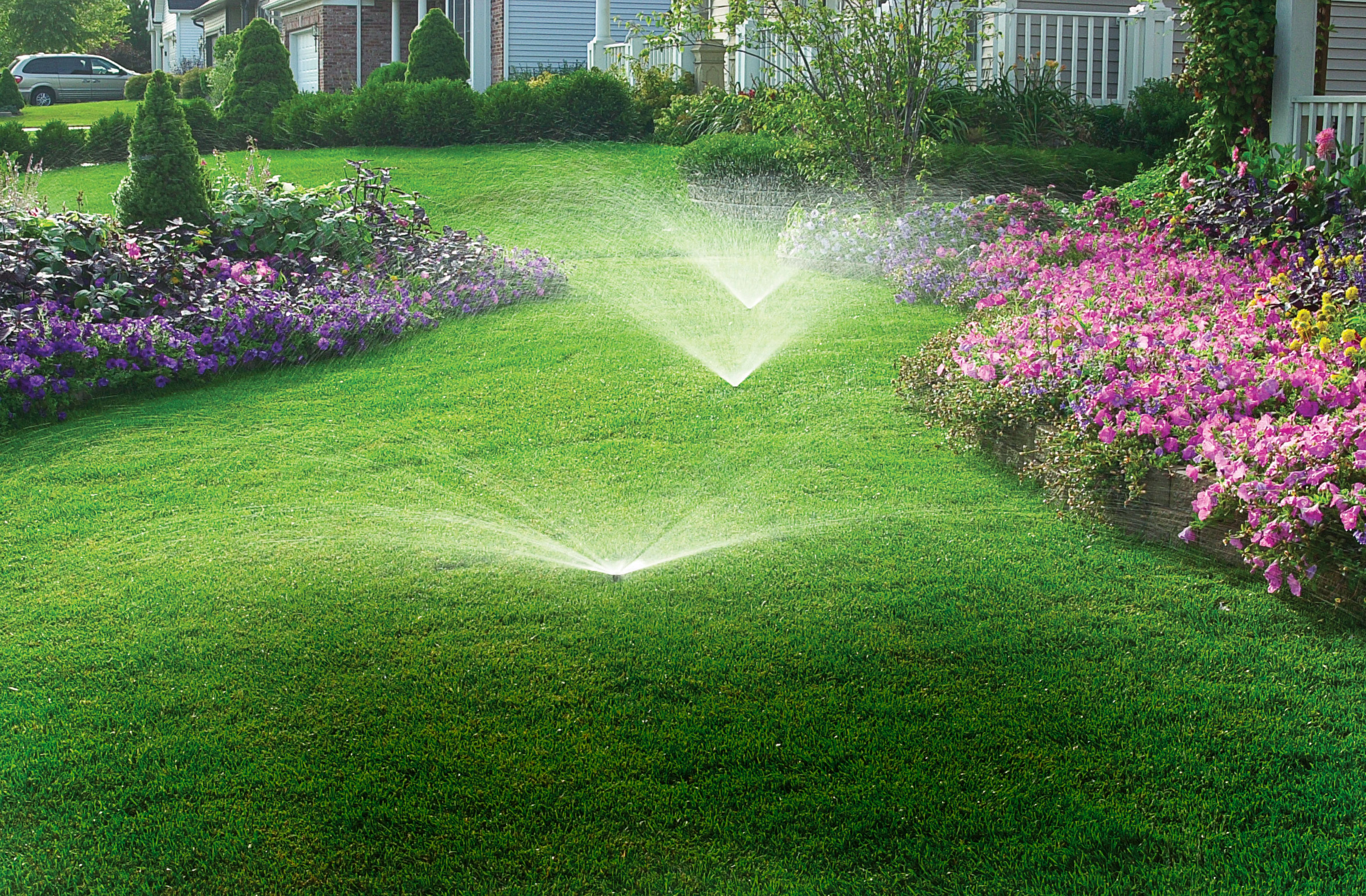
If you’ve ever stared at your sprinkler and wondered, “Is this enough? Too much? Am I basically giving my lawn a latte or a flood?” you’re not alone. Watering grass seems simple, but getting lawn watering time and frequency right is one of the biggest differences between a crunchy, patchy yard and that soft, barefoot-friendly carpet you see in lawn care ads.
The good news: you don’t need to guess, and you definitely don’t need a degree in irrigation science. With a few simple rules of thumb about how long to water grass, how often, and when, you can keep your lawn healthy, green, and not constantly begging for a rescue.
How Much Water Does a Lawn Really Need?
Most established lawns need about 1 to 1.5 inches of water per week, total that includes rainfall and irrigation. In very hot, dry weather, cool-season grasses (like Kentucky bluegrass and perennial ryegrass) can need closer to 2 inches per week, while many warm-season grasses (like Bermuda or zoysia) may need a bit less once they’re established and actively growing.
Why do lawn pros talk in inches instead of minutes? Because sprinklers all apply water at different rates. Ten minutes with a slow soaker isn’t the same as ten minutes with a high-output rotor head. Inches measure what your grass actually receives, not how long your timer runs.
How to Measure an Inch of Water
Here’s a simple “no math degree required” method:
- Set a few tuna cans, cat food cans, or shallow plastic containers around the lawn.
- Run your sprinkler as you normally would.
- Watch the clock and see how long it takes to fill the cans to about 0.5 inch or 1 inch.
- Use that timing to set your sprinkler schedule for future watering days.
For example, if it takes 30 minutes for your system to deliver 0.5 inch, then two 30-minute sessions in a week will give your lawn about 1 inch of water.
How Long to Water Grass (By Soil Type)
Your soil type changes how quickly water moves and how often you should water. Think of it like different kinds of sponges: some hold water longer, others drain fast.
Clay Soil (Heavy, Slow-Draining)
- Goal: About 1 inch of water once per week in cooler weather, up to 1.5 inches in hot spells.
- How long: Often better to deliver most or all of that inch in one deep watering session, or in a “soak and cycle” (water, pause, water again) to prevent runoff.
- Why: Clay holds onto water tightly and drains slowly. Fewer, deeper waterings encourage roots to grow down, not stay shallow at the soggy surface.
Sandy Soil (Light, Fast-Draining)
- Goal: Still about 1 to 1.5 inches per week, but split up.
- How long: Aim for 3 shorter waterings of about 0.3–0.5 inch each during the week.
- Why: Sandy soils drain quickly and don’t hold moisture as long. More frequent, moderate watering keeps roots hydrated without wasting water deep in the subsoil.
Loam or Sandy Loam (The “Just Right” Middle)
- Goal: 1 to 1.5 inches per week.
- How long: Usually 1–2 waterings per week, each delivering about 0.5–0.75 inch.
- Why: Loam balances drainage and water-holding, so deep, infrequent watering works beautifully.
If you’re not sure what soil you have, grab a handful of moist soil and squeeze it. If it forms a tight, sticky ball, it’s clay-heavy. If it falls apart immediately, it’s sandy. If it holds together but crumbles when poked, you’re probably in that “Goldilocks” loam range.
How Often Should You Water Your Lawn?
Instead of asking, “Should I water every day?” a healthier question is, “How can I water less often but more effectively?” For established lawns, the ideal is almost always deep and infrequent watering.
General Frequency Guidelines
- Cool, mild weather: Once per week may be enough if you’re delivering an inch of water and getting some rain.
- Average warm conditions: 2 waterings per week is a sweet spot for many regions.
- Very hot, dry weather: You may need to water every 3–4 days, especially for cool-season grasses, to keep the lawn green and actively growing.
For many sprinkler setups, this translates to something like watering twice a week for 30–40 minutes per zone (adjusted using that tuna can test) rather than running the sprinklers lightly every single day.
Daily, light watering keeps the top inch of soil wet but never pushes moisture deeper. That encourages shallow roots, which makes your lawn more likely to burn out in heat, suffer from disease, and depend on you forever.
Best Time of Day to Water Grass
If you only change one thing about your watering routine, make it this: water at the right time of day.
Water in the Morning
The best time to water is typically early in the morning, between about 4 a.m. and 10 a.m.
- Temperatures are cooler and winds are calmer, so less water evaporates.
- Grass has time to dry out during the day, reducing disease and fungus risk.
- Roots get a deep drink before heat stress kicks in.
What About Evening Watering?
If mornings aren’t possible, early evening (not too close to dusk) is your second-best option. Try to finish watering at least a couple of hours before dark so the blades don’t stay wet all night, which can encourage fungi.
The Worst Time to Water
Midday watering especially between late morning and late afternoon is the least efficient time. The hot sun and wind mean much of the water evaporates before it ever reaches the root zone. You use more water, pay more on your bill, and your grass gets less benefit from it.
How to Tell If You’re Overwatering or Underwatering
Even with rules of thumb, your lawn will give you feedback. Learning to “read” the grass is one of the best skills you can develop as a lawn owner.
Signs of Underwatering
- Footprinting: When you walk across the grass, your footprints remain visible for several minutes because the blades don’t spring back.
- Color change: Grass turns dull, bluish-green or straw-colored instead of vibrant green.
- Dry, crispy feel: The lawn feels crunchy or stiff underfoot.
- Patchy browning: High spots, sunny areas, and compacted spots brown out first.
If you see these signs, try increasing your watering depth first, not just frequency. One deep watering that really soaks the top 6–8 inches of soil is better than three light sprinkles.
Signs of Overwatering
- Squishy or soggy soil: The lawn feels spongy when you walk on it, or you can see puddles.
- Moss, algae, or mushrooms: These love constantly damp conditions.
- Very shallow roots: Grass lifts easily or has a weak, surface-level root system.
- Yellowing or limp grass: Ironically, too much water can cause yellowing and wilting because roots can’t get enough oxygen.
Overwatering is more than a waste of water it can actually suffocate roots, promote disease, and invite weeds that thrive in poorly drained, constantly damp soil.
Adjusting Watering by Grass Type and Season
Not all lawns are created equal. Cool-season and warm-season grasses respond differently to heat and drought, and your watering routine should adjust with the seasons.
Cool-Season Grasses (Kentucky Bluegrass, Fescues, Ryegrass)
- Grow strongest in spring and fall.
- Can go semi-dormant in summer heat if water is scarce.
- In hot, dry spells, may need up to 1.5–2 inches of water per week to stay green.
- If you choose to let them go dormant, give a light watering (about 0.5 inch every couple of weeks) just to keep crowns alive.
Warm-Season Grasses (Bermuda, Zoysia, St. Augustine, Buffalo)
- Love the heat and grow most aggressively in summer.
- Often need slightly less water than cool-season lawns once established.
- Deep, infrequent watering helps these grasses build an impressive root system and great drought tolerance.
Seasonal Adjustments
- Spring: Often damp and cool. You may be able to rely heavily on rainfall and top up only when the lawn shows early drought stress.
- Summer: The main season for a structured watering schedule track rainfall, watch for signs of stress, and aim for that 1–1.5 inches per week.
- Fall: Gradually reduce watering as temperatures drop, but don’t cut it off completely right away. You want roots strong going into winter.
- Winter: In cold climates, lawns are dormant. In warmer areas, occasional watering during dry spells may still be helpful.
Special Case: New Seed and New Sod
Everything above is for established lawns. New seed and fresh sod play by different rules.
Newly Seeded Lawns
- Keep the top 0.5–1 inch of soil consistently moist, not soggy.
- This often means light watering 1–3 times per day (5–10 minutes at a time), depending on heat and wind.
- Once the grass reaches mowing height and you’ve mowed a couple of times, gradually transition to deeper, less frequent watering.
New Sod
- Water immediately after installation so the soil beneath is thoroughly moist.
- For the first 1–2 weeks, water at least once daily (sometimes twice in hot, dry weather) to keep the sod and soil underneath evenly moist.
- After roots start to knit into the soil (you’ll feel resistance when you tug), reduce frequency but increase depth, moving toward an established-lawn schedule.
Simple Steps to Build Your Own Lawn Watering Schedule
Ready to turn all this into a real-world plan? Here’s a straightforward way to build a schedule that works for your yard.
Step 1: Learn Your Sprinkler’s Output
Use the tuna can test to figure out how long it takes your system to deliver 0.5 inch of water. That’s your “time per half inch” for each zone.
Step 2: Decide Weekly Target
- Start with 1 inch per week.
- In very hot, dry conditions, increase toward 1.5 inches for thirsty cool-season lawns.
Step 3: Split into 1–3 Sessions
For most lawns:
- Loam or clay: 1–2 sessions per week.
- Sandy: 2–3 sessions per week.
If your sprinkler takes 30 minutes to deliver 0.5 inch per zone and your target is 1 inch a week, set two sessions of 30 minutes each, spaced a few days apart.
Step 4: Schedule the Time of Day
Program your controller for early morning runs. If you’re using a hose-end sprinkler, use a simple mechanical or battery timer so you don’t have to stand there watching the clock at sunrise.
Step 5: Fine-Tune Based on Feedback
Over the next couple of weeks, watch the lawn:
- If areas look dry, bluish, or show footprints that don’t bounce back → add a bit more depth or shorten the gap between sessions.
- If areas are squishy, growing mushrooms, or staying wet for days → reduce run time or frequency.
Think of your schedule as a starting template. Weather, soil quirks, shade, and slope all affect how much water sticks around. Minor tweaks over time make a huge difference.
Real-Life Watering Experiences: What Actually Works in the Yard
Watering charts and extension bulletins are incredibly useful, but nothing beats what you learn walking your own lawn in flip-flops at 7 a.m. Here are some common real-world experiences homeowners run into and what they discover along the way.
The “Every Day for 10 Minutes” Problem
One of the most common stories goes like this: a homeowner sets the in-ground system to run for 10–15 minutes every single morning. For the first few weeks, the lawn looks fantastic intensely green, lush, and soft. Then midsummer hits. Suddenly, the lawn starts to thin, develops odd yellow patches, and feels spongy when walked on. Mushrooms pop up after rainy stretches.
What happened? The lawn was pampered with constant surface moisture, so roots never had a reason to dive deeper. When heat and occasional skipped runs hit, shallow roots couldn’t reach water lower in the soil. The fix is almost always the same: turn off daily cycles and switch to deeper, less frequent watering. It’s a little scary at first the lawn may look stressed temporarily but after a few weeks, roots strengthen and the lawn becomes more resilient.
Discovering the Power of the Tuna Can Test
Another classic experience: two neighbors compare lawn care tips. One insists on watering 45 minutes per zone, twice a week. The other only does 20 minutes. Both think the other is over- or under-watering. Then they run the tuna can test together and discover that one set of sprinklers applies water twice as fast as the other.
After adjusting run times to deliver the same inch of water, not the same number of minutes, both lawns improve. Brown patches shrink, over-watered corners dry out, and they realize that “how long to water grass” only makes sense when tied to the actual output of their specific sprinklers.
Soil Surprises: The Side Yard That Never Cooperates
Many homeowners notice there’s always one problem zone: usually a side yard or strip along the driveway. It might burn out faster in summer or stay soggy longer after rain. Often, that patch has different soil perhaps heavy clay from construction fill, or sandier soil near a sidewalk or it gets extra reflected heat from pavement.
The lesson here is that it’s perfectly normal to treat different parts of the same lawn differently. You might water most zones twice a week but give that hot, sandy side yard a third, shorter cycle. Or you might cut back watering in a shady, low-lying spot and concentrate on improving drainage instead. A “one schedule fits all” mindset rarely survives long once you start paying attention.
Learning to Trust Lawn “Body Language”
Over time, lawn owners get surprisingly good at reading their grass. You’ll start to notice that right before a dry spell really hits, the lawn shifts from bright apple-green to a slightly duller tone. Footprints linger a bit longer. Areas along sidewalks and driveways fade first. Once you connect those subtle signs with a calendar (“Oh, we haven’t had rain in 9 days, and I skipped last week’s second watering”), you’ll feel much more confident adjusting your schedule without guesswork.
The same goes for overwatering. You’ll recognize that persistent soggy feel, the squish of your shoes at the low point in the yard, or the sudden appearance of moss in shadier corners. Those are all the lawn’s way of saying, “Hey, I’m good. You can turn the faucet down now.”
When Smart Controllers and Simple Habits Meet
Many people eventually move to a smart sprinkler controller or at least a programmable timer paired with weather data. These gadgets can skip watering after heavy rain, adjust for seasonal changes, or reduce run times during cooler weeks. But even the smartest technology works best when you understand the basics: how much water your grass needs, what your soil does with that water, and how to spot the early signs of stress.
In the end, a healthy lawn doesn’t come from watering every day or from memorizing complicated formulas. It comes from a simple combo:
- Watering deeply enough to reach the root zone.
- Watering infrequently enough to encourage roots to chase moisture downward.
- Watering at the right time of day so less water is wasted.
- Paying attention and making small tweaks as the weather, seasons, and lawn conditions change.
Once you dial in your timing and frequency, your sprinkler system stops feeling like guesswork and starts working like a simple, reliable tool. And your lawn? It starts looking less like a project and more like a proud, green welcome mat.