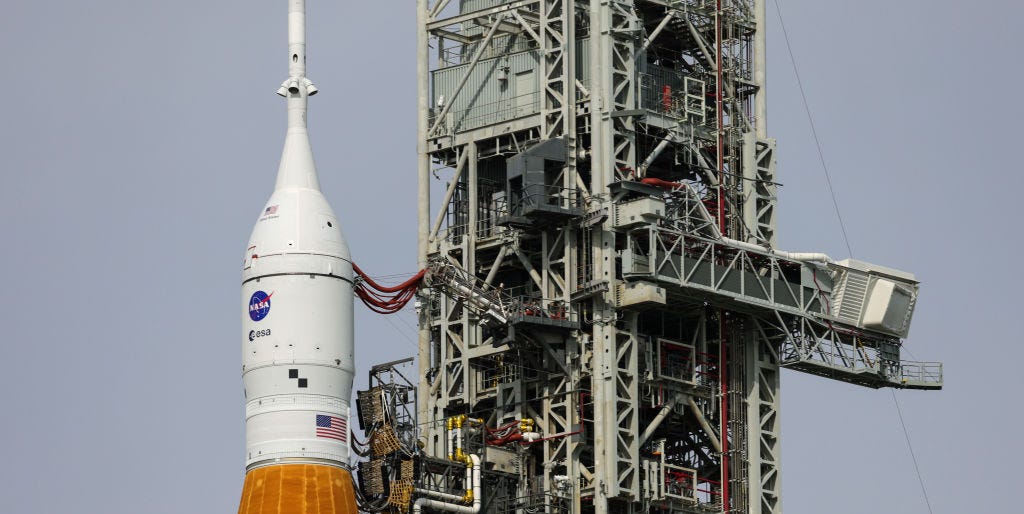
Picture this: you’ve spent more than a decade and tens of billions of dollars building the most powerful rocket NASA has ever flown. It’s stacked on the pad, glowing under Florida floodlights, cameras are ready, astronauts are watching from home… and then the weather app says: “Hurricane inbound.” That’s exactly the situation NASA faced with Artemis I in 2022, when Hurricanes Ian and Nicole muscled their way into the launch schedule.
Clearing Artemis for launch after hurricane damage wasn’t a matter of crossing fingers and hoping for clear skies. It was a carefully choreographed blend of engineering analysis, risk management, and a lot of very tired people climbing a lot of stairs on a 355-foot tower.
In this deep dive, we’ll look at how NASA evaluated the rocket after the storms, what exactly was damaged, how managers decided the risk was acceptable, and what lessons they carried forward for future Artemis missions. Think of it as a behind-the-scenes tour of how you certify a Moon rocket that’s just been slapped around by a Category 1 hurricane.
Artemis I: A Moonshot With Weather Issues
Artemis I was the first uncrewed test flight of NASA’s new deep space system: the Space Launch System (SLS) mega-rocket topped by the Orion spacecraft. Its job was to fly Orion to lunar orbit and back, proving that the hardware, software, and ground systems could work together before astronauts climb aboard.
The rocket rolled out to Launch Pad 39B at Kennedy Space Center multiple times in 2022 for fueling tests and aborted launch attempts. By late September, the stack had already endured scrubbed launches because of hydrogen leaks and engine chilldown issues. Then Hurricane Ian showed up on the forecast.
Hurricane Ian: The First Big Test
When Ian threatened Florida’s Space Coast in late September 2022, NASA made the conservative call: roll Artemis I back to the Vehicle Assembly Building (VAB). The 322-foot-tall rocket and its mobile launcher crawled back at about 1 mph, a move designed to keep the vehicle inside a hardened building before Ian’s powerful winds arrived.
After the storm, inspections showed good news. NASA reported no damage to Artemis I flight hardware and only minor water intrusion in a few locations around the facilities, which is about as “boring” as you want a hurricane inspection to be.
The trade-off was schedule. Rolling back meant yet another delaypushing the earliest realistic launch opportunities to November. But it gave NASA a baseline: they’d seen what “no significant damage” looked like after one storm. That experience would matter later.
Hurricane Nicole: The Rocket Stays Put
Fast forward to early November. Artemis I was back on the pad, launch campaigns were ramping up, and then the Atlantic decided to roll out Tropical Storm Nicole, which strengthened into a Category 1 hurricane just before landfall. This time, NASA faced a different problem: timing.
There simply wasn’t enough time to safely roll the rocket back to the VAB given Nicole’s forecast track and the logistics of moving a fully stacked SLS. So managers did something that made many space fans nervous: they left the rocket on the pad to ride out the storm, confident that SLS was certified for winds up to about 85 mph at the 60-foot level of the pad structure. Observed winds stayed within those limits, though higher gusts hit the lightning towers above.
Nicole hit Florida’s east coast not far from Kennedy Space Center. The next question was obvious: what did it do to the rocket?
Inspecting a Moon Rocket After a Hurricane
Once conditions were safe, NASA teams returned to Launch Pad 39B for walkdowns and inspections. Think of this as the world’s most stressful post-storm home inspection, except the “home” is a skyscraper-sized rocket that will experience millions of pounds of thrust and deep space conditions.
What They Found: Minor But Real Damage
Initial inspections were reassuring: no major structural damage to the SLS rocket or the Orion spacecraft. But “no major damage” isn’t the same as “no damage at all.”
- A strip of flexible insulation/caulkingroughly 10 feet longhad peeled away from the base of the Orion crew module’s launch abort system, near the top of the vehicle. This material helps smooth airflow and protect against heating.
- Sensors picked up issues with one of the umbilicals that connect ground systems to the rocket, including erratic signals that required troubleshooting and sometimes switching to backup lines.
- The mobile launcher and pad infrastructure suffered minor damage: dinged umbilicals, affected crew access arm components, and damaged pneumatic lines for gases like nitrogen and helium. These caused false low-oxygen readings until the leaks were isolated.
None of this is the kind of thing you ignore, especially when you’re about to fire up the most powerful rocket currently flying.
The Engineering Deep Dive
Clearing Artemis for launch after hurricane damage meant turning those observations into numbers. Engineers modeled how losing that strip of insulation might affect aerodynamics and heating on Orion during ascent. The concern was whether the exposed area could experience higher temperatures or turbulent flow that might threaten the spacecraft or downstream parts of the rocket.
They also evaluated the chance that additional insulation could come off during flight and potentially strike other parts of the vehiclea worry that understandably echoes the foam shedding that doomed the Space Shuttle Columbia. The difference here is that SLS and Orion were designed with that history in mind, and every potential debris source gets analyzed to death (the technical term is probably “extremely conservative risk assessment,” but you get the idea).
The result: NASA concluded the risk from the missing insulation was real but acceptable. Mission manager Mike Sarafin described it as a “non-zero” risk, but still within the bounds of what the program was willing to accept for an uncrewed test flight whose purpose is partly to uncover unknowns in real-world conditions.
The Decision to Launch: How NASA Clears the Risk
NASA doesn’t clear a hurricane-battered rocket for launch in a hallway conversation. The decision flows through a formal Flight Readiness Review (FRR) process and multiple technical boards, with engineers, safety officers, and managers all weighing in.
Flight Readiness Reviews and Risk Trades
In the days after Nicole, NASA convened Mission Management Team meetings and readiness reviews that included specialists in structures, thermal protection, aerodynamics, avionics, and ground systems. Each discipline had to sign off that their systems were either undamaged or that any damage did not materially increase risk beyond accepted limits.
Several key questions guided the decision:
- Is the flight hardware still within its certified structural and thermal limits?
- Are there any new credible failure modes introduced by the hurricane damage?
- Can remaining issues be mitigated by changes in procedures, monitoring, or contingency plans?
- Does delaying to repair items actually reduce risk, or does it introduce new risks (for example, additional rollbacks, handling, or more hurricane seasons)?
Importantly, Artemis I was an uncrewed mission. That doesn’t mean NASA was casual about risk, but it does change the balance of what is acceptable. An uncrewed test can carry slightly higher technical risk if it yields critical data for future crewed flights like Artemis II and III.
Why NASA Said “Go” After Hurricane Damage
By November 14, 2022, NASA announced that Artemis I was cleared to proceed toward a November 16 launch attempt, despite the minor damage from Hurricane Nicole. Managers concluded:
- The missing insulation strip did not compromise Orion’s ability to endure ascent heating or maintain aerodynamic stability.
- The risk of additional insulation loss in flight was low and unlikely to create catastrophic debris issues.
- Umbilical and pad system issues were either resolved, monitored, or mitigated with backup systems.
- Weather and trajectory constraints for the new launch window were acceptable.
In other words, the rocket might not have been picture-perfect, but it was safe enoughand the opportunity to finally fly was too valuable to waste.
When Artemis I finally thundered off the pad on November 16, the rocket performed exceptionally well. Orion completed its 25-day mission around the Moon and splashed down safely in the Pacific Ocean, validating years of design work and, indirectly, NASA’s judgment call after Nicole.
What the Hurricane Experience Taught NASA
Weather is always part of spaceflight, but back-to-back hurricanes hitting during a new Moon program’s debut adds extra urgency to the lessons learned. Here’s what NASA likely carried forward from the Artemis hurricane saga.
1. Infrastructure Resilience Matters as Much as the Rocket
After launch, inspections showed that the mobile launcher’s elevators were out of service for months and that some gas lines and umbilicals needed repair or replacement. Those issues didn’t threaten Artemis I’s flight itself, but they affected pad turnaround time, workforce safety, and the schedule for future missions.
For a long-term lunar program, reinforcing ground infrastructure against more frequent and intense storms is nearly as important as hardening the rocket. That can mean better shielding for critical lines, more robust elevator systems, and improved access routes for post-storm inspections.
2. Rollback vs. Ride-Out Decisions Need Clear Criteria
Artemis I’s experience highlighted the tricky trade between rolling back to the VAB and riding out a storm on the pad. Rolling back protects the rocket from wind but adds mechanical stress, consumes schedule margin, and isn’t always possible if a storm forms quickly. Staying on the pad keeps the vehicle in launch configuration but exposes it to storm forces.
NASA already had wind limits and structural models, but Nicole’s close call likely prompted refinements to the decision tree: better forecast triggers, clearer timing thresholds for rollback, and more simulation of “borderline” hurricane scenarios.
3. Communication and Transparency Build Public Trust
One overlooked aspect of “clearing Artemis for launch” is how NASA communicated the decision. The agency held briefings, released blog updates, and allowed media outlets to report the specifics of the damage and risk analysis. Outlets from Florida Today and ABC News to Space.com and Popular Mechanics covered the details of the missing insulation and the risk trades that followed.
That kind of openness is crucial. When the public hears “we had some damage, we analyzed it, and here’s why we’re still flying,” it’s easier to accept that engineering decisions aren’t made on gut feeling but on data and disciplined process.
4. Climate and Coastal Risk Are Now Design Inputs
Artemis is based in a region where sea-level rise, stronger storms, and shifting climate patterns are not theoretical concerns. As NASA looks ahead to a whole series of Artemis missions, the experience with Ian and Nicole is a reminder that climate and coastal risk are no longer “external” factors. They are design and programmatic inputs, from how high you build your launch structures to how much schedule margin you keep in a given hurricane season.
Experiences and Takeaways: What It’s Like to Clear a Rocket After a Hurricane
It’s easy to talk about NASA’s decisions in abstract termsrisk matrices, structural margins, and thermal models. But behind those terms are real people with very long days, messy whiteboards, and way too much coffee. Let’s zoom in on what the experience of clearing Artemis for launch after hurricane damage likely felt like on the ground.
The “Morning After” Walkdowns
Imagine being part of the first inspection team returning to the pad after Nicole. The sky is clearing, the air still smells like rain and ocean, and the rocket is towering above the pad, still wrapped in its orange and white paint. You know the models say the winds stayed within limitsbut you also know models are only as good as their assumptions.
The first hours are all about triage. Teams split up the structure into zones: pad deck, mobile launcher levels, gantry platforms, umbilicals, access arms. Each group walks down their area, snapping photos, logging anything that looks out of place: a loose panel, a shifted cover, pooled water where it shouldn’t be, a frayed cable tie.
When someone spots the missing strip of insulation near the Orion nose cone, it triggers a flurry of activity: measurements, close-up imagery, and immediate calls back to engineering groups who have the thermal and aero models. Meanwhile, pad technicians are wrestling with practical problems: an elevator that won’t run, stairwells slick with moisture, and access to tight spaces where storm debris might be hiding.
Engineers in “What If?” Mode
Back in offices and control rooms, engineers go into full “what if?” mode. What if the exposed area runs hotter than expected? What if an edge of remaining insulation catches the airflow and peels off at Max-Q, the point of maximum aerodynamic pressure? Could it hit the core stage or solid rocket boosters? If it did, could those structures tolerate a hit?
These aren’t hypothetical academic questions; they’re plugged into detailed models and compared to test data from wind tunnels and previous flights. The fact that Artemis I is an uncrewed mission gives engineers a bit more room to accept risk, but it doesn’t erase responsibility. Each discipline lead has to stand behind their assessment in a room full of peers and managers.
At the same time, weather officers are updating launch probabilities, logistics teams are checking staff availability (remember, employees also had homes and families in a hurricane zone), and public affairs teams are preparing to explain whatever decision comes next.
Managers Balancing Courage and Caution
On the management side, the experience is a balancing act between courage and caution. Saying “no-go” could mean rolling back, slipping weeks or months, and losing a narrow launch window that took years to line up. Saying “go” means accepting a calculated risk in a very public way.
For Artemis I, managers ultimately chose to go forward, emphasizing that the damage was minor, the analyses were thorough, and the mission’s uncrewed nature made this a reasonable test flight decision. It’s the kind of call that doesn’t make everyone comfortablebut the fact that the mission succeeded and the vehicle performed well gives future decision-makers more confidence that the engineering and risk processes are solid.
What Future Artemis Teams Can Learn
Future Artemis missions will benefit from this experience in several ways:
- Faster, more focused inspections: Now that NASA has seen what typical hurricane-related issues look like on SLS and the pad, teams can prioritize the most vulnerable areas first during walkdowns.
- Improved storm-hardening plans: From protecting insulation seams to shielding sensitive umbilicals, design tweaks and procedural changes can reduce the chance of similar damage next time.
- More refined launch criteria: The real-world data from Ian and Nicole feed back into wind limit models, structural margins, and rollback decision thresholds.
- Better public expectations: Artemis I taught the world that “launch day” is more of a moving target than a fixed appointment, especially in an era of more active hurricane seasons. That understanding can soften frustration when future launches get bumped by weather.
In a way, clearing Artemis for launch after hurricane damage is exactly what test flights are for: not just testing hardware, but testing the entire ecosystempeople, processes, infrastructure, and communicationin the face of unpredictable real-world events.
Conclusion: A Moon Rocket, a Hurricane, and a Hard-Won “Go”
NASA’s decision to clear Artemis I for launch after hurricane damage wasn’t reckless optimism. It was the end result of detailed inspections, sophisticated modeling, hard conversations, and an honest look at risk in the context of an uncrewed test flight.
Hurricanes Ian and Nicole made Artemis’s path to the Moon more complicated, but they also gave NASA valuable experience in operating a mega-rocket program on a vulnerable coastline. As Artemis missions evolve toward landing astronauts on the lunar surface and building a long-term presence, the lessons learned from these storms will help ensure that when the weather turns bad, the decisions remain good.