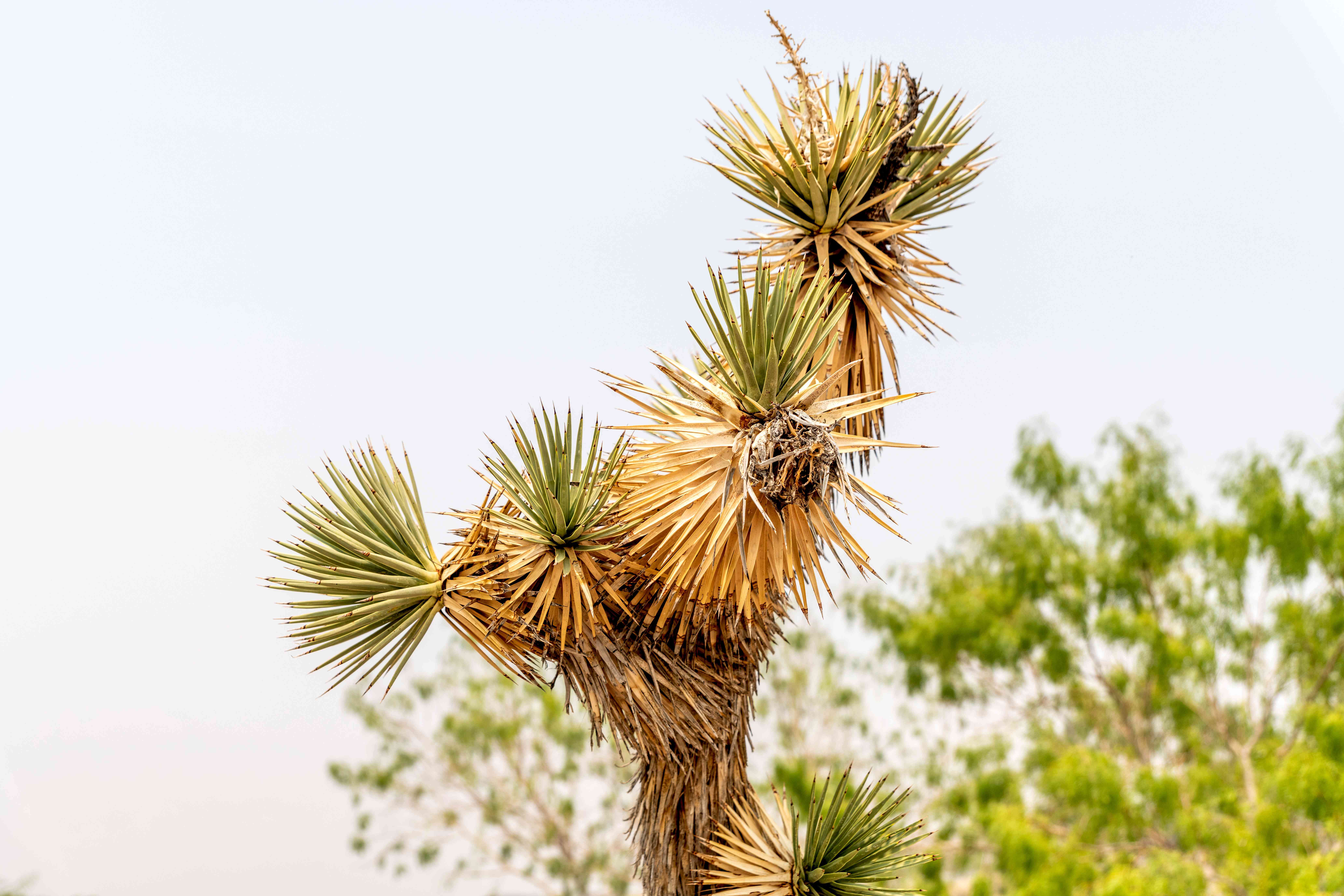
The Joshua tree (Yucca brevifolia) is the Mojave Desert’s most recognizable mascot: spiky, sculptural, and somehow both prehistoric and Dr. Seuss-y at the same time.
It’s also a plant with extremely specific opinions about how it wants to live. Think “low-water minimalist” with a hard boundary around humidity.
If you can match its desert vibe, it’s remarkably low-maintenance. If you can’t… it will quietly (or not so quietly) decline while you whisper,
“But I watered you because I care.”
Joshua Tree Basics (Know What You’re Signing Up For)
What it is
Joshua tree is a tree-form yucca native to the Mojave Desert in the southwestern United States. It’s slow-growing, long-lived, and designed for intense sun,
fast-draining soils, and lean livingno pampering required (or appreciated).
Size, lifespan, and climate reality
- Mature size: commonly around 15–30 feet tall and wide, with some older specimens larger.
- Lifespan: often ~150 years, with older trees recorded over 300 years.
- Where it thrives: cold winters + hot summers + low precipitation. It’s not a “tropical patio accent.”
Before You Plant: Can You Actually Grow One Where You Live?
The best success comes in true desert or high-desert conditionsthink Southern California deserts, parts of Nevada, Arizona, Utah, and similarly dry climates.
Joshua trees want full, unfiltered sun, very low humidity, and soil that drains like it has somewhere important to be.
If you live in a humid region (hello, Gulf Coast summers), a Joshua tree usually struggles because moisture lingers in the air and in the soiltwo things this plant
treats like personal enemies. In rainy climates, root problems are the most common failure point. Your mission is not “keep it watered,” but “keep it dry enough.”
Ethical + Legal: Buy Nursery-Grown, Don’t Take from the Wild
Joshua trees are iconicand increasingly protected. Collecting from the wild often requires permits and, in some states, official tags.
When purchasing, look for legitimate sourcing (nursery propagation or properly permitted collection) and avoid anything sketchy.
In California, the western Joshua tree has been under heightened conservation attention; it remains a candidate under the California Endangered Species Act,
with added protections through the Western Joshua Tree Conservation Act framework. If you’re planting or relocating in California, treat it as a “check the rules first” situation,
not a “move it this weekend” situation.
Site Selection: Sun, Space, and Drainage Are Everything
Light
Give a Joshua tree full sunideally 8+ hours of direct, unfiltered sunlight. Shade makes it weaker and more prone to issues; “bright shade” is not a compromise it accepts.
Spacing
Plan for the adult size, not the cute “starter plant” phase. Many reach 15–30 feet wide; crowding it near walls, power lines, or tight courtyards is a slow-motion headache.
Give it room to grow and room for you to walk around it without making your forearms regret your life choices.
Drainage (the non-negotiable)
Joshua trees can handle poor soil. They cannot handle wet feet. Choose a spot that drains fastslopes, berms, and raised mounds are your friends.
Avoid low spots where rainwater collects, and avoid irrigation zones.
Soil: Make It “Bad” on Purpose (Your Rich Compost Is Not a Gift)
In the Joshua tree’s world, “fertile” often means “dangerous.” It prefers sandy, rocky, well-drained soil, and can do fine in low-nutrient conditions.
Heavy, compacted soil is a problem because it holds water and suffocates roots.
A practical soil recipe for garden planting
- If your native soil is already sandy/gravelly: use it. (Seriously. Don’t overthink this.)
- If your soil is clay or stays wet: build a raised mound/berm and blend in coarse mineral material (decomposed granite, gravel, coarse sand) to improve drainage.
- Avoid heavy mulches (wood chips) right up against the trunk; consider gravel mulch instead.
The goal isn’t “fluffy and rich.” The goal is “water runs through and doesn’t linger.”
How to Plant a Joshua Tree (Step-by-Step)
- Plant in a cool season (often fall or spring in desert climates) to reduce heat stress while roots establish.
- Dig a hole that’s wider than the root ball but not deeper. Planting too deep invites rot.
- Set the plant at the same depth it was growing in its container or nursery field.
- Backfill with mostly native/mineral soil (not a compost buffet).
- Water in once to settle soil and eliminate air pockets, then let it dry down significantly before watering again.
- Protect from accidental irrigation (sprinklers and drip lines aimed at lawns are silent Joshua-tree assassins).
Watering: The Fastest Way to Kill It Is to Love It Too Much
A mature Joshua tree is drought-tolerant. The risky phase is establishmentwhen you need enough water to help roots settle, but not so much that soil stays wet.
The general rule: deep, infrequent watering, and only after the soil has dried significantly. Overwatering is the #1 cause of failure via root rot.
A realistic watering framework (adjust for your weather)
- Newly planted (first few months): a deep soak, then wait until the surrounding soil is dry and crumbly before watering again.
- First year: spacing waterings farther apart over time; think “less often” as it shows signs of new growth.
- Established: often only occasional supplemental watering during prolonged droughtsometimes as little as monthly in summer, or even less if rainfall happens.
The easiest “should I water?” test
Don’t water because the calendar says so. Water because the soil says so. If the ground is still cool and damp below the surface, step away from the hose.
If it’s dry, dusty, and crumbly, a deep soak can be appropriatethen let it dry out again.
Temperature and Humidity: It Wants Desert Extremes
Joshua trees are adapted to hot, dry summers and cold winters. They tolerate a wide temperature range in their native climate, but they don’t thrive in warm-winter, high-humidity regions.
That winter chill matters for normal life-cycle cues (including flowering patterns).
Fertilizer: Usually Optional (and Often Counterproductive)
In the wild, Joshua trees grow in poor soils and generally don’t need fertilizer. If you choose to feed, go light: a slow-release, desert-appropriate product used sparingly.
Heavy feeding can push unnatural, weaker growth. If you’re fertilizing because you feel guilty, try therapy instead (kidding… mostly).
Pruning and Safety: Leave the “Skirt” Unless You Have a Good Reason
Joshua trees don’t need shaping. Most pruning is limited to removing spent flower stalks or damaged material. Many horticultural references note that dead leaves hanging on the trunk
can provide insulation and protectionso don’t automatically strip them off for aesthetics. Also: those leaf tips are sharp. Gloves and eye protection are not overkill.
Common Problems (and What They’re Usually Trying to Tell You)
Root rot / collapse
If the plant looks suddenly stressed, soft at the base, or declines after frequent watering, suspect excess moisture and poor drainage.
Fixing it is mostly about changing conditions: stop watering, improve drainage, and keep irrigation away.
Leaf spotting, browning tips, or “sad rosettes”
In non-desert areas, humidity and lingering moisture can invite fungal issues. In intense reflected heat, you may see cosmetic stress.
Check the basics first: sunlight, drainage, and watering frequency.
Blooming: Why Your Joshua Tree Isn’t Flowering (Yet)
Joshua trees don’t rush into adulthood. In the wild, they may not flower until roughly 50–70 years old (often around 8 feet tall), and bloom timing varies with conditions.
Even mature trees may not flower every yearwinter cold and weather patterns play a role you can’t fully control.
Propagation: Seeds Are Possible, But It’s a Long Game
Growing from seed is doable, but it’s not “instant gratification gardening.” Pollination in nature involves specialized yucca moth relationships, so seed production can be limited outside native ranges.
When seeds are available, start with fresh, fully ripe seeds and use a well-draining medium. Expect slow growththink in years, not weekends.
A simple seed-start approach
- Use fresh, viable seeds (dark, mature seeds; avoid damaged ones).
- Pre-sprout on lightly moist paper towel (moist, not wet), then pot into gritty mix once sprouted.
- Keep seedlings bright and warm, but never soggy.
- Choose a larger starter container to reduce transplant disturbance early on.
Can You Grow a Joshua Tree in a Pot?
Short-term, sometimesespecially for young plants. Long-term, it’s usually impractical because of eventual size and the need for outdoor, desert-like seasonal swings.
If you do container-grow a juvenile, use an extra-gritty cactus/desert mix, a pot with excellent drainage, and keep it outdoors in full sun where climate allows.
In rainy areas, the biggest challenge is preventing prolonged wet soil.
Landscape Ideas: Make It Look Like It Belongs There (Because It Does)
Joshua trees shine in xeriscape designs: boulders, gravel, decomposed granite paths, and other drought-adapted plants that won’t demand frequent irrigation.
Think of it as designing a “Mojave moment” rather than forcing a desert icon into a thirsty lawn ecosystem.
Compatible companions often include other low-water desert natives and architectural plants (choose species suited to your exact region and rules).
Conservation Note: A Mojave Icon Under Pressure
Climate change, wildfire, and development are documented threats to Joshua tree habitats, and agencies are actively planning for conservationespecially for western Joshua tree populations in California.
As a home gardener, the best thing you can do is avoid wild collection, buy responsibly, and plant it only where it can thrive without excessive water use.
Wrapping It Up: The Joshua Tree Care Checklist
- Sun: full, intense sun.
- Soil: fast-draining, sandy/rocky, not rich.
- Water: deep but infrequent; let soil dry hard between waterings.
- Climate: desert-likelow humidity, cold winter + hot summer.
- Maintenance: minimal pruning; don’t over-fertilize.
- Ethics: buy legal, nursery-grown or properly permitted stock.
of Real-World Joshua Tree Experiences (So You Don’t Learn the Hard Way)
The first time most people fall in love with a Joshua tree is not in a garden centerit’s on a desert road where the horizon looks like it’s been sharpened with sandpaper.
You pull over, step into the dry air, and suddenly the silence has a volume knob. Then you see it: a Joshua tree standing there like it’s posing for an album cover,
arms flung outward in dramatic “behold me” fashion. That’s when the thought happens: I need one at home.
That’s also when the Joshua tree, if it could talk, would say: “Cool. Do you live in the Mojave?”
Home-growing experiences tend to split into two storylines. In the first, the gardener lives in a truly arid climateLas Vegas, high desert California, parts of Arizona
and the Joshua tree becomes the easiest “tree” they’ve ever owned. It sits in full sun, ignores most human attention, and looks better the moment you stop hovering.
People in this group learn the great Joshua tree paradox: you water it less, and it thanks you by looking more alive.
They’ll tell you their biggest maintenance task is simply making sure the drip line from a nearby shrub doesn’t “helpfully” wander over.
In the second storyline, the gardener lives somewhere with summer humidity or regular rainfall and tries to negotiate with physics.
These are the folks who build berms like they’re constructing tiny desert mesas, switch to gravel mulch, and become amateur hydrologists overnight.
One common “aha” moment is realizing that the enemy isn’t rain by itselfit’s slow-drying soil. A Joshua tree can survive a storm.
What it can’t survive is staying wet afterward like a sponge that refuses to let go of its feelings.
The most relatable mistake is overwatering during establishment. It comes from a good place! You plant, you worry, you imagine roots whispering,
“Hello? Is anyone down here?” So you water again. And again. Then the plant starts looking tired, and you water more because obviously it’s thirsty, right?
In desert gardening, that instinct is how plants get accidentally drowned with love. Gardeners who succeed long-term usually adopt a new mantra:
When in doubt, don’t watercheck the soil. They learn to wait until it’s genuinely dry, then water deeply, and then wait again.
It’s less like “daily houseplant care” and more like “occasional, meaningful conversations.”
Another experience that surprises people: the “skirt” of old, dead leaves. New owners often want to tidy it up immediately.
Then they discover the skirt can help protect the trunk and insulate during cold snapsand also that removing it is a full-contact sport with sharp leaves.
Many end up choosing the middle path: clean up what’s truly hazardous or messy, but leave enough that the tree stays naturally protected and looks authentically desert.
Finally, the long-game experience: flowering. People hear “spring blooms” and assume a schedule. Joshua trees laugh at schedules.
In practice, blooming is the reward for maturity and the right winter cues, plus a dash of weather luck. When a Joshua tree finally flowers,
it feels like the desert is throwing a small, fragrant (some would say mushroom-scented) partyand you got invited.
Editorial research basis (US sources used):