Verbs are the engines of English sentences. Nouns may sit in the driver’s seat, adjectives may polish the dashboard, and adverbs may shout directions from the back seat, but verbs are what make the sentence move. Without a verb, a sentence is usually just a pile of words wearing a nice hat.
Learning how to identify a verb is one of the most important grammar skills for students, writers, English learners, and anyone who has ever looked at a sentence and thought, “Wait, what is actually happening here?” The good news is that verbs are not mysterious creatures hiding in the grammar jungle. They follow patterns. They show action, describe a state of being, help another verb, or connect a subject to more information.
In this guide, you will learn how to identify a verb in 7 clear steps. We will cover action verbs, linking verbs, helping verbs, verb phrases, tense clues, tricky verb forms, and practical examples. By the end, you will be able to spot verbs faster than a teacher spots gum under a desk.
What Is a Verb?
A verb is a word that expresses an action, occurrence, condition, or state of being. In simple terms, verbs tell us what the subject does, what happens to the subject, or what the subject is like. Words such as run, think, grow, exist, become, and is can all be verbs depending on how they are used in a sentence.
For example, in the sentence “The dog barks loudly,” the verb is barks because it tells what the dog does. In “The dog is sleepy,” the verb is is because it connects the subject dog to the description sleepy. In “The dog has eaten my homework,” the verb phrase is has eaten, because has helps the main verb eaten.
The main keyword here is how to identify a verb, but the deeper skill is learning to ask: What job is this word doing in the sentence?
How to Identify a Verb: 7 Steps
Step 1: Look for the Action in the Sentence
The easiest way to find a verb is to look for action. Ask yourself, What is someone or something doing? If a word shows physical movement, mental activity, communication, or a process, it may be an action verb.
Physical action verbs include words such as jump, walk, write, throw, dance, build, and drive. These are usually easy to spot because you can picture the action. For example:
- Maria painted the fence.
- The baby laughed at the cat.
- Our team won the game.
In each sentence, the verb shows what the subject does. Maria painted, the baby laughed, and the team won. Simple enough, right? Grammar has not bitten anyone yet.
However, verbs do not always involve visible action. Mental action verbs are also verbs. Words such as think, believe, remember, imagine, wonder, prefer, and understand describe actions happening inside the mind. For example:
- I remember that song.
- She believes the story.
- They wondered about the answer.
If a word tells what the subject does physically or mentally, you have probably found a verb.
Step 2: Find the Subject and Ask What It Does
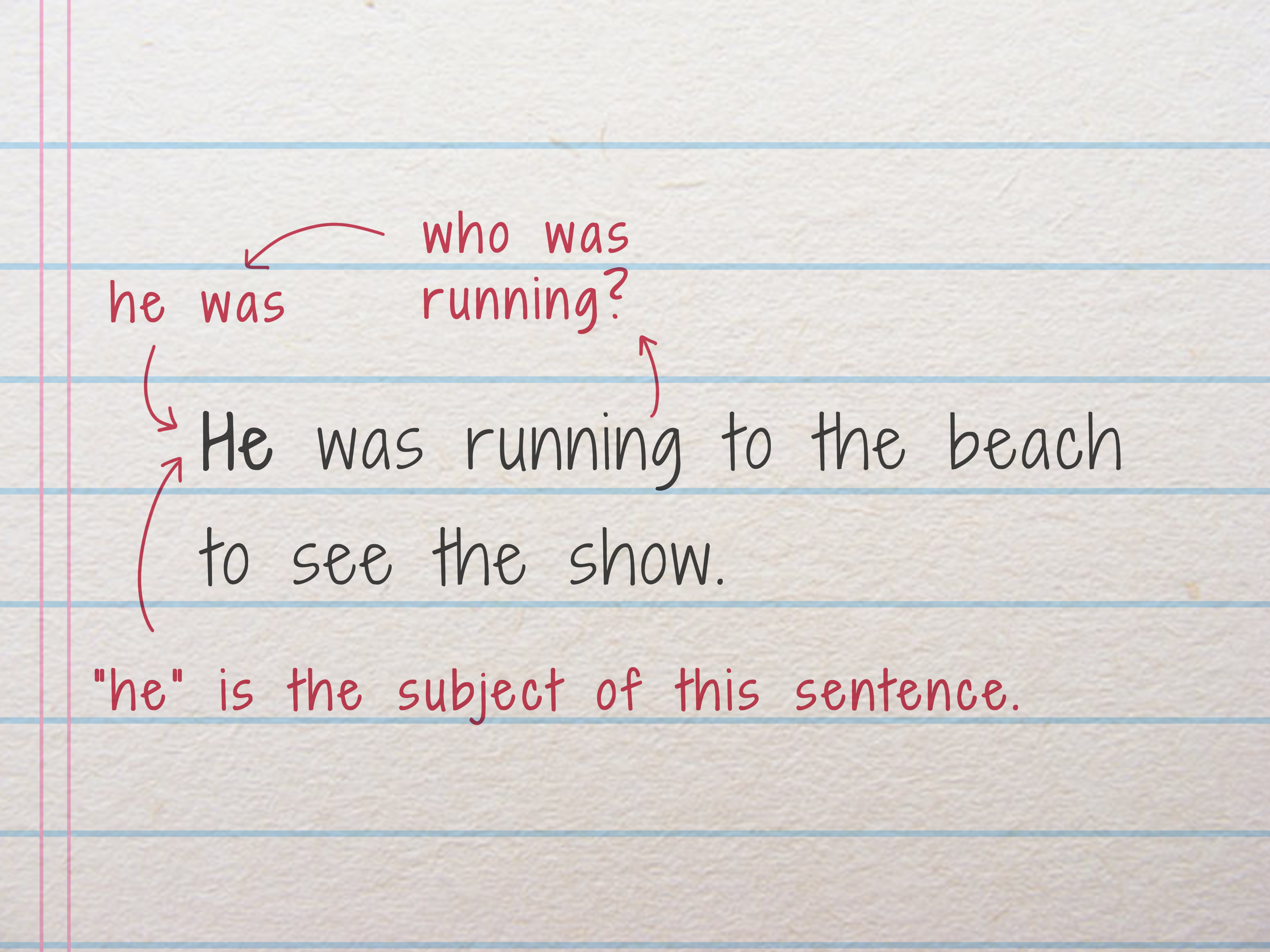
Another powerful method is to find the subject first. The subject is the person, place, thing, or idea the sentence is about. Once you find the subject, ask, What does the subject do? or What is said about the subject?
Look at this sentence:
“The old clock ticks in the hallway.”
The subject is clock. What does the clock do? It ticks. So ticks is the verb.
Here is another example:
“My cousins are visiting this weekend.”
The subject is cousins. What are they doing? They are visiting. The verb phrase is are visiting.
This method works especially well when a sentence contains lots of extra details. Consider:
“The squirrel with the suspiciously confident attitude stole my sandwich.”
The subject is squirrel. What did the squirrel do? It stole. The phrase with the suspiciously confident attitude is extra description. Funny? Yes. The verb? Still stole.
Step 3: Check for State-of-Being Verbs
Not all verbs show action. Some verbs express a state of being. The most common state-of-being verb is to be, which appears in forms such as am, is, are, was, were, be, being, and been.
These verbs often tell what something is, was, or will be. For example:
- I am ready.
- The soup is hot.
- They were tired after practice.
- The answer will be obvious soon.
State-of-being verbs can feel sneaky because nothing dramatic happens. No one jumps through a window. No volcano erupts. The sentence simply states a condition or identity. Still, these words are verbs because they perform the grammatical job of the verb.
A useful test is to ask whether the word connects the subject to a condition, identity, or description. In “The sky is blue,” the word is connects sky to blue. That makes is the verb.
Step 4: Watch for Linking Verbs
Linking verbs connect the subject of a sentence to more information about that subject. They do not show action. Instead, they act like a grammatical bridge. Common linking verbs include be, seem, become, appear, feel, look, sound, smell, taste, remain, and grow.
Examples:
- The movie seems long.
- Her idea became popular.
- The cookies smell amazing.
- He remained calm.
In these sentences, the verbs do not show the subject performing an action. The movie is not actively “seeming” in a superhero cape. The cookies are not intentionally “smelling” anything. Instead, the verb links the subject to a description.
One helpful trick is to replace the suspected linking verb with a form of be. If the sentence still makes sense, the word is probably a linking verb. For example, “The cookies smell amazing” can become “The cookies are amazing.” The meaning changes slightly, but the structure still works. That suggests smell is functioning as a linking verb.
Be careful, though. Some words can be action verbs or linking verbs depending on context:
- Action: She smelled the flowers.
- Linking: The flowers smelled sweet.
In the first sentence, she performs the action of smelling. In the second, smelled links flowers to sweet.
Step 5: Identify Helping Verbs and Verb Phrases
Sometimes the verb is not just one word. A verb phrase may include a main verb plus one or more helping verbs. Helping verbs, also called auxiliary verbs, support the main verb by showing tense, mood, voice, possibility, or emphasis.
Common helping verbs include forms of be, do, and have, such as am, is, are, was, were, do, does, did, has, have, and had. Modal helping verbs include can, could, may, might, must, shall, should, will, and would.
Examples:
- She is reading a novel.
- They have finished dinner.
- We should leave soon.
- I did call you yesterday.
In each example, the full verb includes both the helping verb and the main verb. If you identify only reading, finished, leave, or call, you miss part of the verb phrase.
To identify a verb phrase, look for words that work together around the main action or state. In “The students will have completed the project by Friday,” the verb phrase is will have completed. That sounds fancy, but it is just a team of verbs doing one job.
Step 6: Test the Word by Changing the Tense
Verbs often change form to show time. This is called tense. A word is likely a verb if you can change it from present to past or future tense.
Try this simple test:
- Today I walk.
- Yesterday I walked.
- Tomorrow I will walk.
The word walk changes to fit time, so it is a verb. Many regular verbs form the past tense with -ed, such as played, opened, cleaned, and laughed. Irregular verbs change in less predictable ways, because English apparently enjoys keeping everyone humble. Examples include go/went, eat/ate, write/wrote, bring/brought, and see/saw.
Consider the word light. In one sentence, it may be a noun: “Turn on the light.” In another, it may be a verb: “Please light the candle.” How can you tell? Change the tense: “Yesterday, I lit the candle.” Since the word can change tense in that sentence, light is functioning as a verb.
The tense test is especially useful for words that can belong to more than one part of speech. English loves multitasking words. A word like work can be a noun in “My work is difficult” and a verb in “I work every day.” The sentence role decides the answer.
Step 7: Watch Out for Verbals
Here is where things get spicy. Some words look like verbs but do not act as the main verb in a sentence. These are called verbals. The three main types are gerunds, participles, and infinitives.
A gerund is a verb form ending in -ing that functions as a noun:
- Swimming is fun.
- She enjoys reading.
In these examples, swimming and reading come from verbs, but they act like nouns. In “Swimming is fun,” the main verb is is, not swimming.
A participle is a verb form used as an adjective:
- The barking dog woke us.
- The broken vase sat on the table.
Here, barking describes dog, and broken describes vase. They look verb-like, but they are acting as adjectives.
An infinitive is usually formed with to plus the base form of a verb, such as to run, to eat, or to study. Infinitives can act as nouns, adjectives, or adverbs:
- To learn grammar takes practice.
- She has a book to read.
- He came to help.
Verbals are important because they can trick you. When identifying the main verb, ask whether the word is carrying the sentence or simply acting like another part of speech. If the verb-looking word is functioning as a noun, adjective, or adverb, it is not the main verb.
Quick Verb Identification Examples
Let’s practice with a few sentences.
Example 1: “The children played outside.”
The subject is children. What did they do? They played. The verb is played.
Example 2: “The children were playing outside.”
The subject is still children. The complete verb phrase is were playing. The word were helps show tense, and playing is the main action.
Example 3: “The children were noisy.”
The word were is the verb. It links children to the description noisy.
Example 4: “Running every morning improves my mood.”
The word running looks like a verb, but it acts as the subject of the sentence. The main verb is improves.
Example 5: “She can solve the puzzle.”
The complete verb phrase is can solve. The helping verb can shows ability, and solve is the main verb.
Common Mistakes When Identifying Verbs
Mistake 1: Looking Only for Action
Many learners think verbs must be action words. That is partly true, but not complete. Verbs can also show being, condition, or connection. In “He is nervous,” the verb is is, even though nobody is doing cartwheels.
Mistake 2: Ignoring Helping Verbs
In a sentence like “They have been waiting,” the full verb phrase is have been waiting. Do not leave the helping verbs behind like forgotten socks in the dryer.
Mistake 3: Confusing Verbals with Main Verbs
In “Cooking relaxes me,” the word cooking is a gerund acting as a noun. The main verb is relaxes. Always check the job the word performs.
Mistake 4: Forgetting That One Word Can Have Different Jobs
The word paint can be a noun or a verb. In “The paint dried,” paint is a noun. In “We paint the room,” paint is a verb. Context is king, queen, and the entire royal grammar court.
Why Learning to Identify Verbs Matters
Knowing how to identify a verb improves writing, reading comprehension, punctuation, sentence structure, and editing. Verbs help you find the main idea of a sentence. They also help you check subject-verb agreement, correct fragments, avoid run-on sentences, and create stronger writing.
For example, weak writing often relies on vague verbs such as is, has, does, or gets. Stronger writing uses more specific verbs: argues, reveals, transforms, discovers, inspires, or challenges. Once you can identify verbs, you can also improve them.
Compare these sentences:
- Weak: The dog was in the yard.
- Stronger: The dog raced across the yard.
The second sentence gives readers a clearer picture. It has energy. It has movement. It also sounds like the dog is late for a very important squirrel meeting.
Experience-Based Tips: How I Learned to Spot Verbs Faster
When I first learned how to identify a verb, I made the same mistake many students make: I hunted only for obvious action words. If someone was running, eating, shouting, or throwing something, I could find the verb. But the moment a sentence used is, seems, has been, or might have gone, my confidence packed a suitcase and left town.
The breakthrough came when I stopped asking only, “What is the action?” and started asking, “What word is doing the main grammar job?” That small change made a big difference. In a sentence like “The lesson is difficult,” nothing is moving, but is still holds the sentence together. Without it, we get “The lesson difficult,” which sounds like a caveman review of an English class.
Another helpful experience was marking verbs in real paragraphs instead of isolated sentences. Textbooks often give clean examples, but real writing can be messier. A sentence may include prepositional phrases, adjectives, adverbs, clauses, and verbals. I learned to cross out extra information temporarily. For example, in “The notebook on the kitchen table contains my best ideas,” the phrase on the kitchen table is extra location information. The subject is notebook, and the verb is contains. Once the clutter is cleared, the verb usually waves from the middle of the sentence like, “I’ve been here the whole time.”
I also found that reading aloud helps. Verbs often carry rhythm and meaning. In “She quietly opened the door,” your voice naturally lands on opened because that is the main event. In “She was quietly opening the door,” the phrase was opening works together. Hearing the sentence can reveal the verb phrase faster than staring at it until your eyes file a complaint.
One of the best practice methods is to keep a “verb hunt” habit while reading. Take any paragraph from a book, article, or email and underline the verbs. Then ask whether each one is an action verb, linking verb, or helping verb. This exercise turns grammar from a memorization chore into a pattern-recognition skill. The more sentences you examine, the easier it becomes.
Finally, I learned not to panic over tricky words ending in -ing. At first, I assumed every -ing word was automatically a verb. Then sentences like “Reading improves vocabulary” ruined my day. In that sentence, reading acts as a noun, and improves is the main verb. The lesson is simple: form matters, but function matters more. A word’s spelling gives clues, but its job in the sentence gives the answer.
My practical advice is this: identify the subject, ask what is being said about it, look for action or being, include helping verbs, and double-check verb-looking words that act like nouns or adjectives. Do that consistently, and verbs become much easier to find. They stop being grammar gremlins and start becoming useful signposts.
Conclusion
Learning how to identify a verb is easier when you follow a clear process. Start by looking for action, then find the subject and ask what it does or what is said about it. Remember that verbs can show action, state of being, or connection. Watch for linking verbs, helping verbs, and full verb phrases. Use tense changes as clues, and be careful with verbals that look like verbs but act as nouns, adjectives, or adverbs.
Once you understand verbs, sentences become easier to read, write, and edit. You can spot the heart of a sentence, fix grammar mistakes, and choose stronger words. In other words, verbs do not just sit there looking grammatical. They work. And now, so can you.
Note: This article was written in standard American English and synthesized from reputable grammar education references. Source links are intentionally omitted from the body for clean web publishing.