If your doctor has ever said, “Let’s keep an eye on your blood pressure,” and then sent you home with a vague,
“Just check it regularly,” you’re not alone. Home blood pressure monitoring can feel strangely technical for
something you’re expected to do in your pajamas before coffee. The good news? Once you know the right steps,
measuring your blood pressure at home is straightforwardand a powerful way to protect your heart health.
In this guide, we’ll walk through how to measure your blood pressure at home accurately, what the numbers mean,
how often to measure, and practical tips from real-life experiences. Think of it as your friendly, slightly
nerdy owner’s manual for that blood pressure monitor sitting on your kitchen counter.
Why Measuring Blood Pressure at Home Matters
Nearly half of U.S. adults have high blood pressure, and many don’t know it. High blood pressure (hypertension)
usually doesn’t cause obvious symptoms, but over time it increases your risk of heart attack, stroke, kidney
disease, and other serious problems.
Home blood pressure monitoring helps because:
- It gives your doctor more accurate information. Office readings can be higher from “white coat” anxiety.
- It can uncover masked hypertension. Some people have normal readings at the clinic but higher readings at home.
- It tracks how well treatment is working. Your doctor can adjust medications or lifestyle plans based on your home readings.
- It gives you control. Seeing your numbers regularly can motivate changes like eating better, moving more, and reducing sodium.
In fact, major guidelines recommend using blood pressure readings taken outside the cliniclike at hometo help
confirm a diagnosis of hypertension and to guide treatment decisions. Home readings aren’t just “extra”; they’re
often the star of the show.
What You Need Before You Start
Choose the right blood pressure monitor
Not all monitors are created equal. Here’s what most experts recommend for home blood pressure monitoring:
- Automatic, upper-arm cuff monitor. Wrist and finger devices are more sensitive to position and often less accurate.
- A validated device. Look for monitors that appear on lists of clinically validated devices published by major organizations or medical societies.
- The correct cuff size. Using a cuff that’s too small or too large can give false readings. Most cuffs list the arm circumference range on the packaging.
If you’re unsure, bring the monitor (and its cuff) to your next appointment. Your health care professional can
compare your device’s reading with their office device and confirm that it’s reasonably accurate.
Have a way to record your readings
You can keep track of your numbers in:
- A notebook or printed blood pressure log
- A smartphone note or spreadsheet
- A blood pressure app that syncs with your monitor (if available)
The key is consistency. Your doctor will care less about any one “weird” reading and more about trends over days
and weeks.
How to Prepare for a Home Blood Pressure Reading
The prep you do in the 30 minutes before you measure can change your numbers more than you might think. A rushed
reading after running up the stairs with a latte in hand is basically a stress test, not a resting blood pressure.
About 30 minutes before you measure, try to:
- Avoid caffeine. Coffee, tea, energy drinks, and some sodas can temporarily raise blood pressure.
- Skip tobacco and vaping. Nicotine also increases blood pressure for a while.
- Avoid alcohol and heavy meals. Both can influence your numbers.
- Skip vigorous exercise. Exercise is great, just don’t measure right after an intense workout.
- Empty your bladder. A full bladder can slightly raise your reading.
Then, sit quietly for at least five minutes before taking your reading. No texting, no emails, no arguing about
whose turn it is to take out the trash. The goal is to measure your blood pressure in a calm, rested state.
Step-by-Step: How to Measure Your Blood Pressure at Home
Step 1: Sit in the correct position
Proper posture is not just for yoga class. It’s crucial for accurate blood pressure readings. Here’s what good
positioning looks like:
- Sit in a chair with your back supported (no slouching at the edge of the seat).
- Keep your feet flat on the floor, not dangling or crossed at the ankles.
- Rest your arm on a flat surface at heart levelfor example, on a table.
- Relax your shoulders and keep your palm facing up.
- Make sure you are not talking, laughing, or scrolling your phone during the measurement.
Little thingslike crossing your legs or holding your arm too lowcan make your reading look higher than it truly is.
Step 2: Place the cuff correctly
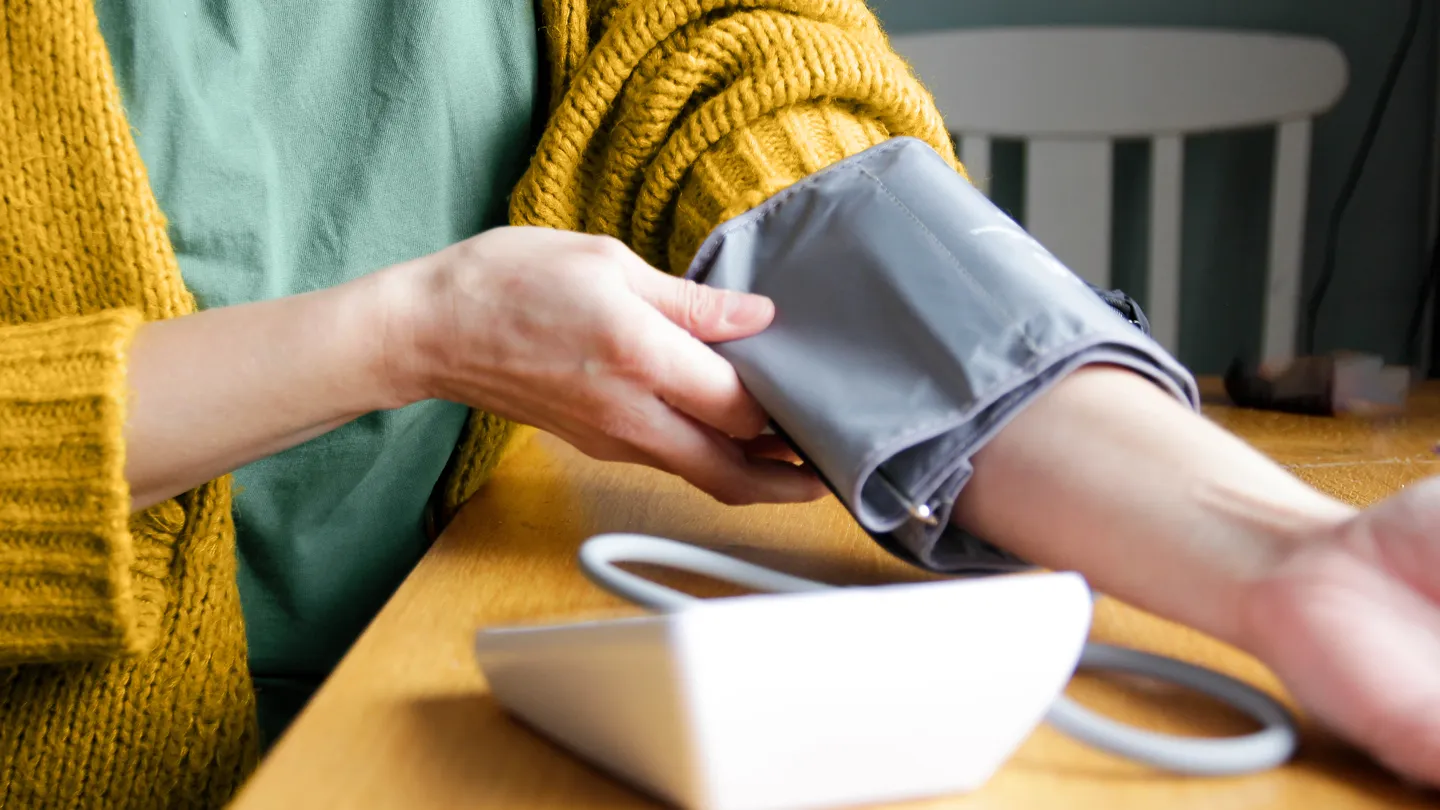
Next, position the cuff on your bare upper arm:
- Remove clothing from your upper arm. Don’t place the cuff over sleeves.
- Wrap the cuff around your upper arm so the lower edge is about 1 inch above the bend of your elbow.
- The cuff should be snug but not painfully tightyou should be able to slip two fingertips under the edge.
- Align the tubing so it runs down the front of your arm, roughly over the main artery.
If the cuff feels like it’s sliding down or digging into your skin, adjust the fit and try again. A poorly placed
cuff is one of the most common causes of inaccurate readings.
Step 3: Take the reading
Once you’re seated comfortably and the cuff is in place:
- Relax and stay still. Keep your arm supported and your feet flat.
- Press the start button on your automatic monitor.
- Don’t talk, look at your phone, or tense your muscles while the cuff inflates and deflates.
After a few seconds, your monitor will display two main numbers (sometimes three if it shows heart rate). Make
sure you note them down along with the date and time.
Step 4: Repeat and record
For most people, it’s best to:
- Take two readings, about 1–2 minutes apart.
- If the numbers are very different, take a third reading and note all of them.
- Record the readings, then share the log with your health care professional at your next visit.
Many clinicians will look at the average of those readings rather than one single number, especially when making
decisions about diagnosis or treatment.
How Often Should You Measure Your Blood Pressure at Home?
How often you check your blood pressure depends on why you’re monitoring it in the first place.
If you’re being evaluated for high blood pressure
When your doctor is trying to figure out whether you truly have hypertension, they may suggest:
- Measuring your blood pressure twice a day (morning and evening)
- Taking two readings each time, 1–2 minutes apart
- Doing this for about 7 days before your follow-up visit
This gives a much more accurate picture than a few quick checks at the office.
If you already have diagnosed hypertension
If your blood pressure is already known to be high:
- Some experts recommend checking it several days per week.
- You may check more often for a short time after a medication change.
- Once your numbers are stable, you may not need to check every single day.
Always follow your own health care professional’s instructions. They may tailor monitoring frequency based on your
age, other medical conditions, and how well controlled your blood pressure is.
Understanding Your Blood Pressure Numbers
A blood pressure reading looks like this: 118/76 mm Hg.
- The top number is your systolic pressure (pressure when the heart beats).
- The bottom number is your diastolic pressure (pressure when the heart relaxes between beats).
While your doctor should interpret your readings in the context of your overall health, common categories (for
adults) often include:
- Normal: Less than 120/80 mm Hg
- Elevated: Systolic 120–129 and diastolic less than 80
- Stage 1 hypertension: Systolic 130–139 or diastolic 80–89
- Stage 2 hypertension: Systolic 140 or higher or diastolic 90 or higher
- Hypertensive crisis: 180 or higher systolic and/or 120 or higher diastolic
Don’t panic over one high reading. Look for patterns over time and bring your log to your health care professional.
They can help you understand what your numbers mean for you personally.
Common Mistakes That Can Skew Your Readings
Even the best monitor can’t fix bad technique. Here are some easy mistakes to avoid:
- Measuring over clothing. Always use the cuff on bare skin.
- Using the wrong cuff size. A cuff that’s too small can give artificially high readings.
- Talking or laughing during the reading. Save the conversation for after the cuff deflates.
- Crossing your legs. This can nudge your numbers higher.
- Measuring right after coffee, smoking, or exercise. Wait at least 30 minutes.
- Tensing your arm or holding it up unsupported. Rest your arm at heart level on a surface.
- Checking only once. Always try to take at least two readings.
If your numbers seem wildly inconsistent, review this list, check your technique, and consider bringing your monitor
to the clinic to compare against their device.
Special Situations: When Technique Matters Even More
Orthostatic (standing) blood pressure checks
If you feel lightheaded when you stand up, your clinician may ask you to check your blood pressure lying down and
then standing. Typically, you:
- Rest lying down for about five minutes, then measure your blood pressure.
- Stand up carefully, wait about one minute, and measure again.
Sudden drops in blood pressure when standing can increase the risk of falls, especially in older adults. Don’t do
this on your own unless your health care professional has explained exactly howthey may want specific timing or
extra safety precautions.
Irregular heart rhythms
Some devices can have trouble with irregular heartbeats (like atrial fibrillation). Certain modern monitors are
better at handling this and may display a symbol when they detect an irregular rhythm. If your device often shows
an irregular rhythm indicator or your readings seem very inconsistent, talk to your health care professional. You
may need additional monitoring or a different type of device.
When to Call Your Doctor or Seek Emergency Care
Blood pressure readings are just numbersuntil they’re not.
Contact your health care professional promptly if:
- Your home readings are consistently higher than the target your clinician set for you.
- You see a trend of rising numbers over several days or weeks.
- You’re unsure whether to adjust medications or change how often you measure.
Seek emergency care (call 911 in the U.S.) if:
- Your reading is around 180/120 mm Hg or higher and you have symptoms like chest pain, shortness of breath, back pain, severe headache, weakness, confusion, or trouble speaking or seeing.
When in doubt, especially with very high readings and concerning symptoms, it’s safer to get immediate medical help
than to wait and see.
Real-World Experiences: Making Home Blood Pressure Checks Work for You
Reading instructions is one thing; living with a blood pressure monitor is another. Here are some experience-based
insights and practical tips that often come up when people start checking their numbers at home.
1. The “I did everything wrong at first” phase
Many people begin by doing exactly what you’re not “supposed” to do: grabbing the monitor right after coffee,
talking through the reading, or taking it while perched on the edge of the bed. The numbers look scary, anxiety
climbs, and suddenly the monitor feels more like a stress machine.
If that sounds familiar, you’re not failing; you’re just learning. Most people need a few days to get comfortable
with the routine. Once you slow down, follow the position and prep steps, and take readings at the same times each
day, the numbers usually become more stableand less alarming.
2. Turning the routine into a habit (without hating it)
One of the easiest ways to keep up with home monitoring is to attach it to something you already do. For example:
- Measure before breakfast, after you’ve used the bathroom but before eating or taking medication.
- Take an evening reading before you start winding down for bed, not after scrolling news headlines that raise your blood pressure in a different way.
Pairing blood pressure checks with existing routines (like brushing your teeth) helps you remember them without
feeling like you’ve added another big job to your day.
3. Dealing with “blood pressure anxiety”
It’s surprisingly common to feel nervous every time you put on the cuff, worried that the machine is about to
deliver bad news. Ironically, that anxiety can temporarily increase your numbers.
A few strategies that many people find helpful:
- Focus on trends, not single readings. One high reading doesn’t mean you’re in danger. Your doctor will look at patterns over time.
- Use deep breathing. Before you press “start,” take a few slow, deep breaths, letting your shoulders relax.
- Agree on clear rules with your doctor. For example: “If I see readings above X for three days, I’ll call the office.” Clear rules reduce guesswork and worry.
4. Making sense of fluctuating numbers
It’s normal for blood pressure to fluctuate throughout the day. Stress, sleep, pain, and even a salty meal the night
before can influence your reading. People often notice patterns, like:
- Higher readings when they’re stressed at work
- Lower numbers after a few weeks of regular exercise
- Spikes after a poor night’s sleep or high-sodium takeout
Instead of obsessing over every change, treat your readings like feedback. If your numbers improve when you sleep
better, move more, and eat more vegetables and fewer processed foods, that’s your body giving you a gold star.
5. Bringing your monitor and log to appointments
One of the smartest moves you can make is to bring both your home monitor and your blood pressure log to your
medical appointments. Your health care professional can:
- Compare your monitor’s reading with their device
- Review your home numbers alongside office readings
- Adjust medications or lifestyle recommendations based on real-life data, not just one office measurement
Patients who do this often feel more involved in their care. Instead of just being told, “Your blood pressure is
high,” they can talk about exactly what’s happening at home and what might be driving changes.
6. Seeing home monitoring as a tool, not a verdict
Ultimately, a blood pressure monitor is like a dashboard warning light, not a final diagnosis. It alerts you and
your health care team to potential problems earlywhen they’re most treatable. It can also show you that your
efforts are working when numbers slowly move in the right direction.
Yes, the cuff can be annoying. Yes, the first few days may feel awkward. But over time, many people find that home
blood pressure monitoring becomes just another simple, empowering part of taking care of their healthlike brushing
their teeth, but with more data and fewer minty bubbles.
Bottom Line
Learning how to measure your blood pressure at home isn’t just about pushing a button. It’s about choosing the
right monitor, using the correct cuff size, preparing properly, sitting in the right position, and taking readings
consistently over time. Do those things, and your home readings become a powerful tool that you and your health
care team can use to protect your heart, brain, and overall health for years to come.