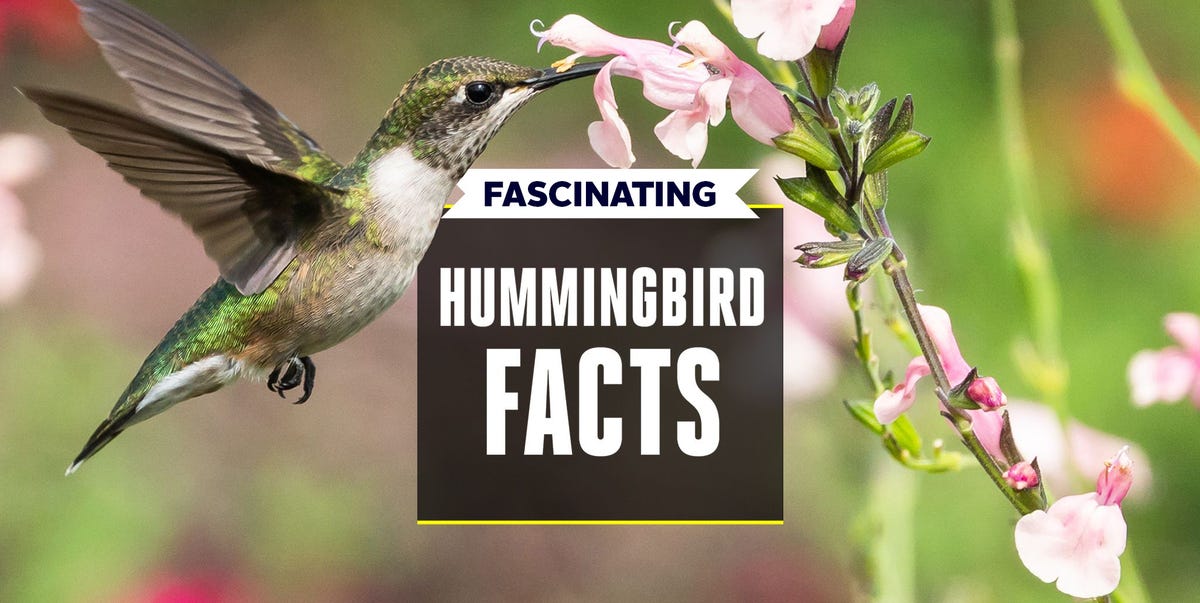
If you’ve ever watched a hummingbird hover in place like a tiny, caffeinated helicopter, you already know the
truth: these birds do not live by the normal rules of “birding.” They live by the rules of physics, sugar,
and attitude. Hummingbirds are small enough to sit on a dime, flashy enough to look like living jewelry,
and intense enough to defend a feeder like it’s the last donut on Earth.
This guide rounds up the most fascinating hummingbird factshow they fly, how they eat, why they migrate, and
what you can do (without turning your backyard into a sticky crime scene) to help them thrive.
Fast Facts: The “Wait, Seriously?” Highlights
- They can hover and pull off aerial moves other birds can’t, including sustained backward flight.
- Their metabolism is extreme, with heart rates that can skyrocket during flight and drop dramatically during torpor.
- Nectar is fuel, but insects are the proteinbecause even tiny superheroes need snacks with substance.
- Migration is not optional for many North American species: they time it to flowers, weather, and survival.
- Backyard feeders can helpif you keep the recipe simple and the feeder clean.
What Exactly Is a Hummingbird?
Hummingbirds belong to the bird family Trochilidae and live only in the Western Hemisphere.
Depending on which scientific checklist you’re looking at (taxonomy gets updated), there are roughly
more than 360 species worldwide, with most diversity in Central and South America. In the United States,
you’ll typically see a smaller set of regularslike the Ruby-throated hummingbird in the East and Anna’s hummingbird
in many Western areas.
Even if you only ever see one species at your feeder, it helps to remember: hummingbirds are not “one kind of bird.”
They’re a whole world of specialized designsdifferent bills, different ranges, different migration patterns, and
different strategies for surviving on what is basically a high-speed nectar economy.
Why they look like living gemstones
That shimmering “metallic” color many hummingbirds show isn’t like paint on a wall. It’s often
structural colortiny feather structures that reflect and refract light. That’s why a hummingbird can
look neon green from one angle and suddenly “go dark” from another. Same bird, different lighting, instant outfit change.
How Hummingbirds Fly: Hovering, Backing Up, and Breaking Your Brain
Most birds generate lift primarily on the downstroke. Hummingbirds are different. Their wings move in a
figure-eight pattern that helps generate lift on both the downstroke and upstroke, which is a big reason
they can hover so precisely in front of flowers.
Yes, they can fly backward
Hummingbirds are famous for backward flight, and it isn’t a clumsy “oops, reverse gear” moment. It’s a controlled,
repeatable maneuver used for feeding and positioning. Researchers have studied the kinematics of backward flight and
found that hummingbirds adjust stroke plane and posture in ways that aren’t just a simple rewind of forward flight.
In other words: backward flight is its own special skill, not a party trick.
Wingbeats: the sound of speed
That humming noise? It’s wingbeats. Depending on species and behavior, hummingbirds may beat their wings
dozens of times per second. In hovering, rates around ~50 beats per second are commonly cited, and some
species can go higher, especially in display dives. The point isn’t the exact numberit’s the lifestyle: flying is
basically their full-time job.
Why their feet look… kind of useless
Hummingbird legs are short and better for perching than walking. They can shuffle a little, but you won’t see a
hummingbird casually strolling like a pigeon. Their bodies are optimized for flying and feeding, not for doing laps
around your patio.
Metabolism: Built Like a Tiny Sports Car (With No Off Switch)
If hummingbirds had a bumper sticker, it would read: “Runs on sugar. Still needs protein.” Their energy
demands are enormous for their size. Powering high-frequency wingbeats requires intense oxygen delivery, which means
a seriously high-performance heart and circulatory system.
Heart rate that makes your smartwatch nervous
During flight, hummingbird heart rates can surge to astonishing levels (often reported around
1,000–1,200 beats per minute for some species). That’s not a typo. It’s what happens when you’re basically
a hovering jet engine the size of a thumb.
Torpor: their nightly “energy saver mode”
With that kind of metabolism, you might wonder how hummingbirds survive nighttime, cold snaps, or lean food days.
Enter torpor, a hibernation-like state where body temperature and metabolism drop sharply. In torpor,
heart rate can fall dramatically, conserving energy when the bird can’t keep fueling the furnace. Some research
has documented remarkably low body temperatures during torpor in certain hummingbirds.
The practical takeaway: hummingbirds aren’t “fragile.” They’re specialized. They can be incredibly resilient
but they also depend on reliable habitat and food sources because their margin for error is small.
What Hummingbirds Eat: Nectar, Bugs, and an Ingenious Tongue
Nectar is the headline act: it provides fast carbohydrates. But hummingbirds also eat
small insects and spiders for protein, fats, and micronutrients. This matters because a feeder full of
sugar water is not a complete dietit’s more like a convenient gas station.
The tongue isn’t a straw
For a long time, people described hummingbird tongues like tiny drinking straws. Modern research shows the story is
more interesting: the tongue’s structure helps it rapidly collect nectar through a dynamic lapping mechanism.
The tongue can unfurl and trap liquid quicklyperfect for a bird that needs efficiency at every flower.
They’re pollinators with a day job
When hummingbirds feed from flowers, they pick up pollen and move it from plant to planthelping many native plants
reproduce. In some ecosystems, hummingbirds are key pollinators for specific plant species, meaning their daily
“snack routine” is also ecological work.
Migration Facts: Tiny Bird, Huge Commute
In North America, hummingbird migration can feel like a seasonal magic trick: one week your yard is quiet, the next
it’s buzzing with aerial duels. Migration timing is influenced by daylight length, temperature, andmost importantly
food availability (flowers and insects).
The Ruby-throated hummingbird’s famous journey
If you live east of the Mississippi, the Ruby-throated hummingbird is often the star. This species is known for
migration routes that can include long nonstop flights, including crossings over the Gulf of Mexico under the right
conditions. To prepare, hummingbirds often bulk up, storing fat as fuelbecause there are no rest stops on open water.
Should you take down feeders to “force” migration?
No. Leaving a feeder up in late summer or early fall does not “trap” hummingbirds or stop them from migrating.
Migration is driven by biology and seasonal cues. A clean, well-maintained feeder can help birds fuel up for the trip,
especially during weather swings or late blooms.
Backyard Hummingbird Facts: Feeders, Flowers, and Avoiding Sticky Mistakes
A yard can be a legitimate hummingbird support systemespecially if you focus on native flowering plants
and safe feeder habits. The goal is to provide energy without creating health risks.
Hummingbird nectar recipe (keep it boring on purpose)
The widely recommended homemade nectar is simple: 1 part white granulated sugar to 4 parts water.
That’s it. No honey. No brown sugar. No “organic agave artisan nectar concentrate.” Just plain sugar and water.
- Dissolve white sugar in water (many experts recommend heating/boiling to dissolve and improve cleanliness).
- Cool completely before filling the feeder.
- Store extra in the refrigerator and use within a reasonable time.
Skip the red dye
You do not need red food coloring in nectar. Feeders often already have red parts that attract hummingbirds, and
multiple wildlife organizations caution against adding dye. Keep the nectar clear and the feeder clean.
Cleaning matters more than the feeder brand
Warm weather can turn sugar water into a science experiment. Clean feeders regularly (often weekly, or more frequently
in hot conditions) and replace nectar before it spoils. If nectar looks cloudy, smells odd, or has visible mold,
dump it, wash thoroughly, and refill.
Plants that earn frequent visits
If you want the “hummingbird loop” (the repeat visits throughout the day), plant for a sequence of blooms:
early-season flowers, mid-summer favorites, and late-season nectar sources. Many native salvias, bee balm, trumpet
vines (in appropriate regions), and other tubular blooms can be especially attractive.
Bonus: native plantings support insects toomeaning hummingbirds can find protein near the nectar bar.
Conservation: Why Hummingbird Habitat Matters
Hummingbirds face many of the same pressures as other birds: habitat loss and fragmentation, pesticide exposure,
climate-driven changes in flowering times, window collisions, and outdoor cats. Because hummingbirds depend so heavily
on reliable nectar corridors and suitable nesting sites, losing native vegetation can hit them hard.
What helps most (and is surprisingly doable)
- Plant native flowers and support continuous blooms from spring through fall.
- Reduce pesticide use (especially broad-spectrum insecticides that wipe out the insects birds rely on).
- Make windows safer with bird-friendly treatments if collisions are an issue.
- Keep cats indoors (your cat will live longer too, and local wildlife will thank you).
- Support habitat protection through reputable conservation organizations.
Hummingbird Myths (Politely) Retired
Myth: “Hummingbirds only drink from red flowers.”
Red is attractive, but hummingbirds feed from many flower colors. What matters most is nectar availability and
flower shapeespecially tubular blooms that match their bills.
Myth: “Sugar water is junk food.”
Sugar water is not a complete diet, but it mimics the energy role of nectar. When prepared correctly and kept fresh,
it can be a helpful supplementespecially during migration and in areas with limited blooms.
Myth: “If you stop feeding, they’ll starve.”
Hummingbirds naturally forage widely. A feeder is one resource, not the whole system. That said, if you put up a feeder
during active seasons, try to keep it reliably clean and filledbecause the birds will incorporate it into their routine.
Everyday Experiences With Hummingbirds (500+ Words of Real-Life Magic)
Hummingbird facts are impressive on paper, but hummingbirds are even better in the lived experience of watching them.
Ask anyone who’s kept a feeder for a season and you’ll hear the same story: it starts as a casual “Let’s try this,”
and ends with you standing at a window whispering, “Oh my gosh, it’s back,” like you’re greeting a celebrity.
One of the most common hummingbird experiences is the first arrival. In many parts of the U.S., the season
has a clear “before and after.” Before: quiet mornings. After: sudden zips of movement, sharp chirps, and a tiny bird
appearing so fast you wonder if it teleported. People often notice that the first visitors act like scoutsquick drinks,
a little hovering inspection, then a streak into the trees. A few days later, the pattern becomes predictable, and you
start recognizing “regulars” by behavior: the bold one that feeds while you’re watering plants, the cautious one that
waits until you step away, the one that insists on guarding the feeder like it owns the deed.
Then come the feeder dramas. Hummingbirds are famously territorial, and a single feeder can become the stage
for nonstop aerial negotiations. You’ll see birds chase each other in tight arcs, pause midair like they’re reconsidering
their life choices, then launch again. Some people solve this by spacing feeders far apart or using multiple small feeders.
Others lean into the chaos and treat it like a daytime soap opera: “Today on As the Feeder Turns…”
Another experience: the gardening upgrade. Plenty of folks start with a feeder and then realize the
hummingbirds stick around longer when the yard offers natural nectar too. That’s when the planting spree begins.
You learn quickly that hummingbirds love reliable blooms and that a “hummingbird garden” isn’t one plantit’s a
season-long buffet. When a patch of flowers starts working, the difference is obvious: the birds don’t just visit,
they cycle through, popping in every so often like they’re running a route.
And let’s not forget the accidental mindfulness hummingbirds create. Even people who claim they’re “not
bird people” end up slowing down to watch them hover, back up, and angle their heads to inspect a bloom. It’s hard to
multitask while a hummingbird is hanging in midair like a living punctuation mark. For a few seconds, your brain
quits doomscrolling and just goes, “Wow.”
Finally, there’s the experience of seasonal change. Late summer can bring heavier feeding as birds fuel up,
and migration periods sometimes introduce unexpected visitors. You might spot a species you don’t normally see, or notice
a sudden burst of activity after a weather front passes. This is where hummingbird facts become personal: you’re not just
reading about migrationyou’re watching it unfold one tiny sip at a time.
In the end, hummingbirds don’t just decorate a yard. They change how you pay attention. And honestly? That might be their
most underrated superpower.
Conclusion: The Big Takeaway From These Hummingbird Facts
Hummingbirds are not “cute little birds.” They’re high-performance flying machines with extreme metabolisms, precision
feeding tools, and a talent for migration that seems impossible until you remember: nature has been doing R&D for a
very long time. The best way to appreciate hummingbird facts is to connect them to real choicesplant native flowers,
keep feeders clean, skip dyed nectar, and protect habitat. Do that, and you’re not just watching a hummingbird.
You’re helping keep one of the most astonishing animals in the Americas right where it belongs: in the air, humming
like a tiny engine, and living life at full speed.