There are two kinds of people in America right now: the ones who hear “six seven” and instantly do the little hand motion, and the ones who hear “six seven” and immediately wonder if they missed a math class, a group chat, or an entire year of culture. If you’re in the second group, welcomeplease take a seat in the “I’m not old, I’m just… pre-meme” section.
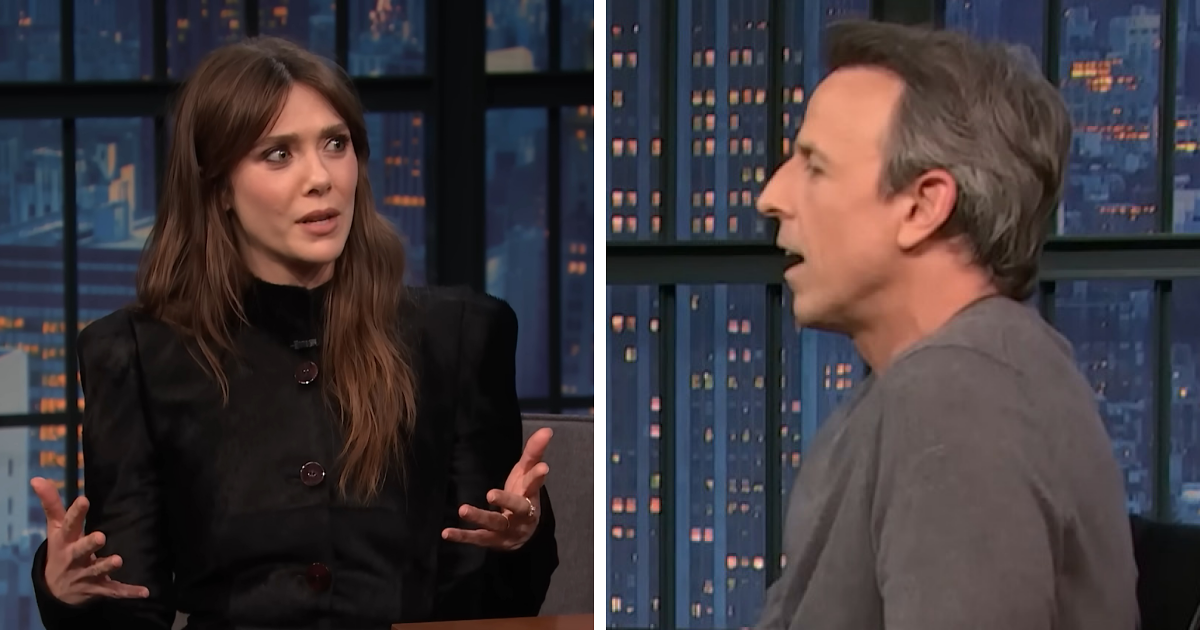
And then there’s Elizabeth Olsen, who walked onto Late Night with Seth Meyers and somehow managed to be both groups at once. She openly admitted she feels out of touchthen casually revealed she’s “really into 6-7,” like it’s a new Pilates class. The internet’s reaction was immediate and dramatic: how does someone who plays reality-bending superheroes understand a meme that has the emotional logic of a rubber chicken?
Let’s break down what the “6-7” meme actually is (and why “actually” is doing a lot of work there), what Olsen said that made people feel seen (and/or personally attacked by time), and why a joke about two numbers in order has turned into a cultural stress test for adults everywhere.
So… What Is the “6-7” Meme?
“6-7” (also written as “67” or “6 7”) is a viral internet catchphrase that blew up in the U.S. through TikTok, Instagram Reels, and the kind of youth-to-youth telepathy that makes parents consider moving into a quiet lighthouse. It’s usually said out loud as “six seven,” not “sixty-seven” (important distinction, because “sixty-seven” sounds like a retirement community).
Here’s the twist that makes adults short-circuit: it doesn’t have one fixed, reliable meaning. It’s flexible. Vibes-based. It can be a punchline, a filler phrase, a chant, a signal, a celebration, or a harmless act of chaosoften paired with a hand gesture that looks like you’re weighing two invisible melons and judging them equally unserious.
If you’ve ever heard kids shout “6-7!” after someone says the number six, the number seven, a score near 67, or anything that even vaguely smells like a digit, you’ve already encountered the meme in its natural habitat: the world, unfortunately.
Where Did “6-7” Come From? (A Very 2020s Origin Story)
Like many modern memes, “6-7” didn’t start as a carefully crafted joke with a mission statement and brand guidelines. It started as a sound, got adopted by sports edits, and then escaped into real life like a raccoon that figured out how trash cans work.
1) The Soundtrack: A Song Hook That Wouldn’t Let Go
The phrase is widely linked to a track associated with rapper Skrilla, whose “Doot Doot (6 7)” became a commonly used audio clip in short-form videos. The numbers are repeated in a way that’s catchy, blunt, and weirdly satisfyingbasically the musical equivalent of tapping a pen until it becomes everyone else’s problem.
2) The Sports Boost: Basketball, Height Jokes, and Highlight Edits
From there, “6-7” attached itself to basketball cultureespecially highlight edits and jokes about height. A major reason the meme “clicked” visually is that 6’7” is a real, specific height that sounds impressive in a way teens find hilarious. Once people started pairing the audio with hoops clips, it became less of a phrase and more of a reflex.
3) The Real-World Spark: The “I Can’t Believe This Is a Thing” Phase
Viral moments at games and in school settings turned “6-7” into something you could chant, not just post. At that point, it stopped being “a trend” and became “an outbreak,” which is how you know it made the jump from internet to everyday life.
How “6-7” Spread: TikTok → Classrooms → Arenas → Your Nervous System
The life cycle of “6-7” is basically a modern case study in how culture moves now: teens adopt something for fun, the internet amplifies it, adults demand an explanation, and the lack of explanation makes it even stronger.
In schools, “6-7” became the kind of disruptive inside joke that thrives on being banned. Tell a kid not to say something and you’ve basically turned it into an elite membership card. Suddenly, math class becomes a danger zone. “Turn to page six… and seven…” and boomyour lesson plan is gone, replaced by a chorus of tiny comedians.
Meanwhile, sports fans found a new mini-game: tracking when a team’s score approaches 67 and erupting when it hits the magic number. It’s part scoreboard, part ritual, part “we’ve all agreed this matters now,” which is how half of human history works if you think about it.
Enter Elizabeth Olsen: “I Don’t Know Culture… But I Do Know 6-7.”
On Late Night with Seth Meyers, Elizabeth Olsen was promoting her film Eternity and joking about feeling “like an old lady in real life.” She described being out of touch with what’s happening culturallythen dropped the line that made the internet spit out its drink: she knows about “6-7,” and she’s into it.
Seth Meyers, playing the role of “Adult Who Has Heard It But Refuses to Engage for Self-Preservation,” admitted he’d made an effort not to learn it from his kids. Olsen, however, leaned innot as a Know-It-All, but as someone genuinely delighted by the chaos.
Her Breakdown (In Plain English)
Olsen’s explanation wasn’t a strict definition like “6-7 means X.” Instead, she offered something more accurate: why people love it. She described it as absurd and random, and she seemed to enjoy that it’s not trying to “own” anything. In a culture where so much humor is sarcastic, cynical, or aimed like a laser, “6-7” is pure abstractionjust excitement about two numbers that already come in that order.
That’s what stunned people. Not just that she knew it existed, but that she instinctively understood the function of it: it’s a shared, low-stakes signalmore about belonging and play than meaning.
Why Her Take Hit So Hard: It’s Not About Meaning, It’s About Membership
Adults tend to treat slang like it’s a password to a vault: “Tell me what it means so I can access the content.” But “6-7” is closer to a secret handshake than a dictionary entry. The point isn’t the definitionit’s the moment of connection when someone else recognizes it.
That’s why Olsen’s breakdown landed. She didn’t try to pin it down into a single boring translation. She basically said: “It’s funny because it’s nonsense,” which is exactly how nonsense works when it becomes culture.
Linguists have pointed out that these kinds of forms help younger people build solidarity and separate their world from adult expectations. Translation: it’s not for you. And that’s the whole joke.
The “Brain Rot” Debate: Is 6-7 Dumb… or Just Doing Its Job?
Any meme that spreads this far will trigger a predictable adult response: “This is brain rot.” Sometimes that’s fair! Sometimes the internet really does feel like a conveyor belt of nonsense. But it’s also worth noting that playful language has always existedkids have always loved chants, catchphrases, and inside jokes that make zero sense to outsiders.
The modern twist is scale. Social platforms turn a local inside joke into a national phenomenon in days. So a phrase that used to stay inside one school cafeteria now shows up at NBA games, late-night TV, andsomehowyour dentist’s waiting room.
Olsen’s reaction was a useful reminder: you can roll your eyes at it and still recognize what it’s doing. “6-7” is a pressure valve. It’s a tiny burst of group joy that doesn’t need a thesis statement.
How to Use “6-7” Without Embarrassing Yourself (Much)
If you’re determined to try using “6-7,” here’s the safest truth: don’t force it. This isn’t a phrase you “deploy.” It’s a vibe you stumble into.
Low-Risk Ways It Shows Up
- As an interjection: Someone says something mildly interesting; you respond “6-7” as if that answered anything.
- As a celebration: A score hits 67, a test grade is 67%, a height is 6’7”, or you see the number pair in the wild.
- As a social signal: You say it to see who reacts. (This is how adults accidentally become youth anthropologists.)
High-Risk Ways to Avoid
- Using it in a serious meeting.
- Asking a teenager “Did I do it right?” (You didn’t.)
- Calling it “sixty-seven” with confidence.
FAQ: The Questions Everyone Asks (Usually Right Before Being Roasted)
Does “6-7” mean “so-so” or “mid”?
Sometimes people use it that way, especially with the “weighing” hand gesture that suggests “ehhh… maybe.” But it’s not locked to that meaning. Context matters, and half the time the context is “because it’s funny.”
Is it connected to sports?
Yesbasketball culture helped push it mainstream, especially through highlight edits and the obsession with 67 points. Sports turned it into something you can chant together, which is meme fuel.
Why did people freak out that Elizabeth Olsen knew it?
Because celebrity + niche youth slang creates an instant generational jump-scare. Also, Olsen delivered the line with a straight-faced confidence that felt like your cool aunt suddenly speaking fluent group chat.
Conclusion: The Meme Isn’t the PointThe Moment Is
The funniest part of “6-7” might be that it’s basically a celebration of order itself. Not a pun. Not a clever twist. Just two numbers that have always been next to each othernow treated like a cultural event.
Elizabeth Olsen’s “I still don’t get it” energy captured what most adults feel, while her explanation captured what kids already know: the best memes aren’t always “about” something. Sometimes they’re just a shared giggle, a signal flare, a small act of joyful nonsense.
And if you’re still confused? Congratulations. You’re experiencing the meme correctly. 6-7.
Experiences Related to the “6-7” Moment (500+ Words of Real-World Vibes)
If you want to understand “6-7” on a gut level, don’t start with a definition. Start with the experience of encountering it in the wildbecause that’s where the meme stops being “a thing online” and becomes “why is my day like this?”
Imagine you’re a parent in the carpool line. It’s too early for philosophy, and yet you’re about to receive it anyway. Your kid and their friend are in the back seat, talking in the kind of fast, casual shorthand that makes you feel like you’re listening to a podcast at 3x speed. Someone says, “We should sit in group six,” and instantly both kids chirp “SIX SEVEN!” with the little hand motion, like they’re blessing the air. You ask, politely, “What does that mean?” and they reply, “Nothing,” the way someone says “nothing” when they absolutely mean “you are not invited.”
Or picture a middle school math teacher trying to explain fractions. The teacher says, “Okay, if we divide by seven…” and the room erupts. Not in anger. Not even in rebellion. In glee. The kids aren’t mad at math; they’re delighted by the possibility that math is accidentally referencing their inside joke. The teacher pauses, considers a long career that did not include digital chants, and continues anywaybecause what else can you do? That’s the “6-7” experience: not malicious, just contagious.
Then there’s the sports version, which is where “6-7” becomes a full-body event. You’re at a basketball game, and the home team is at 65 points. People start whispering like they’ve spotted a rare bird. Someone points at the scoreboard. A kid in the stands is already standing, primed like a human firework. When the score hits 67, the place eruptsnot because the game is over, not because it’s a record, but because everyone agreed (silently, psychically) that this number is now a communal checkpoint. It’s like a flash mob, except nobody learned choreography, and the choreography is two hands and a shared understanding that this is hilarious.
The funniest experience might be the “adult trying to participate” phase. You see “6-7” on social media, then in the real world, and eventually you think, “I can do this. I can be cool.” So you try it in a conversationmaybe with a coworker’s teenager, maybe with your nephew, maybe in a comment section where confidence goes to die. You say “six seven” a little too carefully, like you’re reading a password from a sticky note. The teenager looks at you with polite concern, like you just tried to dab in 2026. And that’s when you realize: the meme is less about the words and more about the effortless, throwaway way it’s used. You can’t “perform” it. You can only stumble into it and hope nobody records you.
That’s why Elizabeth Olsen’s moment landed: she didn’t act like she cracked a code. She acted like someone who’s heard the chant, clocked the vibe, and decided to enjoy the nonsense. In a world where everyone is constantly explaining, optimizing, and debating everything, “6-7” is a rare thing: a shared joke that doesn’t demand a dissertation. Sometimes it’s nice to laugh at two numbersjust because you can.