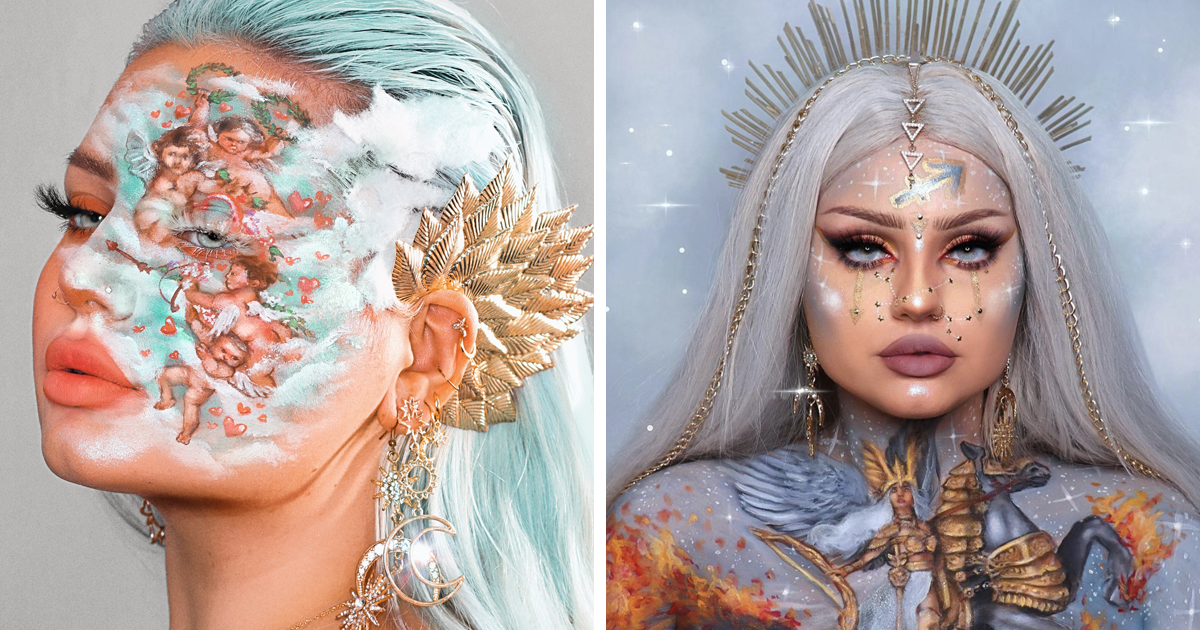
For some people, makeup means a quick dab of concealer, a swipe of mascara, and maybe a tinted lip balm on a good day. For others, it’s a full glam ritual with contour, lashes, and the works. But for artists like Sarina Nexie whose work was featured in the viral Bored Panda post “I Use Makeup To Create Art On My Face (107 Pics)” makeup is something completely different: it’s a canvas, a sketchbook, and a storytelling tool all rolled into one.
This style of creative makeup, sometimes called face art, editorial makeup, or optical illusion makeup, has exploded across Instagram, TikTok, and Pinterest. Artists around the world paint galaxies on their cheeks, turn their lips into 3D sculptures, and reshape their faces with trippy illusions that make you look twice.
From Everyday Makeup to Full-On Face Art
Traditional beauty looks focus on enhancing what you already have evening out skin tone, sharpening your eyeliner, or adding a bit of glow. Face art flips that script. Instead of asking, “How can I look more polished?” artists ask, “What wild idea can I pull off on this tiny canvas called my face?”
In the original Bored Panda story, Sarina explains that she joined the growing community of makeup lovers who treat their faces like canvases, painting surreal landscapes, cartoon characters, and abstract shapes directly onto their skin. She doesn’t just apply eyeshadow she builds entire scenes across her eyes, nose, and cheeks, blurring the line between everyday beauty and performance art.
This movement doesn’t exist in a vacuum. Around the internet, artists like Mimi Choi, Luca Luce, Dain Yoon, and Amazing JIRO are known for jaw-dropping optical illusions created with makeup alone. Faces appear sliced, duplicated, pixelated, or melting; hands look like they pass through skulls; and eyes seem to be floating where they shouldn’t be.
The Rise of Creative and Editorial Makeup
If you’ve scrolled through beauty hashtags lately, you’ve probably noticed that “pretty” is no longer the only goal. Creative and editorial makeup looks you’d expect to see on a runway or magazine cover is now all over social feeds. These styles use bold color, graphic shapes, and unexpected textures to make a statement rather than simply enhance features.
Editorial makeup is often described as makeup that tells a story. It’s used in fashion campaigns, music videos, and high-concept photo shoots. Think floating crystals around the eyes, neon liner that stretches into the hairline, or painted-on lace masks. Beauty pros describe it as a blend of high fashion and fine art a way to explore identity, fantasy, and emotion using pigment instead of paint.
Social media has opened the door for a new wave of creatives who don’t necessarily work backstage at fashion week but still create editorial-level looks in their bedrooms. Articles highlighting “maximalist” makeup artists show how creators use insect-inspired designs, 3D embellishments, and surrealist shapes to turn a bare face into something that looks ready for a gallery wall.
Meet the Artists Turning Faces Into Canvases
Sarina Nexie and the Bored Panda Community
In “I Use Makeup To Create Art On My Face (107 Pics),” Sarina shares how she joined the face-art community as a self-taught makeup enthusiast. Rather than just copying existing trends, she treats each look like a mini art project sometimes whimsical, sometimes eerie, always imaginative. Her work, featured by Bored Panda and widely saved on Pinterest, helped introduce more people to the idea that makeup can be pure art, no traditional “beauty” rules required.
The comments and shares on those posts show how resonant this kind of creativity is. Viewers marvel at the precision and imagination, but they also connect emotionally many say the art makes them feel braver about trying something unconventional in their own routines.
Mimi Choi: Optical Illusions That Break the Internet
Makeup artist Mimi Choi is famous for her mind-bending illusions: multiple sets of eyes, faces that look shattered like glass, or mouths that appear stitched shut. She’s built an audience of well over a million followers by leaning fully into surreal, sometimes unsettling visual tricks. Her looks take hours and meticulous layering of cream paints, shadows, and highlights to sell the illusion.
What’s especially striking is that none of this is Photoshop. It’s all brushes, sponges, and a serious understanding of light and shadow. Creators like Mimi routinely remind fans that makeup isn’t just about looking “perfect” it can also make you question reality for a second.
Luca Luce, Dain Yoon, and the Global Illusion Squad
Italian artist Luca Luce takes 3D makeup to another level by transforming his own face into optical illusions where pieces appear missing, twisted, or peeled away. His designs often look more like digital renders than something painted in real life.
South Korean artist Dain Yoon uses her background as a classically trained painter to create detailed body and face illusions that blur reality think multiple overlapping faces, melted features, and hand-painted reflections. Her work has been widely featured online as an example of how far body art can go when traditional painting skills meet modern makeup tools.
Japanese SFX artist Amazing JIRO brings special-effects-level detail to his makeup, using prosthetics, texture, and color to create hyperrealistic transformations. His decades of experience in film and advertising show how this kind of artistry isn’t just for social media; it’s also central to storytelling on screen.
Why People Are Drawn to Makeup as Art
So why does a post with 107 face-art photos capture so much attention? It’s not only because the looks are technically impressive; it’s also because they tap into deeper cultural shifts around beauty and self-expression.
First, there’s the simple joy of transformation. Playing with color and shape lets people temporarily become someone or something else. For many creators, this is less about hiding flaws and more about exploring different sides of their personality: soft and dreamy one day, chaotic and maximalist the next.
Second, there’s a growing appreciation for “maximalist” beauty. Instead of minimalist, barely-there makeup, more people are gravitating toward bold designs, vibrant pigment, and visible artistry. Beauty editors note that this movement is fueled by social media, where striking, unconventional looks stand out in a feed packed with nearly identical selfies.
Third, makeup-as-art can be incredibly empowering. Many artists share that painting on their own faces helps them reclaim control over how they’re seen. What might once have been perceived as “too much” makeup is now a form of choice and agency.
Inside the Creative Process: How Face Art Comes Together
While the final photos look effortless, the process behind them is anything but. Makeup artists often spend hours sketching ideas, testing color schemes, and studying reference images before they ever dip into a palette. Some treat it exactly like a painting session: plan the composition, block in shapes, then layer details.
To create illusions like an open crack in the face or floating shapes artists rely heavily on highlighting and shading. Dark colors create “depth,” while lighter shades pull areas forward, tricking the eye into seeing 3D forms on a 2D surface. Many draw inspiration from fine art, street art, comics, and sci-fi movies, and some even credit Pinterest boards and mood collages for helping them find new ideas.
The tools themselves can range from professional cream paints and airbrushes to drugstore eyeliners and budget brushes. Editorial makeup guides emphasize that you don’t need the most expensive products to create great art technique, patience, and imagination matter far more than brand labels.
Once the look is finished sometimes after eight, ten, or even twelve hours of work artists photograph their creations under good lighting. Those images then travel across the web, landing on sites like Bored Panda, beauty blogs, and fashion magazines and inspiring the next wave of face-art experiments.
Tips for Trying Face Art at Home
You don’t have to be a seasoned pro to start using makeup as art on your own face. If Sarina and other artists have taught the internet anything, it’s that experimentation is part of the fun. Here are a few beginner-friendly tips inspired by editorial artists and beauty experts:
- Start small. Instead of trying a full-face illusion on your first attempt, focus on a single area like the eyes or cheeks maybe a mini galaxy eye, a tiny painted tear, or a graphic liner design.
- Use reference images. Save looks you love from Bored Panda, Pinterest, and Instagram. Study where the highlights and shadows fall, and try to recreate them on your own features.
- Experiment with texture. Editorial makeup guides suggest mixing matte, shimmer, glitter, and even rhinestones or decals for more dimension and visual interest.
- Prioritize skin prep. Artists consistently highlight that well-moisturized, prepped skin makes color sit better and blend more smoothly, which is essential for detailed designs.
- Take lots of photos. Some illusions only truly come to life on camera, especially under directional lighting. Adjust angles and lighting to show off your work at its best.
- Be patient with removal. Heavy pigments, adhesives, and waterproof formulas can be stubborn, so double cleansing and gentle removers are your best friends. Don’t scrub your face like it wronged you.
Above all, remember that you’re allowed to “fail.” Creative makeup looks wild in the middle stages and sometimes even at the end. That’s kind of the point.
Living With a Face Full of Art: Real-Life Experiences
Beyond the photos, there’s a whole lived experience behind turning your face into a canvas. Wearing intricate makeup art in real life can be both magical and slightly chaotic, and many artists share similar stories about what happens once the camera stops rolling.
The first thing most people notice is the reaction. If you walk outside with a galaxy painted across your face or an illusion that makes it look like your jaw is unzipping, you will get double-takes. Some people are fascinated and ask questions; others assume it’s digital until they see you in person. Artists often talk about how these interactions become small social experiments in how people respond to anything that falls outside “normal” beauty expectations.
There’s also the physical side. Detailed makeup art can take hours to complete, which means sitting in one position for long stretches, keeping your eyes half-closed while liner dries, or trying not to move your forehead while tiny shapes are painted above your brows. Many creators describe it as equal parts meditation and endurance challenge.
Then comes the moment of seeing yourself fully transformed. It can be emotional especially for people who grew up with strict beauty rules or felt pressured to look a certain way. Makeup art flips the script: your face is no longer something to “fix,” it’s your favorite surface to create on. For a lot of artists, that change in mindset is life-changing.
And yes, there are practical mishaps. Elaborate looks don’t always love the real world. Sweat, rain, strong wind, or an overly affectionate pet can quickly turn a crisp illusion into abstract expressionism. Many creators share behind-the-scenes clips of eyeliner smudges, glitter explosions, and the tragic moment when they accidentally smear a design right before taking photos.
Still, those imperfections are part of why this art form feels so alive. Unlike a painting that you can hang on a wall forever, face art is fleeting. You put in hours of work, live with it for a moment, capture it in photos, and then wash it down the drain. That temporary nature makes the process both precious and oddly freeing.
Over time, using makeup to create art on your face can change how you see creativity in general. You may start recognizing color stories in sunsets, in cereal boxes, in movie posters. Everyday life becomes inspiration for the next look. Many maximalist and editorial artists say they now think in shapes and palettes: “How would this neon sign look as eyeliner?” or “Could I turn this shadow pattern into a face illusion?”
The community aspect is just as powerful. Posting your work, even when it’s not perfect, connects you with other people experimenting in similar ways. Comment sections under Bored Panda posts, Instagram reels, and Pinterest boards become mini art clubs where strangers share tips, cheer each other on, and celebrate every wild new idea.
Ultimately, “I Use Makeup To Create Art On My Face (107 Pics)” isn’t just a collection of pretty images it’s part of a larger movement redefining what makeup is for. It’s no longer only about perfection or subtle enhancement. It’s about play, curiosity, and the courage to turn your face into a living, breathing, limited-edition masterpiece.
Conclusion: When Your Face Becomes Your Favorite Canvas
Using makeup to create art on your face sits at the intersection of beauty, fashion, and fine art. From Sarina’s playful designs on Bored Panda to the surreal illusions of artists like Mimi Choi, Luca Luce, Dain Yoon, and Amazing JIRO, this movement shows that creativity has no real rules just pigments, ideas, and the willingness to try something new.
Whether you’re casually adding a bold graphic liner or planning a full-face illusion that will take all afternoon, the message is the same: your face doesn’t have to fit into anyone else’s idea of “normal.” It can be a gallery, a mood board, or a comic strip. And if it smudges halfway through the day? That’s just part of the story.
So the next time you open your makeup bag, imagine you’re standing in front of a blank canvas. Maybe you’ll keep it simple, or maybe you’ll surprise yourself. Either way, the art you create even if it only lasts until your next cleanse is 100% yours.