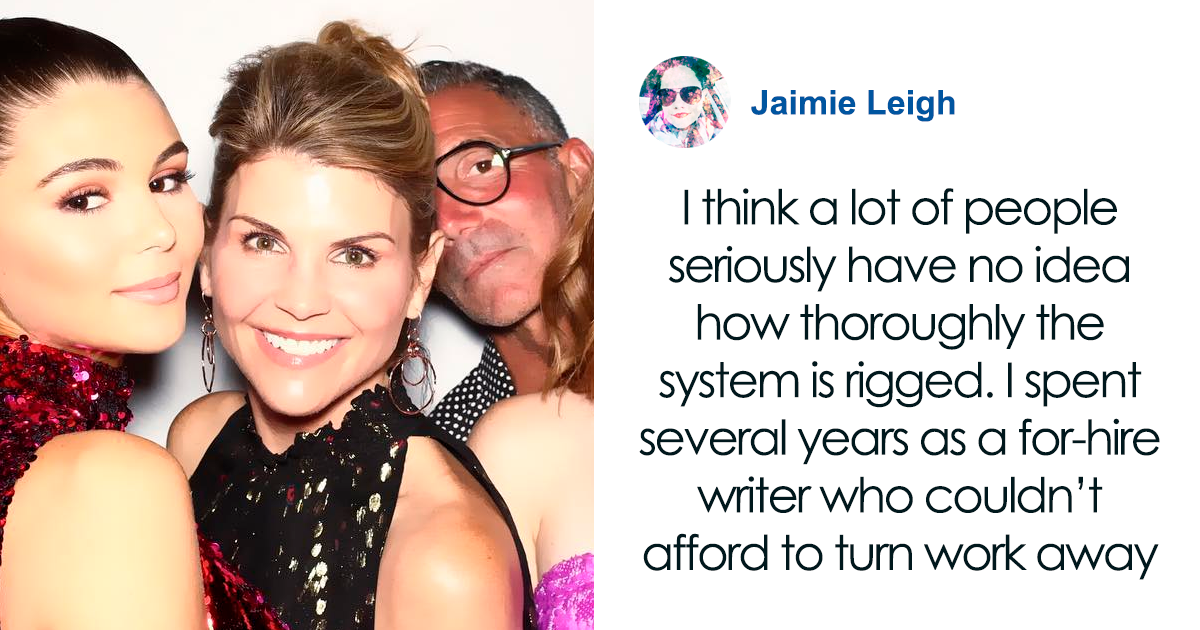
Remember the college admissions scandal that made America collectively clutch its pearls, refresh Twitter, and briefly consider rowing as a “family sport”? The one where prosecutors said wealthy parents paid to fake athletic profiles and rig entrance exams? That mess had a name (Operation Varsity Blues), a cast of recognizable faces, and the satisfying clarity of a courtroom storyline: money moved, rules broke, handcuffs clicked.
And then a writer’s viral post landed like a cold splash of truth: bribes and fake recruiting aren’t the only way the wealthy buy an advantage. Sometimes the “cheat” is quieter, legal-ish, and delivered via email with a subject line like: “Essay helpASAP.” In her account, rich families weren’t just paying for tutoring or proofreading. They were paying for someone else’s wordsresumes polished into fiction, essays written to sound like a teenager who mysteriously reads Proust for fun, and personal narratives engineered like luxury handbags: expensive, carefully stitched, and meant to signal status.
If Varsity Blues was the loud scandalflashy, illegal, and made-for-streamingthis is the stealth version. And that’s exactly why it can feel worse.
Varsity Blues in 90 seconds: what happened, and why it hit a nerve
When federal prosecutors unsealed charges in March 2019, they described a nationwide scheme that helped families cheat on standardized tests and slip applicants into selective universities as purported athletic recruits. The allegations weren’t about a kid getting an extra essay edit. They were about fraud: bribery, fake credentials, and an admissions process treated like a VIP loungeexpensive, exclusive, and guarded by people willing to open the rope for the right price.
The reason the story detonated wasn’t just celebrity involvement. It was the blunt confirmation of something many students already suspected: “merit” in college admissions often arrives wearing a designer label. The scandal became shorthand for a bigger discomfortan anxiety that the system rewards resources more than effort, and that the line between “help” and “fraud” gets blurrier the more money you have.
The post that made people say, “Wait… that’s allowed?”
The writer’s post (widely shared in the wake of Varsity Blues) described being hired by wealthy clients to provide writing that went far beyond coaching. She framed the work as crafting the “personal brand” of applicantsbuilding cover letters, resumes, and application materials that made unmotivated students look polished, driven, and distinctive. The punchline wasn’t just that the clients were rich. It was that they were buying the very thing admissions officers are supposed to evaluate: a student’s voice, thinking, and story.
That hits differently than test prep. A tutor can help you understand calculus, but you still have to do the homework. A ghostwritten essay can be submitted without the student understanding a single sentenceother than the part where they sign the application certifying it’s their work.
Editing vs. ghostwriting: the line that matters
There’s a real difference between ethical support and someone doing the work for you. Ethical counselors and admissions organizations typically draw that line around authenticity: help a student clarify ideas, organize a draft, fix grammar, and learn to communicatewithout replacing the student’s thinking or voice. Cross the line into writing the essay, inventing achievements, or “improving” the story by making things up, and you’re no longer coaching. You’re manufacturing.
In higher education, the term for outsourcing your work to a third party is often contract cheating (also called ghostwriting). The core idea is simple: work is submitted as a student’s own, but it was created by someone else. That’s treated as a serious academic integrity violation on most campusesand it’s increasingly a concern long before students even set foot on campus.
Why buying writing can feel worse than buying a test score
Here’s the uncomfortable truth: admissions essays and personal statements are supposed to reveal character, growth, curiosity, andyeswriting ability. They’re the “show your work” section of the human being. When money buys that voice, admissions becomes less about who you are and more about who you can hire to pretend to be you.
1) It targets the softest, least-auditable part of admissions
Standardized tests have security protocols, score audits, and paper trails. Essays are… vibes. They’re evaluated by humans reading quickly, often under time pressure, trying to sense authenticity in a genre that practically begs for embellishment. A bribe is a transaction. A ghostwritten essay is a performance. And performances are hard to prosecute.
2) It widens inequality in a way that’s invisible to everyone but the checkbook
When a family pays a professional to craft application materials, the advantage isn’t just “better writing.” It’s access to strategy, narrative framing, and the unwritten rules: what “leadership” sounds like, which activities read as “impact,” and how to turn ordinary privilege into a heroic arc. Meanwhile, a student without money may have the same intelligence and driveplus a part-time jobbut not the time or insider knowledge to package it.
3) It corrupts the point of education: learning to do the work
Even if a student gets admitted with a purchased persona, the bill comes due. College is still college. Writing seminars still assign papers. Professors still expect original thinking. The gap between the application version of a student and the real one doesn’t just create unfair admissions outcomesit sets students up for stress, imposter syndrome, and academic trouble once the scaffolding disappears.
“Legal” doesn’t mean ethical: the booming gray market of advantage
One reason people react so strongly to accounts like this is that the U.S. already has plenty of “legal but gross” pathways for buying advantage: expensive test prep, private tutoring, elite extracurricular programs, glossy summer institutes, legacy preferences, donor influence, and boutique admissions consulting that can cost more than a year of tuition at many colleges.
Investigations and reporting over the past decade have shown a growing industry that sells “edge” in everything from application strategy to résumé building to research opportunities designed to look impressive in an admissions file. Some services are legitimate skill-building. Others are essentially packaging: turning money into a story that looks like merit.
High-end consulting: from helpful guidance to “concierge admissions”
Admissions consultants can be valuable when they help students plan realistically, find a good-fit list of colleges, and learn to present themselves honestly. But there’s also a luxury tier that markets itself like a private jet: if it exists, someone will sell it to the 1%.
Recent reporting has described families spending thousands (and sometimes far more) for comprehensive admissions support, including multi-year planning and intensive essay work. The problem isn’t that advice exists. The problem is when “advice” becomes authorshipwhen the consultant’s expertise replaces the student’s voice.
Legacy and donor preferences: the quiet cousin of Varsity Blues
Varsity Blues was illegal because it involved fraud and bribery. But many critics argue it merely dramatized long-standing inequities that are perfectly allowed. Legacy preferences, for instance, can tilt odds toward applicants with family ties to alumni. Donor influence can also shape access, even if it operates through softer signals and institutional priorities rather than an envelope of cash.
In recent years, several institutions have moved to reduce or end legacy preferences, and some states have proposed or enacted restrictions tied to financial aid programs. The debates are intense because legacy status is essentially inherited advantage dressed up as “tradition.”
Now add AI: the ghostwriter who never sleeps
Just when colleges started paying closer attention to authenticity, generative AI showed up like a group project partner who “totally did their part” but won’t tell you which part it was. Students can now produce polished drafts in seconds. That doesn’t automatically equal cheatingAI can be used ethically for brainstorming or revisionbut it does pour gasoline on the same fire: if writing is a gatekeeper, technology (and money) will find a ladder.
Surveys and recent reporting suggest many teens believe their peers are using AI tools to cheat “at least somewhat often.” That perception matters, because once people think the game is rigged, they’re more likely to rationalize rigging it themselves. And that’s how integrity erodes: not with one big scandal, but with a million small “everybody does it” moments.
What colleges can do (without turning admissions into an interrogation)
Colleges can’t fully police authenticity, and they shouldn’t try to turn every applicant into a suspect. But there are practical ways to reduce incentives for ghostwriting while keeping the process humane.
Make writing part of a process, not a product
- Short, timed writing samples (even optional) can help schools see how a student communicates in their own voice.
- Interviews and conversationsespecially for scholarships or highly selective programscan reveal whether an essay’s “voice” matches the student’s thinking.
- Portfolio-style prompts that ask for drafts, reflections, or process notes can reward genuine growth over polished perfection.
Reduce the reward for “perfect packaging”
Admissions offices can also de-emphasize hyper-polished narratives and look for substance: sustained commitment, real curiosity, and context. A student who worked 20 hours a week may not have founded a nonprofit, and that’s not a moral failing. It’s life.
What families can do ethically (and still help a lot)
Parents want to help their kids. That’s normal. The ethical version of help is teaching skills and supporting effortnot outsourcing identity.
- Pay for learning, not replacement. Tutoring, writing instruction, and feedback are great when the student does the work.
- Keep the student in the driver’s seat. If an essay sounds like a corporate annual report, it’s probably not the teen’s voice.
- Choose consultants who follow ethics standards. Reputable counseling organizations explicitly emphasize honesty and student ownership.
- Normalize “good enough.” The essay doesn’t need to be Pulitzer-ready. It needs to be real.
The bigger lesson: admissions is a mirror, and we don’t love what it shows
Varsity Blues shocked people because it made the corruption visible. The writer’s post stung because it suggested the invisible version is everywhere: advantage for sale, quietly, through words.
And here’s the part nobody wants to say out loud at a college night info session: the problem isn’t just individual cheaters. It’s a system that treats admission to a handful of schools as a life-or-death sorting mechanism, then acts surprised when families spend like it’s an auction.
Fixing this isn’t about shaming anxious parents or pretending all assistance is evil. It’s about drawing a bright line between coaching and counterfeitand building an admissions culture that rewards authenticity, context, and real achievement more than professional packaging.
Because if the “American Dream” requires a ghostwriter, it’s not a dream. It’s a subscription service.
Experiences: What this looks like in real life
Note: The experiences below are composites based on common scenarios reported in journalism, academic integrity research, and admissions counseling practicenot identifiable individual stories.
The freelance writer’s inbox. It starts innocently: “Can you help my son with his essay?” Then the attachments arrive: a half-finished draft, a resume with bullet points that read like marketing copy, and a parent email that quietly shifts the goalposts“We want it to sound more Ivy League.” The writer pushes back: “I can edit, but he needs to write.” The reply is swift, polite, and transactional: “Of course. But we are very busy. Please just make it happen.” The writer realizes the client isn’t buying help. They’re buying invisibilitythe ability to submit a perfect personal statement without anyone seeing the messy middle where learning actually happens.
The student who can’t recognize their own essay. In a school hallway, a junior reads their “final” draft and laughs nervously. Not because it’s funnybecause it doesn’t sound like them. The essay mentions “intellectual vitality” unironically. It includes a metaphor about “navigating liminal spaces.” The student’s friends tease them: “Bro, who talks like that?” The student shrugs. The pressure is heavy, and the adult help is expensive. Somewhere between fear and ambition, authenticity got traded for polish.
The counselor trying to keep it fair. A public school counselor has hundreds of students on their caseload. They can’t workshop every sentence. They can, however, teach principles: be specific, be honest, show your impact. Meanwhile, a student down the street has weekly sessions with a private consultant who helps plan extracurriculars, refine story arcs, and produce multiple essay drafts. The counselor isn’t angry at the studentthey’re angry at the math. One kid gets a megaphone; the other gets a sticky note that says “good luck.”
The first-gen student with a job and a deadline. A student works evenings, helps with siblings, and writes essays after midnight. Their story is real, but their grammar is rough. They worry admissions officers will read “mistakes” as “less capable,” even when the content is powerful. The temptation to over-editor let someone else “fix it”isn’t just about vanity. It’s about survival in a system that punishes imperfect presentation. When people say “just be yourself,” what they often mean is “be yourself… but in flawless prose.”
The admissions reader and the déjà vu problem. An admissions officer reads hundreds of essays. Many blur together: mission trips, leadership awakenings, tragic injuries turned into grit. It’s not that those experiences never happen. It’s that they become templatesespecially when professionals shape them. The reader learns to look for the tiny signs of realness: a surprising detail, an imperfect joke, a sentence that feels like a teenager actually wrote it. When essays are purchased, those fingerprints disappear. The reader ends up selecting not just students, but stylists.
The “small cheat” that snowballs. A family starts with a proofreader. Then a rewrite. Then a second rewrite because “the first one didn’t sparkle.” Nobody calls it cheating; they call it “support.” But the student absorbs a lesson: if you can pay to skip hard parts, do it. That lesson doesn’t stay in admissions. It follows them into college, internships, and workwhere the ability to think, write, and own your ideas is the whole job.
These experiences point to the same conclusion: the real scandal isn’t just that some people buy an advantage. It’s that we’ve built a system where advantage is for sale, and then we act shocked when the wealthy browse the menu.