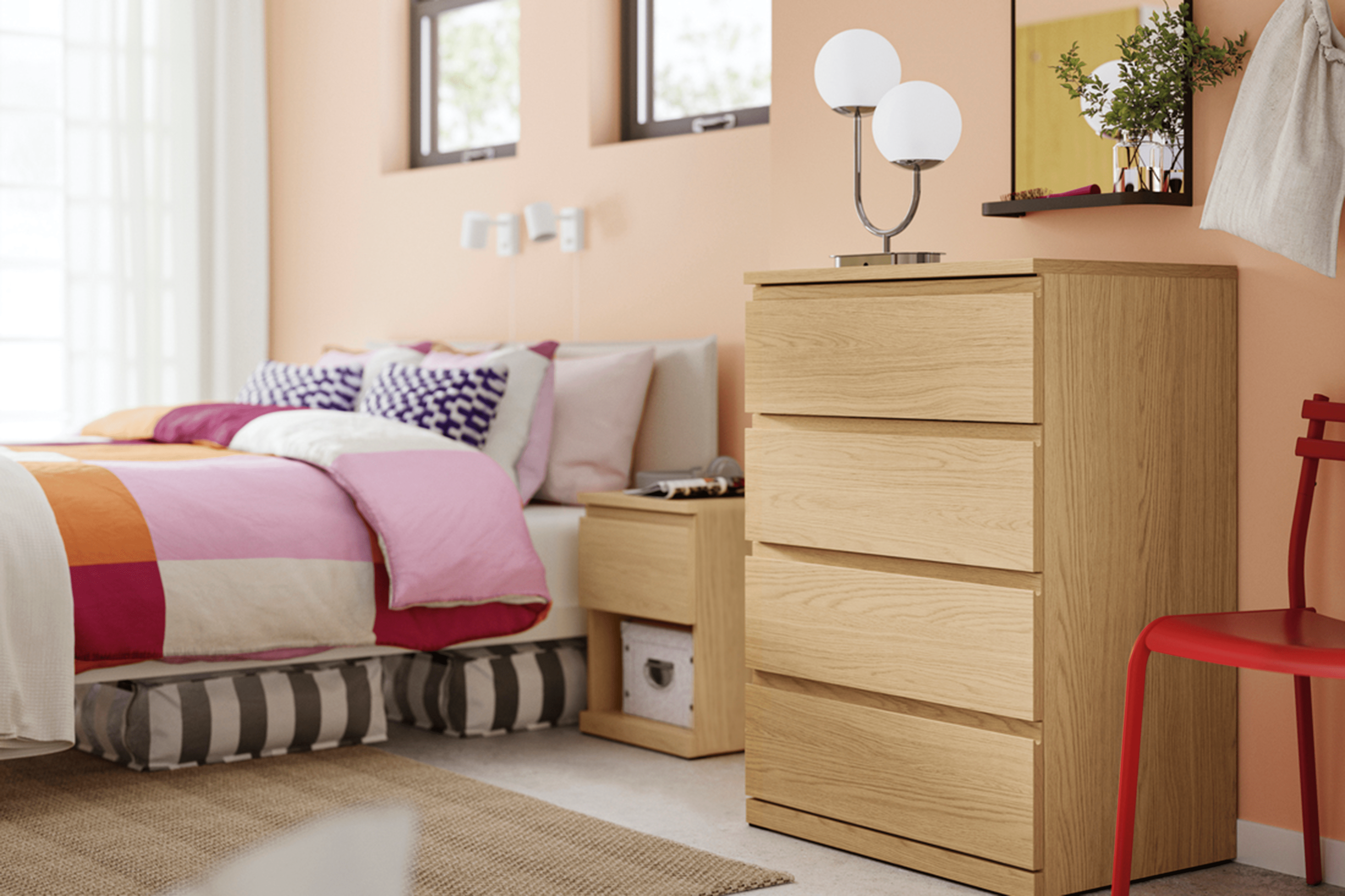
If you’ve ever assembled a dresser while whispering, “Please let this be the last screw,” you already know IKEA has a special place in modern homes.
Now the company is aiming for a new kind of household peace: the kind where your dresser stays uprighteven when life gets chaotic (kids climbing, drawers yanked open,
pets launching themselves like tiny furry missiles, and that one uneven floorboard you pretend isn’t there).
IKEA’s newest chest-of-drawers lineup leans hard into stability and anti-tip design, built around features that reduce tip-over risk and nudge people
toward the safest habit of all: anchoring furniture to the wall. It’s not just a “nice idea” anymorefederal safety rules in the U.S. have raised
the bar for clothing storage units, and IKEA is responding with designs that make safe behavior easier (and unsafe behavior more annoying… in a helpful way).
Why anti-tipping furniture suddenly matters to everyone
Furniture tip-overs aren’t rare, and they’re not just a “parent problem.” The U.S. Consumer Product Safety Commission (CPSC) tracks tip-over incidents involving
televisions, furniture, and appliances, and their data shows thousands of emergency-department-treated injuries each year. Bedrooms are a common setting, and
dressers are specifically called out in the broader category of furniture involved in tip-over injuries. In other words: this is a real-world hazard that shows up
in real homesnice homes, messy homes, tiny apartments, big suburban houses, all of it.
The U.S. also now has a mandatory stability standard for certain “clothing storage units” (dressers, bureaus, chests of drawers, armoires, and similar pieces that
meet size/weight thresholds). This standard is tied to the STURDY Act and is codified in federal requirements that apply to units manufactured after a set date.
Translation: brands can’t treat tip-over resistance like a “premium add-on” anymore. It has to be part of the design conversation.
What IKEA launched: a new chest-of-drawers range designed around stability
IKEA U.S. announced a new chest-of-drawers range that includes fresh families like STORKLINTA and GULLABERG, plus additional
series rolling in over time. The headline feature is IKEA’s patented Anchor and Unlock stability mechanisman anti-tip concept that makes anchoring
the “default best choice,” not an afterthought.
IKEA has also said redesigned versions of fan-favorites (including well-known dresser families) are part of the broader transition, with older versions eventually
being phased out over time. So this isn’t a one-off “safety model.” It’s a shift in how the category is built and sold.
The big idea: make the safe option the easy option
Most furniture brands have historically relied on an “anti-tip kit included” approach: a bracket, a strap, a warning label, and a prayer. The problem is that the
kit only helps if it gets usedand plenty of people never install it (renters worry about holes, busy households forget, and some folks simply underestimate the risk).
IKEA’s new approach tries something different: it uses design to shape behavior.
Feature #1: Anchor and Unlock (IKEA’s “you can’t ignore this” safety mechanism)
Here’s how Anchor and Unlock works in plain English:
-
When the dresser is not anchored, it restricts how many drawers you can open at once (often just one).
That limits forward weight shiftthe “physics moment” that can turn a dresser into a slow-motion disaster. -
When the dresser is anchored, the mechanism “unlocks,” allowing multiple drawers to open normally.
You get full everyday convenience after you’ve made the piece safer.
This is clever because it doesn’t rely on fear-based messaging. It relies on mild, daily friction. Want the dresser to behave like a normal dresser? Anchor it.
Want to keep it floating free like a ship at sea? Finebut it will act like a cautious dresser with boundaries.
Important note: IKEA’s own product messaging emphasizes that the feature can reduce tip-over risk, but it does not claim to eliminate it completely.
That’s the right tone. Safety features are layers, not force fields.
Feature #2: Drawer interlocks (the “one drawer at a time” classic)
Anchor and Unlock is IKEA’s flashy new headline, but it’s not the only stability trick in the toolbox. IKEA also describes
drawer interlocks as another safety solutionmechanisms designed to allow only one drawer to open at a time.
This matters because multiple open drawers can act like a staircase for kids and can also pull a unit’s center of gravity forward.
Feature #3: Shortened drawer extension, supporting feet, and smart base geometry
Some stability improvements are less visible but still meaningful:
- Shortened drawer extension reduces how far drawers can travel outward, lowering the leverage effect.
- Designs with supporting feet act like built-in supports that can help counter forward tipping forces.
- Forward-extended bases increase stability by changing the footprint and counteracting forward pull.
- Wall-mounted designs require mounting to stand properly, eliminating the “freestanding tip” scenario.
In short: some IKEA pieces are getting stability via mechanisms, some via geometry, and some via “this only works if you mount it.”
Different designs, same goalfewer tip-over pathways.
How the U.S. safety standard influences what shows up in your cart
The federal clothing storage unit standard applies to certain freestanding storage pieces that meet defined criteria (including height and mass thresholds)
and it requires stability testing that reflects real-life conditionslike loaded storage, carpeted surfaces, and forces meant to simulate how children interact
with furniture. That’s a big deal, because real homes are not sterile laboratories. They have plush rugs, overstuffed drawers, and people who open two drawers
because they’re in a hurry and can’t find socks.
IKEA’s timing here isn’t accidental. Its newer dresser families and redesigned storage pieces are being marketed as aligned with the tougher safety environment.
The company is also positioning Anchor and Unlock as both a technical fix and an educational toolsomething that reminds consumers that anchoring matters.
Spotlight on the new IKEA families: what to expect
STORKLINTA: modern lines, multiple configurations, built-in stability thinking
STORKLINTA is part of IKEA’s newer chest-of-drawers lineup and is offered in multiple sizes and configurations. The key point isn’t just what it looks likeit’s that
stability is baked into the user experience. If your household has “drawer chaos” (multiple people rummaging at once, kids who treat furniture like a jungle gym,
or adults who open three drawers because that’s where the T-shirts might be), the anchored-and-unlocked design encourages safer everyday use.
GULLABERG: classic dresser vibe with the same safety-first logic
GULLABERG is positioned as a more classic bedroom storage lookframed styling, practical drawer space, and options that fit common bedroom layouts. The same stability
approach applies: anchor it for full function, keep it unanchored and it will limit simultaneous drawer use.
VIHALS and beyond: safety features spreading across series
IKEA introduced Anchor and Unlock first in globally sold items like VIHALS, and the company has been clear that more designs with innovative stability features are planned.
This suggests the long-term strategy is not just “a safe dresser line,” but a safer categorywith different stability solutions used for different product shapes.
Practical buying advice: how to shop the safer way (without killing the vibe)
1) If you can anchor, treat it like part of assemblynot an optional side quest
Anchoring is the single biggest step most households can take to reduce tip-over risk. If you’re already committing to the full IKEA experienceunboxing, sorting
hardware, and learning that “Piece A” is never where you think it isgo ahead and make anchoring the last step of victory.
2) If you can’t anchor (renters, brick walls, weird situations), reduce risk in other ways
- Keep heavier items in lower drawers (think jeans, books, spare linens).
- Avoid loading the top with heavy objects that shift the center of gravity forward.
- Use drawer habits that avoid multiple open drawers at once (especially with kids around).
- Place the unit on the most stable surface possible; thick carpet can change stability behavior.
3) Look for language that signals compliance and stability intent
Product pages and labels often mention meeting a U.S. federal stability standard, including instructions and requirements around anchoring. When you see a feature like
Anchor and Unlock or an interlock mechanism, that’s a sign the piece is designed with stability behavior in mindnot just a generic warning sticker.
Safety without panic: the tone IKEA (and you) should aim for
The internet loves a scare story, but good safety design is calmer than that. The best outcome is boring: furniture that stays put, kids who stay safe, and adults who
never have to learn about tip-over physics the hard way.
IKEA’s approach is especially interesting because it acknowledges real human behavior. People don’t always install the strap. People do open two drawers. People do put
the “cute storage basket” on top, which secretly weighs as much as a small boulder. Designing furniture that anticipates those habits is a smarter long game than simply
printing “DON’T DO THAT” in 11 languages.
of real-world experiences: what anti-tip design feels like at home
Let’s talk about the part product descriptions can’t capture: how anti-tipping features actually feel in daily life. In many homes, the dresser isn’t just
storageit’s a shared resource, like the fridge or the Wi-Fi. People approach it at full speed, open drawers without looking, and assume gravity will mind its business.
That’s why stability features become noticeable in the most ordinary moments.
One common experience: the “two-drawer scramble.” You’re getting ready, you open the top drawer for socks, the next for a shirt, and you’re halfway into the third
before your brain catches up. With an interlock-style designor with Anchor and Unlock in its not-yet-anchored modeyou get a small interruption. The dresser basically
says, “Pick a drawer, friend.” At first it can feel mildly inconvenient, like your phone asking you to confirm a password you swear you already entered.
But after a week, it becomes a habit shift: you open one drawer, close it, move to the next. It’s slower by seconds, faster by stress, and safer by design.
Parents often describe a different set of moments: the “tiny mountain climber phase.” Kids love drawers because drawers are ladders in disguise. Anti-tip thinking
changes how you set up roomsheavy items go low, tempting items (toys, remotes, snacks) move away from the top, and anchoring becomes as routine as outlet covers.
The best part is psychological: once a dresser is anchored properly, there’s a background sense of relief. You don’t have to watch every interaction like a hawk.
You still supervise, of course, but you’re not living in a constant low-grade “what if” spiral.
Renters have their own version of the story. Many renters hesitate to anchor anything because wall damage can mean lost deposits. In practice, households often compromise:
they choose placement carefully (against the most solid wall), minimize top-heavy loading, and use the manufacturer’s safest-possible approach within their constraints.
Some renters coordinate with landlords for permission, especially when the request is framed as a child-safety measure and the installation is clean and professional.
Even in a rental, the anti-tip conversation tends to evolve from “I don’t want holes” to “I don’t want a preventable emergency.”
Then there’s the “moving day reality check.” Furniture that was stable in one home may behave differently in another because floors, carpeting, and wall structure vary.
People often discover tip risk not through catastrophe, but through a wobble: a drawer opens and the unit shifts just enough to get your attention. That’s where designs
that encourage anchoring shine. They turn a vague warning into a clear next step. The experience becomes less about fear and more about finishing the job: level the unit,
tighten hardware, anchor if possible, and treat stability like maintenancejust like changing smoke-detector batteries.
Finally, there’s the quiet benefit most people don’t expect: anchored, stable furniture simply feels nicer to use. Drawers glide better when the frame isn’t flexing.
The unit feels solid when you lean in to fold clothes. And your home feels more “grown-up” in the best waysafer, steadier, and designed for real life instead of a
showroom where nobody ever opens two drawers at once.
Conclusion
IKEA’s new safety-forward furniture direction is a practical response to a serious, well-documented home hazard: tip-overs. With designs like STORKLINTA and GULLABERG
and innovations like Anchor and Unlock, IKEA is pushing stability from “instruction manual fine print” into the everyday experience of using a dresser.
The takeaway is simple: if you’re shopping for bedroom storage, prioritize pieces built for modern safety expectationsand if you can anchor, do it. Your future self
(and everyone in your home) will appreciate the boring, beautiful outcome: furniture that stays exactly where it belongs.