Let’s settle this the way responsible adults do: with definitions, real-world context, and just enough humor to keep your brain from
wandering off to watch cat videos. (No judgment. Cats are basically the internet’s renewable resource.)
Yessolar energy is renewable. The energy source is sunlight, and it is naturally replenished on human timescales. But the
moment you add the words “solar panels,” people start asking a different (and totally fair) question: “Okay, but what about the mining,
manufacturing, waste, and recycling?”
That’s where the conversation gets interesting. Solar power is renewable, but it isn’t “impact-free.” Think of it like tap water: renewable
via the water cycle, but the pipes, pumps, and treatment plants don’t magically appear from fairy dust and good intentions.
Renewable vs. Clean vs. Sustainable: Same Party, Different Guests
What “renewable” actually means
In energy terms, renewable refers to a source that is naturally replenishedlike sunlight, wind, and geothermal heat.
The “fuel” doesn’t run out because it’s continuously supplied by nature.
Why people confuse “renewable” with “perfect”
A renewable energy source can still have environmental impacts through land use, supply chains, water use, or waste. That’s why you’ll also
hear terms like clean energy (low pollution, especially during operation) and sustainable (broader long-term
environmental and social considerations).
Solar energy checks the “renewable” box easily. Whether it’s “clean” and “sustainable” depends on how the technology is made, installed,
maintained, and managed at end of life.
So Why Is Solar Energy Considered Renewable?
Because the sun “refuels” itself (for our purposes)
Solar electricity uses incoming sunlightphotonsto generate power. The sun shines every day (even when your weather app says “doom clouds”),
and the resource is effectively inexhaustible on any timeline that matters to homeowners, businesses, or national energy planning.
Solar doesn’t “consume” sunlight the way a furnace consumes gas
When you burn fossil fuels, you’re depleting a finite stock of fuel that took millions of years to form. Solar PV (photovoltaics) converts
sunlight directly into electricity without burning anything. No combustion means fewer ongoing emissions and no fuel supply that can be “used up.”
But WaitSolar Panels Are Made From Stuff. Doesn’t That Make Solar Nonrenewable?
This is the most common gotcha question, and it’s a good one. Solar panels are physical products made from materials like glass, aluminum,
silicon, copper, and small amounts of other metals. Those materials are not infinite, and extracting them has impacts.
Here’s the key distinction:
The energy source (sunlight) is renewable.
The equipment (panels, inverters, racking) is manufactured.
Manufacturing requires energy, mining, and transportationsome of which still relies on fossil fuels today.
That doesn’t make solar “nonrenewable.” It means solar has a life cycle footprintwhich we can measure, compare, and reduce.
The Life Cycle Footprint: Does Solar Still Count as “Clean”?
Life cycle emissions: the full “cradle-to-grave” view
Life cycle assessment (LCA) looks at emissions across a technology’s entire lifespan: raw materials, manufacturing, shipping, installation,
operation, and end-of-life management. Solar’s headline advantage is that most emissions happen upfront (manufacturing), while
operation is extremely low-emission because the “fuel” is sunlight.
Multiple life cycle studies consistently place solar PV among the lowest-emissions electricity sources per unit of electricity generated.
Exact numbers vary by technology type, manufacturing location, grid mix used in production, and system performance over time. But the big picture
is clear: solar’s life cycle emissions are far lower than coal and typically far lower than natural gas.
Energy payback time: when panels “repay” the energy used to make them
Another way to explain this without turning into a spreadsheet: solar panels require energy to manufacture, but over their operating lifetime,
they generate vastly more energy than it took to produce them. In many regions, the “energy payback” arrives relatively early in a system’s life,
and the rest is net clean electricity.
Environmental Trade-Offs: The Honest List
Renewable doesn’t mean “no impact.” It means “replenished fuel.” Here are the main solar trade-offs people ask aboutand what’s true in practice.
1) Mining and materials
Solar supply chains involve mining and industrial processing. Common materials include aluminum (frames), glass, copper wiring, and silicon cells.
Mining can affect land and water, and manufacturing can involve chemicals that require safe handling.
The important nuance: these impacts are front-loaded, and they can be reduced through cleaner manufacturing, better material
efficiency, and recycling.
2) Land use and habitat
Rooftop solar typically uses space that already exists. Utility-scale solar farms require land, which can affect habitats if poorly sited.
Better siting practices include using disturbed lands (like brownfields), co-locating with agriculture (“agrivoltaics”), and building on
rooftops, parking structures, and other developed areas.
3) Water use (mostly for certain technologies and cleaning)
Standard PV solar uses little water during operation compared with many conventional power plants that rely on water for cooling. Some solar
thermal technologies can use more water, depending on design. PV arrays may also need occasional cleaning in dusty regions.
4) Waste and end-of-life solar panels
Solar panels are durable, but not immortal. Managing retired modules responsibly mattersboth to avoid waste problems and to recover valuable
materials. Today, recycling options exist, but the ecosystem is still scaling up alongside the rapid growth of solar deployment.
Solar Panel Lifespan and Renewability Over Time
How long do solar panels last?
Most modern solar panels are designed for decades of operation. It’s common to see lifespans discussed in the 25–30+ year range, and industry
expectations have been trending upward as products improve and more long-term performance data becomes available.
Degradation: the slow fade, not a sudden cliff
Panels typically lose a small amount of efficiency each year. That means your system doesn’t “die” at year 25it usually continues producing,
just a bit less than it did in year one. (Like many of us after 30. But we still show up.)
Is Solar Energy Renewable If the Sun Doesn’t Shine at Night?
Intermittency is real, but it’s not a renewability problemit’s an availability problem. Renewable resources can be
“flow-limited,” meaning you can only capture them when they’re present. Sunlight is renewable, but it arrives on a schedule.
Modern grids handle solar variability through a mix of:
- Geographic diversity (it’s sunny somewhere)
- Better forecasting (weather models are now part of energy planning)
- Flexible generation (resources that ramp up/down)
- Energy storage (batteries, pumped hydro, and more)
- Demand response (shifting some electricity use to match supply)
Translation: solar can be renewable and reliableif the system around it is designed thoughtfully.
Solar Power in the Real World: Specific Examples
Example 1: Rooftop solar for a household
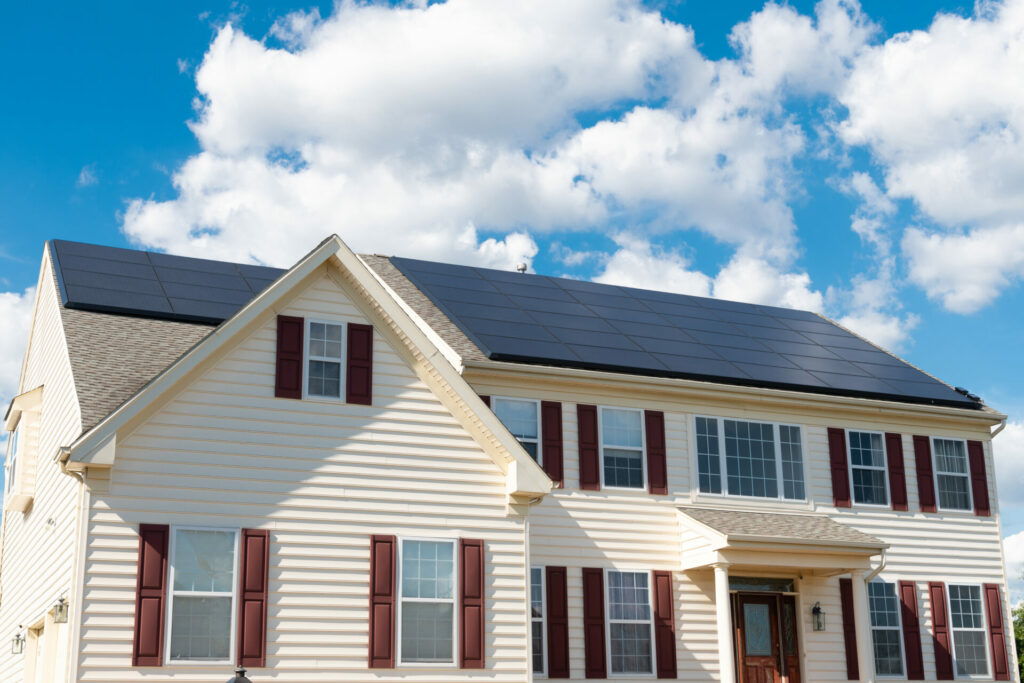
A rooftop PV system generates renewable electricity for your home during daylight hours. Many homeowners pair solar with net metering or time-of-use
strategies, and some add batteries for backup power and evening use. The renewable part is the sunlight; the practical part is matching your
consumption to production.
Example 2: Community solar for renters and shaded roofs
Community solar allows people who can’t install rooftop panels (renters, condo owners, homes with shading) to subscribe to a local solar project
and receive bill credits. It’s a “solar access” solution that spreads renewable benefits beyond single-family rooftops.
Example 3: Utility-scale solar farms plus storage
Large solar farms can generate electricity for thousands of homes. When paired with battery storage, they can shift some solar output into the
evening peakhelping with reliability and making better use of renewable generation.
How to Make Solar More Sustainable (Not Just Renewable)
1) Cleaner manufacturing and better supply chains
Solar gets cleaner as manufacturing uses more renewable electricity and improves efficiency. Policies, procurement standards, and corporate
commitments can encourage lower-carbon supply chains.
2) Smarter siting and dual-use projects
Prioritizing rooftops, parking canopies, and low-conflict lands reduces habitat concerns. Agrivoltaics can sometimes help farms keep land in
production while generating renewable electricity.
3) Recycling and end-of-life planning
Planning for end-of-life is part of responsible scaling. Recycling can recover materials like glass and metals, reduce waste, and build domestic
circular supply chains. The recycling market is growing and policy is evolving to support better management of retired panels.
Quick FAQs People Search (and Argue) About
Is solar energy renewable or nonrenewable?
Renewable. Sunlight is naturally replenished. The equipment has a footprint, but the energy source is renewable.
Is solar energy “green” energy?
Often, yesespecially because operational emissions are extremely low. “Green” is sometimes used to describe renewable electricity with the
greatest environmental benefits, but definitions vary by program and policy.
Is solar energy truly sustainable?
Solar can be highly sustainable when paired with responsible sourcing, improved manufacturing, smart siting, and solid end-of-life recycling.
It’s not impact-free, but it’s one of the most scalable low-emissions options available.
Do solar panels create more pollution than they prevent?
In the vast majority of cases, no. Solar avoids the ongoing pollution and greenhouse gas emissions that come from burning fossil fuels for
electricity. Life cycle studies show solar’s total emissions per kilowatt-hour are far lower than coal and typically far lower than natural gas.
Conclusion: Solar Is RenewableAnd That’s the Starting Line, Not the Finish Line
If you’re asking “Is solar energy renewable?” the answer is straightforward: yes. Solar power is renewable because it
uses a naturally replenished resourcesunlightto generate electricity.
The more useful follow-up is: “How renewable and sustainable is the whole solar systemmaterials, manufacturing, land use, and recycling?”
That answer is: very good, improving fast, and still worth doing thoughtfully.
Solar isn’t magic. It’s engineering. And like all good engineering, it gets better when we measure the trade-offs honestly and keep improving the
design. The sun is going to keep showing up. Our job is to build the smartest, cleanest way to use it.
Real-World Experiences: What People Notice After Going Solar (The Human Side)
Facts and definitions are great, but most people don’t decide based on a dictionary. They decide based on what solar feels like day to day.
Here are common experiences homeowners, renters, and small businesses often report when they interact with renewable solar energy in real life.
(Not universal truthsjust the patterns that show up again and again.)
1) The “Wait… I’m generating electricity?” moment
The first time people open a monitoring app and see real-time production, it’s oddly thrillinglike discovering your roof has a side hustle.
On sunny days, production charts climb steadily, and people start learning the rhythm of solar: strong midday output, softer mornings and late
afternoons, and a steep drop when clouds roll in. That variability doesn’t make solar less renewableit just makes it more… honest. The sun
isn’t a light switch; it’s a schedule.
2) Behavior changes without trying (aka “solar makes you a tiny energy nerd”)
Many households quietly shift habits once solar is installed. Laundry and dishwashers migrate to midday. Thermostats get tweaked. Someone
inevitably says, “Let’s run the dryer while we’re producing,” like your appliances are attending a renewable-energy buffet and you want them to
eat while it’s fresh. This is one of solar’s underrated benefits: it makes energy visible, and visibility changes behavior.
3) The “renewable, but not unlimited” realization
Solar can cover a lot, but it rarely covers everythingespecially at night or during seasonal swings. People learn that “renewable” doesn’t
mean “infinite power on demand.” It means you’re tapping a replenished source, and you may need smart supportlike the grid, batteries, or a
plan for peak evening usage. This is often where storage becomes emotionally appealing, not just technically useful: batteries feel like
“keeping your sunshine for later,” which is basically the adult version of saving dessert.
4) Maintenance is usually boring (which is a compliment)
Most rooftop systems don’t require much hands-on care. That’s a common surprise. People expect constant upkeep, but solar is typically a
“set it and mostly forget it” technology. The main real-world annoyances tend to be practical: trimming a tree that got ambitious, replacing
an inverter years down the line, or washing panels if pollen/dust is intense. In rainy regions, nature often handles cleaning. In very dusty
places, a periodic rinse can noticeably help output.
5) Renters and shaded-roof households discover community solar
A growing number of people report relief when they learn solar isn’t only for homeowners with perfect roofs. Community solar subscriptions can
feel like joining a shared neighborhood projectwithout needing a ladder, roof access, or a long-term property commitment. The emotional shift is
real: instead of thinking “solar isn’t for me,” people start thinking “renewable electricity is a service I can opt into.”
6) The end-of-life question comes up earlier than expected
Even though panels can last decades, many solar adopters quickly ask: “What happens when these wear out?” That question is healthy. It pushes
buyers to look for reputable installers, warranties, and recycling or take-back pathways. People don’t want “renewable energy” to become “landfill
energy.” The good news is that end-of-life planning and recycling options are expanding as the industry maturesso solar’s renewability story is
getting stronger over time.
In short, the lived experience of solar tends to reinforce the core answer: solar energy is renewable, and it also nudges people
toward smarter energy use. The sun supplies the fuel; good planning supplies the reliability; and responsible recycling supplies the long-term
sustainability. That’s the full picturehuman, technical, and refreshingly not powered by wishful thinking.