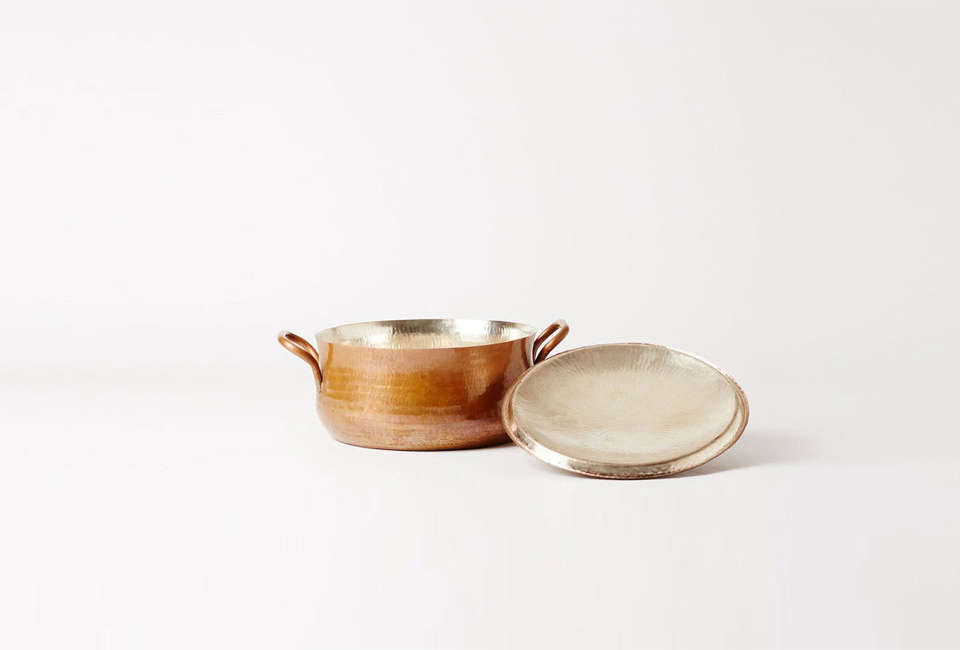
If kitchen tools had a “quiet luxury” category, the Jurgen Lehl Copper Pan Round would be sitting at the very top, polishing its own patina and pretending not to notice you staring. This hand-hammered copper pan has become a cult object among design lovers and serious home cooks alike: it’s part cookware, part sculpture, and part “someday heirloom.”
But beyond the beautiful photos on design blogs and the eye-watering price tag, what is this pan actually like to live with? Is a hand-hammered round copper pan from a small Japanese brand really that different from a regular stainless-steel skillet? And how do you take care of something that looks like it belongs in a museum, not next to your weeknight scrambled eggs?
Let’s take a deep dive into the Jurgen Lehl Copper Pan Round: where it comes from, how it’s made, how it cooks, how to care for it, and what it feels like to actually use one in a real kitchen.
Meet Jürgen Lehl and Babaghuri
To understand the pan, it helps to understand the designer. German-born Jürgen Lehl moved to Japan in the 1970s and built a career as a fashion and lifestyle designer known for his commitment to natural materials, slow craftsmanship, and everyday beauty. In 2006 he launched the Babaghuri label, focused on housewares and home goodsthink pottery, textiles, towels, baskets, and kitchen tools made by artisans using sustainable materials and traditional techniques.
Babaghuri pieces are intentionally understated: soft colors, natural fibers, subtle textures, and a handmade feel. The philosophy is simple but demandingcreate useful objects that respect the environment, celebrate craftsmanship, and age gracefully with use.
The Jurgen Lehl Copper Pan Round fits squarely into that philosophy. It’s not a mass-produced “celebrity chef” pan. It’s a small-batch, artisan-made piece created to be used for decades, not seasons.
The Jurgen Lehl Copper Pan Round at a Glance
One of the clearest published descriptions of the Jurgen Lehl Copper Pan Round comes from Remodelista, which featured the piece in a product roundup and in a Scandi-style Canadian kitchen. According to their listing, the pan is:
- Hand-hammered copper with a tin lining
- Round shape, made in Japan
- Approximately 24 cm in diameter and 10 cm tall (about 9.5" x 4")
- Capacity around 1.8 liters
At the time of their feature, the round copper pan was priced around 775 CAD at Mjölk, a Toronto design shop that was one of the only stores outside Japan to carry the line.
In other words: this is not your average pan. It’s deep enough for braises, stews, and poaching, but still manageable on the stovetop for everyday tasks. The proportions are slightly more “pot” than “skillet,” which makes it incredibly versatile.
Why Cooks Obsess Over Copper
Copper has a very loyal fan club in professional kitchens, and it’s not just because it looks good on open shelves. Copper is one of the best conductors of heat used in cookware. It heats quickly, cools quickly, and distributes heat evenly across the bottom and sides of the pan. That means fewer hot spots, more control, and better results when you’re cooking something fussylike caramel, sauces, or delicate fish.
Serious Eats and other cookware testers generally recommend copper pans in the 2.5–3 mm thickness range because this gives the best balance of responsiveness and even heating. Thicker walls hold heat too much; thinner walls can be uneven and prone to scorching.
That’s why high-end copper cookwareMauviel, De Buyer, and similar brandscosts what it does. You’re paying for a metal that behaves like a race car on the stovetop: it responds instantly to every twist of the knob, which is exactly what you want when you’re trying not to burn a delicate sauce you’ve been stirring for 20 minutes.
The Jurgen Lehl Copper Pan Round takes that same performance concept and wraps it in a very Japanese, very handmade aestheticvisible hammer marks, soft curves, and a design that looks as good on a table as it does on a stove.
Hand-Hammered Craftsmanship That Shows
One of the first things you notice about the Jurgen Lehl pan is the surface. Instead of a perfectly smooth factory finish, you see small, irregular hammer marks. These aren’t just for show: they’re the trace of a metalworker slowly shaping a flat sheet of copper into a three-dimensional pan.
Babaghuri’s broader range of copper itemskettles, bowls, potsoften highlight the same handmade look: thick copper, hammered texture, slightly organic shapes, and simple, functional handles. This gives the pan a tactile quality that factory-made cookware rarely has. Each piece will be slightly different, like a handmade ceramic bowl.
Importantly, the pan is lined with tin, which is traditional for copper cookware. Tin acts as a barrier between reactive copper and your food, and it has a naturally “nonstick-ish” character when used correctly. Serious Eats and other sources note that almost all copper cookware is lined with another metal for food safetytin in the classic pieces, or stainless steel in modern hybrid designs.
How the Jurgen Lehl Copper Pan Round Performs
So what does this pan actually do well? Think of it as a deep, responsive, all-purpose pan that happens to look like art.
Eggs and Breakfast Dishes
A tin-lined copper pan is an egg-lover’s dreamespecially if you’re willing to use a little butter. The even heat and gentle conduction mean fried eggs, omelets, and pancakes cook without stubborn hot spots. Japanese product descriptions for Babaghuri’s shallower copper frying pans emphasize how good they are for tamagoyaki, fried eggs, and pancakes, thanks to that high thermal conductivity.
With the deeper round pan, you gain space for breakfast scrambles with vegetables, shakshuka, or baked eggs. Because copper reacts so quickly, you can lower the heat the second your eggs reach that just-set point instead of playing “guess the burner lag.”
Sauces, Risottos, and One-Pot Meals
The 1.8-liter capacity makes the Jurgen Lehl Copper Pan Round ideal for sauces, risottos, and small one-pot meals. The rounded sides help with stirring and whisking, especially when you’re emulsifying butter into a pan sauce or gently cooking down tomatoes.
Copper’s even heat distribution is especially helpful here: it reduces the risk of scorching cream or catching a starch-heavy dish like risotto on the bottom. You get that “simmer everywhere” effect instead of bubbles exploding in one angry corner of the pan.
Searing and Gentle Braising
Can you sear in a tin-lined copper pan? Yeswith caveats. Copper heats very quickly, so you don’t need high heat to get a good sear. Many tin-lined copper owners rely on a simple “butter test”: if the butter instantly smokes or burns, your pan is too hot and you should back the heat off.
Once you’ve browned your meat, the depth of the pan makes it great for a small braise: add aromatics, deglaze with wine, add stock, and slide the pan into a low oven. The thick copper walls help maintain a stable, gentle simmer that’s perfect for tender results.
How to Care for Tin-Lined Copper (Without Losing Your Mind)
Tin-lined copper sounds delicate, but with the right habits it’s surprisingly practical. You just need to respect its limits.
1. Keep the Heat Moderate
Tin melts at a much lower temperature than stainless steel, which means you never want to blast this pan on high, especially when it’s empty. Most experts suggest cooking on low to medium heat and letting the copper’s excellent conductivity do the work.
For searing, preheat gradually, use a fat with a decent smoke point, and avoid letting the pan sit screaming hot with nothing in it.
2. Skip Metal Utensils
Tin is softer than stainless steel, so think wood, silicone, or maybe very gentle nylon tools. Metal spatulas and whisks can eventually scratch or thin the lining. A well-treat tin lining develops a grayish, lived-in lookit doesn’t have to stay bright silver to be safe or functional.
3. Clean Gently
For the interior, warm water, mild dish soap, and a soft sponge are usually enough. For stuck-on bits, many copper-care guides recommend filling the pan with water and a little soap, bringing it to a simmer for 10–15 minutes, then scraping with a wooden or bamboo utensil.
The exterior can be left to develop a warm, natural patina, or you can polish it. Classic tricks include a paste of vinegar and salt, or even a rub of ketchup or lemon and salt to brighten the copper without harsh abrasives.
4. Plan for Retinning… Eventually
The reality of tin-lined copper is that, after years of use, the lining will wear down. Retinning services recommend sending copper pans in when patches of exposed copper are about the size of a coin. For most home cooks, this might be every 10–20 years, depending on use.
Is that a hassle? A little. But it’s also what makes copper pans “forever objects”: unlike nonstick pans that get tossed when the coating fails, a good copper pan can be revived again and again.
Is the Jurgen Lehl Copper Pan Round Worth the Investment?
Let’s be honest: at around 775 CAD (historical pricing) for the round pan, this is not a casual purchase. It sits firmly in “investment piece” territory, similar to high-end French copper from legacy brands.
Food and design writers often frame a Jürgen Lehl copper pan as the special piece on a wedding registry or a once-in-a-lifetime giftsomething you unwrap once, then use and enjoy for decades. Epicurious even describes large-scale Jürgen Lehl copper pans as the kind of “useful and beautiful” gift that brings a sense of ceremony every time it’s used.
So, who is this pan really for?
- Design-obsessed home cooks who care as much about how their kitchen looks as how their food tastes.
- Copper enthusiasts who want a piece that blends Japanese minimalism with classic European copper performance.
- Collectors and slow-living fans who like owning fewer, better things that will last for years.
If you just need a pan to boil noodles at midnight, this isn’t it. If you want a piece that brings you joy every time you take it off the rack, it starts to make a lot more sense.
How It Compares to Other Copper Pans
If you’re already familiar with brands like Mauviel, De Buyer, or modern stainless-lined copper from Cuisinart or Hestan, you might wonder how the Jurgen Lehl Copper Pan Round stacks up.
Most mainstream copper cookware is designed first for performance and second for aesthetics. It’s beautiful, but you can tell it came from a factory line: everything is mathematically identical, highly polished, and ready to live on the wall of a French bistro.
The Jurgen Lehl pan, by contrast, leans into its handmade character. It’s part of a wider Babaghuri world that includes hand-carved teak furniture, handwoven textiles, and limited-run ceramics. The performance is still serious, but the vibes are softer, warmer, and more personal.
In independent testing, modern copper sets with stainless linings are often praised for being easier to live with: no retinning, higher heat tolerance, and dishwasher compatibility in some cases. But they lack that old-world, tin-lined charm and the specific “feel” of a handmade Japanese pan.
In short: you don’t buy the Jurgen Lehl Copper Pan Round instead of all other cookware; you buy it as the special pan in a thoughtful, curated kitchen.
of Real-World Experience with the Jurgen Lehl Copper Pan Round
So what is it actually like to live with a Jurgen Lehl Copper Pan Round day after day, once the novelty of unboxing a jewel-like piece of cookware has worn off?
Imagine a slow Saturday morning. You pull the pan off its hook and, for a moment, you just enjoy the weight of itthe way the hammered surface catches the light from the window, the way the handle feels substantial but not clumsy. It doesn’t feel like “just a pan”; it feels like a tool that expects you to pay attention.
You set it on the burner and turn the heat to low. No rushing here. The copper warms quickly, so there’s no need to crank the flame. A little butter goes in, and you swirl it around the rounded bottom; the foam spreads evenly, no cold spots or stubborn corners. You toss in a handful of sliced mushrooms, and almost immediately they begin to sizzlenot angrily, but with a calm, steady sound that tells you the heat is just right.
One of the surprising things about cooking in a pan like this is how interactive it feels. Change the heat a notch and the pan responds almost instantly. You’re not waiting for a heavy aluminum disc to catch up; the copper transmits your decisions straight to the food. When the mushrooms are browned, you slide them to the side and crack a couple of eggs in. They slip into the tin-lined surface and set into soft, lacy-edged perfection without sticking.
Later in the day, the same pan becomes the base for a small, cozy braisemaybe chicken thighs with garlic, white wine, and herbs. You brown the chicken gently (the butter test is your friend here), then build the sauce right on top of those golden sticky bits. The deglazing moment is almost cinematic: a splash of wine, a burst of steam, and suddenly every caramelized scrap on the bottom of the pan melts into something glossy and fragrant.
Because the pan is relatively deep, it transitions easily from stovetop to oven. You slide it onto a middle rack, dial in a low temperature, and let the copper do what it does best: hold a steady, gentle heat that coaxes flavor out of everything inside. When you pull the pan out an hour later, the chicken is tender, the sauce is syrupy, and the whole thing looks so good you’re tempted to set the pan directly on the table.
And honestly? You probably should. A big part of the experience with the Jurgen Lehl Copper Pan Round is how well it moves from kitchen to dining table. It looks as natural on a linen tablecloth as it does on the stove grates. Guests notice itbut not in a flashy, “look at my expensive gadget” way. More in a “where did you find this?” way.
Cleanup is where you’re reminded that this is a special piece, not a rugged nonstick warhorse. You let the pan cool (no shocking hot copper under cold water), then hand-wash it with a soft sponge. If something’s stuck, you soak and simmer instead of attacking with steel wool. The patina on the exterior evolves over time: fingerprints, heat shadows, the odd splash mark. You can polish it back to “new-penny shiny” if you want, or you can embrace the lived-in looka visual record of all the meals it has seen.
Over months and years, you begin to develop a sense of “muscle memory” with the pan. You know instinctively which burner setting is perfect for pancakes, how long it takes to bring a sauce to a simmer, and where in the oven it behaves most gently. You stop thinking of it as fragile and start thinking of it as reliable, like a seasoned cast-iron skilletjust with a different personality.
Is it perfect? No. It’s heavy. It demands handwashing. You need to remember to keep the heat reasonable. In a rushed, everyday weeknight, you might default to a stainless skillet that you can abuse a little more. But every time you choose the Jurgen Lehl Copper Pan Round, the cooking experience feels a bit more intentional, a bit more special.
That, more than any technical spec, is the real “value” of this pan. It nudges you toward cooking that’s slower, more mindful, and more tactile. It turns simple tasksfrying an egg, simmering soup, caramelizing onionsinto small rituals. If you like the idea of your cookware encouraging you to cook like that, the Jurgen Lehl Copper Pan Round isn’t just a luxury object; it’s a companion you’ll happily cook with for years.
Conclusion
The Jurgen Lehl Copper Pan Round is not for everyone, and that’s part of its charm. It’s a hand-hammered, tin-lined, Japanese-made copper pan designed for cooks who value craft, beauty, and control as much as pure functionality. It asks more of you than a basic panattention to heat, gentle cleaning, long-term carebut it gives a lot back in the form of even cooking, quick responsiveness, and a deeply satisfying cooking experience.
If your ideal kitchen is a place where the tools are as thoughtfully chosen as the ingredients, this round copper pan fits right in. It’s not just something you cook with; it’s something you cook around, design your meals for, and quietly admire every time you reach for it.