King Tutankhamun is the rare historical figure who can turn silence into a headline. He ruled for about a decade, died as a teenager,
and still manages to outsell modern pop stars in museum gift shops. That’s not an insult to pop starsit’s a compliment to a 3,300-year-old brand
that runs on gold, mystery, and one very famous tomb.
This article pulls from museum scholarship, public-history reporting, and science coverage published by major U.S. institutions and outlets
(think: Smithsonian, National Geographic, PBS, History, NEH, and multiple American museums). No conspiracy sauce, no “ancient aliens” detoursjust
real information, plus a little friendly attitude. And yes: we’re ranking things. Because if the internet has taught us anything, it’s that humans
will happily debate a “Top 10” list even while the building is on fire.
What We’re Ranking (And What We’re Not)
These rankings are opinionated, but the facts underneath them are solid. We’re ranking:
(1) iconic artifacts, (2) myths and misunderstandings, (3) science and “what we actually know,”
(4) cultural impact, and (5) the best ways Americans have experienced “Tut fever.”
What we’re not ranking: which pharaoh would win in a cage match. (AlthoughrespectfullyTut would probably hire excellent trainers for the afterlife.)
Quick Refresher: Who Was King Tut?
Tutankhamun (often shortened to “King Tut”) was an 18th Dynasty pharaoh who came to the throne as a child and died around age 18 or 19.
His reign mattered politically because it helped steer Egypt away from the religious upheaval of the Amarna Period and back toward traditional
Egyptian worship practices. In plain English: he inherited a complicated family situation, then spent his short rule helping the country return to
“the old ways,” at least officially.
In modern times, his name would be a footnoteif not for 1922, when Howard Carter’s team found Tut’s tomb in the Valley of the Kings.
The discovery produced a near-unmatched cache of burial goods: dazzling, numerous, and emotionally powerful in a way that even people who “don’t do history”
can feel in their bones. You can read about Tut, sure. But his objects? They introduce themselves.
Ranking #1: The Artifacts That Deserve Their Own Fan Club
If you’ve ever wondered how an ancient teenager became a global icon, here’s the short answer:
his stuff is unbelievably good. Here’s my ranking of the most “explain-it-in-one-photo” objects.
1) The Gold Funerary Mask (The Face That Launched a Thousand Posters)
The mask is the headline, the logo, and the main character. Technically, it’s “funerary equipment,” but emotionally it’s a time machine.
The polished gold and inlay work aren’t just expensivethey’re intimate. You’re looking at how ancient craftspeople imagined a king
should appear in eternity: serene, idealized, and absolutely not stressed by taxes.
2) The Nested Coffins and the “Matryoshka Pharaoh” Effect
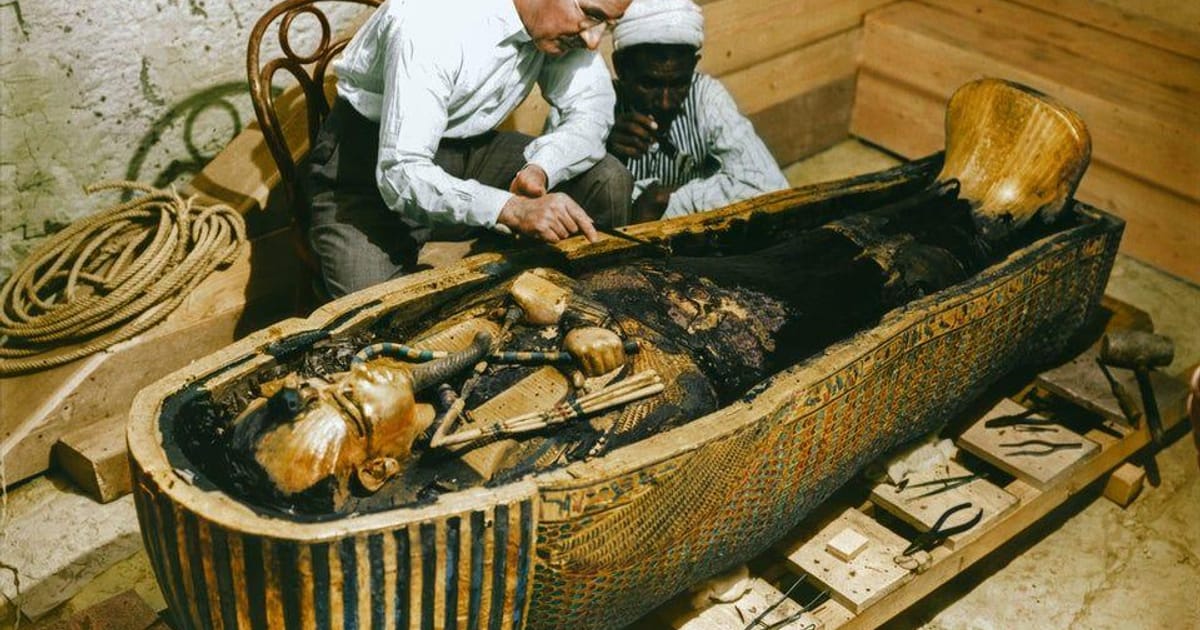
Tut’s burial wasn’t a single dramatic container; it was an entire system of protection and symbolism. Multiple layersshrines, coffins,
and barriersturn the burial into a ritual of “not today, tomb robbers.” Even when you only see photos, the scale of the layering makes
the afterlife feel like a carefully engineered destination, not a vague spiritual concept.
3) The Meteorite-Iron Dagger (A Space Knife With Perfect PR)
Few objects scream “tell your friends” like a dagger made from meteoritic iron. It’s a reminder that ancient Egyptians were not living in a fog.
They noticed the sky, valued rare materials, and built meaning around them. Also, it’s hard to beat the phrase “space metal” for pure conversational power.
4) The Golden Throne (Domestic Life, But Make It Royal)
The throne is what makes Tut feel human. Masks and coffins are cosmic; a chair is personal. You can almost imagine court life:
sandals scuffing the floor, servants hovering, someone quietly thinking, “Please let the ceremonial schedule end before sunset.”
Royal furniture turns history from “dates and dynasties” into “a teenager had to sit somewhere.”
5) The Burial Goods That Are Weirdly Relatable
Chariots, board games, clothing, jewelry, small daily-life itemsthese are the objects that whisper, “This wasn’t mythology. This was a life.”
They also prove an uncomfortable truth: if you were sent into eternity, you’d also want snacks, shoes, and maybe a hobby.
The afterlife plan wasn’t minimalist. It was “pack like you’re moving forever.”
Ranking #2: The Biggest Myths (From “Curse” to “Perfectly Untouched”)
1) “The Curse of King Tut” (A Great Story, Not Great Evidence)
The “mummy’s curse” is the original clickbait. A patron dies after the tomb’s discovery, newspapers lose their minds, and suddenly the afterlife
has a legal department. Real life is less dramatic: illness, infection, and coincidence. The curse persists because it’s funand because humans
prefer spooky explanations to boring ones like “bacteria do not care about your feelings.”
2) “The Tomb Was Totally Untouched” (It Wasn’t)
Tut’s tomb was unusually intact compared to many others, but “untouched” is too clean. Evidence suggests ancient intrusions happened early on.
The difference is that the tomb retained a massive amount of material culture anyway, which is why the discovery mattered so much.
“Mostly intact” doesn’t sell as well as “perfect,” but it’s closer to reality.
3) “Tut Was a Great Warrior-King” (He Was a Teen With a Short Reign)
Tut’s cultural fame can trick people into assuming political fame. But his reign was brief, and much of his significance comes from context:
the restoration after Amarna, the court politics around him, and how later rulers treated his legacy. His modern celebrity is the result of discovery,
not necessarily world-shaking achievements during life.
4) “Science Solved His DeathCase Closed” (It’s More Like: Case Organized)
Modern imaging and genetic work have added valuable clues, but ancient causes of death rarely come with a neat receipt.
Researchers have discussed factors like disease, injury, and inherited conditions. The honest takeaway is that science narrowed the possibilities
and clarified misconceptionsbut the story still has gray areas.
5) “King Tut = Ancient Egypt” (He’s a Gateway, Not the Whole City)
Tut is often people’s first stop in Egyptology, which is greatso long as we don’t confuse the welcome mat for the whole house.
His era was one chapter in a civilization that lasted millennia. Tut is a powerful entry point because his tomb preserved a snapshot
of elite material culture with unusual completeness.
Ranking #3: The Science That Made Tut Feel Like a Person, Not a Symbol
One reason King Tut stays relevant is that each generation finds new ways to ask old questions. Early 20th-century coverage focused on treasure.
Later, photography archives and careful museum scholarship widened the lens. Then medical imaging and lab work stepped in and said,
“Okay, but what did his life actually look like?”
CT scanning and related research helped move the conversation from “murder mystery fanfic” toward anatomy and evidence.
DNA work and family-line debates have added both insight and controversybecause ancient royal families were complicated, and the
archaeological record is not always friendly to certainty. The best part of the science era isn’t that it makes Tut less mysterious.
It’s that it makes him more real: a young person with a body, a family, and a time period that left fingerprints everywhere.
Ranking #4: The Cultural Moments That Turned Tut Into a U.S. Phenomenon
1) The 1970s “Blockbuster Exhibit” Era (When Museums Became the Hottest Ticket in Town)
In the late 1970s, “Treasures of Tutankhamun” toured major American cities and helped define what a modern blockbuster museum exhibition looks like:
huge crowds, long lines, cultural buzz, and the feeling that you were attending something bigger than your weekend plans.
For many Americans, this wasn’t just their first King Tut momentit was their first “museum as pop culture” moment.
2) Photography and “Wonderful Things” Energy
Archival photographs from the excavationespecially images showing objects in situgive Tut a cinematic quality.
They also highlight the reality behind the romance: cataloging, conservation, and meticulous work.
The discovery wasn’t just a dramatic door-opening. It was years of organization, fragile materials, and the slow, unglamorous discipline
that makes history survivable.
3) The New Millennium’s “Tut, Updated” Storytelling
Modern exhibits and reporting often blend artistry with science: scans, reconstructions, and context about the Amarna Period.
It’s less “gold shock” and more “gold plus questions.” And honestly? That’s a glow-up. Awe is great, but informed awe is better.
Ranking #5: Best Ways to Experience “King Tut Energy” in the United States
You don’t need a plane ticket to feel the pull of ancient Egypt. While Tut’s core treasures belong to Egypt, U.S. museums and institutions have
done serious work making Egyptian history accessiblethrough collections, photography exhibits, and educational installations.
1) Major Museum Egyptian Galleries (For the “I Want the Full Civilization” Approach)
The Metropolitan Museum of Art’s Egyptian Art department is a classic starting point if you want context, not just a single name.
The point isn’t to “replace” Tut’s tomb treasures; it’s to understand what Tut’s world looked like across objects, time, and style.
2) Smithsonian’s Ancient Egypt Experiences (For the “Teach Me Without Lecturing Me” Approach)
Smithsonian offerings related to ancient Egyptmummies, burial practices, and interpretationhelp translate big concepts into real visuals.
You walk away with a better grasp of why tombs were built, how the afterlife was imagined, and what preservation can (and can’t) do.
3) University Museums and Photo Archives (For the “I Want the Behind-the-Scenes” Approach)
University collections and exhibits can be a cheat code: less crowded, more detail-rich, and often deeply focused.
Photography-based exhibits, in particular, show you the excavation story without turning it into a treasure-hunt fairy tale.
My Opinions: What King Tut Actually Teaches Us (Beyond “Gold Is Shiny”)
- Fame is often accidental. Tut didn’t plan to be a global icon. Preservation and discovery did that.
- Objects are arguments. Every artifact is evidence about belief, labor, taste, and power.
- Myths spread because they satisfy emotional needs. The “curse” story is about controlpeople trying to make sense of death and coincidence.
- Science doesn’t ruin wonder. It replaces fuzzy wonder with sharper wonder. That’s an upgrade, not a downgrade.
- Context is the real treasure. Gold is stunning, but understanding the civilization is what lasts.
How to Build Your Own “King Tut Rankings” (A Fun Framework)
If you want to make your own tier list without turning history into a popularity contest, rank by criteria instead of vibes alone:
craftsmanship, story value, historical insight, symbolism,
and how much it changes what you thought you knew. Then argue with your friends respectfully, like adults.
(Or at least argue with footnotes.)
Conclusion: King Tut Is Still WinningBecause He’s a Mirror
We think we’re obsessed with Tut because of treasure. But the longer you sit with the story, the clearer it gets: we’re obsessed because the tomb
reflects us back at ourselves. Our curiosity. Our fear of death. Our appetite for mystery. Our tendency to make legends out of coincidence.
King Tut is a teenager frozen in cultural amber, and every generation reintroduces itself to him with a new question:
“What does this mean now?”
Experience Add-On: of “Tut Fever” You Can Actually Feel
The most honest way to describe “King Tut energy” is this: it sneaks up on you. You can walk into a museum thinking you’re just there to kill time,
and then you’re suddenly standing very still, reading labels like they’re plot twists. You might start with the big-ticket itemsgold, faces, gods,
that unmistakable “ancient luxury” vibebut the experience changes once you notice the human-scale details. A sandal. A small box. A piece of jewelry
that looks less like “artifact” and more like “someone owned this, wore this, cared about this.”
If you’ve ever attended (or even heard family stories about) the classic traveling exhibitions, you’ll recognize a particular rhythm: anticipation,
patience, then a hush that falls over a crowd when people finally reach the objects. It’s not the hush of boredom; it’s the hush of recognition.
Even in a noisy city, people tend to quiet down when confronted with something that has survived longer than any modern institution. Your brain does
the math without asking permission: wars, empires, languages, everything that rose and fellyet here is a crafted face staring past you like time is
a minor inconvenience.
A different kind of “Tut experience” happens at home, and it’s surprisingly common. You read a new headline about fresh analysis of burial rituals,
or you watch a documentary that uses scans and reconstructions, and you feel the story expand. Instead of “mystery solved,” you get “mystery refined.”
That can be more satisfying than a tidy ending. It feels like being invited into the process: historians arguing, conservators explaining why fragile
materials don’t behave, scientists offering probabilities instead of drama. You start to appreciate that the discovery wasn’t one magical moment in 1922;
it was the beginning of a century-long conversation about evidence, interpretation, and what we owe the past.
And then there’s the most relatable experience of all: the moment you realize you have opinions. Not just “wow,” but actual rankings.
You decide which artifact feels most human, which myth is most annoying, which museum display taught you the most. You might even catch yourself
defending nuance at a dinner table“Yes, the tomb was unusually intact, but not untouched”like you’ve been appointed unofficial family Egyptologist.
That’s Tut’s real superpower. He doesn’t just fascinate you. He recruits you.
In the end, “King Tut fever” isn’t about worshipping a pharaoh. It’s about discovering that history can still deliver a shock of immediacy:
a reminder that real people lived, believed, built, feared, celebrated, and diedand sometimes, against all odds, left behind “wonderful things”
that make us stop scrolling and pay attention.