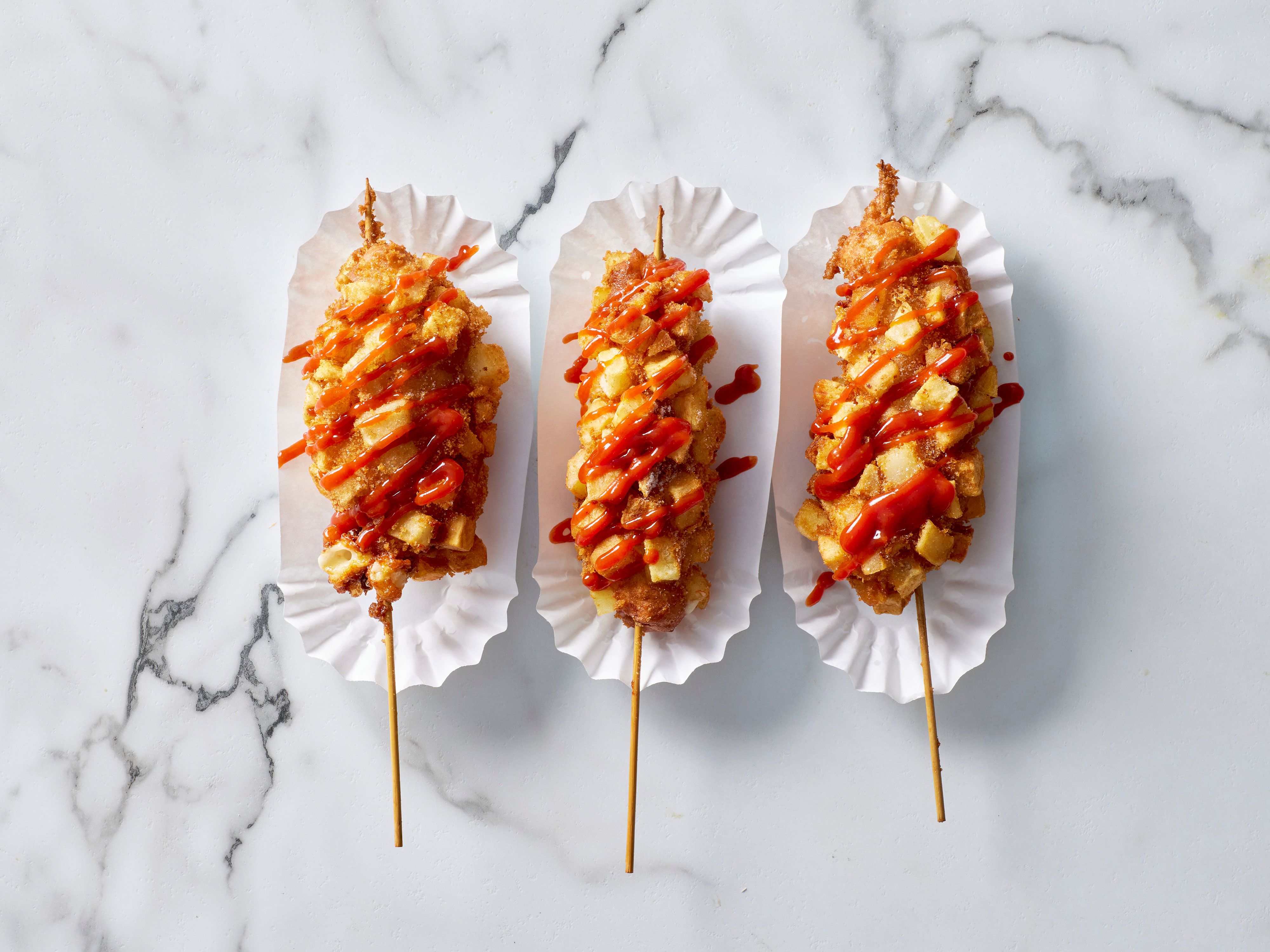
Korean corn dogs are the snack equivalent of a plot twist: you think you’re getting a classic carnival corn dog,
and thenboomthere’s stretchy mozzarella, a shatter-crisp panko jacket, maybe a potato “coat of armor,” and a
suspiciously delightful dusting of sugar. Sweet. Savory. Crunchy. Cheesy. And somehow still handheld (barely).
This in-depth Korean corn dog recipe walks you through the most popular street-food style: a chewy, lightly sweet
batter (often made with wheat and/or rice flour), rolled in crunchy coatings, fried until golden, then finished
with signature toppings like ketchup, mustard, and sugar. We’ll also cover variations (potato, ramen, all-cheese),
troubleshooting, storage, and deep-frying safetybecause nobody wants a “corn dog incident report.”
What Makes a Korean Corn Dog Different?
American corn dogs usually rely on a cornmeal-heavy batter with a cakey, corn-bread vibe. Korean corn dogs are a
different creature: the coating is often based on flour (sometimes with rice flour for chew), then upgraded with
panko breadcrumbs and creative “crunch jackets” like diced fries, crushed ramen, or puffed rice. And yesmany are
finished with a sprinkle of sugar for that sweet-and-salty street-food magic.
Ingredients
For the filling (choose your adventure)
- Hot dogs: all-beef, chicken, or pork (6 regular-size)
- Mozzarella sticks: low-moisture, part-skim works best for a dramatic cheese pull (6 sticks)
- Optional add-ons: rice cakes (tteok) cut into 2–3 inch pieces, or a half-and-half combo (hot dog + cheese)
For the batter (yeasted “street-style”)
- 1 3/4 cups all-purpose flour
- 1/2 cup rice flour (or substitute cornstarch for extra crisp, but rice flour gives more chew)
- 2 tablespoons granulated sugar
- 2 teaspoons instant yeast
- 1/2 teaspoon kosher salt
- 3/4 cup warm water (about 105–110°F) + 1/4 cup warm milk (or use all water)
- 1 large egg
For the crunchy coating
- 2 cups panko breadcrumbs (the MVP of crunch)
- Optional “potato armor”: 2 cups frozen fries, chopped into small cubes (or thawed hash brown cubes)
- Optional fun crunch: crushed ramen, cornflakes, or puffed rice cereal
For frying and finishing
- Neutral oil with a high smoke point (canola, vegetable, peanut), enough for 2–3 inches in your pot
- Extra granulated sugar for sprinkling (yes, trust the process)
- Ketchup and yellow mustard (classic)
- Optional: spicy mayo, gochujang mayo, honey mustard, or sweet chili sauce
Equipment You’ll Want (So This Is Fun, Not Stressful)
- Wooden skewers or sturdy chopsticks
- Deep, heavy pot or Dutch oven
- Clip-on or instant-read thermometer (oil temperature = crispy success)
- Wire rack or paper towels for draining
- Two shallow bowls/plates for coatings
- A tall cup or narrow container (helpful for dipping and coating)
Step-by-Step Korean Corn Dog Recipe
Step 1: Prep the fillings
- Pat hot dogs and mozzarella sticks very dry with paper towels. Moisture is the enemy of batter cling.
-
If you want the classic half-and-half: cut hot dogs and cheese sticks in half and thread 1 hot dog piece + 1 cheese piece
onto each skewer. - For full-size dogs: skewer one hot dog (or one cheese stick) per skewer, leaving a handle at the bottom.
- Optional pro move: freeze skewered fillings for 10 minutes. It helps the batter set faster and reduces cheese leaks.
Step 2: Make the batter and let it proof
- In a large bowl, whisk all-purpose flour, rice flour, sugar, yeast, and salt.
- Whisk in warm water, warm milk, and egg until you get a thick, sticky battermore like very thick pancake batter than pourable cake batter.
- Cover and let proof in a warm spot for about 45–60 minutes, until puffy and slightly bubbly.
Step 3: Set up your coating station
- Plate A: panko (and/or crushed ramen/cornflakes).
- Plate B (optional): chopped fries or potato cubes.
- Tip: If you’re doing potato + panko, most people go batter → potato → panko so the crumbs fill the gaps.
Step 4: Heat the oil
- Fill a heavy pot with 2–3 inches of oil. Heat to 350°F.
- Keep the temperature between 350–375°F while frying. Too cool = greasy. Too hot = over-browned outside, under-done batter inside.
Step 5: Coat the corn dogs (the “sticky but worth it” part)
- Pour batter into a tall cup if that’s easier.
-
Roll or spoon batter onto each skewered filling, turning as you go. If the batter is very thick, use lightly wet fingers
to help it cling and cover evenly. - Immediately roll in potato cubes (if using), pressing gently so they stick.
- Then roll generously in panko until fully coated. Don’t be shythis is where the crunch lives.
Step 6: Fry until golden and dramatic
- Fry 2–3 at a time (don’t overcrowd). Gently lower them into the oil.
- Turn occasionally for even browning. Fry about 3–5 minutes, until deep golden and crisp.
- Drain on a wire rack (best crunch) or paper towels (still great crunch).
Step 7: Finish like a street-food legend
- While hot, sprinkle lightly with sugar (or roll quickly in a shallow sugar plate for a bolder sweet finish).
- Drizzle ketchup and mustard in zigzags.
- Optional: add spicy mayo, gochujang mayo, or sweet chili sauce for a sweet-heat combo.
Quick Batter Option (No Yeast, Still Crunchy)
Want Korean corn dogs without waiting for proofing? You’ll lose a bit of that signature chewy “street” texture,
but you’ll still get crispy, golden, cheese-pull happiness.
- 1 1/2 cups all-purpose flour
- 1/2 cup rice flour (or cornstarch)
- 2 tablespoons sugar
- 1 1/2 teaspoons baking powder
- 1/2 teaspoon salt
- 3/4 cup cold seltzer + 1 egg (mix to a thick batter)
Best Variations (Pick Your Crunch Level)
Potato Korean corn dog (Gamja-style)
Go full “potato suit.” Use chopped frozen fries or small potato cubes as the first coating layer, then seal with panko.
The result is extra crunchy, extra fun, and basically the snack version of wearing a puffer jacket in winter.
Ramen-crunch corn dog
Replace (or mix with) panko using lightly crushed ramen noodles. It fries up super crisp with a “snack aisle” crunch.
Bonus points if you pretend you invented it.
All-cheese corn dog
Use only mozzarella sticks. Chill or briefly freeze first to reduce blowouts. Fry just until goldencheese waits for no one.
Half hot dog, half cheese
The crowd favorite: savory hot dog + stretchy cheese in one bite. It’s like compromise, but delicious.
Dipping Sauces and Toppings
- Classic street style: sugar + ketchup + mustard
- Spicy mayo: mayo + sriracha (or gochujang) + a splash of rice vinegar
- Sweet chili: bottled sweet chili sauce + a squeeze of lime
- Honey mustard: mustard + honey + a pinch of salt
- Korean-ish drizzle: ketchup + gochujang + a little sugar for balance
Troubleshooting (Because Corn Dogs Can Be Dramatic)
The batter won’t stick
- Dry the hot dogs and cheese thoroughly.
- Make sure batter is thick enough to cling; if it’s runny, add a tablespoon of flour at a time.
- Lightly dust the skewered fillings with flour before battering for extra grip.
The coating falls off in the oil
- Press panko (and potato cubes) firmly onto the batter.
- Don’t move the corn dog too much in the first 30 secondslet the crust set.
- Oil temperature may be too low; cold oil makes coatings sad and slippery.
Cheese leaks out
- Use low-moisture mozzarella sticks and chill/freeze briefly before frying.
- Don’t over-fry. Once golden, pull them outcheese keeps melting after you remove them.
- Make sure cheese ends are well-covered by batter and crumbs (no exposed “escape hatches”).
They’re greasy
- Keep oil at 350–375°F.
- Fry in small batches. Too many at once drops the oil temp fast.
- Drain on a wire rack for maximum crispness.
Storage and Reheating
Korean corn dogs are at their absolute best freshcrunchy coating, molten cheese, maximum joy. That said, leftovers can
still be tasty if you reheat them the right way.
- Fridge: store in an airtight container for up to 3–4 days.
- Freezer: freeze on a tray, then transfer to a freezer bag for up to 2–3 months.
- Reheat: oven or air fryer at 350°F until hot and crisp. Microwaving works in emergencies, but the crust will soften.
Deep-Frying and Food Safety Notes
- Use a deep pot and keep oil at least a few inches below the rim to reduce splatter risk.
- Never leave hot oil unattended, and keep water far away (oil + water = chaos).
- Hot dogs are usually fully cooked, but it’s still smart to heat foods thoroughlyespecially when serving anyone at higher risk for foodborne illness.
Frequently Asked Questions
Do Korean corn dogs actually have corn in them?
Sometimes, but not always. Many Korean-style versions skip cornmeal in the batter and focus on flour-based dough plus
crunchy coatings like panko and potatoes.
What oil is best for frying Korean corn dogs?
Choose a neutral, high-smoke-point oil like canola, vegetable, or peanut oil. You want clean flavor and stable heat.
Can I bake them instead?
You can try, but you won’t get the same signature crunch. If you want a lower-mess option, an air fryer can work better
than bakingespecially for reheating leftovers.
Conclusion
Making Korean corn dogs at home is equal parts cooking and edible arts-and-crafts: you skewer, coat, roll, fry, and then
finish with sweet-and-savory flair. The payoff is hugecrispy panko crunch, chewy batter, and that iconic mozzarella pull
that makes everyone within a 10-foot radius say, “Wait… can I have a bite?”
Start with the classic half hot dog/half cheese version, then get creative with potato crust, ramen crunch, and fun sauces.
Once you nail oil temperature and batter thickness, Korean corn dogs become less “internet trend” and more “personal tradition.”
Real Experiences With Korean Corn Dogs (The Fun, The Mess, The Glory)
The first time most people try a Korean corn dog, it’s usually in a place that feels like snack paradisemaybe a food court,
a pop-up stand, or a Korean street-food shop where the menu reads like a crunchy science experiment. You order one, they hand
it over looking suspiciously innocent, and then you take a bite and realize you’ve been living your life without a
mozzarella-powered joy stick. The outside is loud-crunchy. The inside is steamy and savory. And then the sugar hits, and your
brain goes, “Wait… why does this work?” (Answer: because sweet + salty is a classic duo, and Korean corn dogs lean into it.)
Making them at home is its own mini-adventure. There’s the moment you thread hot dogs and cheese onto skewers and feel
extremely confidentlike a snack engineer. Then you meet the batter, which is sticky, slightly chaotic, and determined to
glue itself to your fingers more than your food. The best home-cook lesson is that Korean corn dogs reward preparation:
dry the fillings, keep your coating station organized, and accept that your first one might look “rustic.” Street food is
allowed to be lumpy. In fact, lumpy often means extra crunchy surface area, which is basically a culinary cheat code.
The most memorable part is always the frying. Oil temperature turns into a personality test: stay calm, monitor your heat,
fry in small batches, and you get golden perfection. Rush it, overcrowd the pot, and suddenly your corn dogs are pale and
soggy like they stayed up all night scrolling. When you do it right, though, the crust sets quickly, the panko turns crisp,
and the whole thing looks like it came from a shop display. That’s the moment you start planning your next batchbecause
you already know your friends or family will “just try a bite” and somehow finish half of them.
The topping experience is a whole separate personality test. Some people are minimalists: sugar + ketchup + mustard, done.
Others treat the corn dog like a canvas: spicy mayo zigzags, sweet chili drips, maybe a sprinkle of everything seasoning
because they’re feeling bold. The potato version is often the biggest crowd-pleaser because it feels like two comfort foods
stacked into one: fries and a corn dog, holding hands, sprinting toward happiness.
And then there’s the cheese pull. If you’ve ever watched someone take a bite and slowly pull the corn dog away like they’re
trying to stretch mozzarella into a new zip code, you know it’s not just foodit’s entertainment. The funniest part at home
is that everyone suddenly becomes a director: “Wait, do it againbut slower. No, turn it toward the light.” By the time
you’re done, you’ve made dinner, a snack, and a tiny food documentary starring a very stretchy piece of cheese.