Larry Kudlow has never been shy about a big, shiny sloganespecially when that slogan wears a red-white-and-blue cape.
When he stepped into the White House economic adviser role, he signaled he liked a strong dollar so much he basically pitched a trade:
buy “King Dollar,” sell gold. It’s a clean sound bite. It’s also a reminder that currency markets are the one place where slogans go to get
graded… immediately… by people with spreadsheets and no patience.
The tricky part isn’t that a strong dollar is bad. The tricky part is that a “strong dollar policy” is not a lever you pull.
It’s a complicated outputan end resultshaped by interest rates, growth, inflation expectations, geopolitics, trade rules,
global investment flows, and the market’s mood swings. In other words: it’s easier to say “strong dollar” than to produce one on command.
What “Strong Dollar” Actually Means (And What It Doesn’t)
In everyday conversation, “strong dollar” usually means the U.S. dollar buys more foreign currency than it did beforeso it’s stronger versus
the euro, yen, pound, and other major trading-partner currencies. Economists often track this using trade-weighted indexes (a basket, not a single pair),
because America doesn’t just “trade with Europe,” it trades with… well… basically everyone.
Here’s the part many people skip: the U.S. government doesn’t target a specific dollar level the way it targets inflation or employment.
The dollar’s value is primarily determined in foreign exchange markets. So when someone promises a “strong dollar,” they’re really promising
a set of conditions that might lead the market to bid the dollar higher.
The “Strong Dollar Policy” Is Mostly a Credibility Story
The modern “strong dollar” mantra traces back to the 1990s when U.S. officials emphasized that a strong dollar was in the national interest.
Over time, Treasury secretaries repeated the phrase often enough that it became a kind of policy north starless a mechanical plan and more a signal:
the U.S. isn’t trying to cheapen its currency to win a trade war or inflate its way out of debt.
That signaling matters. Currencies are confidence machines. If global investors believe the U.S. will protect institutions,
keep markets open, honor contracts, and avoid erratic “surprise” interventions, the dollar tends to benefit.
But confidence isn’t a switch. It’s a reputation. And reputations don’t obey talking points.
So Who Does Move the Dollar?
1) The Federal Reserve (Even When It Isn’t “Talking About the Dollar”)
Interest rate differentials are jet fuel for exchange rates. If U.S. rates are higher (or expected to be higher) than foreign rates,
global investors have a stronger incentive to hold dollar-denominated assets. That can lift the dollar.
But the Fed’s job is maximum employment and stable pricesnot “keep the dollar looking swole.”
If the economy weakens and the Fed cuts rates, the dollar can soften even if Washington is chanting “strong dollar” from the rooftops.
Monetary policy doesn’t take orders from cable-news segments.
2) Global Fear (a.k.a. the Dollar’s Safe-Haven Superpower)
When the world feels shakywars, crises, recession scares, messy politicsmoney often runs toward liquidity and perceived safety.
U.S. Treasury markets are still the biggest, deepest pool around, and the dollar is the on-ramp.
In risk-off moments, the dollar can strengthen even if U.S. fundamentals aren’t perfect.
3) Growth and Inflation Expectations
If the U.S. economy outperforms, investors chase American returnsstocks, bonds, private investment.
That can raise demand for dollars. But there’s a twist: strong growth can also mean sticky inflation,
which can keep rates high (supporting the dollar) or create instability (undermining confidence) depending on how it plays out.
4) Fiscal Deficits and Debt: The Long Game
Budget deficits don’t automatically crush a currencyespecially a reserve currency.
But persistent large deficits can complicate the story: higher borrowing needs, higher interest costs,
and political fights over how (or whether) to pay the bill.
Sometimes deficits push yields higher, attracting foreign buyers and strengthening the dollar.
Other times, deficits trigger “policy credibility” worries that make investors demand a higher risk premiumor diversify away.
The direction depends on whether markets see borrowing as temporary and manageable, or structural and corrosive.
5) Trade Policy and Capital Flows: The “It’s Complicated” Department
Trade headlines can move currencies quickly, not because tariffs magically “create strength,” but because they change expectations:
growth, inflation, supply chains, retaliation, and the overall reliability of policy.
Add in global portfolio choiceshow much the world wants to own U.S. tech stocks, U.S. bonds, U.S. real estateand you get the truth:
sometimes the dollar rises because America looks irresistible; sometimes it rises because everywhere else looks worse; and sometimes it falls
because investors decide they already own plenty of America and would like to meet other countries too.
Why Kudlow’s “Strong Dollar” Is Hard to Deliver in Practice
A lot of pro-growth agendas come with a built-in contradiction:
Policies aimed at boosting U.S. growth can strengthen the dollar (via higher rates and higher returns),
while policies aimed at shrinking the trade deficit often prefer a weaker dollar (because it makes exports cheaper).
You can’t maximize both without some real-world pain showing up somewhere.
Imagine trying to increase exports, revive domestic manufacturing, and keep the dollar rising at the same time.
That’s like trying to make your team win by raising ticket prices while also insisting the stadium must always be full.
It can happenbut you’re fighting the math.
The Strong Dollar’s Awkward Side Effects (Yes, Even When It “Feels Good”)
Cheaper Imports, Lower Inflation Pressure
A stronger dollar can help consumers by lowering the cost of imported goods and commodities priced globally.
It can also reduce inflation pressure at the marginuseful when prices are already acting like they drank three espresso shots.
Export Headwinds and Earnings Pain
The same strong dollar that makes overseas vacations feel like a bargain can squeeze exporters and multinationals.
U.S. products become more expensive abroad, and foreign earnings translate into fewer dollars on corporate financial statements.
That’s why CEOs periodically complain that the dollar is “too strong” right after they finish praising the U.S. economy on the earnings call.
“Buy King Dollar, Sell Gold”: The Seduction of Simple Trades
Kudlow’s line worked because it gave people a story with characters: King Dollar and Gold, eternal rivals, battling for your portfolio.
And yesthere’s often an inverse relationship between a rising dollar and gold prices.
But markets aren’t obligated to keep a neat storyline for your convenience.
Gold can rise even when the dollar is firm if investors fear inflation, geopolitical tail risk, or fiscal disorder.
And the dollar can strengthen while gold also holds up if global stress is intense enough that investors buy both “liquidity”
(dollars) and “insurance” (gold). Reality is rude like that.
What Would a Real “Strong Dollar” Strategy Actually Require?
If you want a durable strong dollarone that isn’t just a six-week spike during a panicyou typically need some combination of:
- Institutional credibility: independent central banking, predictable rule of law, clean market plumbing.
- Competitive growth: productivity gains, innovation, and an economy investors want to own for decades.
- Fiscal seriousness: not necessarily “austerity,” but a believable plan that stabilizes debt dynamics over time.
- Policy consistency: fewer headline whiplashes that force investors to price in chaos as a permanent feature.
- Global cooperation (sometimes): because currency moves can be international political events, not just market events.
Notice what’s missing: a magic wand. Currency strength is mostly an emergent propertya reflection of incentives and trust.
You can influence those forces, but you can’t command them like a marching band.
Bottom Line
Larry Kudlow’s “strong dollar” message is emotionally satisfying because it feels like confidence, strength, and economic dominance.
But the dollar isn’t a campaign posterit’s a price. And prices respond to realities: interest rates, deficits, growth, risk, and trust.
If the policy mix sends mixed signals, the currency will reflect that confusion, even if the slogan stays perfectly consistent.
In short: a strong dollar is possible. But it’s not a promise you make. It’s a result you earn.
Field Notes: 5 Real-World Experiences That Show Why “Strong Dollar” Is Complicated
To make this less abstract, here are five real-world “experiences” (the kind businesses and investors routinely talk about) that show why
a strong dollar is easier said than doneand why it can feel great for one group while quietly wrecking another group’s spreadsheet.
1) The Importer Who Thinks the Strong Dollar Is a Coupon Code
A U.S. retailer sourcing products from overseas often loves a stronger dollarat first. Costs fall in dollar terms, margins look better,
and the company can either lower prices (winning market share) or keep prices steady (padding profits). But then the second-order effects arrive.
Foreign suppliers may raise local-currency prices. Shipping and energy costs can jump for unrelated reasons. And if a strong dollar contributes to a wider trade deficit,
political pressure for tariffs can risecreating uncertainty that disrupts contracts and delivery schedules. The importer’s “coupon code” starts coming with fine print:
cheaper goods today, potentially messier trade rules tomorrow.
2) The Exporter Who Has to Explain to Customers Why Prices “Suddenly” Went Up
A U.S. manufacturer selling equipment to Europe or Asia can get squeezed fast in a strong-dollar cycle. Even if the factory is efficient and the product is excellent,
foreign buyers see a higher local-currency price. The exporter faces ugly choices: cut prices (and margins), push price increases onto customers (and risk losing deals),
or shift production abroad (which may protect competitiveness but angers domestic stakeholders). This is why “strong dollar” can collide with “bring jobs back”
in the real economy. You can chant both, but the exchange rate will force you to pick a sacrifice eventually.
3) The Traveler Who Loves a Strong Dollar… Until They Work for a Company That Doesn’t
For consumers, a stronger dollar can feel like a raise when traveling. Hotels, meals, and shopping abroad get relatively cheaper.
But the same traveler may work for a company that earns revenue overseas. If that company reports weaker dollar-denominated earnings because foreign sales translate into fewer dollars,
management may slow hiring, tighten budgets, or cut bonuses. The strong dollar becomes a strange two-sided coin: your vacation is cheaper,
but your workplace mood is… less sunny. This tension is one reason why “strong dollar” can be politically popular while economically divisive.
4) The CFO Who Treats Currency Like Weather: You Don’t Control It, You Prepare for It
In boardrooms, “dollar risk” isn’t a debate club topic; it’s a risk management line item. Companies hedge currency exposure using financial instruments,
operational tactics (like matching costs and revenues in the same currency), and pricing strategies. But hedging isn’t free.
The more volatile the policy environment feels, the more expensive and complex hedging becomes. This is one of the hidden costs of currency drama:
even when the dollar ends up “strong,” the uncertainty around how it got there can force companies to spend more time and money protecting themselves.
That money could have gone into R&D, wages, or expansion. Instead, it goes into buying peace of mind.
5) The Investor Who Learns the Dollar Can Be a Performance Booster… or a Performance Tax
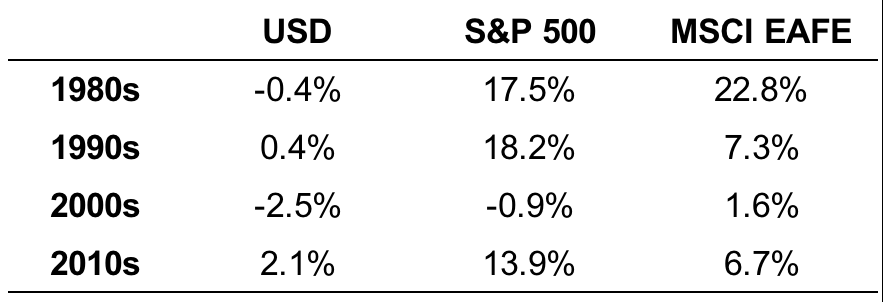
Investors who own international assets discover a blunt truth: currency can dominate returns in the short run. A U.S. investor in foreign stocks may see gains erased
if the dollar surges. Or they may see returns supercharged when the dollar weakens and foreign profits convert back into more dollars.
That’s why “strong dollar” can change portfolio behavior: some investors hedge currency exposure; others embrace it as diversification.
But either way, the experience teaches humility. You can pick great companies and still get surprised by exchange ratesbecause the dollar is responding to a global system,
not just your stock picks. This is exactly why a “strong dollar policy” is hard: it’s not a domestic-only variable.
These experiences all point to the same conclusion: a strong dollar isn’t purely “good” or “bad.” It’s a powerful force that redistributes benefits and pain.
And because it’s driven by markets reacting to policy, growth, and trust, it resists being commanded by rhetoricno matter how confident the rhetoric sounds.