Hollywood has many special effects, but none are more powerful than this one: a single emoji, posted by the
right person, at the right time, and suddenly the internet is acting like it just discovered fire.
That’s basically what happened when Liam Neeson’s late wife’s sister weighed insubtly but unmistakablyon
the swirl of romance rumors connecting him to Pamela Anderson.
The whole story is a mix of modern celebrity culture (press tours, playful interviews, social posts) and
something a lot more human: people trying to make sense of what it looks like when someone widely loved,
widely watched, and widely associated with a decades-long love story appears to be opening a new chapter.
What Sparked the Buzz: A Press Tour With Extra Chemistry
A “wait… did we just see that?” TV moment
Romance rumors don’t always start with candlelight and string quartets. Sometimes they start with
two co-stars on morning television, a camera cutting away, and viewers collectively leaning toward
their screens like, “Excuse mewas that flirting… or just extremely committed promotion?”
During a promotional appearance for their film The Naked Gun, the duo played coy when asked directly
about their relationship. Their vibe was warm, teasing, and carefully unseriousexactly the sort of
public-facing energy that keeps the rumor machine humming without giving it a signed affidavit.
The red carpets, the compliments, and the quote that lit the fuse
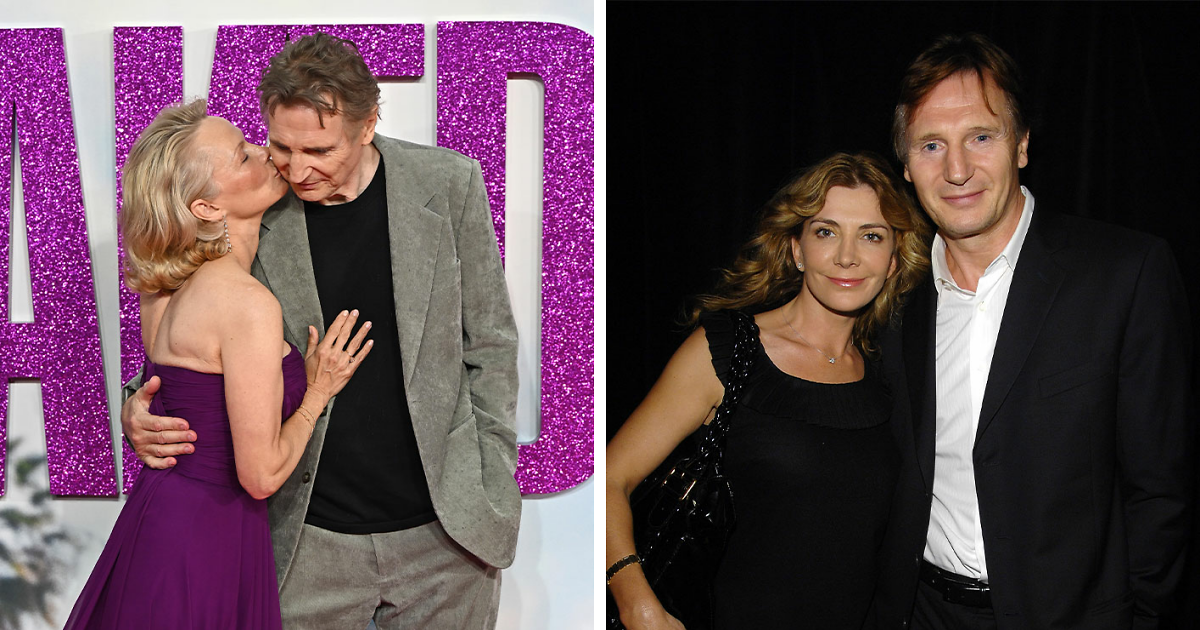
Add a few affectionate red-carpet moments and some openly admiring comments about each other, and you’ve got
a full-blown “Are they or aren’t they?” situation. In today’s celebrity ecosystem, sincere praise can get
repackaged as a relationship announcement faster than you can say “source close to the situation.”
And, importantly, these weren’t random strangers tossed together for a photo op. They were co-stars
selling a movie that depends on timing, charisma, and (yes) chemistry. That’s literally the job.
The complication is that sometimes good on-screen chemistry comes with off-screen rapportand people love
to turn rapport into romance.
The Family Context People Don’t Want to Ignore
The public remembers the love story
Liam Neeson’s marriage to Natasha Richardson wasn’t just a private relationship; it became part of
how many fans understood him. When Natasha died in 2009 after a skiing accident, it was a tragedy
that reverberated publicly while also being intensely personal for their family.
That history matters because it explains why even a rumor about a new relationship lands differently
here than it might for two celebrities who haven’t been tiedso strongly and so publiclyto a past
love story. When the internet sees a widower possibly dating, it doesn’t treat it like gossip; it
treats it like a sequel. (And as any movie fan knows, sequels are judged harshly.)
So, who is “his late wife’s sister” in this story?
Natasha Richardson’s sister, Joely Richardson, is a respected actor in her own rightand also someone
with unique standing in this narrative: she’s family. So when she reacts, it carries a different kind of
weight. Not “a fan’s opinion.” Not “a random insider.” Family.
The Reaction That Everyone Noticed: Hearts, Warmth, and a Clear Signal
The reaction that sent headlines spinning wasn’t a press conference or a long statement. It was
social-media shorthand: Joely Richardson engaging positively with a post from Pamela Anderson that included
photos of Pamela and Liam together tied to The Naked Gun press moment. In the modern celebrity language
of the internet, that’s a supportive nodpublic, visible, and hard to misread.
Later, Joely didn’t exactly slam the door on the topic either. She spoke warmly about Pamela in interviews,
describing her in genuinely complimentary terms. For people watching from the sidelines, it felt like the
closest thing to a “family seal of approval” you can get without someone mailing out embossed stationery.
Why did it matter so much? Because it reframed the rumor. Instead of “Is this disrespectful?” or
“Would the family be upset?” the conversation shifted toward: “If the family is okay, maybe we can all
unclench a little.”
What Liam Neeson and Pamela Anderson Have Actually Said
Early on: playful, careful, and noncommittal
At first, their public comments sounded like what you’d expect from two seasoned professionals: admiration,
friendship, and the kind of careful wording that avoids turning a press tour into a personal-relationship
announcement. They emphasized how well they worked together and how naturally their comedic rhythm clicked.
Then came a clearer update
Later reporting added a new wrinkle: Pamela Anderson eventually addressed the rumors more directly in an
interview, describing the relationship as real but brief, happening after filming. The way she framed it
leaned less “tabloid twist” and more “two adults had a meaningful connection and kept it respectful.”
She also made it a point to emphasize boundariesdetails that suggested the situation wasn’t some chaotic,
secretive drama, but something handled with care and a bit of privacy. That distinction matters because
celebrity rumor culture thrives on extremes: either a soulmate fairytale or a scandal. Real life is usually
quieter than that.
Why This Story Hit Harder Than the Average Celebrity Dating Rumor
1) People feel protective over grief narratives
When someone’s loss becomes public, audiences often develop a sense of emotional “ownership” over the story.
It’s not logical, but it’s common: fans feel like they’ve been part of the journey, so they start acting
like unpaid executive producers of another person’s life.
2) It challenges the myth that love has only one “right” timeline
Some people believe moving on should happen quickly; others believe it should never happen at all.
Neither approach is fair. The truth is: healing isn’t a straight line, and companionship in later chapters
of life doesn’t erase what came before.
3) The pairing itself feels surprisingin a way that sparks curiosity
Sometimes a rumored couple gets attention simply because people didn’t predict it. A surprising pairing
triggers the same impulse as a plot twist: you want to know how it happened, what it means, and whether
it’s “canon.” (Yes, the internet has turned real humans into a fandom category. No, we should not be proud.)
How Celebrity Rumors Become Headlines (and How to Read Them Like a Sane Person)
If you’ve ever wondered how a whisper turns into a headline, here’s the rough recipe. It’s not secret.
It’s just loud.
- Step 1: A moment that can be interpreted romantically (a flirty joke, a cheek kiss, a warm quote).
- Step 2: A few photos that look like “evidence,” even if they’re normal colleague behavior.
- Step 3: A headline that uses safe words like “spark,” “fuel,” or “ignite” so no one gets sued.
- Step 4: The internet does the rest, building a narrative faster than anyone can confirm facts.
The smartest way to read these stories is to separate three things:
public behavior (what you can actually see),
reported claims (what outlets say sources told them),
and direct statements (what the people involved say on the record).
The closer you get to direct statements, the closer you get to reality.
What Joely Richardson’s Reaction Suggests (Without Overreaching)
Let’s keep this grounded. A supportive social-media reaction and positive comments do not confirm a
relationship status, define its seriousness, or guarantee anything about the future.
What they do suggest is something simpler and more meaningful: goodwill. If you’re looking for the
“headline version,” it’s: “Family doesn’t seem upset.” If you’re looking for the “human version,” it’s:
“People who care about Liam appear to want him to be okay.”
In celebrity culture, that’s rare. Too often, the narrative is conflictexes feuding, families objecting,
insiders whispering. This story’s surprising element is that it reads more like quiet support than public
drama.
What This Means for Their Public Image (and for The Naked Gun)
There’s a cynical take that always pops up: “Is it all publicity?” It’s a fair question in an industry
where publicity is basically oxygen. But it’s also possible for two things to be true at the same time:
a press tour can be strategic, and the connection between two people can still be genuine.
If anything, the public response has reinforced both of their images in interesting ways:
- For Liam: it frames him as someone allowed to be joyful again without “betraying” his past.
-
For Pamela: it fits neatly into her recent narrative shiftless caricature, more respected
artist, more in-control of her public story.
And yes, it keeps The Naked Gun in the conversationbut not through scandal. Through curiosity,
warmth, and a little comedic sparkle. That’s the best kind of buzz if you’re trying to sell a comedy:
people smiling, not clutching pearls.
Real-Life Experiences Related to This Story (The Part No One Prepares You For)
Even if you’ve never cared about celebrity news a day in your life, this story can still hit a nerve,
because it mirrors experiences many people recognizejust with brighter lights and louder headlines.
If you’ve ever watched someone rebuild their life after loss, you know the weird truth: the first “new”
thing isn’t always excitingit’s complicated. A new relationship, even a casual one, can feel like it
brings up everything at once: love, guilt, relief, sadness, hope, and the slightly panicked thought of,
“Wait, are we allowed to do this?”
Families often experience that complexity in their own way. Some relatives feel protective and cautious:
they want to make sure the person they love isn’t getting hurt, rushed, or taken advantage of. Others feel
quietly grateful because they’ve seen the lonely parts up closeholidays, anniversaries, random Tuesdays
that hit like a wave. And sometimes people feel both at the same time, which is the emotional equivalent
of holding two grocery bags in one hand and pretending your fingers aren’t going numb.
There’s also the “public narrative” problemeven in non-famous families. People outside the situation can
act like they get a vote. Friends might say, “It’s too soon,” as if grief runs on a calendar app. Others
might say, “It’s about time,” as if healing is a delayed flight that finally landed. In reality, the person
living it has to make choices based on what feels supportive, safe, and honestnot what looks neat to
outsiders.
Another common experience is how small gestures can matter more than big speeches. A sibling, cousin, or
close friend doesn’t always sit you down and deliver a dramatic monologue about moving forward. Sometimes
they just show acceptance in a simple wayan invitation that includes the new person, a warm hello, a
gentle joke, or a small sign that says, “I trust you. I’m not here to judge you.” In a celebrity context,
that kind of gesture might look like a supportive comment or a kind public remark. In everyday life, it
might look like a quiet smile across a dinner table.
And then there’s the part people don’t talk about enough: moving forward doesn’t erase what happened.
It doesn’t rewrite history. It doesn’t cancel love. Most people who find companionship after loss aren’t
trying to replace anyone; they’re trying to keep living. That can be messy, brave, awkward, beautiful,
and painfully normal all at once.
So when a story like this pops upcelebrity names, rumored romance, family reactionit can accidentally
become a little mirror. Not because strangers’ relationships are our business, but because the emotions
behind the headline are familiar: the hope that someone can find light again, and the desire for the people
who love them to say, in whatever language they choose, “We’re okay with you being okay.”
Conclusion: A Little Grace Goes a Long Way
The internet may want a simple storyconfirmations, denials, hard labels, neat timelines. But the most
interesting detail here isn’t whether the rumor machine was right on day one. It’s that when people looked
for the family’s reaction, they saw something that felt unusually kind: support, warmth, and a hint of
“let adults live.”
Whether this connection is best described as romance, friendship, or a meaningful moment that happened
between two people who genuinely enjoyed each other, one thing is clear: the healthiest response isn’t
outrage or ownership. It’s respect. If you want a fair ending to this story, it’s not “happily ever after.”
It’s “happily, privately, with boundaries.”