In Paris, the neighborhood bakery is practically a sacred institution. Most boulangeries lean into the romance:
gilded mirrors, fluted moldings, pastel boxes stacked like tiny gifts. Then along came Liberté, a bakery that
wrapped the corner of a 19th-century building in Canal Saint-Martin and said, “What if we keep the bread
traditional but give the space a brutal little glow-up?”
Remodelista’s feature on Liberté captured this tension perfectly. Instead of politely refurbishing the old shell,
the designers kept the bones raw: peeling paint, exposed ceilings, and walls that look like they just stepped out of
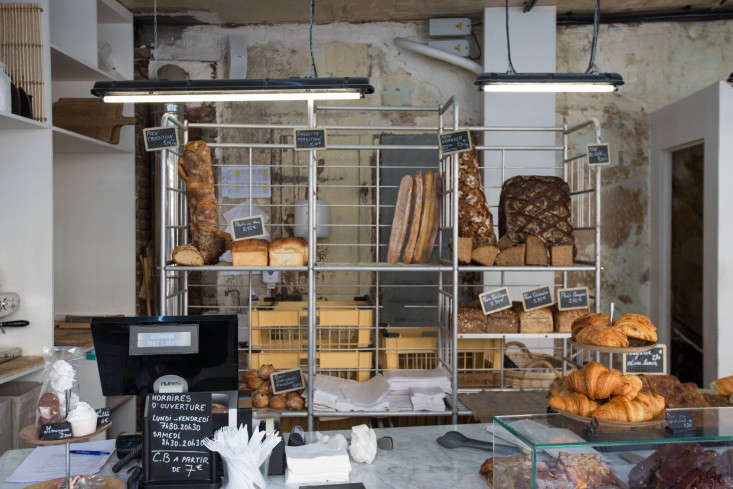
a construction site photoshoot. Against that backdrop, marble counters and sculptural lighting showcase pastries as
if they’re limited-edition art pieces rather than something you’ll devour in three bites.
The result is a bakery that feels at once rough and refinedindustrial chic with a Parisian accent. It helped
usher in a wave of café and bakery interiors that celebrate imperfection, letting history, patina, and honest
materials share the stage with immaculate baguettes and glossy tarts.
A Corner Bakery That Broke the Rules
Liberté’s original Canal Saint-Martin location sits on Rue des Vinaigriers, occupying the corner of a classic
Haussmann-era building. From the street, simple black-and-white signage and big windows tell you what you need to
know: bread lives here, and so does a serious design point of view. This isn’t a cutesy patisserie; it’s a bakery
that looks as if it has been carved out of the city’s concrete.
Raw Bones, Polished Details
Step inside, and the first thing you notice isn’t actually the pastriesit’s the room itself. The walls have that
wonderfully imperfect “we stopped sanding on purpose” look. The ceilings are high and unfinished, with industrial
fixtures that feel more like a loft than a corner boulangerie. Underfoot, the floor leans toward an industrial
paletteconcrete and stone tones that visually cool the warmth of freshly baked loaves.
Against this raw shell, the counters read as sleek and almost luxurious. Remodelista highlights the bakery’s long,
pale stone or marble counter, where golden breads and jewel-bright pastries are arranged with gallery-level care.
In some shots, bright red stools punctuate the otherwise neutral interior, a reminder that even the most pared-back
spaces benefit from one bold, joyful accent.
There’s a clever rhythm to how textures play off one another: cool stone against crusty loaves, glass cases against
rough walls, chalkboard menus against sun-faded plaster. The bakery doesn’t hide the fact that it’s in a historic
building; it exaggerates it. Instead of covering up age, Liberté frames itliterallywith clean lines and precise
millwork around the counters and shelving.
A Bakery That Feels Like a Gallery
Liberté treats bread the way some shops treat handbags. Loaves are stored in vintage bread racks that climb the
walls, creating a visual grid of color and texture. Baguettes lean dramatically in metal baskets. Tarts and
croissants rest in orderly rows behind glass, spotlighted like tiny sculptures.
Outside, chalkboard specials face the street, a nod to classic cafés but executed with the same stripped-down
aesthetic. Inside, the openness of the plan lets you see across the space in one sweep: people lining up, bakers at
work, racks slowly emptying. It feels less like a shop and more like a performance space dedicated entirely to
carbs.
That showmanship matters. Across global design media, Liberté is often cited as a benchmark for how a small bakery
can punch above its square footage by using bold architectural gesturesrather than just décorto communicate
brand identity.
The Liberté Philosophy: Transparency, Craft, and Character
Behind Liberté’s growing mini-empire is founder Mickaël Benichou, who launched the brand in 2013 with a clear goal:
to spotlight both the craft of the bakers and the architectural spaces they work in. Over time, Liberté has
expanded beyond the original Canal Saint-Martin location to multiple boutiques across Paris and even to Tokyo and
Kyoto, bringing its carefully curated aesthetic to an international audience.
In newer locations, Benichou has collaborated with interior architect Emmanuelle Simon, whose designs take the
“new aesthetic” in a softer, more monastic direction. The tiny bakery on Rue Saint-Dominique, for instance, is just
25 square meters but feels surprisingly serene, with bluestone floors that echo the Parisian pavement outside and a
façade marked by a simple white front and a golden neon croissant.
Inside, Simon’s design swaps rough concrete for creamy walls, stone arches, and warm woods. Alcoves hold sculptural
bread displays and ceramics; a narrow opening at the back lets guests peek into the kitchen, turning the work of
mixing, shaping, and baking into a quiet spectacle. It’s a spiritual cousin to the Canal Saint-Martin bakery:
still minimalist, still intensely designed, but with a cloister-like mood instead of industrial grit.
Across all locations, the through-line is transparency and authenticity. Liberté doesn’t try to hide the labor or
the setting. You see the bakers. You see the walls. You see the dough evolving into something flaky and golden.
The design simply makes sure all of that looks intentionaland highly photographable.
A New Aesthetic for Parisian Bakeries
To understand why Liberté hit such a nerve, you have to zoom out and look at the broader Parisian bakery landscape.
For decades, the visual language of the boulangerie leaned ornate: carved wood counters, ceiling medallions, rows
of pastel macarons, and swooping logos that looked like they belonged on perfume bottles.
Liberté kept the care and craft of that tradition but swapped the visual sugar for something leaner. Its Canal
Saint-Martin space belongs to a wave of cafes and bakeries that embraced industrial chic and stripped-down forms:
white tiles, concrete floors, visible structure, and simple color palettes.
This aesthetic wasn’t born in a vacuum. Design institutes and interiors blogs have charted the rise of industrial
chic for years: think exposed brick, metal details, reclaimed wood, and a mix of vintage and minimal furnishings.
Liberté applies that playbook to a small urban bakery but softens it with curves, warm lighting, and the inherent
charm of bread.
The newer Rue Saint-Dominique shop shows how that aesthetic can evolve. Instead of concrete, you get cloister-like
arches and bluestone floors. Instead of a rough shell, you get creamy plaster and meticulously detailed woodwork.
Yet it still feels like Liberté because the design continues to spotlight the product and the process above all
else.
Design Details to Steal from Liberté
You may not own a Parisian bakery (yet), but Liberté’s design is full of ideas that translate beautifully to other
cafés, restaurants, or even home kitchens. Here are a few steal-worthy moves:
1. Let Imperfect Surfaces Be the Star
Instead of covering every wall with pristine tile or paint, Liberté leans into patina: peeling plaster, visible
patches, and subtle stains that tell a story of age and use. If your space has brick, concrete, or old plaster in
decent shape, consider leaving a portion exposed and balancing it with cleaner finishes elsewhere.
2. Use One Clean Material as a Counterpoint
The bakery’s smooth countersstone, marble, or similarly polished surfacesgive the eye a break from all the
texture. This contrast makes both the raw and refined elements feel intentional, not accidental. In a home kitchen,
a simple solid countertop against a slightly rough wall can create the same effect.
3. Choose a Single Bold Accent Color
Liberté’s bright red stools are a lesson in restraint. Instead of a rainbow of décor, one saturated color punctuates
an otherwise neutral room. This is an easy strategy to copy: pick one huered, mustard, forest greenand use it in
just a few places: chairs, a menu board frame, a door, or a pendant light.
4. Turn Storage into Display
Vintage bread racks and wall-mounted shelving at Liberté blur the line between storage and showroom. At home or in
a café, open shelving can hold both everyday items and a few carefully chosen objects: ceramics, cookbooks,
glass jars of ingredients, or even sculptural cookware. It’s functional, but it also builds a visual narrative
around how you cook and eat.
5. Design the Line as an Experience
No one loves standing in line, but at Liberté, you’re surrounded by views of the racks, the counters, and sometimes
the kitchen itself. The circulation path is part of the design. If you’re planning a café or bakery, think about
what guests see while they wait: not just the back of someone’s coat, but maybe a feature wall, a coffee station,
or a glimpse into the behind-the-scenes action.
Why Liberté’s Look Still Feels Fresh
Interior trends cycle quicklywhat feels edgy one year can feel overdone the next. Yet Liberté’s aesthetic holds up
because it isn’t just about “industrial” or “minimalist” labels. At its core, the design is anchored in three
timeless principles: honesty of materials, clarity of function, and respect for craft.
Honesty of materials means you see stone, wood, glass, and metal for what they are, not disguised behind layers of
faux finishes. Clarity of function means the space is laid out to serve bread first: wide counters, open views,
efficient paths for both staff and customers. Respect for craft means that everythingfrom the crumb of the
baguette to the curve of an archhas been considered.
That’s why design media continue to revisit Liberté long after its debut and why newer locations can experiment
with different moods without losing the thread. Whether the setting leans rough and urban or warm and cloistered,
the brand’s “new aesthetic” is ultimately about giving bread and pastry the sort of stage you’d usually reserve for
art or fashion.
Experiencing Liberté: What a Visit Feels Like (An Extra Slice)
Reading about Liberté is one thing; picturing the experience is another. Imagine approaching the Canal
Saint-Martin bakery early on a cool morning. The corner windows glow softly, fogged slightly from the warmth
inside. People hover outside with paper bags and takeaway cups, leaning on bikes, chatting in that casual Parisian
shorthand that sounds like punctuation made of shrugging.
As you step in, the temperature shifts: cooler underfoot, warmer in the air. There’s a low murmur of conversation,
the thud of trays behind the counter, the soft scrape of a bread knife. You join the queue and find yourself eye-to-eye
with a wall of breadboules, batards, and baguettes arranged with the crisp precision of a design installation. The
unfinished walls and exposed ceiling fade into the background because your attention is glued to the crumb and crust
on display.
When it’s your turn, you order a baguette tradition, maybe a pain au chocolat, maybe a lemon tart you absolutely
didn’t plan on. The staff move quickly but not mechanically; there’s an easy rhythm to the way they wrap, bag, and
ring up. You pay, step aside, and suddenly you’re part of the scene you were just watchinga person weighed down
by a small paper bag and the happy problem of deciding whether to share.
Later, over in the 7th arrondissement, the Rue Saint-Dominique bakery offers a slightly different vibe. From the
street, the white façade and golden neon croissant are like a quiet wink. Inside, bluestone floors lead you into a
sequence of soft arches. Warm wood and creamy walls replace the raw concrete of Canal Saint-Martin, and the mood
becomes almost contemplativeless edgy, more chapel-of-bread.
Here, the display counter feels like an altar to pastry. Rows of tarts and cakes sit in a minimalist glass case,
framed by textured walls and subtle lighting. The forms are simple; the colorsbrowns, creams, pale goldsare
soothing. You may notice other small details: a shelf of ceramics, the curve of a wooden bench, the way the light
slides across the stone floor in the afternoon. None of it shouts. It all whispers.
Visitors often mention how the space makes them slow down a little: to actually look at the bread, to watch the
bakers through the narrow opening at the back, to decide between a croissant and a seasonal tart based not only on
hunger but on which one feels right in that exact moment. The design doesn’t just house the food; it shapes how you
experience it.
Taken together, these experiences show why Liberté resonates so strongly with design lovers and carb devotees
alike. The brand proves that a bakery can be more than a place you dart into on your way to work. It can be a kind
of urban ritual: a few minutes in a space where architecture, craft, and appetite line up perfectly, and where the
simplest thingsa loaf of bread, a chipped wall, a slice of sunlightfeel elevated, just for a moment.