“`
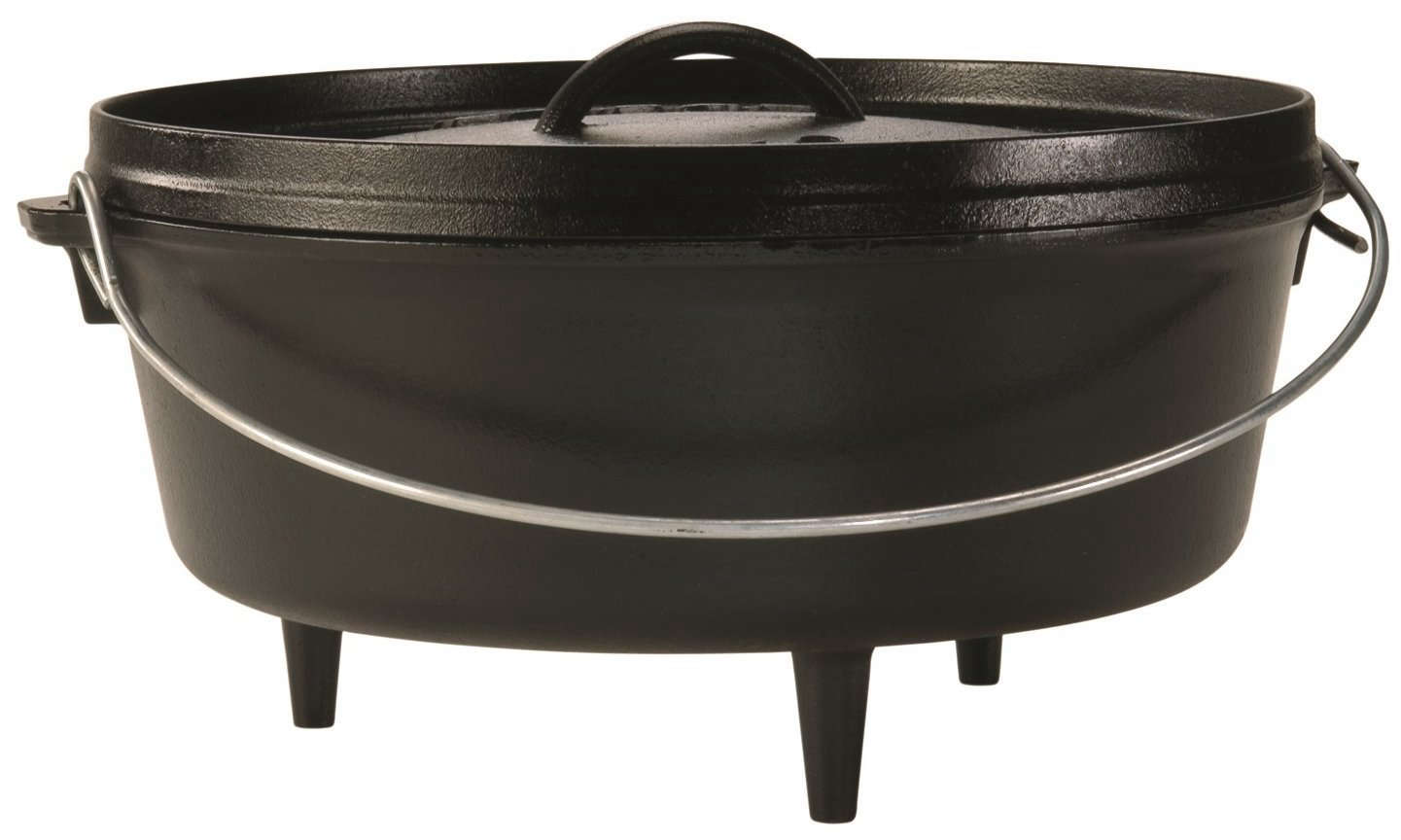
The Lodge L12CO3 Camp Dutch Oven, 6-Quart is the kind of cookware that makes a campfire feel less like “roughing it” and more like running a tiny forest restaurant with questionable seating but excellent ambiance. Built from seasoned cast iron and designed for outdoor cooking, this 12-inch camp Dutch oven can simmer chili, bake cornbread, roast chicken, fry potatoes, and turn a bag of humble ingredients into the meal everyone remembers after the tent poles are packed away.
Unlike a smooth-bottom kitchen Dutch oven, the Lodge L12CO3 is made for coals, campfires, and backyard fire pits. It has three short legs to stand above hot charcoal, a flanged lid that holds coals on top, and a sturdy bail handle for lifting, carrying, or hanging over a tripod. In other words, it is not just a pot. It is an outdoor oven, skillet, stew pot, bread baker, and conversation starter that happens to weigh enough to remind you that “portable” is sometimes a matter of optimism.
For campers, tailgaters, backyard cooks, Scouts, cast-iron fans, and anyone who believes food tastes better with a little smoke in the air, this 6-quart Lodge camp Dutch oven is a practical, durable, and surprisingly versatile piece of gear. Let’s break down what makes it special, how to use it well, and whether it deserves a permanent spot in your outdoor cooking kit.
What Is the Lodge L12CO3 Camp Dutch Oven?
The Lodge L12CO3 is a 6-quart cast iron camp Dutch oven with a 12-inch diameter. It is designed specifically for outdoor cooking over charcoal, campfire coals, or controlled fire-pit heat. The “camp” part matters because the shape and features are different from a kitchen Dutch oven. This model has legs on the bottom, so it can sit directly over coals without smothering them, and it has a rimmed lid that keeps hot charcoal in place for top-down heat.
That top-and-bottom heat is the secret sauce. A regular pot heats mostly from below. A camp Dutch oven can work more like a traditional oven because heat surrounds the food. Put coals under the pot and more coals on the lid, and suddenly you can bake biscuits in the woods. That is either modern convenience or pioneer wizardry, depending on how hungry you are.
Key Product Features
The Lodge L12CO3 Camp Dutch Oven includes several features that make it especially useful outdoors:
- 6-quart capacity: Large enough for family meals, group breakfasts, stews, roasts, and baked desserts.
- 12-inch diameter: A popular size for camp cooking because it balances capacity with manageable heat control.
- Seasoned cast iron: Pre-seasoned with oil, so it is ready to use after a basic rinse and dry.
- Three legs: Elevate the oven above coals for steady bottom heat.
- Flanged lid: Holds charcoal on top and helps create oven-like heat.
- Bail handle: Makes it easier to lift, hang, and move with proper tools.
- Reversible lid function: The lid can be inverted and used as a griddle in many camp setups.
- Made for outdoor use: Best suited for charcoal, campfires, fire pits, and outdoor cooking stations.
Why Cast Iron Still Rules the Campfire
Cast iron has been hanging around American kitchens and campsites for generations because it solves a simple problem: outdoor heat is messy. Campfires do not come with digital temperature buttons. Charcoal gets hot, wind happens, and someone always says, “I think it’s done,” while holding a flashlight like a detective. Cast iron helps because it stores heat and spreads it evenly once it is properly warmed.
The Lodge L12CO3 takes advantage of that thermal mass. It heats slowly, but once it gets going, it holds steady heat beautifully. This is especially useful for long-simmered chili, cobbler, pot roast, beans, and breakfast casseroles. Thin cookware can scorch food quickly over coals. Cast iron is more forgiving, provided you control the charcoal and rotate the oven occasionally.
Seasoning: The Natural Nonstick Personality
The L12CO3 comes seasoned, which means oil has been baked into the iron to form a protective cooking surface. Seasoning helps reduce sticking, adds rust resistance, and improves over time. The more you cook with itespecially with oils and fatsthe more character the surface develops.
Do not expect it to behave like a brand-new nonstick pan on day one. Cast iron is more like a loyal dog than a robot vacuum: treat it well, feed it properly, and it will serve you for years. Fry bacon, roast vegetables, bake cornbread, wipe it clean, oil it lightly, and the surface becomes smoother and more reliable with use.
Best Uses for the Lodge L12CO3 Camp Dutch Oven
The 6-quart size is the sweet spot for many outdoor cooks. It is big enough to feed a group but not so gigantic that moving it requires a pulley system and a motivational speech. For car camping, backyard cooking, RV trips, hunting camps, and family cookouts, this model can handle a wide range of meals.
1. Campfire Chili and Stews
This Dutch oven was practically born to make chili. Brown ground beef or sausage, add onions, beans, tomatoes, spices, and let everything bubble slowly while people wander over asking, “Is it ready yet?” The heavy cast iron keeps the simmer stable, and the lid helps retain moisture and flavor.
2. Biscuits, Cornbread, and Camp Bread
With coals on top and bottom, the Lodge L12CO3 becomes a real outdoor oven. Cornbread is one of the best beginner recipes because it is forgiving, fast, and excellent with chili. Biscuits also work beautifully when you preheat the oven and avoid too much bottom heat.
3. Breakfast Casseroles
Eggs, sausage, hash browns, peppers, onions, and cheese can become a hearty breakfast bake that feeds sleepy campers fast. This is where the 6-quart capacity shines. You can cook enough for a group without juggling three pans on a wobbly camp stove.
4. Roasted Meat and Vegetables
Chicken thighs, pork shoulder, potatoes, carrots, onions, and herbs all love the Dutch oven environment. Add a little liquid, control the heat, and let the cast iron do the heavy lifting. The result is tender food with deep flavor and minimal fuss.
5. Cobblers and Camp Desserts
Fruit cobbler may be the unofficial national dessert of camp Dutch ovens. Canned peaches, berries, apples, cake mix, biscuit topping, brown sugar, cinnamon, butterthere are many versions, and most of them disappear faster than bug spray in July.
How to Cook with Charcoal
The biggest learning curve with the Lodge L12CO3 is heat management. Instead of setting an oven to 350 degrees, you count charcoal briquettes and place them strategically. For baking, outdoor cooks commonly use more coals on top than underneath because bottom heat is direct and can burn food faster. For roasting, top and bottom heat are more balanced. For frying, boiling, and simmering, most of the heat should come from below.
A helpful general rule for a 12-inch camp Dutch oven is to start with about twice the oven diameter in charcoal briquettes for moderate baking heat. That means around 24 briquettes total, often with more on the lid than under the oven. Conditions matter, though. Cold weather, wind, altitude, damp ground, and the brand or size of charcoal can change the result. Camp cooking is part science, part instinct, and part “well, the raccoons seem interested, so it must smell good.”
Coal Placement Tips
- For baking: Use more coals on the lid and fewer underneath to prevent burning the bottom.
- For roasting: Use a more even split between top and bottom heat.
- For frying: Put the heat below the oven and leave the lid off or mostly off.
- For simmering: Use fewer coals and refresh as needed.
- For even cooking: Rotate the pot and lid in opposite directions every 10 to 15 minutes.
Always use heat-resistant gloves, a lid lifter, and long tongs. The bail handle, lid, and body can get extremely hot. Cast iron does not forgive bare fingers. It simply teaches memorable lessons.
Lodge L12CO3 vs. a Regular Kitchen Dutch Oven
A kitchen Dutch oven and a camp Dutch oven may look related, but they are built for different jobs. A kitchen model usually has a flat bottom and may be enameled. It is great on a stovetop or inside an oven. The Lodge L12CO3 has legs and a flanged lid, which make it far better for charcoal cooking but awkward on a flat indoor range.
Because of its legs, the L12CO3 is not ideal for glass cooktops, induction burners, or standard kitchen use. It belongs outdoors. That is not a flaw; it is the whole point. Think of it as a rugged camp tool, not a countertop fashion accessory. It will not match your backsplash, but it might make the best stew you have ever eaten beside a picnic table.
Who Should Buy the Lodge 6-Quart Camp Dutch Oven?
The Lodge L12CO3 is best for people who cook outdoors often enough to appreciate durable gear. It is especially useful for:
- Car campers who want real meals instead of endless sandwiches
- Families who cook at campsites, cabins, or backyard fire pits
- Scout leaders and outdoor educators teaching camp cooking
- RV travelers who enjoy charcoal or campfire meals
- Tailgaters who want chili, pulled pork, or hot dips
- Cast-iron collectors who want a practical outdoor piece
It may not be the best choice for ultralight backpackers. The oven is heavy, and nobody wants to carry a 6-quart cast iron pot up a mountain unless there is treasure inside. For car camping, however, the weight becomes an advantage because it supports stable, even cooking.
Cleaning and Care
Caring for the Lodge L12CO3 is simple, but it requires consistency. After cooking, scrape out leftover food, wash the oven by hand with hot water, dry it completely, and apply a very thin layer of cooking oil while the iron is still warm. The key phrase is “very thin.” If the oven looks greasy enough to audition for a fast-food commercial, you used too much oil.
A small amount of mild soap is acceptable when needed. Modern cast-iron seasoning is not as delicate as old camp legends make it sound. What you should avoid is soaking the oven, running it through a dishwasher, storing it wet, or leaving acidic food inside for long periods. Moisture is the villain. Drying is the hero. Oil is the sidekick with excellent timing.
Basic Cleaning Steps
- Let the oven cool until it is safe to handle but still warm.
- Remove food with a scraper, brush, or non-scratch pad.
- Wash by hand using hot water and mild soap if necessary.
- Dry thoroughly with a towel.
- Warm the oven briefly to evaporate hidden moisture.
- Rub on a light coat of neutral oil.
- Store with the lid slightly ajar or with a paper towel inside to reduce trapped moisture.
Pros and Cons
Pros
- Excellent heat retention for camp cooking
- Large enough for group meals
- Flanged lid supports true baking with charcoal
- Pre-seasoned and ready to use
- Durable enough for years of outdoor meals
- Versatile for stews, bread, roasts, frying, and desserts
Cons
- Heavy for carrying long distances
- Requires cleaning and oiling after use
- Not ideal for indoor stovetops because of the legs
- Heat control takes practice
- Can rust if stored wet or neglected
Practical Cooking Ideas for the Lodge L12CO3
If you are new to camp Dutch oven cooking, start with recipes that forgive uneven heat. Chili, stew, pulled pork, baked beans, breakfast hash, and fruit cobbler are excellent first attempts. Once you understand coal placement, move on to biscuits, cinnamon rolls, roast chicken, lasagna, and sourdough-style camp bread.
For a simple first meal, try a sausage breakfast casserole. Brown sliced sausage in the Dutch oven, add frozen hash browns, bell pepper, onion, and seasoning, then pour beaten eggs over the mixture. Sprinkle cheese on top, cover, and bake with more coals on the lid than underneath. Rotate occasionally. When the eggs are set and the top is melted, you have a campsite breakfast that makes instant oatmeal look deeply embarrassed.
For dessert, use sliced apples, cinnamon, brown sugar, butter, and biscuit dough. Bake until the apples soften and the topping turns golden. Serve with whipped cream if you have a cooler, or eat it straight from a bowl while pretending you made it for “the group.” We both know what happened.
Buying Advice
Before buying the Lodge L12CO3 Camp Dutch Oven, consider how you plan to use it. If you mostly cook indoors, choose a flat-bottom Dutch oven instead. If you camp by car, cook over charcoal, or want to learn traditional outdoor baking, the L12CO3 is a strong choice. The 6-quart capacity is big enough for many families and small groups, while still being manageable for one adult to lift with care.
It is also wise to buy a few accessories. A lid lifter makes coal management safer. Heat-resistant gloves protect your hands. Long tongs help move charcoal. A charcoal chimney speeds up lighting. A trivet or Dutch oven table can make cooking more comfortable. None of these are glamorous, but neither is dropping a hot lid into the dirt five minutes before dinner.
Real-World Experience: Living with the Lodge L12CO3 Camp Dutch Oven
Using the Lodge L12CO3 Camp Dutch Oven feels a little different from using ordinary cookware because it asks you to slow down. That is part of the charm. You do not toss it on the fire and walk away forever. You arrange coals, listen for the sizzle, smell the food changing, rotate the lid, peek carefully, and learn how the oven behaves. After a few meals, it starts to feel less like equipment and more like a cooking partner with a very serious personality.
One of the best experiences with this Dutch oven is making breakfast outdoors. There is something deeply satisfying about hearing potatoes crisp in cast iron while the campsite is still waking up. A 6-quart oven gives you room to cook for several people without crowding the ingredients. Potatoes can brown, sausage can render, onions can soften, and eggs can set gently under the lid. The result feels hearty and homemade, not like emergency food eaten from a wrapper while searching for clean socks.
The oven also changes how people gather around food. A camp stove is useful, but a Dutch oven creates curiosity. Someone always asks what is inside. Someone else wants to lift the lid. A third person suddenly becomes a charcoal expert despite having burned toast earlier. The Lodge L12CO3 turns dinner into an event. Whether you are making chili, cobbler, or roasted chicken, the process gives everyone something to anticipate.
There is a learning curve, especially with heat. Too many coals underneath can scorch the bottom before the top is done. Too few coals on the lid can leave biscuits pale and sad. Wind can steal heat. Cold weather can slow everything down. But these challenges are manageable, and each meal teaches you something. The first cobbler may be rustic. The second will be better. By the third, people may start requesting it before the trip even begins.
Cleaning is not difficult, but it is part of the ritual. The best time to clean the Dutch oven is soon after cooking, while it is warm and food residue is easier to remove. A scraper, hot water, thorough drying, and a whisper-thin layer of oil are usually enough. Once you make this a habit, maintenance takes only a few minutes. Neglect it, however, and rust may appear. Cast iron is durable, but it does appreciate basic manners.
The weight is the most obvious drawback. This is not backpacking cookware. It belongs in a car trunk, camper, chuck box, or backyard cooking area. But that same weight is why it performs so well. The heavy iron moderates heat, resists warping, and makes the oven feel nearly indestructible. With reasonable care, it can last decades. It is the kind of item that may outlive your tent, your cooler, and possibly your ability to remember where you packed the matches.
Overall, the Lodge L12CO3 Camp Dutch Oven is most rewarding for cooks who enjoy the process as much as the meal. It is not the fastest way to cook outdoors, but it may be one of the most satisfying. It encourages better planning, better fire management, and better food. It also gives you the rare pleasure of baking under the sky, which makes even simple cornbread feel like a small achievement.
Conclusion
The Lodge L12CO3 Camp Dutch Oven, 6-Quart is a classic piece of outdoor cookware for good reason. Its seasoned cast iron body, 12-inch size, flanged lid, sturdy legs, and bail handle make it ideal for campfire meals, charcoal baking, backyard cooking, and group-friendly comfort food. It is heavy, yes, and it asks for basic maintenance, but those are fair trades for durability, versatility, and excellent heat performance.
If you want lightweight convenience, this is not your pot. If you want memorable meals, golden cornbread, bubbling chili, smoky cobbler, and the satisfying feeling of cooking with something that could probably survive a minor meteor incident, the Lodge L12CO3 deserves serious consideration. Treat it well, keep it dry, oil it lightly, and it may become one of the most dependable tools in your outdoor kitchen.
“`
Note: Product availability, packaging, and pricing may vary by retailer. Always follow safe outdoor cooking practices, use proper heat-resistant tools, and clean and dry cast iron thoroughly after each use.
“`