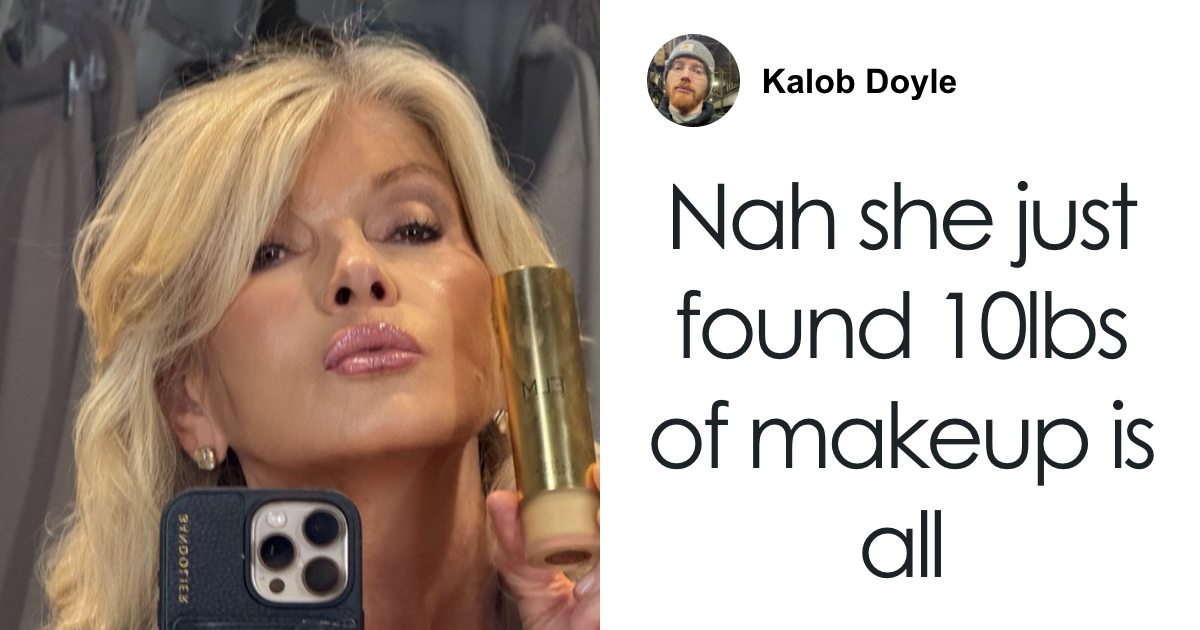
There are two guaranteed ways to break the internet: (1) announce free tacos for life, or (2) post a close-up selfie
with lighting so good it deserves its own agent. Martha Stewart chose door number twoagainand the comments section
did what the comments section does best: sprint straight past “You look great!” and into “Wait… did she get work done?”
If you’ve followed Stewart for more than five minutes, you already know this is not her first rodeo. She’s been
casually dropping selfies that make people rethink sunscreen, hydration, and their entire relationship with overhead
bathroom lighting for years. Still, one particularly glam, “how is this real?” photo can light up social media like a
candle aisle on Black Fridaysparking speculation about plastic surgery, filters, injectables, and the mysterious
wizardry of professional-grade skincare.
So, What’s With the “Shocking” Selfie?
The basic plot goes like this: Stewart posts a new selfieoften crisp, close-up, and intentionally polishedand a wave
of reactions follows. Plenty of fans gush. Others squint like they’re analyzing the Zapruder film and ask the classic
internet question: “How?”
In 2025, for example, she drew fresh buzz when she shared a glam photo while promoting her skincare project, with some
commenters jumping to plastic surgery theories. That cyclepost, praise, speculate, debatehas become a predictable
feature of celebrity social media, especially when the celebrity is famous, photographed often, and aging in public
(which, for women, sometimes gets treated like a suspicious activity).
But here’s the detail that tends to get lost in the scramble for hot takes: “Rumors” aren’t the same as “reality.”
And Stewart has addressed this topic repeatedly, with a message that’s been pretty consistent: she has denied having
plastic surgery, while acknowledging some non-surgical cosmetic treatments.
Why People Jump to Plastic Surgery Conclusions
The internet is allergic to nuance. A selfie shows smooth skin or a lifted-looking contour and suddenly we’re in a
courtroom drama: Law & Order: Special Cheek Unit. The truth is, a single image can be influenced by a
whole stack of factorsmany of them totally non-surgical.
1) Lighting is basically a cosmetic procedure
Good lighting can erase shadows, soften texture, and make anyone look like they just came from a weeklong “wellness
retreat” (or at least a nap). Stewart herself has talked about the importance of taking photos when the light is right.
Translation: she knows what she’s doing.
2) Angles change everything
A slightly higher camera angle can lift the face visually. A close lens can smooth features. A professional glam
momentmakeup, hair, posturecan make the same person look wildly different than a casual candid shot.
3) The “filter” conversation is bigger than filters
Filters exist, sure. But so do beauty modes, editing tools, portrait enhancements, and compression effects that blur
details. Even without heavy editing, a modern phone plus favorable conditions can create an “impossibly perfect” look.
People forget this, then assume the only explanation is surgery.
4) Ageism makes “you look great” sound suspicious
When a man looks good at 80, the internet calls him “distinguished.” When a woman looks good at 80, the internet calls
a plastic surgeon. That’s not a Martha Stewart problem; it’s a culture problem.
What Martha Stewart Has Actually Said About Cosmetic Work
Stewart has publicly denied having plastic surgery. At the same time, she’s been candid that she’s not living on a diet
of fairy dust and “positive vibes” alone. In interviews and on her podcast, she’s discussed non-invasive or minimally
invasive treatmentsthink dermatology, lasers, skin tightening, and certain injectableswhile emphasizing she’s not a
fan of going overboard.
In other words: she’s drawing a line between plastic surgery (surgical procedures) and cosmetic dermatology (treatments
that don’t involve “going under the knife”). The internet often mashes those into one big category called “work,”
which is about as precise as calling every kitchen tool a “spoon.”
A quick clarity moment: surgery vs. injectables
Plastic surgery usually refers to surgical procedures (like a facelift), which require incisions and
recovery time. Injectables like fillers and neuromodulators are typically done in-office with little
downtime. Devices and lasers can tighten skin or improve texture over time. All of these can affect
how someone looks in a photowithout being “plastic surgery.”
When people see a selfie and assume surgery, they might be reacting to the cumulative effect of good skincare, smart
styling, and carefully chosen cosmetic treatments. Or they might just be reacting to something even simpler: a great
photo on a great day.
The Business Behind the Glow: Skincare, Branding, and the “Proof” Selfie
A “shocking” selfie doesn’t exist in a vacuum. In the modern celebrity economy, a close-up photo is often a marketing
assetespecially when the celebrity is launching products tied to appearance, wellness, or skincare.
Stewart’s skincare ventures have drawn attention precisely because she’s the walking billboard. When she promotes a
product alongside a high-impact selfie, the audience naturally connects the dots: “She’s selling skincare… and she
looks like this… therefore the skincare must be sorcery.” And when something feels like sorcery, the internet starts
searching for a “real” explanation (hello, surgery rumors).
The irony is that Stewart’s brand has always been about control: the perfect roast chicken, the perfectly ironed linen,
the perfectly arranged tulips. A polished selfie fits that worldview. It’s not just “Look at my face.” It’s “I’m
presenting the finished product.” The platform is Instagram, but the vibe is still Martha: curated, intentional,
and slightly intimidatingin an aspirational way.
Why One Photo Can Make People Forget Everything They Already Know
Most people understand, intellectually, that celebrities have teams: makeup artists, hair stylists, dermatologists,
trainers, photographers, and lighting that could make a houseplant look like a supermodel. Yet a single selfie can wipe
out that logic like a spilled latte on a white couch.
That’s because photos feel like “evidence.” They’re visual, immediate, and emotionally persuasive. If your brain sees
smooth skin and sharp contouring, it wants a simple story: “She got surgery.” Complex stories“excellent skincare,
great light, strategic angle, maybe some conservative injectables, plus genetics and a healthy routine”don’t go viral
as easily.
Also, let’s be honest: “Martha Stewart is disciplined and hydrated” is less scandalous than “Martha Stewart got a
secret facelift.” The internet loves a twist ending.
A More Useful Question Than “Did She Get Plastic Surgery?”
Instead of treating every flattering photo like a crime scene, it’s worth asking: what does the rumor reveal about
us? Because the loudest part of these conversations isn’t really about Stewart’s face. It’s about how we talk about
aging, beauty, and what we think women are “allowed” to look like at a certain age.
We can hold two ideas at once
- It’s okay to be curious about beauty routines and cosmetic treatments.
- It’s also important not to turn curiosity into certaintyor judgment.
Stewart has chosen to address the topic publicly and explain her approach in broad strokes. That’s her decision. The
healthier cultural move is to listen to what she says, accept that photos can be deceptive, and stop acting like
looking good is inherently suspicious.
What to Take From the Martha Stewart Selfie Cycle
If you want a practical takeaway, here it is: a selfie is not a medical chart. It’s a momentusually optimized.
And in Stewart’s case, optimization is basically a hobby.
So the next time a “shocking” Martha selfie lands on your feed and you feel the urge to play detective, consider a
gentler, more accurate set of possibilities:
- Great lighting and a smart angle.
- Professional styling and makeup.
- Long-term skincare and dermatology.
- Some non-surgical cosmetic treatments (the kind she has discussed publicly).
- And yes, the simple fact that some people photograph extremely well.
None of those explanations require a conspiracy. Just a camera and a woman who understands presentation better than
most brands understand their own logos.
Experiences Related to “Martha Stewart Sparks Plastic Surgery Rumors With Shocking New Selfie” (Extended)
The funniest part of modern selfie culture is that one image can create three completely different realities
at the same time: the poster’s reality (“I looked good, the light was perfect”), the fan’s reality (“icon!”), and the
skeptic’s reality (“this must be surgical”). That split is not unique to celebritiesMartha Stewart just experiences it
at stadium volume.
Many people have had a tiny taste of this on a smaller scale: you post a photo you genuinely likemaybe you slept
well, your skin behaved, and you didn’t have to wrestle your hair into submission. You expect a few hearts. Instead,
someone comments, “Okay but what filter is this?” Another asks if you “did something different.” And suddenly you’re
defending your face like it’s a group project you didn’t even sign up for.
A common experience in these moments is the weird emotional whiplash. Compliments feel nice, but they can also carry a
hidden stingbecause they’re sometimes packaged as disbelief. “You look amazing!” can quietly turn into “I didn’t think
you were allowed to look amazing.” That’s exactly why the Martha Stewart rumor cycle resonates: it’s a magnified
version of what a lot of people deal with when their appearance is treated like public property.
Another very real experienceespecially for public figures and creatorsis learning how to “post like a pro.” Stewart
has openly talked about taking photos when you look your best and when the lighting works for you. That is not vanity;
it’s media literacy. People in entertainment, marketing, and influencer spaces learn quickly that the internet will
judge what you post, not what you intended. So you become selective. You delete the unflattering shot. You keep the one
where your skin looks calm and your eyes look bright. That’s not deception; it’s curationthe same way you wouldn’t
publish a cookbook photo where the soufflé collapsed.
Photographers and makeup artists will tell you (often with a tired laugh) that “camera-ready” is a specific kind of
reality. Makeup for everyday life is different than makeup for HD. Lighting can be kind or brutal. A soft, angled light
can make texture nearly disappear. A harsh overhead light can make anyone look like they lost a fight with a stapler.
When a selfie goes viral, most people don’t think about these mechanics; they jump straight to conclusions.
Then there’s the experience of being compared to your own past photossomething celebrities endure constantly. A photo
from ten years ago might be a candid with bad lighting. Today’s image might be professionally styled. People compare
them as if they were taken under identical conditions, then treat any difference as suspicious. Regular people feel
versions of this too: you get tagged in an unflattering group shot, then post a selfie you actually like, and someone
acts like you “changed.” No, you just stopped letting fluorescent lighting tell your story.
The most useful experience to borrow from Stewart’s approach is this: keep your focus on what you can control. If you
care about skincare, build a routine you can sustain. If you like treatments, make choices that feel right for you and
your doctornot the comment section. If you don’t want any of it, that’s valid too. The point isn’t to chase a single
aesthetic standard; it’s to stop treating aging like failure and beauty like evidence of wrongdoing.
Because at the end of the day, the “shocking selfie” is only shocking if we insist that a woman’s face must follow a
strict timeline. Martha Stewart’s real talent isn’t just domestic mastery or branding geniusit’s refusing to be
politely invisible. And if that sparks rumors? Well, the internet was going to talk anyway. She just gave it better
lighting.
Conclusion
Martha Stewart’s latest selfie didn’t just spark plastic surgery rumorsit exposed how quickly we turn a flattering
photo into a verdict. The more grounded reality is that “camera magic” is usually a mix of lighting, styling,
long-term skincare, and (in her case) the kinds of non-surgical treatments she’s discussed publiclypaired with a
careful refusal to let strangers set the rules for how she’s allowed to look. If the internet wants to debate it,
fine. But maybe we can upgrade the conversation from “Gotcha!” to “How do we talk about aging without losing our
minds?”